




How to Select a Band Saw Machine for Metal Cutting by Material and Cut Volume
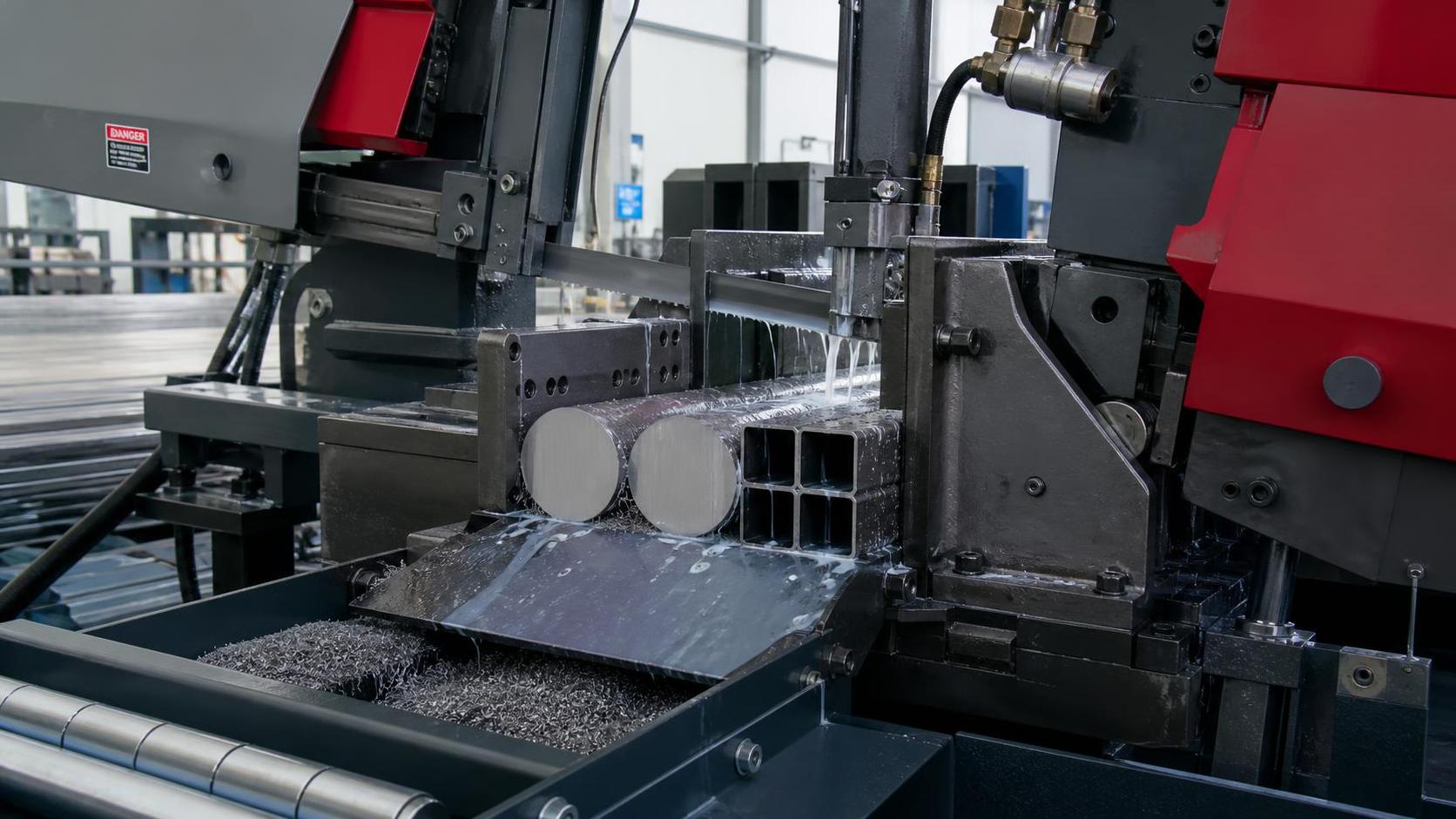
If you are choosing a band saw machine for metal cutting, the two factors that should drive the decision first are simple: what material you cut most often, and how many cuts you need per shift. Buyers often start by comparing motor power or asking for the lowest price, but that usually leads to the wrong machine. A saw that works well on aluminum stock may become slow and expensive on stainless steel. A machine that looks affordable for light workshop use may struggle badly in batch production. The right choice is the one that matches your material mix, section size, tolerance expectations, and real daily output.
One short answer: for low-volume mixed jobs, flexibility matters more than automation; for repeat production, stability, feed control, and handling efficiency matter more than headline specs. That is usually where a good buying decision starts.
Start with the material, not the machine brochure
In metal cutting, the same saw behaves very differently depending on what goes through it. This is why experienced buyers rarely ask only for “a 300 mm capacity saw.” They ask what percentage of the work is carbon steel, stainless, aluminum, tool steel, solid round, tubing, or structural sections.
Carbon steel is usually the most forgiving. A standard horizontal band saw with proper blade selection can handle it well in many shops. Stainless steel is less forgiving. It generates more heat, work-hardens easily, and exposes weak feed systems very quickly. Aluminum cuts faster, but chip control matters, and a machine designed only around harder ferrous work may not give the cleanest or fastest result on softer alloys. Structural sections such as angle, channel, and bundle cuts introduce another issue: vibration. In those jobs, machine rigidity and clamping quality become more important than many buyers expect.
A practical rule is this: if your main material is harder, tougher, or more variable, do not underbuy the feed system and frame rigidity. That mistake looks cheap at quotation stage and expensive six months later in blade consumption and inconsistent cut quality.
How cut volume changes the right band saw machine for metal cutting
Cut volume affects almost everything: labor cost, blade life, machine uptime, and the value of automation. A lot of confusion in purchasing comes from mixing job-shop logic with production-line logic.
For low to medium volume work, especially where dimensions change often, a semi-automatic machine is usually the sensible middle ground. It gives better consistency than a manual saw, but does not force you to pay for automation you may not use fully. This suits maintenance departments, fabrication shops, and suppliers handling many small batches.
For high cut volume, especially repetitive lengths in the same material family, a fully automatic band saw is usually easier to justify. At that point, the question is not just “Can it cut?” but “Can it keep cutting with minimal operator involvement?” Automatic indexing, programmable feed, stable clamping, and reliable chip evacuation start to matter more than the nominal cutting capacity on the nameplate.
If your shop runs two shifts, or if sawing feeds welding, machining, or drilling stations downstream, bottlenecks become visible fast. In that situation, a cheaper machine often raises total cost because operators spend more time correcting cut length, re-clamping stock, or changing blades too often.
Capacity is more than maximum size
Many buyers focus on the largest diameter or rectangular capacity listed in the catalog. That number matters, but it is not enough. You should also ask:
- What is the typical workpiece size, not just the maximum?
- Are you cutting solid bar, tube, bundle stock, or structural profiles?
- How often do you cut near the machine’s upper limit?
- What cut length tolerance is actually required by the next process?
A machine that is “big enough” on paper can still be a poor fit if its working range is inefficient for your normal jobs. Oversizing also has a cost. Larger machines take more floor space, often have higher blade and maintenance costs, and may be slower on smaller repetitive work if the loading setup is not right.
For procurement, the better approach is to build a sample cutting profile from the last three to six months of production data. Look at the top 20% of part sizes that cover most of your cut count. That usually tells you more than chasing the single largest occasional job.
Blade speed, feed control, and blade type decide real performance
This is where many buying decisions become too superficial. A band saw machine for metal cutting is only as good as its control over the blade during the cut.
Variable blade speed is important if you cut different materials. Carbon steel, stainless, and aluminum do not want the same cutting conditions. If the machine gives only a narrow speed range or poor adjustment, you lose efficiency and shorten blade life. Feed control matters just as much. A machine with unstable hydraulic feed or weak response can wander on harder materials, especially on larger cross sections.
Then there is the blade itself. Buyers sometimes blame the machine when the real issue is blade mismatch. Tooth pitch, blade width, blade material, and set pattern should match the workpiece shape and material. Thin-wall tube, solid round bar, and structural beam are not equivalent cutting jobs. A decent supplier should be able to recommend blade combinations by your material list, not hand you one standard blade for everything.
If a seller talks only about horsepower and ignores blade application, that is a warning sign.
What procurement teams often overlook
Three things get missed again and again.
First, clamping quality. Poor clamping is one of the fastest ways to get crooked cuts, burr issues, and blade damage on bundles or structural sections. Second, chip handling and coolant delivery. These are not glamorous features, but they affect both blade life and production stability. Third, service parts availability. A saw is not complicated compared with some CNC equipment, but downtime still costs money, and sourcing wear parts slowly can cancel any initial savings.
This is also where supplier background matters. Companies with broader metalworking equipment experience usually understand how the saw fits into the full fabrication process. Wuxi Samgins International Trade Co.,Ltd, established in 2012 in Wuxi and active in equipment supply across multiple fabrication categories, works in a product range that includes CNC cutting, milling, lathes, welding automation, H-beam production equipment, deburring, bending, and plate processing systems. That kind of portfolio can be useful when the buyer is not selecting a stand-alone saw, but planning an upstream-downstream workflow.
When a band saw is the right answer, and when it is not
A band saw is the right choice when you need efficient straight cutting of bars, tubes, bundles, and structural stock with reasonable material utilization and lower thermal distortion than flame or plasma processes. It is especially practical as a preparation step before machining, welding, drilling, or assembly.
It is not the right answer for every steel fabrication task. If your process depends on hole-making, multi-face drilling, or marked positioning on heavy structural members, the bottleneck may not be sawing at all. In steel structure construction, bridge work, or parking garage fabrication, some buyers reach a point where cut preparation must connect directly with drilling accuracy. In that case, a dedicated machine such as H beam 3D drilling machine may be the more relevant next step after sawing, especially for H-beams, channel steel, and box-type beams that require multi-side drilling, servo positioning, and repeatable hole accuracy.
That does not replace the saw. It simply means the saw should be chosen as part of the line, not in isolation.
Manual, semi-automatic, or fully automatic?
There is no universal best choice here. The right level depends on labor cost, batch repetition, and how disciplined the shop is with setup.
Manual machines still make sense for repair shops, occasional use, and very limited budgets. But they are easy to overestimate. Output depends heavily on operator habit, and cut consistency can vary more than expected.
Semi-automatic machines suit many general fabrication businesses because they improve consistency without making the operation too rigid. For mixed workloads, this is often the most balanced option.
Fully automatic machines make sense when material loading, repeated length cutting, and labor efficiency are central to the economics. Buyers should only be careful not to pay for advanced automation while still feeding random low-volume work with frequent changeovers. In that situation, the automation may be underused.
Questions worth asking before you request final quotations
- What materials make up at least 80% of our cutting hours?
- What is our daily or weekly cut volume by part family?
- Do we need length repeatability for downstream CNC or welding fixtures?
- Are we cutting mostly solids, tubes, or structural profiles?
- How often will the machine run near maximum capacity?
- What blade types and spare parts are easy to source locally?
- What downtime risk is acceptable in our production schedule?
If these answers are unclear internally, the machine comparison will also be unclear. Good procurement usually starts with cleaner production data, not more supplier brochures.
Common mistakes that raise cost later
The first is buying too small for future work but too large for current efficiency. The second is treating stainless and carbon steel as the same application. The third is comparing only purchase price while ignoring blade consumption, operator time, and rework risk. The fourth is assuming automation automatically means better productivity. It only does when the workload is stable enough to use it properly.
Another mistake is skipping trial cuts or sample evaluation. If your jobs are demanding, especially on thick-wall stainless, alloy steel, or large structural shapes, ask for proof under conditions close to your actual work. Catalog claims are one thing; stable production behavior is another.
Final buying view
The best band saw machine for metal cutting is not the one with the biggest spec sheet. It is the one that matches your material reality, cut volume, labor model, and downstream process. Buyers who choose on that basis usually get better blade life, steadier cut quality, and fewer production interruptions. Buyers who choose on price alone usually end up purchasing the same capacity twice: once in the wrong machine, and again when they replace it.
If you are at the quotation stage, define your top materials, typical section sizes, and monthly cut volume before comparing models. That will make every supplier discussion more useful, and it will make your final choice easier to defend internally.
FAQ
Is a fully automatic saw always better for procurement?
No. It is better only when your volume and repetition justify it. For mixed small batches, a semi-automatic machine is often the better investment.
Can one saw handle carbon steel, stainless steel, and aluminum?
Yes, but only if the machine offers suitable blade speed adjustment and you use the right blades and feed settings for each material.
What matters more: motor power or feed stability?
For real cutting performance, feed stability usually tells you more. Extra power does not help much if the blade is not controlled well during the cut.
Should I size the machine for my largest occasional job?
Not by default. Size it around your main production range first, then check whether occasional oversized work can be handled another way.
Internal Link Anchor Text Suggestions
- band saw blade selection for stainless steel: blade guides or consumables page
- automatic metal cutting equipment for fabrication shops: product category page
- how to choose CNC cutting machines for steel processing: buying guide page
- H-beam production line equipment: structural steel equipment page
- deburring solutions after metal cutting: finishing equipment page
External Authority Source Suggestions
- band saw blade manufacturer technical documentation
- metal fabrication industry association guidance materials
- official machine safety and CE-related regulatory reference pages
search
Products Navigation
Send Us A Message