




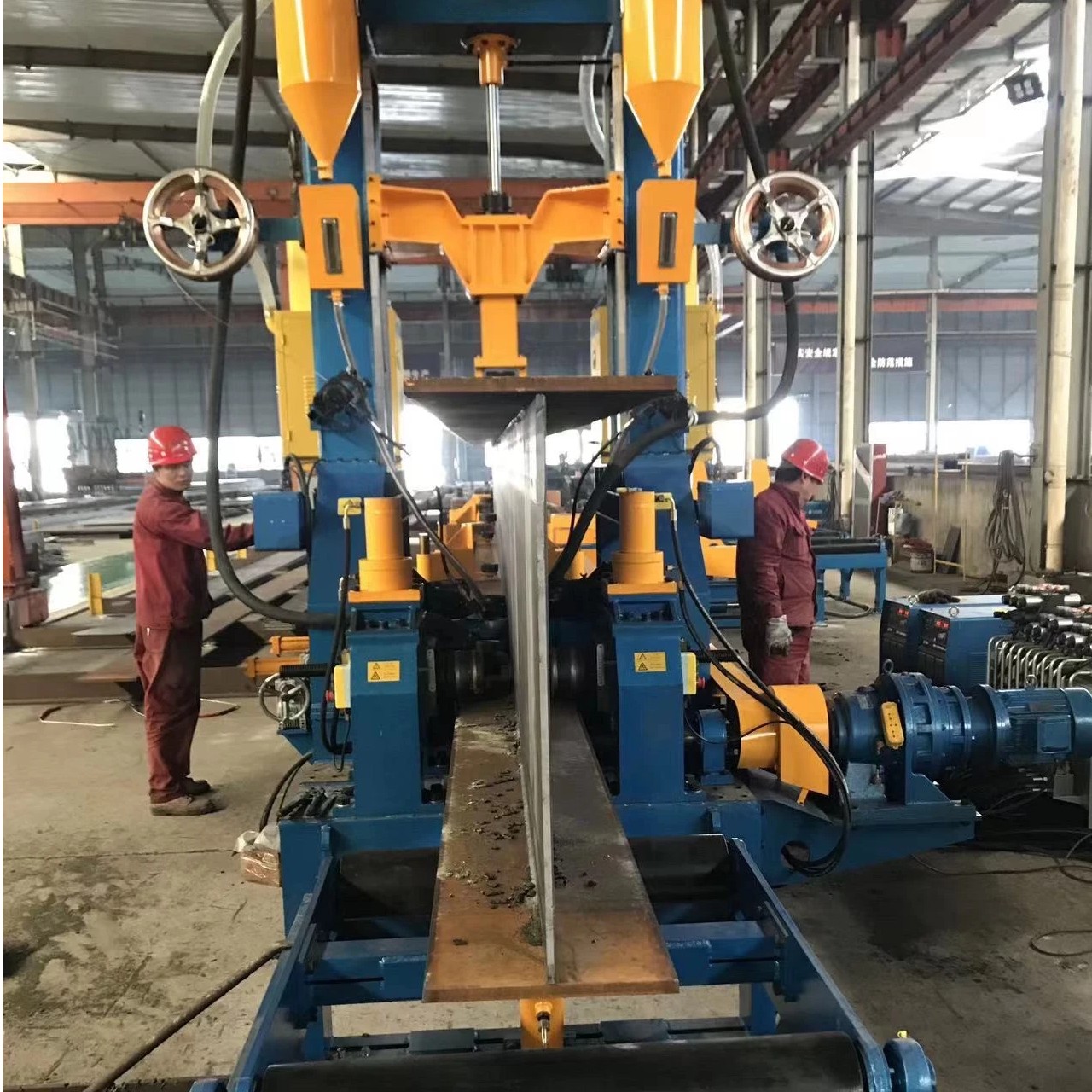
3 in 1 H beam welding machine
Full-range Machinery & Customized Non-standard Solutions
Authorized Certificates & Independent R&D Patents
Over 10 Years Global Export & Worldwide Project Cases
Navigation
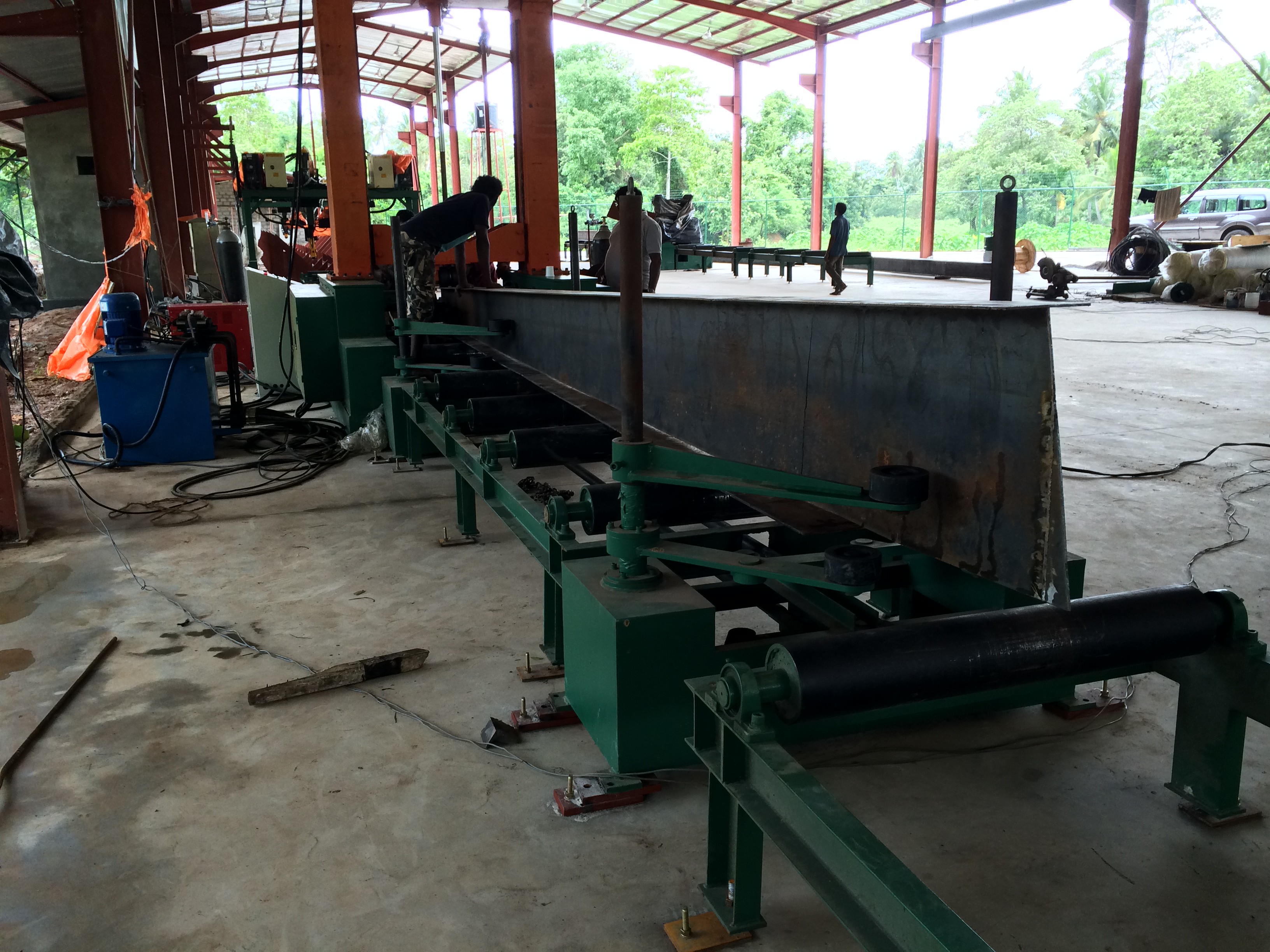

3 in 1 H beam welding machine Description
1.Introduction for 3 in 1 h beam welding machine:
1.1 Heavy-Duty Assembly Host (Patent-Protected)
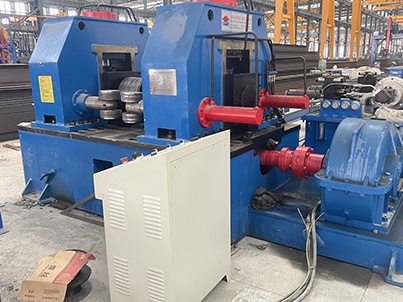
The assembly host features a heavy-duty structure with an invention patent. The web and flange plates are automatically centered, significantly improving assembly precision and efficiency.
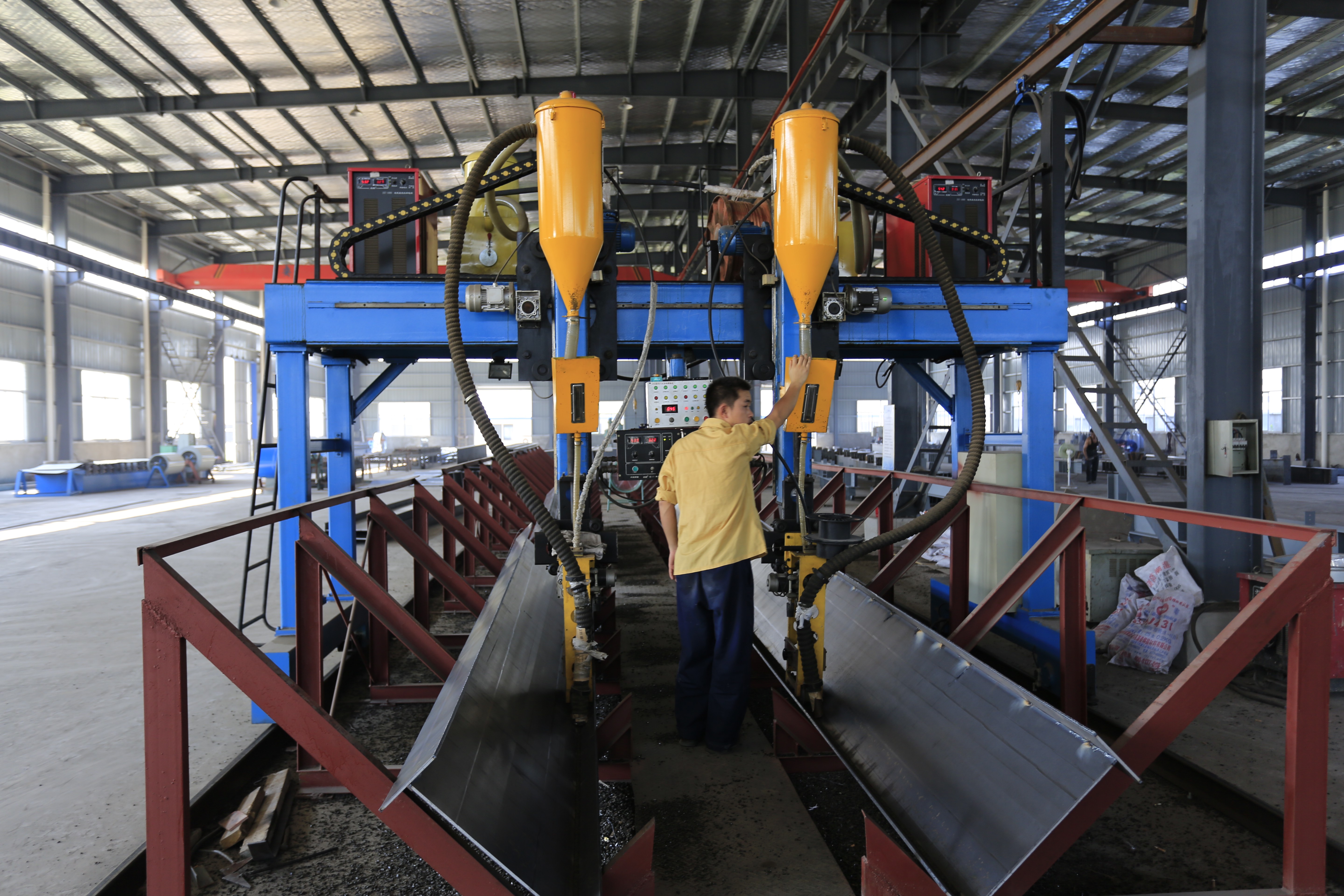
1.2 Independent Welding Gun Fixing Mechanism
The welding torch is mounted on an independently designed fixing mechanism, allowing height adjustment, horizontal positioning, and two-directional angle adjustment—ensuring neat and aesthetically pleasing weld seams.
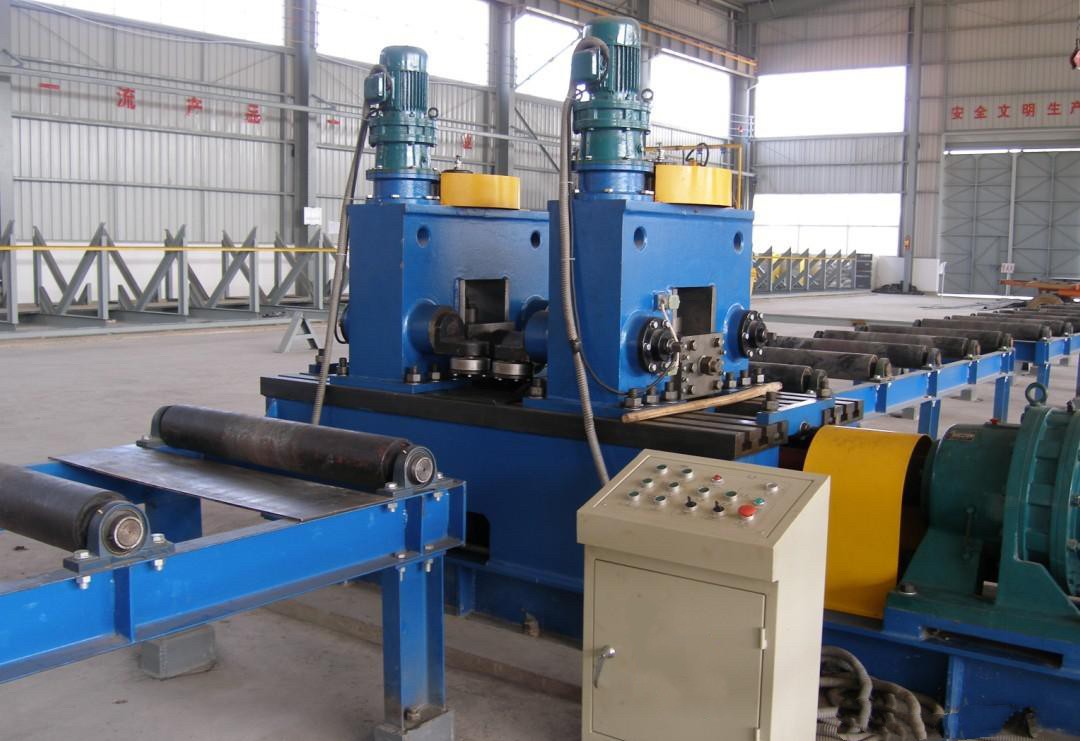
1.3 Unique Correction Auxiliary Machine Design
Two correction wheels actively straighten the workpiece without cylinder interference. The correction mechanism does not obstruct the operator's view of the welding area, making torch adjustment and weld quality observation convenient and intuitive.
1.4 Versatile Configuration
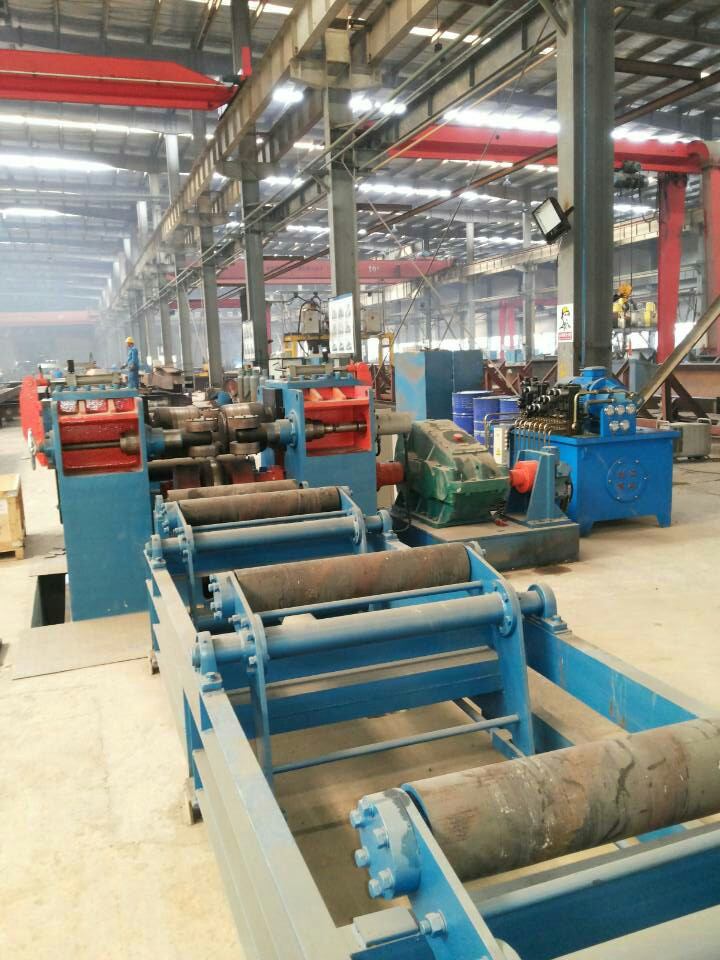
The assembly host can be used independently as a welding machine, or combined with the correction auxiliary machine to function as a complete assembly and welding unit—offering flexible production options.
1.5 Multi-Function Correction Unit
The correction auxiliary machine can be modified to serve as a small straightening machine, adding further value and utility to the equipment.
2.Technical parameter for 3 in 1 h beam welding machine
3.Characters for 3 in 1 h beam welding machine:
3.1 Three-Process Integration
The machine integrates three traditional processes—assembly, gantry welding, and correction—into a single compact unit, significantly improving production efficiency and streamlining the workflow.
3.2 Space & Cost Savings
Compared to conventional production lines, this integrated design saves approximately two-thirds of floor space, substantially reducing factory lease and equipment procurement costs.
3.3 High Level of Automation
Automatic centering and positioning of web and flange plates
Hydraulic + screw rod drive with digitally preset width
Dual-side welding gun automatic tracking system enables symmetrical welding, reducing side-bending deformation
Integrated slag spreading and recovery system forms a closed-loop circulation, minimizing waste
3.4 Hot Welding & Hot Correction Process
Correction is performed simultaneously during welding, utilizing residual heat to enhance correction efficiency and eliminate the energy consumption associated with "cold correction" processes.
3.5 High Product Qualification Rate
By employing "arc-free plate and no weld point technology," customer feedback indicates a qualification rate exceeding 90%—significantly higher than the traditional process (approximately 30%).
3.6 Energy Saving & High Efficiency
Inverter welding machines reduce energy consumption by 25–35%
AC variable frequency speed regulation provides a wide speed range and constant torque, further lowering energy usage
3.7 Convenient Operation
Centralized control box enables parametric setting of processing dimensions and correction amounts. The entire line can be operated by just 1–2 personnel.
3.8 Flexible Structure
Certain models support disassembly, allowing the main unit and auxiliary modules to be used independently when required.
products faq
An H Beam Production Line is a complete automated system for manufacturing H-shaped steel beams. It typically includes an uncoiler, leveling unit, assembly machine, tack welding machine, main submerged arc welding (SAW) system, straightening machine, cutting equipment, and material handling conveyors. All components work together to transform steel plates or coils into finished H-beams with high efficiency and consistent quality.
Submerged Arc Welding (SAW) is the most commonly used process for main welding in H beam production lines. It offers deep penetration, high deposition rates, excellent weld quality, and minimal spatter—making it ideal for heavy structural beams. Some lines also incorporate gas-shielded welding for tacking or light sections.
The line is adjustable to accommodate a wide range of beam sizes. Standard configurations typically handle web heights from 200mm to 1,500mm, flange widths from 100mm to 800mm, and material thicknesses from 6mm to 60mm. Custom sizes can be accommodated with tailored equipment design.
After welding, the thermal distortion caused by heat input is corrected by a straightening machine, which applies pressure to bend the beam back to the required straightness tolerance. In addition, precision assembly fixtures and automated control systems ensure accurate web-flange positioning before welding, maintaining consistent product dimensions throughout production.
Routine maintenance includes checking and replacing welding consumables (flux, wire, contact tips); inspecting conveyor chains, rollers, and bearings; monitoring hydraulic system oil levels and seals; cleaning the flux recovery system; and verifying the straightening machine's adjustment accuracy. We provide comprehensive maintenance schedules, spare parts support, and on-site technical assistance to minimize downtime.