




How to Evaluate a Hydraulic Shearing Machine Exporter for Documentation and After-Sales Support
How to Evaluate a Hydraulic Shearing Machine Exporter for Documentation and After-Sales Support
Choosing the right hydraulic shearing machine exporter is about more than price or specifications.
Complete documents and reliable support shape the whole buying experience.
They affect customs clearance, machine setup, operator training, spare parts planning, and customer satisfaction after delivery.
For that reason, evaluating a hydraulic shearing machine exporter should start with service capability, not only machine data.
Why Documentation Matters More Than Many Buyers Expect
In real transactions, paperwork problems often create bigger losses than minor technical issues.
A capable hydraulic shearing machine exporter should provide accurate, complete, and consistent documentation before shipment.
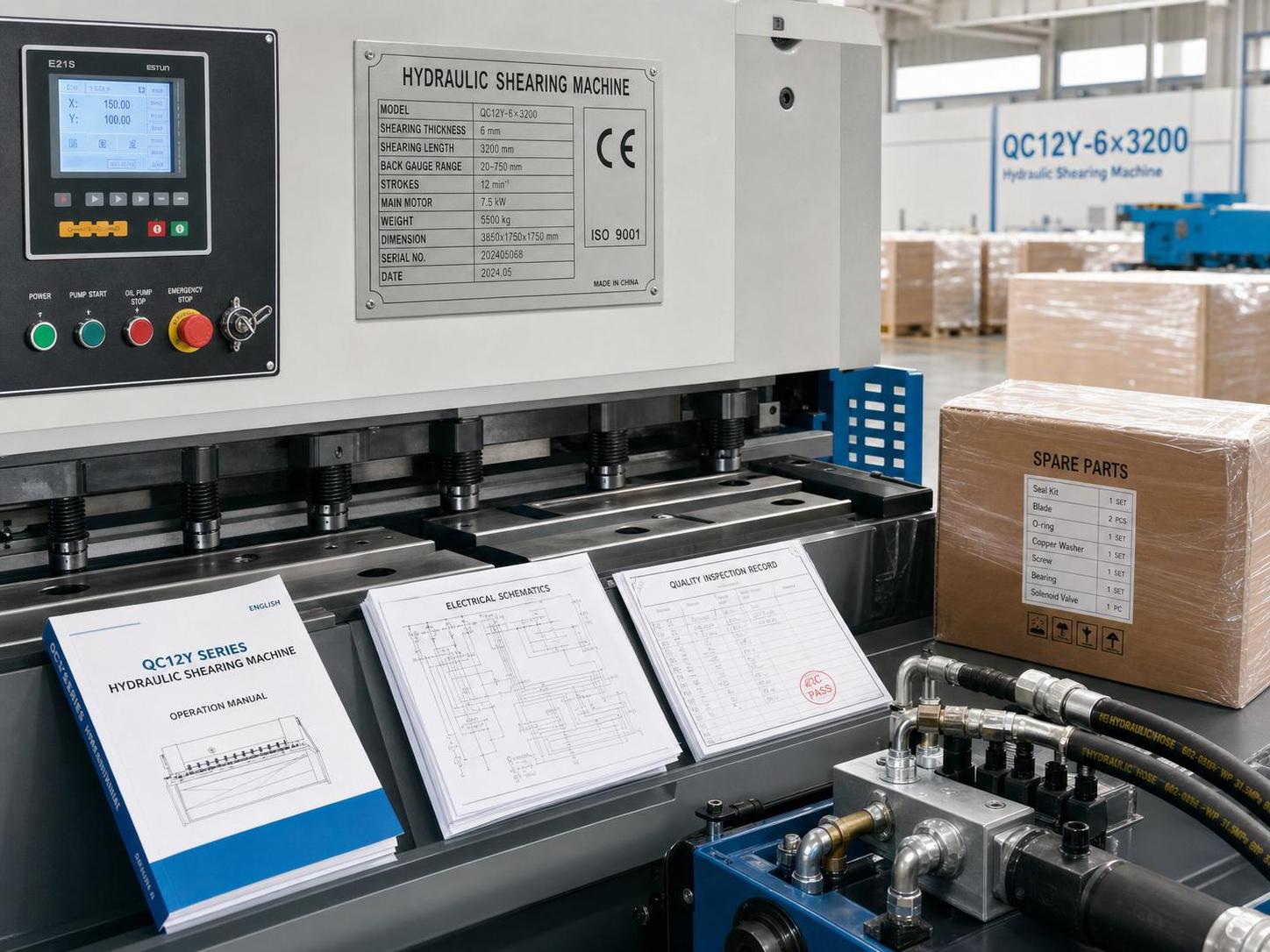
This includes commercial invoices, packing lists, manuals, drawings, test records, and certificates when required.
When these files do not match the machine delivered, import delays become very likely.
That also creates friction with end customers who expect fast installation and clean handover.
Core Documents You Should Request Early
- Proforma invoice with machine model, voltage, tooling, and trade terms
- General arrangement drawing and foundation requirements
- Operation manual and maintenance guide in clear English
- Electrical schematics and hydraulic circuit diagrams
- Quality inspection report and trial run records
- Parts list with component brands and replacement codes
- Certificate of origin, CE-related files, or other market documents
A serious hydraulic shearing machine exporter can usually share sample versions before the order is confirmed.
How to Check Whether the Exporter Really Controls Compliance
Some suppliers mention ISO or CE in marketing, but cannot explain the supporting process.
A dependable hydraulic shearing machine exporter should show how standards are applied in production and export documentation.
Ask direct questions about serial number traceability, inspection checkpoints, and document approval before shipment.
The stronger signal is not the certificate itself.
It is the supplier’s ability to explain how each file connects to the actual machine.
Useful Questions During Evaluation
- Who prepares export documents, sales staff or a dedicated documentation team?
- Can the exporter align HS code details with local broker requirements?
- Are machine nameplate data and shipping records checked before dispatch?
- Can they provide bilingual labels if your market needs them?
- How do they handle corrections when customs asks for revised files?
These questions reveal whether the hydraulic shearing machine exporter works systematically or reacts only after problems appear.
What Good After-Sales Support Actually Looks Like
After-sales support should be measurable, not vague.
A strong hydraulic shearing machine exporter offers clear response times, spare parts procedures, and technical escalation paths.
This matters even more when your customer runs time-sensitive production.
If a machine stops, every hour of delay can damage your reputation.
That is why support quality should be reviewed before deposit payment.
Minimum Support Standards to Confirm
- Remote troubleshooting by video, photos, and live messaging
- Startup guidance for hydraulic, electrical, and blade settings
- Spare parts list with recommended stock for six to twelve months
- Training materials for operators and maintenance staff
- Warranty terms that define exclusions and claim steps clearly
- Technical contacts who can answer application-level questions
A reliable hydraulic shearing machine exporter will not hide behind general promises like “lifetime service” without process details.
Signs the Exporter Understands Industrial Equipment Support
Good exporters usually show discipline across different machine categories, not only one product line.
That matters because support systems often reflect the company’s overall manufacturing and service management.
For example, suppliers experienced with welding equipment, CNC cutting systems, and beam lines often document complex projects more carefully.
In some cases, reviewing another equipment category helps reveal how the team handles installation logic and technical coordination.
A practical reference is the 3 in 1 H beam welding machine.
Equipment like this combines assembly, welding, and correction in one line.
That kind of system requires tighter manuals, parameter guidance, and troubleshooting support than a simple standalone machine.
If an exporter can document complex machines well, that is often a positive sign for hydraulic shearing machine support too.
How to Evaluate Response Speed Before You Buy
Pre-sales behavior usually predicts after-sales behavior.
A hydraulic shearing machine exporter that answers slowly during quotation may respond even slower after payment.
Test the process with real requests instead of general conversations.
Ask for a spare parts proposal, document sample, and technical clarification within a defined deadline.
What to Measure
- Time needed to send technical answers
- Accuracy of model and option descriptions
- Consistency between sales and engineering replies
- Willingness to revise quotations and file details
- Ability to explain risks, not only advantages
This small test often tells you more than a polished brochure.
A Simple Scoring Method for Exporter Comparison
When comparing several suppliers, use a weighted scorecard.
This prevents price from dominating the decision too early.
This method helps identify the hydraulic shearing machine exporter with the best long-term value, not only the lowest offer.
Common Risks That Should Influence Your Decision
Several warning signs should lower your confidence immediately.
- Manuals copied from unrelated models
- No clear spare parts coding system
- Unclear answers about electrical standards or voltage adaptation
- Sales promises that engineering staff cannot confirm
- Delayed replies when document corrections are requested
- Warranty terms written too broadly to be enforceable
These issues usually become expensive later.
A hydraulic shearing machine exporter should reduce operational risk, not transfer it to you.
Final Buying Checklist Before You Place the Order
Before confirming any purchase, run one final verification round.
- Review sample documents and compare them with the quoted machine configuration.
- Confirm who handles technical support after shipment.
- Ask for a recommended spare parts package.
- Verify warranty process, response time, and claim evidence requirements.
- Check whether manuals, diagrams, and labels match your market needs.
- Confirm final inspection records before balance payment.
A good hydraulic shearing machine exporter will welcome this review process.
That usually means the supplier is prepared for stable, repeat business.
For industrial machinery buyers, that is often where the real margin protection begins.
Evaluate documentation discipline, compliance control, and after-sales execution together, and your final supplier choice will be much stronger.
search
Products Navigation
Send Us A Message