




Hydraulic Shearing Machine for Sale: How to Verify Specs Before You Request a Quote
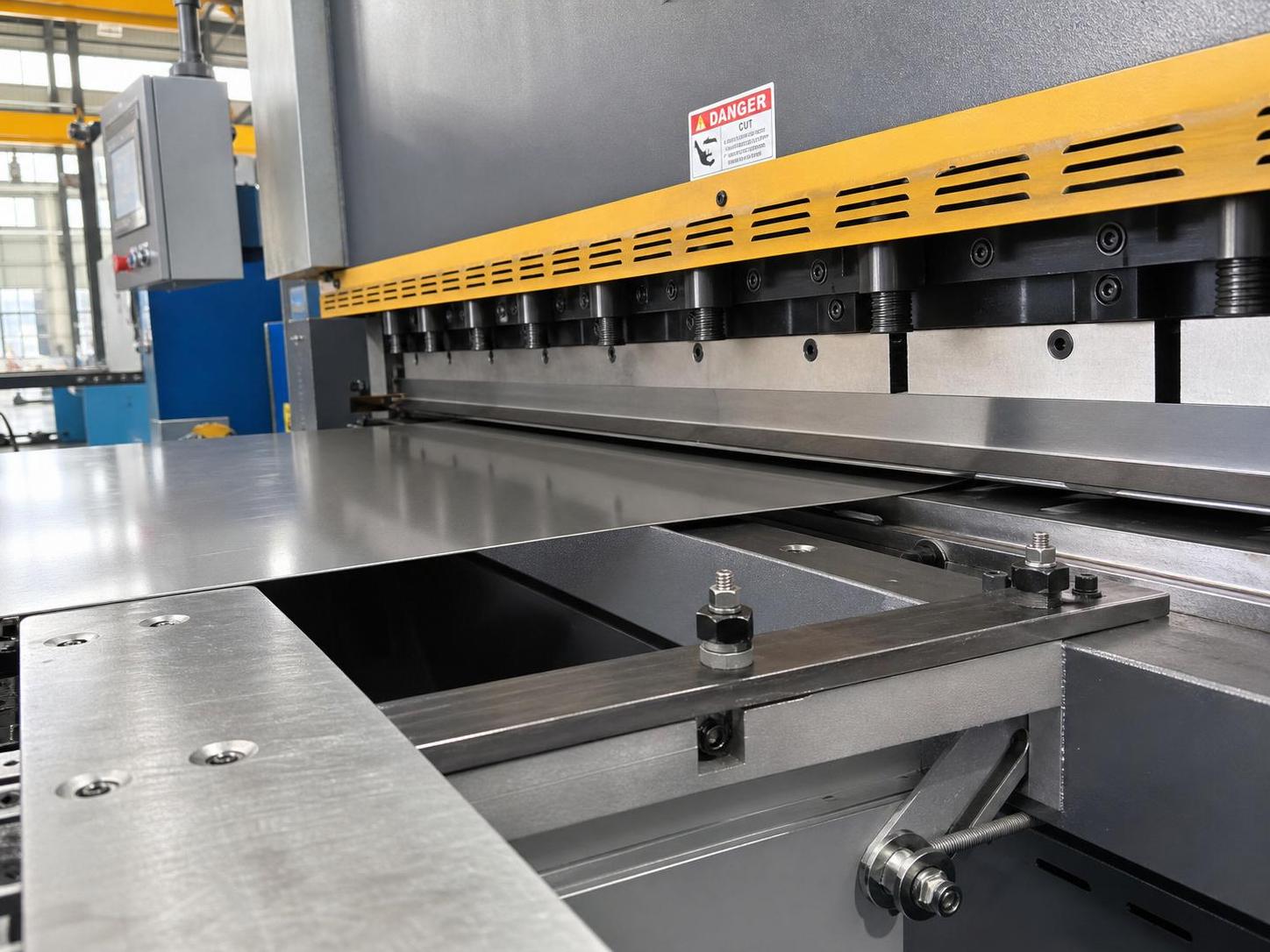
A hydraulic shearing machine for sale can look similar on a catalog page, yet small specification gaps often lead to major differences in output, tooling life, and operating cost.
Before requesting a quote, the real task is not collecting prices. It is confirming whether the machine matches the plate, tolerance, workflow, and safety expectations of actual production.
In metal fabrication, that matters because shearing sits close to the start of the process. If the cut quality is unstable, bending, welding, and downstream assembly all become harder to control.
What a hydraulic shearing machine really needs to deliver
A hydraulic shearing machine uses hydraulic force to drive the upper blade against the lower blade and cut sheet or plate stock in a straight line.
That description is simple, but machine value is decided by stable performance under repeated loads, not by the cutting principle alone.
When comparing any hydraulic shearing machine for sale, the useful question is whether it can cut the required material range consistently, with acceptable edge condition and predictable cycle time.
This is why specification verification should happen before commercial discussion. A low quote on an undersized machine is not a saving. It is a delayed production problem.
Why spec verification has become more important
Fabrication lines now handle more mixed jobs, smaller batches, and tighter delivery windows. Equipment is expected to switch materials and dimensions with less setup waste.
At the same time, buyers often compare machines across regions and standards. A quoted capacity may look sufficient until the exact test conditions are examined.
For example, nominal cutting thickness can vary by material strength. Carbon steel, stainless steel, aluminum, and high-tensile plate do not impose the same load on the frame and blades.
In export-oriented supply chains, documentation also matters more. ISO9001 process control and CE-oriented design practices can support more reliable evaluation, especially for cross-border procurement.
This is one reason established equipment suppliers remain relevant. Wuxi Samgins International Trade Co.,Ltd, founded in 2012 in Wuxi near Shanghai, works across cutting, welding, bending, rolling, milling, and CNC equipment categories, which helps place shearing machines in the wider production context.
The first specifications to verify before asking for price
Price requests become more useful when the technical baseline is already clear. The following points are usually the most important.
Cutting thickness and material grade
Do not read thickness as a universal number. Confirm the maximum thickness by material type and tensile strength, then compare it with the plates actually used most often.
It is also useful to identify the normal operating range. A machine that can barely reach the top requirement may not be ideal for continuous production there.
Blade length and usable cutting width
Blade length must suit the largest sheet width, but the decision should also reflect nesting practice, backgauge travel, and handling space around the machine.
Oversizing without need raises footprint and investment. Undersizing creates extra handling steps and slows throughput.
Blade clearance and cut quality control
Blade clearance affects burr level, edge straightness, and blade wear. Verify whether adjustment is manual, motorized, or CNC controlled.
If the line processes varied sheet thicknesses, fast and repeatable clearance adjustment becomes more valuable than a simple maximum-capacity claim.
Backgauge accuracy and repeatability
A hydraulic shearing machine for sale should be judged by more than cutting force. Accurate positioning determines part length consistency and reduces operator correction.
Check travel range, positioning speed, repeatability, and whether the control system stores job parameters for recurring parts.
How to read the control and safety details
Control systems are often treated as a secondary detail, but they shape daily efficiency. A stronger interface reduces setup time and makes parameter changes easier to track.
Verify whether the machine includes programmable stroke control, cutting count display, backgauge presets, fault prompts, and maintenance reminders.
Safety should be examined with the same discipline. Ask about guarding, emergency stop layout, electrical grounding, and visibility of machine status.
That practical view appears across modern fabrication equipment. For example, 7 axis cantilever type welding robot systems used in long workpiece welding often include clear red, yellow, and green status lights, multiple emergency stop switches, and grounding protection.
The same logic applies to shearing equipment. Visible machine state and immediate shutdown access are not optional details when production pace is high.
A practical comparison table for quote preparation
Before sending inquiries, it helps to structure the comparison. A simple table can prevent vague or incomplete quotations.
Where application context changes the right choice
Not every hydraulic shearing machine for sale should be evaluated by the same priority list. The intended production mix changes the decision.
For general sheet metal work, flexibility and quick setup may matter more than extreme tonnage. For heavy plate preparation, frame rigidity and stable hydraulic performance move higher on the list.
If the shearing process feeds bending cells, edge condition and dimensional repeatability deserve extra attention. If it feeds welded structures, consistency becomes even more important.
That broader line perspective is useful when a supplier handles adjacent equipment categories too. In structural fabrication, shearing, edge preparation, welding, and handling often affect one another more than expected.
For longer fabricated parts, automated welding platforms may process workpieces up to 12000mm in length, with customized layouts and multi-axis positioning. That reminds buyers to evaluate shearing capacity against the full production route, not as a stand-alone purchase.
Common mistakes when reviewing a hydraulic shearing machine for sale
- Using only the maximum thickness number without checking material grade.
- Ignoring backgauge repeatability because the machine appears mechanically strong.
- Comparing quotations that are based on different control systems or safety configurations.
- Missing the cost of blade maintenance, hydraulic service, and operator learning time.
- Asking for price before sharing part size, production volume, and material details.
These errors usually do not appear during the first discussion. They surface later as quality complaints, low efficiency, or repeated clarification with the supplier.
What to prepare before the next inquiry
A stronger inquiry leads to a better quotation. Prepare the actual plate thickness range, material grades, maximum sheet width, expected output, and quality requirements.
Also note preferred controls, local power conditions, safety expectations, and whether future automation or line integration is likely.
When reviewing any hydraulic shearing machine for sale, that information makes it easier to separate headline capacity from practical suitability.
The next step is straightforward: build a short comparison sheet, verify the technical assumptions behind each quote, and judge the machine by fit with production reality rather than by price alone.
search
Products Navigation
Send Us A Message