




Hydraulic or Electric Pipe Bender for Stainless Steel?
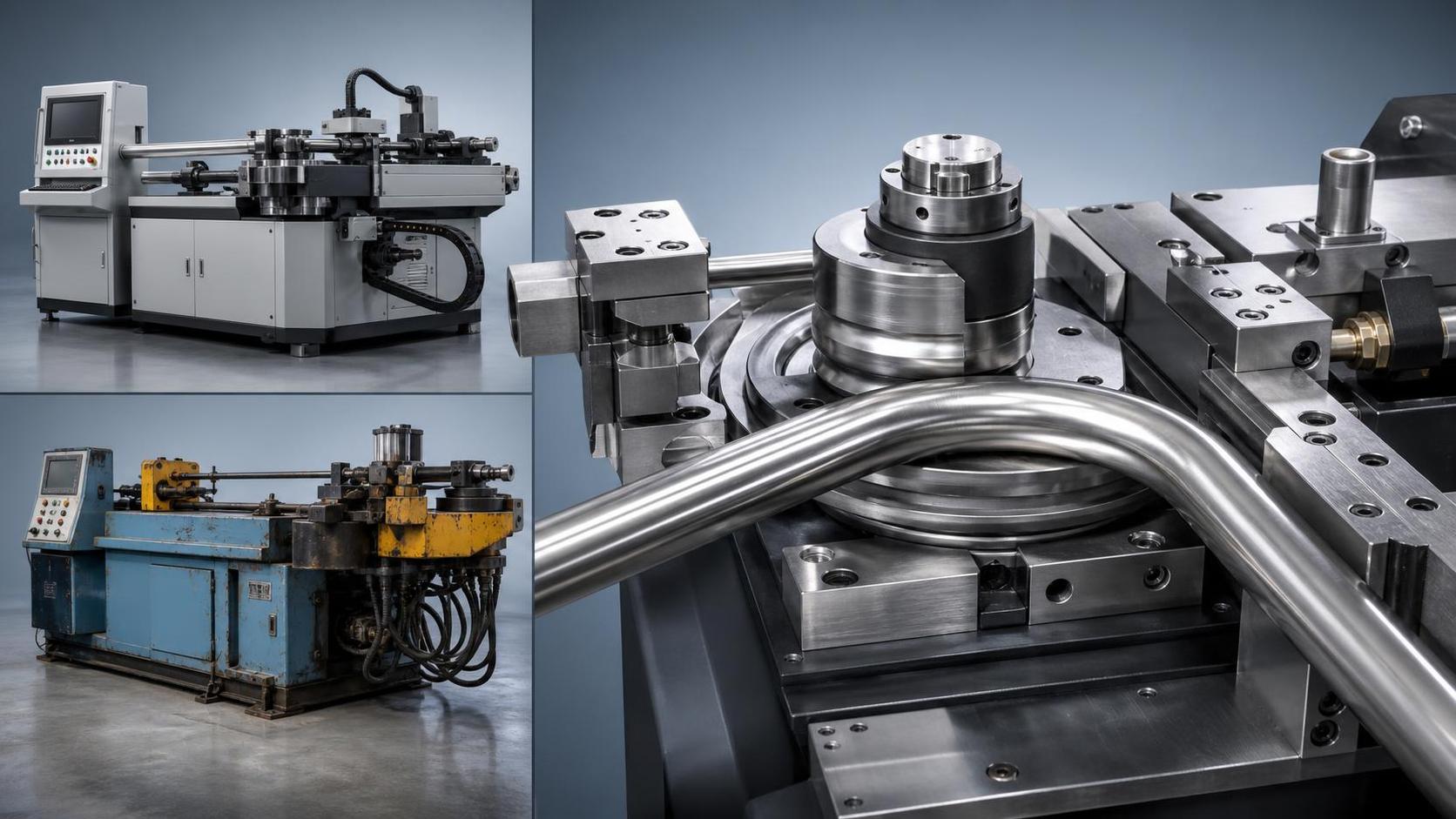
Should I choose a hydraulic or electric pipe bending machine for stainless steel? In most real shop situations, the answer comes down to this: choose an electric pipe bender when bend accuracy, repeatability, cleaner surface finish, and automation matter most; choose a hydraulic pipe bender when your budget is tighter, your parts are less demanding, or you are handling thicker-wall tube with lower output pressure on precision. Stainless steel is not a forgiving material, so the wrong machine choice usually shows up quickly in springback, surface marking, unstable angles, and wasted tube.
Many buyers get stuck because they are not really choosing between two machine names. They are choosing between two production styles. One is more controlled and repeatable. The other is more tolerant on upfront cost and often more familiar to traditional workshops. If you are bending stainless steel tube for furniture, handrails, sanitary tubing, exhaust components, food-grade lines, decorative parts, or industrial frames, this decision will affect not only the bend itself, but also rework rate, tooling wear, operator dependence, and future automation options.
What changes when the material is stainless steel?
Stainless steel behaves differently from mild steel in bending. It has higher strength, noticeable springback, and a stronger tendency to show scratches, flattening, wrinkling, and burnish marks if the machine setup is not stable. This is why a machine that works “well enough” on carbon steel may suddenly become frustrating on stainless tube.
In practice, stainless steel bending usually demands better control of three things: bend angle, clamp pressure, and feeding consistency. It also benefits from good tooling fit and stable mandrel support when thin-wall tubing is involved. That is where electric machines often gain an advantage, especially for jobs with tight tolerances or repeated part programs.
If your stainless parts are visible in the final product, such as architectural tube, food equipment, or polished tubing, surface protection becomes a bigger issue than many first-time buyers expect. A small instability in motion or pressure can leave marks that are difficult to remove without extra finishing work.
Hydraulic or Electric Pipe Bender for Stainless Steel? Start with the short answer
If you need a direct answer in one paragraph: for high-volume stainless steel production, tight bend consistency, reduced operator influence, and easier integration into CNC workflows, an electric pipe bending machine is usually the better choice. For simpler bends, lower-volume work, budget-sensitive purchasing, or heavy-duty jobs where cycle speed and cosmetic finish are not the top priority, a hydraulic pipe bender can still be the right investment.
That short answer is useful, but it is still incomplete. The better decision comes from your actual part mix.
Where electric pipe benders usually win
Electric pipe benders are strong where stainless steel is most demanding: controlled motion and repeatability. Servo-driven bending gives better positioning accuracy and more stable bend-to-bend results, especially when you run multiple parts with the same program. If your customer expects consistent geometry across a batch, electric has a clear edge.
This matters even more when parts have several bends in one tube. On stainless steel, small errors stack up. A machine that misses slightly on one bend can create fit-up problems by the third or fourth bend. Electric systems usually make correction easier because the control is more precise and the stored program is easier to adjust.
Another point buyers often overlook is setup dependency. Hydraulic machines can produce good parts, but results often depend more heavily on operator feel and experience. Electric machines reduce that variation. If your shop wants faster training, easier repeat orders, or less reliance on one highly experienced operator, electric is easier to standardize.
Surface quality is another reason many stainless users move toward electric models. Smoother and more controlled motion can help reduce marking, especially when combined with proper tooling and lubrication. The machine alone will not solve every finish problem, but it gives you a better foundation.
Electric pipe benders also make more sense when you are planning ahead. If today’s order volume is moderate but your next step is automated production, data-based setup, or more complex bending programs, buying electric early can save a costly transition later.
When a hydraulic machine still makes sense
Hydraulic benders are not obsolete, and treating them that way is a mistake. They remain practical for many stainless steel applications, especially where the production environment is less demanding on repeatability.
If your work involves general fabrication, maintenance jobs, structural supports, simple frames, or low-volume custom pieces, a hydraulic pipe bending machine can be enough. It may also be a sensible choice when you are working with thicker wall tube and cosmetic appearance is less critical.
Budget is part of the conversation too. The initial purchase price for a hydraulic machine is often lower than for a comparable electric model, though the exact difference depends on size, control level, tooling package, and brand. If you are entering pipe bending for the first time and still validating market demand, hydraulic can be the more conservative starting point.
There is also the maintenance reality. Some workshops are more comfortable maintaining hydraulic systems because that knowledge already exists in-house. That does not automatically make hydraulic cheaper over the full life cycle, but it can reduce hesitation during the buying stage.
Still, it is worth being honest about the tradeoff: if your stainless products require tight repeatability and low rework, a lower machine price can be offset later by scrap, slower setup, and more manual correction.
The most common buying mistake: comparing force instead of finished parts
A lot of buyers ask first about tonnage or power. That is understandable, but for stainless tube bending, the more useful question is: what kind of finished part do you need every day, and how stable must that result be?
A stronger machine does not automatically produce a better stainless bend. The better machine is the one that controls the bend consistently with the least distortion for your specific tube diameter, wall thickness, bend radius, and surface requirement.
For example, if you are bending polished stainless tube for visible installations, the machine must protect appearance as much as it forms shape. If you are bending industrial transfer lines, dimensional reliability may matter more than cosmetics. If you are producing repeated furniture frames, cycle consistency becomes the real cost driver. These are different jobs, and the right answer can change even within the same factory.
Questions you should answer before choosing
Before deciding on hydraulic or electric, confirm these points internally:
- Tube outside diameter and wall thickness range
- Stainless steel grade you use most often
- Minimum bend radius and whether tight-radius bends are common
- How many bends each part has
- Surface finish requirements after bending
- Expected batch size and daily output
- Acceptable tolerance and rework rate
- Whether future automation or CNC integration is planned
If you cannot answer these clearly, any machine recommendation will be generic. This is also why buyers sometimes feel disappointed after purchase: they selected by machine category, not by production requirement.
How I would decide in typical stainless steel scenarios
For thin-wall stainless tube, tight radius work, or parts that need to look clean straight off the machine, I would lean electric. The control advantage is hard to ignore, and stainless tends to punish inconsistency.
For job shops doing mixed work with moderate volume and simpler bend programs, hydraulic may still be the practical answer, especially if operators are experienced and part tolerance is not extremely tight.
For factories quoting repeat contracts, export orders, or customer parts with stable drawings and quality checks, electric usually becomes easier to justify. Repeatability saves money quietly. It does not always show in the purchase price, but it shows in fewer rejected parts, less setup drift, and smoother production planning.
For buyers who are still scaling, there is a middle ground: choose a supplier that can support both conventional and more automated equipment paths, so your first purchase does not limit your next one. Companies such as Wuxi Samgins International Trade Co., Ltd., which supply a broad range of fabrication equipment including pipe benders and other metalworking machines, can be useful at this stage because the conversation can stay focused on process matching rather than a single isolated machine.
What people often underestimate about operating cost
The machine price is only part of the cost. Stainless steel makes the hidden costs more visible.
If a hydraulic machine causes more trial bends, angle correction, or surface defects, the extra tube loss and labor can exceed the savings from the lower purchase price. On the other hand, if your production is light and part variety is high, paying for a more advanced electric machine may not deliver enough return.
Tooling condition also matters more than some buyers expect. Poor tooling fit, worn dies, or the wrong mandrel setup can create defects on either machine type. Do not assume electric control can compensate for bad tooling. It cannot. Machine choice and tooling choice have to be evaluated together.
Two misconceptions worth clearing up
The first is that electric always means better for every stainless application. Not true. If your parts are simple, output is low, and tolerances are forgiving, hydraulic can be perfectly adequate.
The second is that hydraulic is only for older or low-end production. Also not true. A well-configured hydraulic machine in the right application can be productive and reliable. The real problem starts when buyers use it for jobs that need the consistency of servo control.
Final recommendation
If you are still asking, “Should I choose a hydraulic or electric pipe bending machine for stainless steel?”, use this rule: buy electric when stainless quality requirements are high, repeat orders are important, and production control matters more than the initial machine price. Buy hydraulic when the work is simpler, less cosmetic, lower in volume, or budget constrained.
The best buying decision usually comes after reviewing a few actual parts, not after reading a specification sheet alone. Bring your tube size, wall thickness, bend radius, finish expectation, and sample drawings into the discussion. Stainless steel does not leave much room for guesswork, and the right machine is the one that fits your real production, not the one with the most impressive brochure.
FAQ
Is electric pipe bending always more accurate for stainless steel?
Usually yes, especially for repeated bends and multi-bend parts. But accuracy still depends on tooling, setup, tube consistency, and operator programming.
Can a hydraulic pipe bender handle stainless steel well?
Yes, if the application is suitable. Simple geometries, lower volumes, and less demanding finish requirements are where hydraulic machines remain practical.
Which machine is better for polished stainless tube?
Electric is often the safer choice because controlled motion can help reduce marking and improve consistency, though tooling protection is still critical.
Should I choose based on machine price alone?
No. For stainless steel, scrap, rework, setup time, and surface defects can quickly change the true cost of ownership.
What should I prepare before talking to a supplier?
Have your tube material grade, diameter, wall thickness, bend radius, part drawing, surface requirement, and expected batch size ready. That is the minimum needed for a useful recommendation.
Internal Link Anchor Text Suggestions
- Pipe bending machine for stainless steel applications: product category or buying guide page
- CNC tube bending machine selection: technical solution or comparison page
- How to reduce tube flattening during bending: troubleshooting article
- Mandrel bending vs non-mandrel bending: educational blog page
- Metal fabrication equipment for export projects: company or solutions page
External Source Suggestions
- Stainless steel industry association technical guidance on forming and fabrication
- Pipe bending machine manufacturer technical documentation and tooling guides
- Material engineering references on stainless steel mechanical properties and springback behavior
search
Products Navigation
Send Us A Message