




How to Compare Tube Bending Machine Suppliers on Lead Time and Support
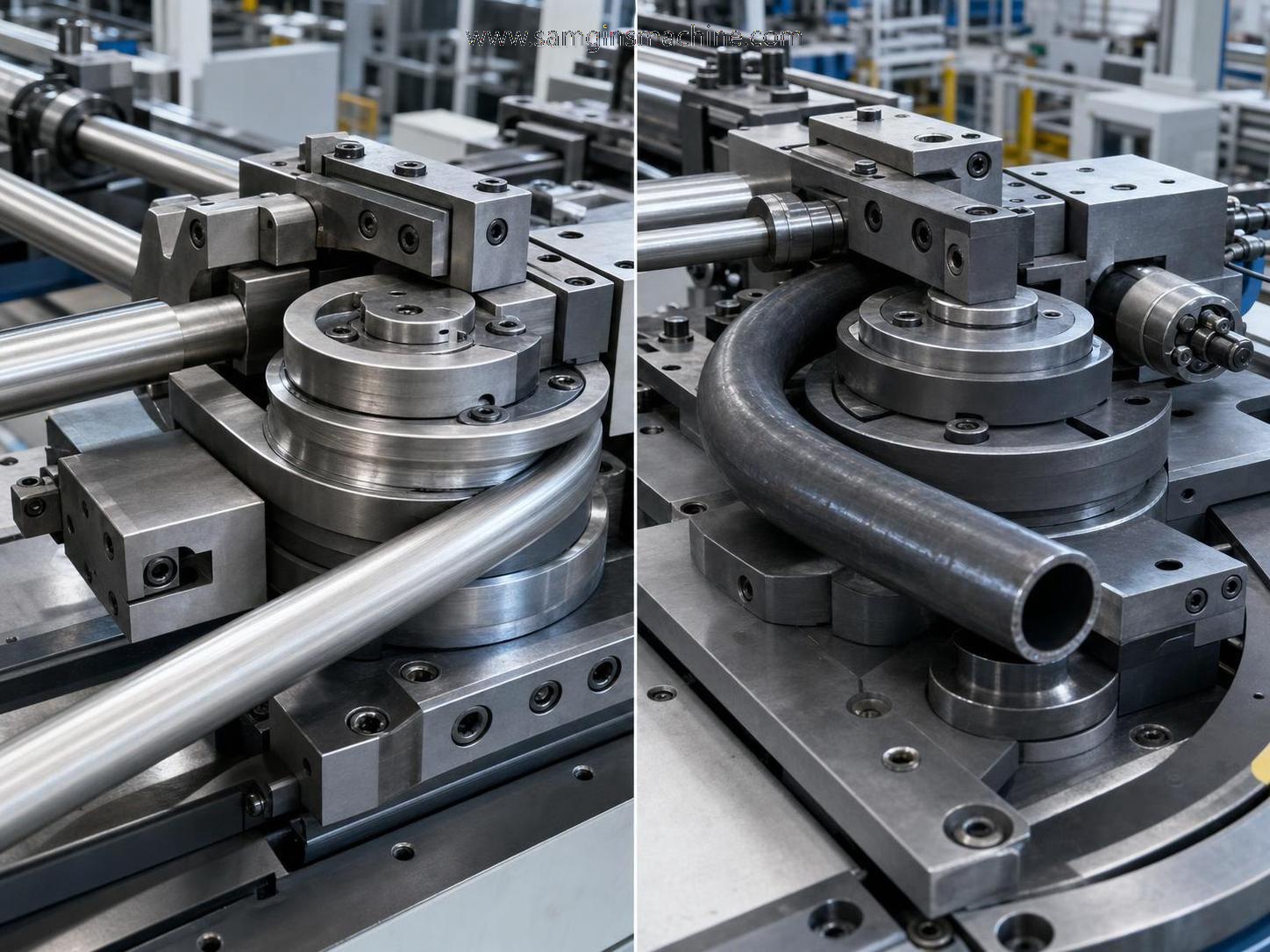
Lead Time and Support Are Where Supplier Promises Become Operational Reality
When buyers compare a tube bending machine supplier, the obvious items tend to dominate the discussion: bending capacity, control system, tooling range, automation level, and price. Those matter, but they do not tell you how the purchase will behave once a production schedule is attached to it. In real procurement work, lead time and support are often the difference between a machine that fits the quotation stage and a machine that fits the factory.
That is why supplier evaluation should move beyond the question of “Can they build this machine?” and into a more useful one: “Can they deliver it when needed, commission it without friction, and keep it running when problems appear?” A capable tube bending machine supplier is not simply a manufacturer with a catalog. It is a partner whose delivery process, technical response, spare parts planning, and communication discipline reduce risk before the machine even arrives.
Lead Time Is More Than the Number Written on a Quotation
One of the most common purchasing mistakes is to compare quoted lead times as if they were fully comparable numbers. They rarely are. A supplier may say 45 days, another 70 days, but unless the scope behind those numbers is clear, the comparison is incomplete. Does lead time include tooling design, electrical configuration, test running, painting, export packing, and documentation? Does it start from deposit receipt, drawing approval, or final technical confirmation? If one supplier assumes a standard machine and another includes custom clamps, mandrels, and integration work, the shorter lead time may not be the safer choice.
For tube bending equipment, delivery risk often sits in the details. Special dies, servo systems, hydraulic components, and control parts may come from different upstream vendors. If the supplier cannot explain which components are stocked, which are outsourced, and which are made to order, the lead time should be treated as an estimate rather than a commitment. Procurement teams should ask for a milestone-based schedule instead of a single delivery date. Design freeze, parts procurement, assembly, FAT, shipment readiness, and installation support should all be visible.
This is also where manufacturing experience shows. Companies that work across metal fabrication equipment usually understand that delivery is not only a workshop issue; it depends on how well engineering, purchasing, quality control, and export coordination are organized. Wuxi Samgins International Trade Co., Ltd., for example, operates in a broader machinery environment that includes CNC cutting machines, welding equipment, beam production line equipment, bending machines, and pipe benders. That matters because suppliers with wider process familiarity are often better at identifying dependencies early, especially when a buyer’s project involves more than one machine type or downstream fabrication steps.
How to Test Whether a Lead Time Is Credible
A credible lead time usually has supporting evidence. Buyers should look for three things.
- A clear technical baseline: machine model, tube range, bending radius requirements, control configuration, tooling scope, and voltage standard must be frozen enough to support scheduling.
- A production logic that makes sense: if custom tooling is required, it should appear in the timing; if CE-related documentation or export packaging is needed, that should appear too.
- A willingness to discuss bottlenecks: serious suppliers can usually say where schedule pressure exists, whether in castings, electrical parts, outsourced machining, or testing capacity.
This kind of questioning is not excessive. It is the practical way to separate “sales lead time” from “factory lead time.” A supplier that reacts defensively to normal schedule questions may also be difficult when delays occur.
Support Should Be Measured Before the Machine Ships
After-sales support is often discussed too vaguely. Buyers hear phrases like “online support available” or “engineers can be arranged,” but those statements do not help much unless they are tied to response time, method, and scope. For a tube bending machine supplier, useful support starts before installation. It includes pre-shipment communication, electrical and foundation preparation, operating manuals in usable English, parameter backup procedures, and clarification of which issues can be solved remotely.
Remote support has become more capable, but it is not universal. A basic alarm reset is one thing; servo synchronization, bending accuracy instability, or tooling alignment issues may require an experienced technician who understands both the mechanical structure and the process application. Buyers should therefore ask not only whether support exists, but how it is delivered. Is there video diagnosis? Are electrical drawings and PLC I/O lists provided? Are wear parts and critical spares identified at the quotation stage? Can the supplier support operators during trial production rather than only during installation?
This is where communication discipline becomes part of technical service. A supplier that answers quickly but vaguely is not necessarily better than one that answers more carefully with drawings, parameter checks, and corrective steps. Good support is structured. It shortens downtime because it reduces guesswork.
Spare Parts Availability Is a Support Issue, Not a Purchasing Footnote
Procurement teams sometimes leave spare parts discussion until after order placement, which is late. For production equipment, support quality and spare parts planning are connected. A strong tube bending machine supplier should be able to distinguish between standard consumables, recommended wear parts, and long-lead critical components. Those are different categories and should not be merged into a generic “spare parts available” statement.
For example, seals, relay modules, proximity sensors, clamps, mandrel elements, and certain hydraulic or servo components do not carry the same replenishment risk. Some can be sourced locally if specifications are open and standard. Others depend heavily on the original machine design. Buyers should ask for a spare parts list with recommended stocking levels for the first 12 months, especially when the machine will be used in continuous production or in regions where import lead times are unpredictable.
A supplier’s broader equipment experience can help here as well. In metal fabrication lines, downtime rarely affects one station in isolation. If a buyer also operates beam fabrication, plate processing, or welding automation, the supplier’s understanding of line balance and maintenance planning becomes more valuable. This is one reason diversified machinery exporters often bring more practical advice than sellers focused only on closing a single unit transaction. In adjacent fabrication processes, for instance, equipment such as the HYJ-800 H beam straightening machine is evaluated not just by its nominal parameters, but by whether its correction wheels, drive system, and adjustment mechanism can be maintained consistently over time. The same logic applies to tube bending purchases: serviceability is part of machine suitability.
What Procurement Should Compare Side by Side
Common Misreadings in Supplier Comparison
The lowest quotation is not automatically the fastest route to production. A lower price can reflect narrower supply scope, lighter testing, limited tooling inclusion, or minimal post-sale commitment. Likewise, a supplier with a polished presentation is not automatically the most responsive one when a machine alarm interrupts a shift.
Another common misreading is to equate export history with support quality. Export experience does matter, especially where packaging, documentation, and compliance expectations are involved. Companies that organize production according to ISO9001 systems and work toward EU CE requirements generally operate with more structured process control. Still, those credentials do not replace the need to ask concrete service questions. Certification can indicate discipline; it does not, by itself, guarantee fast troubleshooting or spare parts readiness.
Buyers should also be careful with generic promises of customization. In bending equipment, customization is valuable only when the supplier can support it through design validation, process testing, and later maintenance. A highly customized machine with weak documentation can create more dependence than productivity.
A Better Way to Make the Final Decision
The most useful comparison method is not to score suppliers only by machine specification and price, but to review them through operational risk. Ask which supplier is most likely to deliver on the agreed date, provide realistic commissioning support, and keep unplanned stoppages manageable over the first year of use. That tends to produce a different ranking than a commercial comparison alone.
For many factories, the strongest tube bending machine supplier is the one that communicates clearly during technical clarification, defines scope without ambiguity, documents lead time assumptions, and treats after-sales service as part of the machine package rather than a separate favor. If a supplier can explain delays before they happen, identify critical spares before they fail, and resolve technical issues with evidence instead of guesswork, procurement is no longer buying a machine only. It is buying predictability, which is often the harder thing to source.
That is the standard worth using when comparing offers. Not who promises the most, but who makes the fewest operational uncertainties invisible.
search
Products Navigation
Send Us A Message