




What to Check During a Visit to a Tube Bending Machine Factory
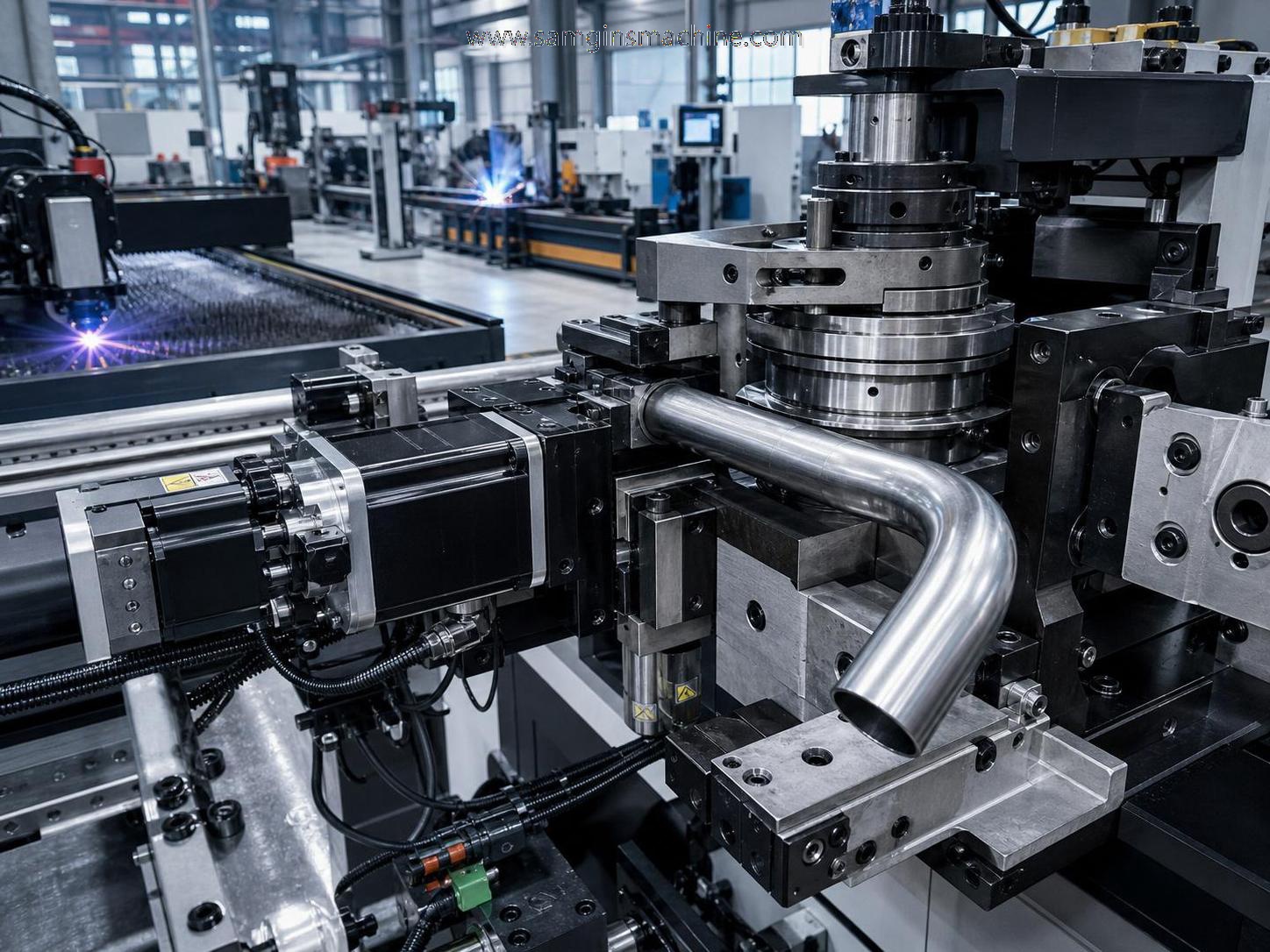
Start with the production floor, not the meeting room
A visit to a tube bending machine factory is where a sourcing decision becomes real. Quotations can look similar on paper, and brochures usually highlight the same promises: accuracy, automation, efficiency, service. What separates a dependable supplier from a risky one is what you can verify on site. For a project manager, that means checking whether the factory can build the machine you need, hold quality consistently, and support production after installation.
If you only tour the showroom and listen to a sales presentation, you will miss the parts that matter. Ask to walk through material storage, frame fabrication, machining, assembly, electrical integration, testing, and final inspection. The sequence tells you a lot. A capable tube bending machine factory usually has a visible flow from raw materials to finished equipment, and the handoff between departments is not chaotic.
Check whether the factory actually builds the kind of machine you are sourcing
This sounds obvious, but it is where many visits go wrong. Some suppliers are strong in general metalworking machinery yet weak in one specific category. Tube bending equipment, especially for production use, depends on more than a bending head. You need to see whether the factory is comfortable with the control system, tooling fit-up, feeding accuracy, repeatability, and the practical details that affect cycle time.
Ask what share of current production is related to tube or pipe processing machines. Then look for evidence: machines in assembly, tooling racks, test pieces, spare parts, and technicians who can explain the bending process without reading from a brochure. A factory that mainly builds unrelated equipment may still be able to supply a machine, but your risk goes up if the product is not part of their regular manufacturing rhythm.
Look at fabrication quality before you discuss bending accuracy
A tube bender cannot perform well for long if the base machine is built carelessly. Start with the frame, weldments, machined surfaces, cable routing, guarding, and fit between assemblies. You are not judging cosmetics. You are looking for whether the factory treats machine structure as a precision product or as a rough fabrication job.
- Are welds consistent and cleaned properly where required?
- Do machined mounting faces look flat, protected, and free from obvious rework?
- Are hydraulic lines, pneumatic tubes, and electrical cables routed neatly with protection at movement points?
- Do guards and covers fit properly, or do they look like late-stage add-ons?
Poor basics usually show up later as vibration, alignment drift, oil leaks, maintenance headaches, and unstable repeatability. Those problems are expensive because they do not always appear during a short acceptance test.
Watch a real test run and control what is being demonstrated
Never rely on a machine idling without load. Ask for a demonstration with material close to your application: tube diameter, wall thickness, material grade, and bending radius that reflect your actual project. If your production involves stainless steel, thin-wall tube, or tight-radius work, the demo should reflect that. A smooth bend on easy material proves very little.
During the test, pay attention to more than the finished part. Watch setup time, tool change steps, clamping behavior, feed stability, mandrel action if applicable, and how the operator handles corrections. Ask for repeat cycles, not just one acceptable sample. A machine that hits one good part after adjustment may still be a bad production choice if consistency depends on a very skilled operator.
Ask how they control accuracy, and make them show the method
When a supplier says a machine is accurate, the useful question is: accurate by what method, under what conditions, and how do you verify it before shipment? For a tube bending machine factory, you want to see how they inspect angle accuracy, repeatability, springback compensation, and positioning along the part program.
Ask to review the inspection process used during assembly and final testing. This may include dimensional checks on tooling interfaces, motion calibration, trial bending, and recorded acceptance data. The key point is not whether they use sophisticated language. The key point is whether the process is repeatable and documented. If every answer depends on one senior technician “knowing how to tune it,” your delivery risk is higher than it looks.
Verify quality documents in the same place where the work is done
A supplier may state that production follows ISO9001 and that certain equipment is designed to meet CE-related requirements. Do not treat that as a slogan. Ask to see how those requirements show up on the floor: inspection records, incoming material control, nonconformance handling, traceable component identification, and final release documents. Project managers do not need a lecture on standards; they need evidence that the paperwork matches the manufacturing routine.
If your target market requires specific technical files, declarations, electrical documentation, or safety markings, ask which documents are prepared for that machine model and who is responsible for issuing them. The useful check is always document plus process, not document alone.
Inspect the engineering depth behind customization
Most factory visits involve some degree of non-standard requirement: different bend radius combinations, automation interfaces, unusual material, special loading direction, or plant-specific electrical needs. The mistake is assuming that “customization available” means “customization controlled.” Ask how non-standard orders move from sales to engineering, then to production.
A sound supplier can explain design review, drawing release, component selection, and what changes affect lead time or machine layout. This matters beyond tube bending. In many machinery categories, the same discipline shows up in adjacent equipment. For example, a supplier handling fabricated and machined assemblies may also offer products such as Non-standard Edge Milling Machine Without Pressure Beam, where options like effective milling length, bevel angle range, and processing thickness have to be engineered around the user’s production task rather than sold as generic features. That kind of engineering discipline is worth noticing during the visit because it usually carries over into custom tube bending projects as well.
Do not skip the tooling discussion
Many buying problems start after the main machine is installed, when the user discovers that tooling cost, lead time, or compatibility was never fully discussed. During the visit, ask who designs the tooling, who machines it, how wear parts are managed, and what information they require from you to produce bending dies correctly.
You also want clarity on future expansion. If your product mix may change, can the machine accept additional tooling sets without awkward retrofits? Is there a standard interface, or will every new part family require custom adaptation? A strong answer here reduces long-term cost far more than a small discount on the machine itself.
Check purchased components and parts availability
On a tube bending machine, reliability depends heavily on motors, drives, controllers, hydraulic elements, sensors, and electrical components. Ask which items are made in-house and which are sourced. Then look at how spare parts are managed. If the factory cannot clearly identify core purchased components and replacement paths, service after delivery may be slow and expensive.
Evaluate service responsiveness while you are still in the factory
A visit is not only about the machine. It is also a live test of how the company handles technical questions, changes, and pressure. Notice who joins the meeting when you ask detailed questions. If every answer has to be routed back through sales, support later may become slow. You want access to engineering, service, and production people, even if only briefly.
Ask for a realistic breakdown of commissioning, operator training, remote support, and spare parts dispatch. Not a general promise. A practical workflow. Who receives the service request? What information do they need? What can be solved remotely, and what usually requires an onsite visit? Good suppliers answer this in operational terms.
Pay attention to factory discipline and throughput
You do not need a perfectly polished workshop to judge a factory well, but you do need signs of control. Look at work-in-progress levels, part identification, storage of finished assemblies, and whether machines appear stuck between stages. A packed floor is not automatically a good sign. It can mean strong order intake, or it can mean bottlenecks.
Ask what is currently in production and what the typical lead time looks like for standard versus customized models. Then compare the answer with what you see physically. If the schedule sounds optimistic but the floor tells another story, trust what the floor tells you.
Leave with a short decision list, not just a brochure
Before the visit ends, write down the points that still need closure: test sample requirements, document package, component list, tooling scope, acceptance criteria, installation boundaries, and after-sales response process. Keep it short enough that both sides can act on it immediately.
The best way to use a factory visit is simple. Start with production reality, move into technical proof, and finish with delivery and service risk. If a tube bending machine factory can show clean manufacturing flow, controlled testing, documented quality practice, and competent answers from the people who build the equipment, you are in a much better position to make a low-risk decision. If those pieces are missing, price should not rescue the deal.
search
Products Navigation
Send Us A Message