




How to Evaluate a Tube Bending Machine Exporter Before Placing an Order
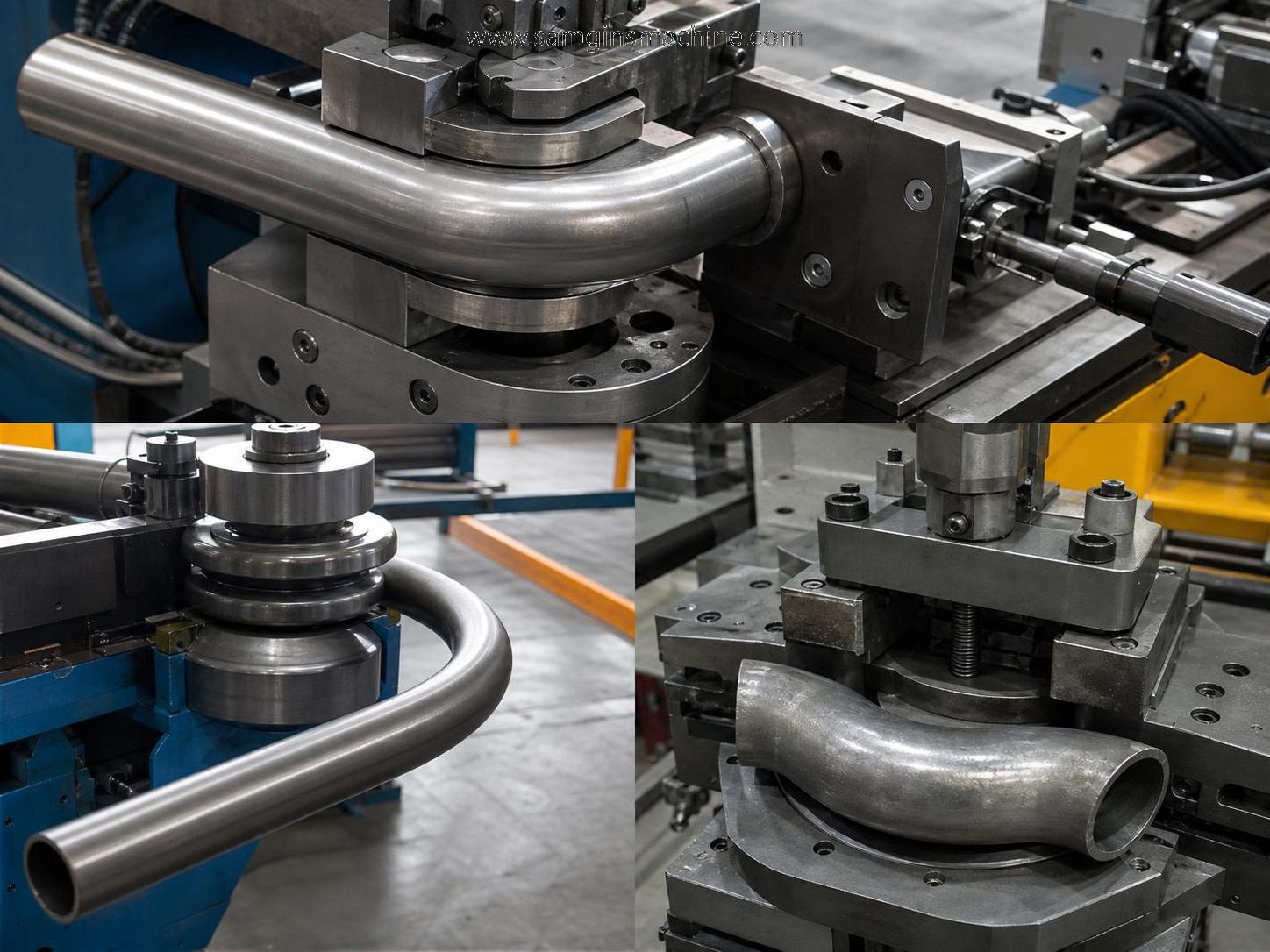
What should a business evaluator look at first?
Start with a simple question: is this exporter actually equipped to support your order beyond the quotation stage? A tube bending machine exporter may present a good catalog and a fast response time, but that does not tell you whether the supplier can deliver stable machine quality, proper documentation, and after-sales support when problems appear.
For procurement teams and business evaluators, the safest starting point is to review four areas together: product range, export experience, quality control discipline, and service capability. If one of those is weak, the commercial risk usually shows up later as delayed delivery, mismatched specifications, difficult commissioning, or spare parts issues. The point is not to find the biggest exporter. It is to find one that can repeatedly ship the machine you need, to the market you serve, with paperwork and support that hold up under real use.
How can you tell whether the exporter understands tube bending applications instead of just trading machines?
Look at how they discuss the application, not just the model name. A capable supplier should ask about tube material, outer diameter, wall thickness, bending radius, production volume, end-use industry, and whether the part requires tight repeatability or complex multi-bend geometry. If the conversation stays at “manual or CNC” and “what is your budget,” that is a weak sign.
This matters because tube bending performance depends heavily on the workpiece itself. Stainless steel, thin-wall tubing, and parts with small radii can behave very differently from mild steel structural tubing. An exporter who understands the process should be able to explain when tooling design, mandrel support, or machine control level will affect the result. They do not need to drown you in jargon. They do need to connect the machine choice to your actual parts.
Which company credentials are worth checking, and which are mostly surface-level?
Basic company information still matters. Check when the company was established, what categories of mechanical equipment it handles, and whether it serves export markets regularly. A supplier that has worked with multiple machinery types and shipped to Southeast Asia, Europe, the Americas, or Oceania is usually more familiar with shipping documents, packaging discipline, and cross-border communication.
Then separate real operating signals from marketing language. Useful credentials include documented quality system alignment such as ISO9001-based production organization, declared compliance with relevant standards such as EU CE where applicable, and a product portfolio that shows industrial depth rather than a single generic listing. Less useful signals are broad claims about being “industry-leading” without any supporting documents, machine details, or export process clarity.
What documents should be requested before placing an order?
Ask for documents that let you verify specification control, compliance, and delivery scope. The exact list varies by market and machine type, but these are the practical essentials:
- Detailed quotation with machine configuration, optional items, tooling scope, and excluded items
- Technical specification sheet showing capacity-related fields relevant to your tubes and bending tasks
- General arrangement drawing or footprint information for installation planning
- Quality or compliance documents promised for the shipment, such as certificates or declarations tied to the machine
- Packing list structure and shipping terms
- Warranty terms, response scope, and spare parts support policy
Do not stop at receiving the documents. Read for missing fields. One common problem is that the quotation gives a machine model but leaves critical process assumptions unstated. That creates room for disputes later when the delivered machine meets the model description but not the buyer’s production requirement.
How do you verify whether the quoted machine really matches your production need?
Use your own part data as the reference point. A purchase decision should be checked against actual production inputs, not catalog language. Build a short evaluation table and compare what your process needs with what the exporter has stated in writing.
If the supplier cannot anchor its recommendation to these production facts, the quotation is still too loose for approval.
Is certification enough to trust machine quality?
No. Certification is useful, but it is not a substitute for specification review and process control. ISO9001-related quality management tells you there is a structured approach behind production and documentation. CE-related compliance, when applicable to the supplied machine and target market, matters for safety and market access. But neither one tells you whether the selected machine is correct for your tube geometry, your operator skill level, or your output target.
A better way to use certification is as one layer in a broader evaluation. Check whether the supplier can tie quality claims to actual machine documents, inspection routines, and shipment records. If certification is mentioned only in sales copy and does not appear in the transaction documents, treat it as incomplete evidence.
What are the clearest warning signs before you issue a purchase order?
A few patterns show up again and again in difficult machinery purchases:
- The supplier avoids discussing material grade, radius, or tooling assumptions.
- The quotation uses broad wording such as “suitable for many tubes” without defining the range.
- Delivery scope is unclear on tooling, electrical standards, installation support, or spare parts.
- Documents from different stages do not match each other.
- After-sales support is described generally, but no response path or parts process is explained.
Another subtle warning sign is excessive product sprawl without process understanding. A broad machinery exporter can be valuable, especially when it has real experience across fabrication equipment, but range alone is not proof of fit. What matters is whether the supplier can move from catalog breadth to a precise, usable recommendation.
Why does the exporter’s wider product range matter in evaluation?
Because many buyers are not solving a bending problem in isolation. They are building or upgrading a fabrication workflow. An exporter that handles related equipment such as deburring, cutting, welding, milling, or rolling machines may understand upstream and downstream constraints better than a seller focused on one item alone.
For example, when bent parts also need edge finishing or post-process surface treatment, it is useful if the supplier can discuss adjacent equipment rationally. That does not mean bundling extra machines into every order. It means they can see whether the bending machine will create downstream handling issues. In some production lines, buyers also assess finishing equipment such as Standard Magnetic polishing machine for metal workpieces that need deburring, cleaning, or brightness improvement after machining or forming. That kind of cross-process understanding usually leads to better scoping and fewer blind spots.
How much weight should you give to export history?
Quite a lot, but for practical reasons rather than prestige. Export history helps you judge whether the supplier can manage packaging, documentation, communication across time zones, and destination-market expectations. A company already shipping machinery to different regions is more likely to understand how small paperwork mistakes can delay customs clearance or commissioning.
The useful question is not “Have you exported before?” It is “What does your export process look like for this machine?” Ask who prepares the technical file set, who confirms electrical requirements, how consumables or spare parts are packed, and how they handle pre-shipment document review. Those answers reveal operational maturity much faster than a general claim about global exports.
What should be clarified about after-sales support before the contract is signed?
Support terms should be concrete enough that two people reading the contract reach the same conclusion. Ask what is included in commissioning guidance, whether remote support is available, what documents come with the machine, which spare parts are recommended for the first period of operation, and how warranty exclusions are defined.
This is where many evaluations stay too general. “We provide good service” has no operational value. What you need is the route from problem to resolution. If a PLC parameter issue appears, who responds? If a wear part is needed, what is the supply path? If tooling replacement is required, what information must the buyer provide? Those details matter more than polished sales language.
How do you compare quotes from different tube bending machine exporters fairly?
Normalize the comparison before you score it. Price differences are often created by scope differences, not by machine value alone. One exporter may include tooling, startup accessories, and documentation support, while another may leave those outside the quote.
- List your required production conditions and target part range.
- Map each quote against the same checklist: machine configuration, tooling, compliance documents, lead time, support, spare parts, and exclusions.
- Flag anything that is described vaguely or not stated at all.
- Recalculate total acquisition risk, not just machine price.
The cheapest offer becomes expensive very quickly if it arrives with incomplete tooling, missing support, or a capability gap that was hidden inside loose wording.
What is a sensible final decision rule?
Approve the exporter only when three things line up in writing: the machine matches your part requirements, the supplier’s quality and export process is documented clearly, and the post-order support path is specific enough to operate in the real world. If one of those remains vague, keep the order on hold and close the gap before payment terms are triggered.
That approach is not slow procurement. It is disciplined procurement. For business evaluators, the best tube bending machine exporter is rarely the one with the loudest claim. It is the one that can translate your production conditions into a clear machine scope, deliver it cleanly, and still be useful after the crate is opened.
search
Products Navigation
Send Us A Message