




When a Custom Tube Bending Machine Is Worth the Extra Investment
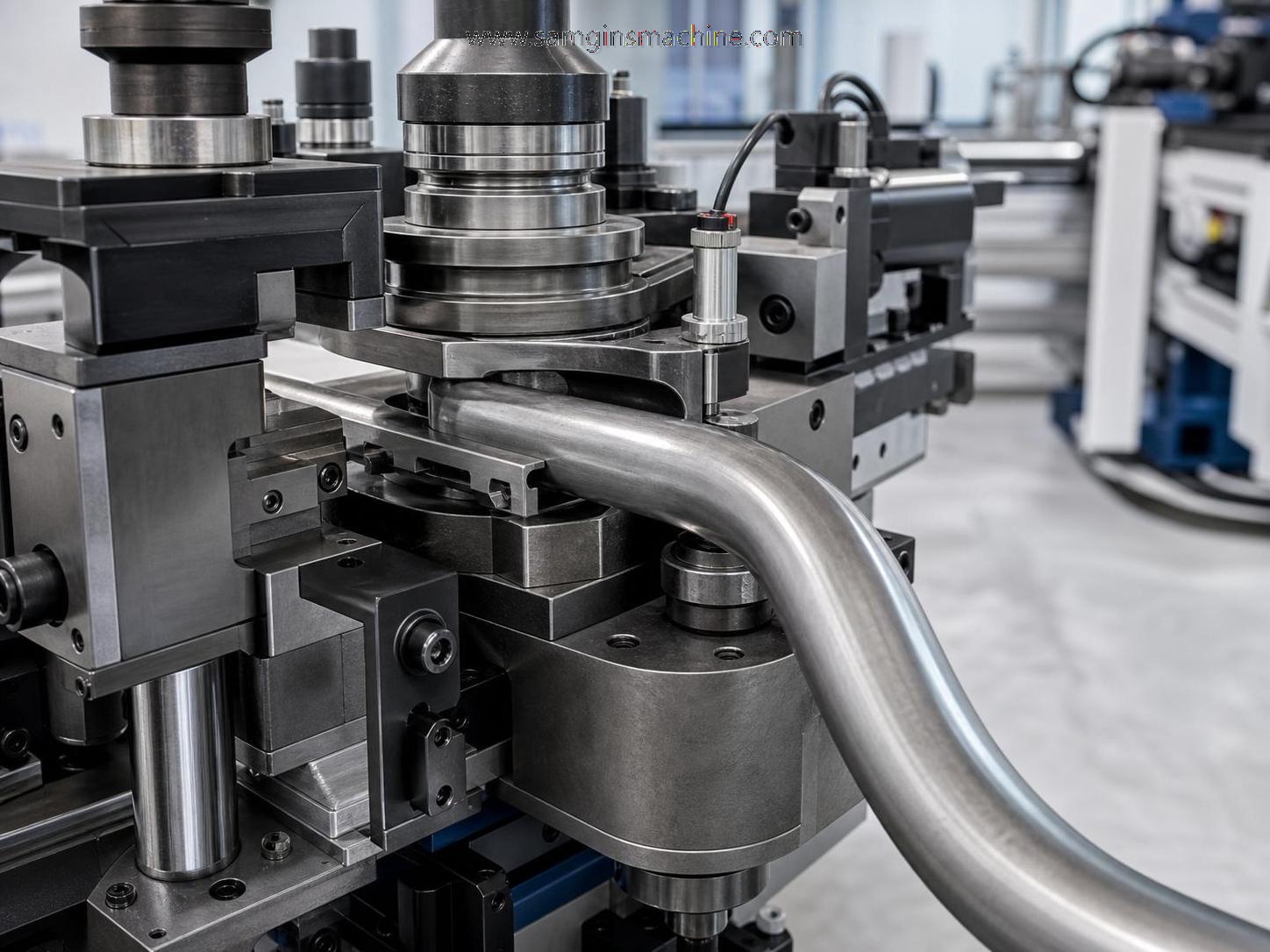
When a Custom Tube Bending Machine Is Worth the Extra Investment
The mistake in many equipment decisions is assuming that tube bending capacity is mainly about whether a machine can bend a tube at all. In practice, the real question is whether it can bend your tube geometry, with your material behavior, at your tolerance level, at your required output, without creating downstream problems. That is the point where a custom tube bending machine stops being a premium option and starts becoming a rational capital decision.
Standard machines are built around common tube diameters, common radii, and broadly repeatable production conditions. They work well when part families are stable and bend requirements are not especially demanding. But once a manufacturer is dealing with multi-radius parts, tight centerline tolerances, thin-wall deformation risk, unusual alloys, or automated loading and unloading requirements, the limits of off-the-shelf equipment show up quickly. The machine may still run, but the process becomes unstable: springback varies, tooling changes take too long, operators compensate manually, and inspection starts catching variation that should have been controlled at the machine level.
That is why the phrase custom tube bending machine should not be understood as a cosmetic modification. In serious manufacturing, customization usually means the machine architecture, control logic, tooling interface, clamping method, feeding system, or integration method has been adapted to a specific production reality. Sometimes the customization is modest, such as a special mandrel arrangement for a difficult wall thickness. Sometimes it is more structural, such as servo sequencing for complex automotive tubing, end-forming compatibility, robotic transfer, or traceability requirements tied to export markets.
Where Standard Equipment Starts to Cost More Than It Saves
A standard machine often looks cheaper only in the purchase phase. The cost picture changes when bent parts have high rejection value, when labor is needed to stabilize each batch, or when a poor bend affects welding, assembly, leak performance, or final fit-up. Tube bending is rarely an isolated process. In exhaust systems, furniture frames, heat exchanger lines, hydraulic circuits, fitness equipment, agricultural machinery, and structural fabrications, bend accuracy influences what happens next. A slight flattening issue or angle drift may not look dramatic at the machine, but it can create rework in fixtures, force manual correction at welding stations, or break repeatability in assembly.
This is also where decision-makers sometimes underestimate tooling life and changeover economics. If the production mix includes multiple part variants, a standard setup may spend too much time being adjusted between jobs. Customization can target exactly that bottleneck: quicker tooling exchange, more predictable reference positioning, recipe-based control, or material-specific parameter storage. None of this is glamorous, but it matters more than headline machine speed if the factory is running mixed batches rather than one idealized part all month.
For manufacturers serving overseas customers, another layer matters: process consistency under audit. Wuxi Samgins International Trade Co., Ltd, supplying machine tools and fabrication equipment to markets across Southeast Asia, Europe, the Americas, and Oceania, works in a context where buyers often care less about nominal machine capability than about whether production can be organized around stable quality expectations. ISO9001-based production discipline and alignment with EU CE standards do not automatically make a machine “better” for every task, but they do reflect a purchasing environment in which documentation, repeatability, and safety are part of the decision, not an afterthought.
The Cases That Usually Justify Customization
A custom solution tends to earn its cost in one of five situations.
- The part geometry is difficult: small bend radii, multiple bends close together, variable radii, or strict orientation requirements.
- The material is unforgiving: high-strength steel, stainless grades with noticeable springback, or thin-wall tubing that marks or collapses easily.
- The production environment is demanding: high volume, low tolerance for downtime, or heavy SKU variation.
- The machine must integrate into a broader line: cutting, end forming, welding, robotic handling, inspection, or digital production tracking.
- The part quality risk is expensive: a bent tube failure causes downstream scrap, assembly delays, or customer rejection.
If none of those conditions apply, custom equipment may be unnecessary. A standard CNC bender with correct tooling and process development can be enough for many jobs. The better decision is not always the more specialized machine. It is the machine whose design assumptions match the work.
What Buyers Often Misread
One common misunderstanding is to compare machines mainly by axis count or maximum tube diameter. Those specifications matter, but they are incomplete. A machine can have impressive catalog numbers and still be wrong for a part family if the clamping sequence causes marks, if the bend die setup does not support the target radius stability, or if the control system is awkward for frequent job changeovers.
Another mistake is treating customization as equivalent to bespoke complexity. In reality, good customization often simplifies production. It reduces operator intervention, narrows parameter drift, and removes the need for improvised fixtures or repeated corrections. The real risk is not customization itself; it is vague customization. If a supplier cannot clearly connect each proposed modification to a production need, the project can become expensive without becoming useful.
There is also a planning error that appears in factories adding automation step by step. They purchase a bender only for current output, then later ask it to work with robotic loading, part sorting, or welded assembly cells. Retrofitting is possible, but not always clean. If automation is likely within the life of the machine, it is often worth specifying interfaces, control expandability, and layout compatibility at the beginning.
How to Evaluate the Investment Properly
The right evaluation is less about machine price and more about process economics. Buyers should look at:
This kind of analysis is more useful than asking whether a custom tube bending machine is “better.” Better for what, under what tolerance, with what labor structure, and for how many years of parts? Those are the questions that expose value.
It can also help to compare tube bending decisions with adjacent forming processes. In thread production, for example, buyers who understand cold-forming economics know that machine choice affects not only speed but also material use, surface quality, and fatigue performance. Equipment such as the Z28-250 thread rolling machine is valued partly because cold rolling forms threads without chip generation, supports manual, semi-automatic, and automatic working modes, and can produce consistent thread profiles on carbon steel, alloy steel, and some non-ferrous metals. Tube bending decisions can follow a similar logic: when the forming process is critical to part function, the correct machine design influences quality far beyond one station’s cycle time.
What a Good Supplier Should Be Able to Clarify
Before approving a custom build, a buyer should expect concrete answers to a few practical questions. Which part features are driving the customization? Which features are handled by tooling and which require machine-level modification? What material range has been considered? How will repeatability be verified in production rather than only in trial samples? If the factory adds automation later, what interfaces already exist?
A capable supplier will usually discuss these points in operational language, not only in sales language. They should be able to talk about tooling wear, clamp marking, lubrication or cooling considerations where relevant, training level of operators, and expected maintenance access. The more specific the conversation becomes, the easier it is to separate necessary customization from decorative options.
This is especially important for companies buying from international sources. The machine itself is only one part of the purchase. Technical communication, commissioning support, documentation quality, and spare-parts responsiveness often determine whether a custom project becomes a stable asset or an expensive workaround.
A Sensible Threshold for Saying Yes
The extra investment is usually justified when customization removes a recurring production penalty that standard equipment cannot reasonably solve: persistent scrap, unstable tolerances, labor-heavy adjustment, or poor compatibility with the rest of the line. It is less justified when the request is based mainly on preference, vague future possibilities, or one unusual part that does not represent the plant’s normal workload.
In other words, a custom tube bending machine is worth buying when the customization is tied to measurable manufacturing constraints and when those constraints are expensive enough to live with every day. That is the practical threshold. Not whether the machine looks more advanced on paper, but whether it fits the actual physics of the part and the economics of the factory.
search
Products Navigation
Send Us A Message