




What Drives Tube Bending Machine Price in Different Production Setups
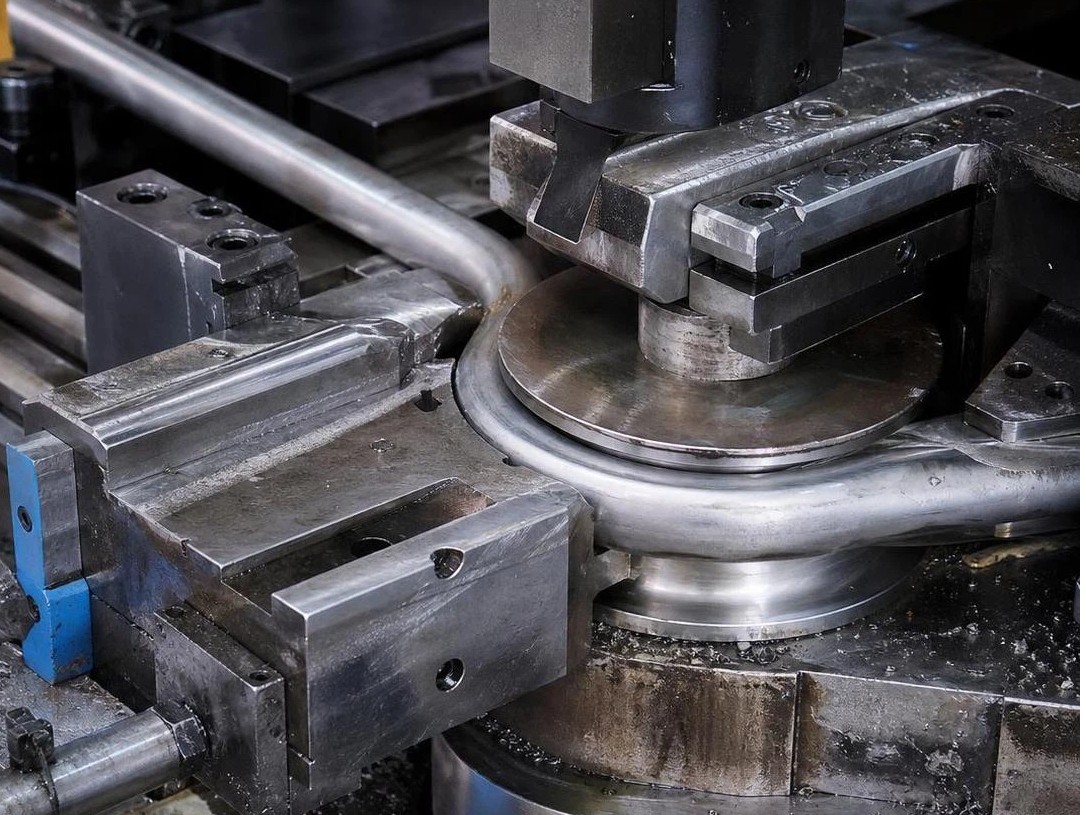
Why can tube bending machine price vary so much for machines that look similar on paper?
Because buyers are rarely paying for the frame alone. In real procurement work, tube bending machine price changes with the production setup behind the machine: output target, material mix, bend complexity, labor strategy, tooling demand, and the level of process control the factory expects.
Two machines may both be described as “CNC tube benders,” yet one is meant for short batches with frequent changeovers and the other is built for stable, repeat production with higher automation. The second machine usually carries a higher purchase price, but it may lower cost per part if labor hours, scrap, and setup time matter more than the initial invoice.
That is the core mistake many sourcing teams make: comparing machine prices without comparing production conditions.
Does production volume have the biggest impact on price?
Very often, yes. Volume drives the level of automation that makes financial sense.
If you run low-volume, mixed-model jobs, a simpler machine can be the better buy even if it needs more operator input. Paying for advanced loading, unloading, or fully automatic correction features may not return much when each order changes every few days.
If you run high-volume parts with repeat geometry, the pricing logic changes. A more expensive machine may save enough through cycle time reduction, lower operator dependence, and more stable quality to justify the investment.
- Ask for expected parts per shift, not just annual volume.
- Check how often the bend program changes.
- Measure setup time lost between part numbers.
- Compare labor cost per machine hour, not only machine cost.
A low unit price can look attractive in procurement review, but if it creates a bottleneck on a busy line, it becomes expensive very quickly.
When does automation push the budget up, and when is it actually worth it?
Automation adds cost whenever the machine includes more axes, automatic loading support, servo-controlled movements, integrated measuring, or functions that reduce manual adjustment. That part is straightforward. The harder question is whether those features solve a real cost problem in your plant.
It is usually worth paying more when you are dealing with one or more of these conditions:
- Skilled operators are hard to retain.
- Part consistency is more important than raw machine speed.
- Tube lengths are long enough that manual handling affects accuracy.
- Rework and scrap already consume meaningful margin.
- Orders repeat often enough to benefit from stored programs and fast recall.
It is less convincing when the shop runs small batches with changing diameters, materials, and bend forms, especially if a capable operator can handle those jobs efficiently on a less complex machine.
How much do tube material and wall thickness affect tube bending machine price?
A lot more than many RFQs show. Material type, outer diameter, wall thickness, and bending radius all influence the required machine capacity, clamping force, tooling design, and control level.
Carbon steel, stainless steel, aluminum, and thin-wall tubes do not behave the same way in bending. A machine chosen only around nominal tube diameter may underperform once you start running harder material or tighter radii. That usually leads to extra tooling trials, unstable shape, marking, flattening, or springback issues.
For procurement, the key is to request quotation against a real part envelope:
If this information is missing, quoted prices are often misleadingly low.
Is tooling included, or is that where budgets often go wrong?
This is one of the most common budgeting gaps. The machine may be quoted attractively, but the full bending package can grow once bend dies, clamp dies, pressure dies, mandrels, wiper dies, and spare sets are added.
The risk is highest when the factory handles many part families. Every additional tube size or bend profile can mean extra tooling cost, longer lead time, and more maintenance inventory. Procurement teams should not approve a machine quote before seeing a tooling matrix tied to actual part numbers.
At this stage, it also helps to look at other metalworking purchases with the same discipline. For example, when evaluating Turn Type Plate Edge Milling Machine options, buyers usually pay close attention to cutter insert replacement, material range, and one-pass bevel capability because those details change operating cost later. Tube bending procurement needs the same mindset. The machine price is only one layer; tooling consumption and changeover strategy often decide the real cost.
What kind of accuracy requirement makes a machine more expensive?
Not every bent tube needs the same level of repeatability. If the part feeds into welding fixtures, assemblies with tight fit-up, or downstream automated lines, the machine usually needs stronger control over positioning, rotation, bend angle repeatability, and springback compensation.
That generally means a higher-priced configuration. You may also need better tooling finish, more rigid structure, and a more capable control system. The extra cost is usually justified when deviation causes fixture mismatch, scrap in secondary operations, or installation problems at the customer end.
Where buyers get into trouble is asking for “high precision” without attaching measurable tolerances. A supplier cannot quote the right setup against vague language. The drawing, inspection method, and acceptance criteria should all line up before price comparison starts.
Does a cheaper machine always mean lower total cost?
Usually not. It only means lower entry cost.
Total cost changes when you add installation, tooling, training, freight, wear parts, downtime exposure, and operator dependency. In many plants, the hidden cost comes from unstable output rather than from spare parts. A machine that stops production for adjustment or creates rework during a tight delivery window can wipe out the savings from a low purchase price.
For a practical comparison, build your sourcing review around three figures:
- Acquisition cost: machine, tooling, shipping, commissioning.
- Operating cost: labor, maintenance parts, energy, consumables, scrap.
- Disruption cost: downtime risk, delayed shipments, quality loss.
That framework usually exposes whether a low quote is genuinely competitive or simply incomplete.
Which quotation details should a buyer insist on before comparing suppliers?
If the quote is too brief, you are not comparing suppliers. You are comparing assumptions.
A usable quotation should clearly identify:
- Maximum and recommended tube range
- Control type and number of controlled axes
- Included tooling and tooling material
- Cycle assumptions used for output claims
- Utility requirements
- Commissioning scope and training scope
- Spare parts list for the first operating period
- Warranty terms and service response method
- Applicable documentation, such as CE-related documents where required by the destination market
Without that detail, a lower tube bending machine price may simply mean fewer included items.
Do after-sales support and documentation really affect price that much?
They can, especially for overseas procurement. The issue is not just the warranty period. It is whether the supplier can support startup, troubleshooting, replacement parts, and technical communication in a way that matches your factory’s risk tolerance.
A machine sold into Southeast Asia, Europe, the Americas, or Oceania may need a different documentation package depending on destination and buyer requirements. Procurement should verify exactly which documents are included in the offer and which are optional. That matters for customs handling, installation readiness, and internal compliance review.
A stronger support package may increase the quoted price, but it can reduce startup delays. For plants with tight launch schedules, that tradeoff is often justified.
What mistakes cause buyers to overpay for the wrong setup?
The biggest one is buying for the most difficult possible part when that part only appears occasionally. That pushes the project toward a larger, more complex machine than daily production actually needs.
Other frequent mistakes include:
- Using only maximum tube diameter as the selection basis
- Ignoring changeover frequency
- Leaving tooling scope undefined until late in negotiation
- Comparing quotes without matching technical assumptions
- Underestimating the cost of operator skill dependence
There is a similar lesson in adjacent fabrication equipment. A plate processing line may not need the most extreme heavy-duty version if the real work stays in a narrower thickness range, even though machines such as the Turn Type Plate Edge Milling Machine family can cover standard plate thicknesses from 6–80mm and heavy-duty non-pressure beam versions from 6–400mm. Buyers pay too much when they source for headline capacity instead of production reality.
So what is the best way to judge whether a quoted price is reasonable?
Start with the part mix, not the machine brochure. Group your demand by tube diameter, material, wall thickness, radius difficulty, annual volume, and changeover frequency. Then ask each supplier to quote against the same production package.
A reasonable price is one that matches the actual job: not under-specified enough to create quality and capacity problems, and not overbuilt for a production pattern you do not have. For procurement teams, that is the useful rule of thumb. When the quote reflects real operating conditions, tube bending machine price becomes easier to judge and much harder to misread.
search
Products Navigation
Send Us A Message