




How CE Compliance Affects Safety Checks for a Tube Bending Machine
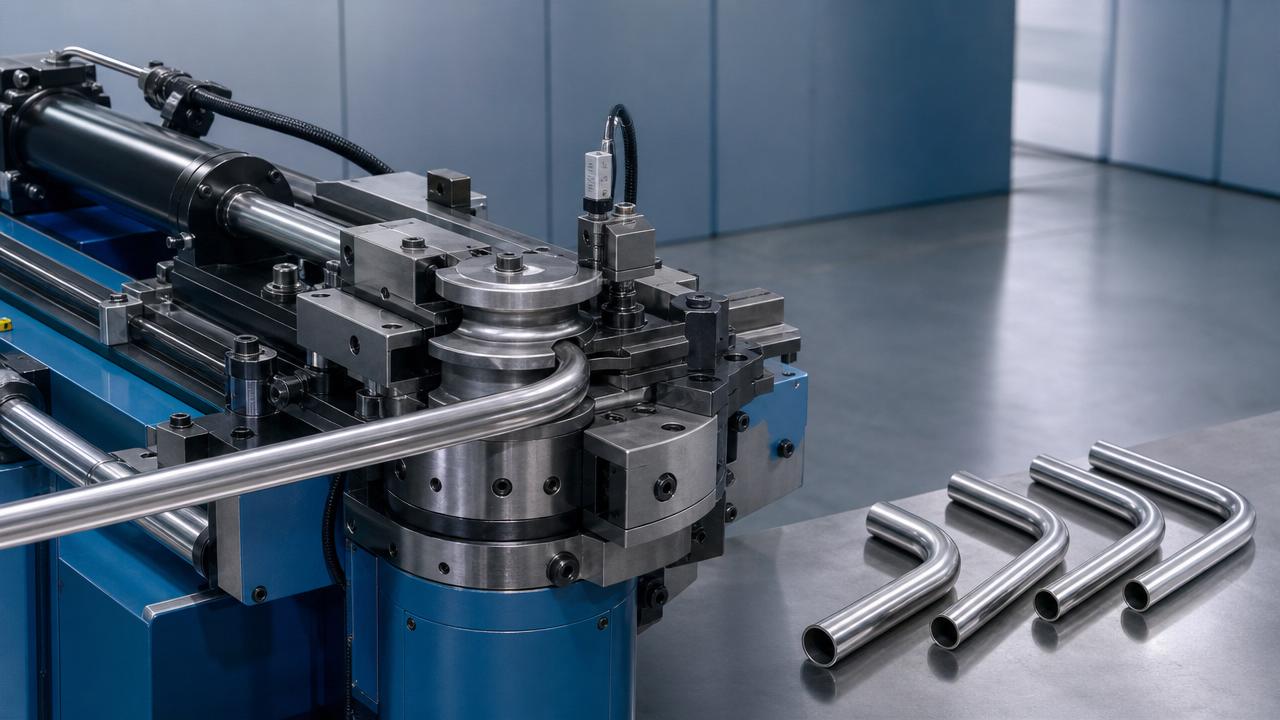
Why does CE compliance change the way a tube bending machine is inspected?
For QC and safety managers, a tube bending machine with ce marking is not just a machine cleared for sale in Europe. It is a machine that should have been designed, assessed, and documented against essential safety requirements. That changes what you need to check on the shop floor. You are no longer looking only at output quality, bend accuracy, or cycle speed. You are also checking whether the machine’s safeguards, controls, electrical system, warning information, and operating limits match the declared compliance status.
In practice, CE compliance shifts inspections from a simple condition check to a structured safety verification. If a guard has been removed, an interlock bypassed, or control settings changed outside the original design intent, the machine may still run, but its compliance position may already be weakened. That is why CE affects routine safety checks so directly.
What should you verify first on a tube bending machine with ce marking?
Start with the basics that prove the machine was placed on the market as a compliant unit, not just labeled as one. The CE mark itself is only one part of the picture.
- The machine nameplate and CE mark should be present and legible.
- The manufacturer or responsible economic operator should be clearly identified.
- The instruction manual should include safe use information, residual risks, and maintenance guidance.
- The Declaration of Conformity should match the machine identity and reference the applicable directives or regulations relevant to the machine.
If these documents are missing or inconsistent, do not jump straight to production release. That gap usually means your inspection has to go deeper, especially around guarding, emergency stops, and control reliability.
Does CE marking guarantee the machine is safe in daily use?
No. It tells you the machine was intended to meet the relevant requirements when supplied, but daily use introduces a different set of risks. Guards get opened for setup, tooling gets changed, sensors get misaligned, and maintenance teams sometimes create shortcuts to keep production moving.
For a tube bender, the common danger points are predictable: pinch zones at the clamp die and pressure die, rotation hazards around the bending arm, unexpected movement during setup, and stored energy in hydraulic or pneumatic systems. CE compliance should have addressed these hazards in design, but your inspection still has to confirm that the protection remains effective in the real operating condition.
Which safety devices deserve the most attention during routine checks?
On most tube bending equipment, a few items deserve more attention than the rest because failures there create immediate exposure.
The point is not to tick every item with the same weight. Focus on controls that prevent access to moving parts or stop hazardous motion.
How does CE compliance affect electrical safety checks?
It raises the standard from “the cabinet looks tidy” to “the electrical system behaves safely under fault and restart conditions.” A CE-oriented inspection should look at enclosure integrity, grounding continuity, cable protection, separation of power and control wiring where relevant, and the condition of terminals, relays, and safety components.
Just as important, verify the machine’s behavior after a power loss. A tube bending machine should not resume hazardous motion automatically when power returns unless the design and control logic safely require that behavior, which is unusual in operator-accessible machinery. Unexpected restart is one of the most serious inspection findings because it turns an ordinary interruption into an exposure event.
What documents actually matter during a safety audit?
Auditors and internal reviewers usually want more than the manual. For a machine claimed as CE compliant, these are the documents that help you judge whether safety checks are grounded in the original design intent:
- Declaration of Conformity
- Operating instructions with setup, maintenance, and residual risk information
- Electrical diagrams and control descriptions where available
- Maintenance records showing changes to guards, sensors, valves, or software settings
- Inspection logs for emergency stops, interlocks, and protective devices
This is where many plants get caught out. The machine may have arrived with the right paperwork, but no one tracks later modifications. From a compliance and liability point of view, undocumented changes can matter more than the original delivery status.
If we retrofit tooling or automation, do we need to reassess safety?
Usually, yes. Any modification that changes access to hazard zones, control logic, workpiece handling, or operating modes deserves a fresh safety review. That does not automatically mean the entire machine loses compliance, but it does mean your original inspection checklist may no longer be enough.
Typical examples include adding loaders, changing clamp arrangements, increasing tube size range, or integrating the bender into a larger line. Even a seemingly simple interface change can alter stop functions or operator exposure. The right question is not “Did we only make a small change?” but “Did the change create a new hazard or weaken an existing protective measure?”
What are the most common inspection mistakes on CE-marked tube benders?
One is assuming documentation equals current safety. Another is testing only whether the machine runs, not whether it fails safely. A third is ignoring setup mode. Many serious exposures happen during tool change, sample runs, or manual adjustment rather than normal automatic cycling.
There is also a quality-side blind spot: teams often separate dimensional inspection from safety inspection too sharply. On bending equipment, process instability can be a safety clue. Repeated misfeeds, slipping tubes, erratic clamping force, or abnormal return movement may point to mechanical wear or control faults that affect both part quality and operator risk.
How often should safety checks be performed?
CE rules do not turn routine inspection into a single fixed interval that fits every machine. The practical frequency depends on use intensity, operator access, changeover rate, maintenance history, and the severity of possible harm if a safety function fails.
A workable approach is to split checks into layers:
- Pre-shift visual checks by operators for guards, emergency stop access, leaks, and obvious damage.
- Scheduled functional tests by maintenance or safety staff for interlocks, stop circuits, and restart behavior.
- Event-based reassessment after repairs, crashes, control changes, or tooling modifications.
That layered approach is usually stronger than relying on one monthly checklist that misses what happens between inspections.
Does CE thinking apply only to the bending machine, or to nearby equipment too?
It applies to the whole interaction zone. Tube bending rarely works in isolation. Material may be cut, faced, beveled, transferred, and then bent. If upstream or downstream equipment changes handling posture, edge condition, or operator access, your safety checks should reflect that.
For example, when shops prepare tube or pipe ends before fabrication, they may use equipment such as Pipe Cutting & Beveling Machine systems in pressure vessel, boiler, shipbuilding, or heavy machinery work. Machines with automatic clamping, automatic feed and return, bevel angle adjustment from 0° to 90°, and safety-oriented details like a slide-touch conductor bar reduce some manual handling exposure, but they also create transfer points that need control. If a workpiece arrives with burr-free, accurately prepared edges and stable dimensions, handling tends to be more predictable at the bending stage. That is a production benefit, but it also affects risk around loading and positioning.
What should a QC or safety manager do when a nonconformity is found?
Treat it according to hazard, not convenience. If the issue affects a protective function, restrict use until the condition is corrected and retested. Examples include failed interlocks, missing guards, emergency stop malfunction, uncontrolled drift, or restart behavior that is not safe.
If the finding is less immediate, such as worn labels or incomplete maintenance records, document it, assign ownership, and close it with evidence. The mistake to avoid is accepting a verbal promise that the issue was fixed. For CE-related safety checks, closure should include a functional verification, not just a work order note.
What is the best practical rule for inspecting a tube bending machine with ce status?
Inspect the machine as it is actually used, then compare that reality with what the compliant machine was supposed to be. That means checking documentation, yes, but also watching setup, manual intervention, restart behavior, and any modification made after installation.
If a protective measure exists only on paper, it does not belong in the pass column. For QC and safety teams, that single rule usually catches more real risk than a long checklist filled in from memory.
search
Products Navigation
Send Us A Message