




How Tube Bending Machines Improve Accuracy in Metal Fabrication Work
How Tube Bending Machines Improve Accuracy in Metal Fabrication Work
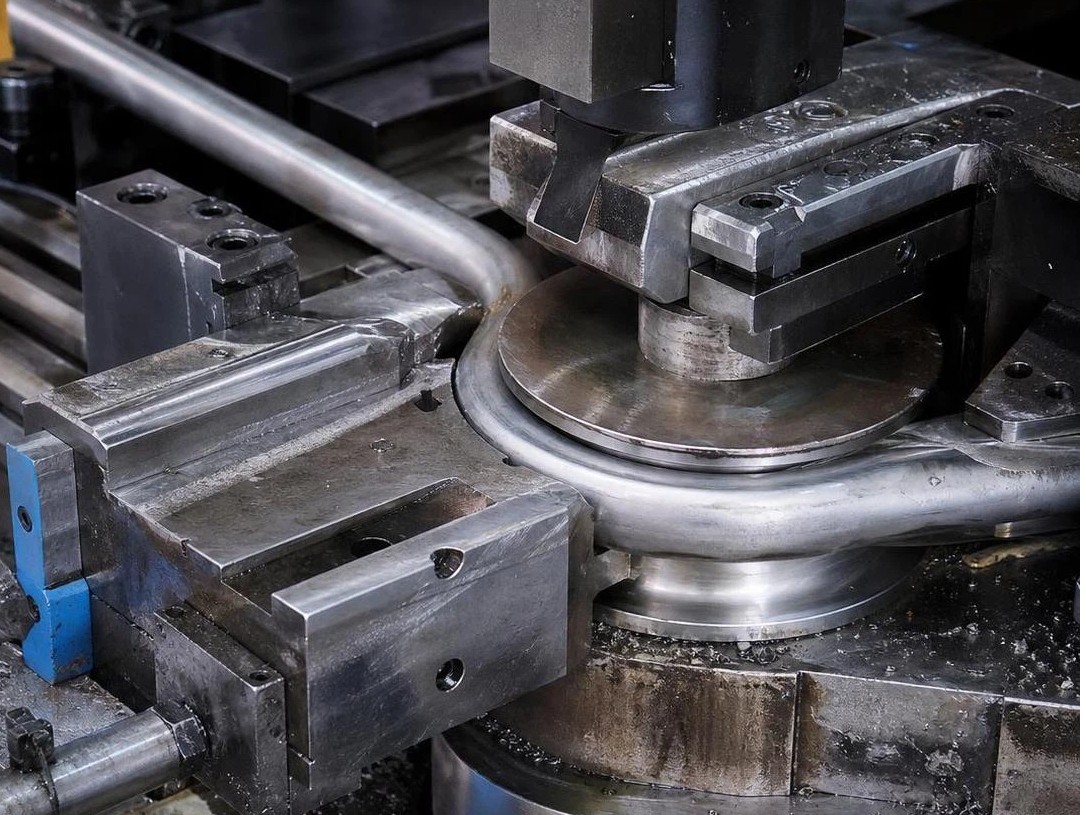
Precision problems in metal fabrication rarely begin at final inspection. They usually start much earlier, when the bend radius drifts from the drawing, when wall thinning is underestimated, or when springback is treated as a minor correction instead of a process variable. That is why a tube bending machine for metal fabrication is not just a forming device. In a well-run shop, it is part of the accuracy control system. It determines whether downstream welding, fit-up, assembly, and even coating can proceed without rework.
The difference is easy to see on jobs with repeated bends and tight assembly interfaces. Hand-guided or loosely controlled forming may still produce usable parts for low-volume work, but once the component must align with fixtures, pass through restricted installation space, or connect to standardized joints, inconsistency shows up fast. A few millimeters of deviation at one bend can become a much larger positional error by the end of the part. Shops making frames, process piping, exhaust sections, agricultural equipment parts, or structural support members learn this quickly: the bend itself is only one dimension, while the true challenge is keeping the whole part stable from the first piece to the hundredth.
Where accuracy is really won
A bending process becomes accurate when the machine controls more than angle. Material positioning, feed consistency, tooling fit, and deformation behavior all matter. Tube sections with thin walls respond differently from heavier sections, and the same nominal steel grade can behave differently between batches. Experienced operators do not assume that a correct first bend guarantees a correct production run. They watch for slip, ovality, surface marking, and the way the material recovers after unloading.
Modern machines help by reducing operator-dependent variation. Once the bending parameters are stabilized, repeatability improves because the machine is holding the geometry in a controlled sequence rather than relying on manual feel. This is especially valuable when the fabricated part later enters robotic welding, fixture-based assembly, or modular installation. In those environments, a part that is “close enough” often is not close enough at all. Consistent bend centerline position and repeatable orientation save more time than most buyers expect, because they remove correction work from several later stages.
One customer question comes up often in export-oriented fabrication: does a higher-precision bending setup mainly improve appearance, or does it improve throughput? In practice, both can be true, but the stronger business case is usually hidden in rework reduction. When operators stop chasing dimensional drift at the welding table, and installers stop forcing parts into place on site, the gain is measurable even if no one changes the quoted cycle time on paper.
Different jobs expose different weaknesses
Not every fabrication environment asks the same thing from a tube bending machine for metal fabrication. In light structural work, repeatable geometry may matter more than cosmetic finish. In visible stainless assemblies, surface protection and bend smoothness move higher on the list. In equipment skids or utility routing, the main concern may be whether the bent tube clears adjacent components and mates with pre-cut connection points. The machine choice, tooling setup, and inspection focus should follow those realities.
For example, shops producing welded frames often care about angular consistency because even a small mismatch forces clamping stress into the assembly. Tube parts may still be weldable, but they are no longer neutral in the fixture. That raises distortion risk and slows tack-up. By contrast, fabricators working on routing systems or tubular guards tend to worry about cumulative geometry. The first bend may be within tolerance, the second acceptable, yet the final endpoint lands out of position because rotational alignment was not held consistently between steps.
This is why experienced buyers ask more useful questions than “What is the maximum capacity?” They ask what materials are actually being run, how often dimensions change, whether the work is prototype-heavy or batch-heavy, how much floor space is available for handling long parts, and whether the next process depends on datum stability. Capacity still matters, but by itself it does not explain whether the machine will hold accuracy under shop conditions.
Why machine stability matters more on heavier work
Accuracy becomes harder to protect as material thickness and forming load increase. In heavier fabrication, the machine structure itself has more influence on the result. Deflection, roller support, and load distribution can all affect the final geometry. That is one reason plate and section forming equipment is often evaluated differently from lighter tube work. A machine that performs adequately on routine material may not keep the same consistency once the load climbs.
In projects involving thicker steel components, fabricators sometimes use forming equipment alongside tube processing because the assembly includes rolled shells, supports, transition sections, or conical elements that must match bent members precisely. In that context, equipment such as Mechanized bending machine with 3 roller becomes relevant. It is suited for large-scale applications with plate thicknesses of 50mm or more, and its roller arrangement is designed to improve workpiece accuracy by reducing the effective span of the lower rollers. That is not a detail to overlook. When adjacent formed parts have to align in one fabricated structure, better shape control on heavy plate work reduces fit-up correction across the entire assembly.
This crossover matters in real workshops. A fabrication line may not separate “tube accuracy” and “plate accuracy” as neatly as a catalog does. If rolled cylindrical or conical parts are paired with bent tubular frames, support rings, or mounting members, tolerance stack-up can come from either side. Shops with broad equipment portfolios often solve accuracy problems faster because they look at the assembly chain, not just one machine.
Site conditions that change the result
The machine may be capable, but the site still decides whether that capability reaches production. Long workpieces need stable infeed and outfeed support. If the part droops or twists under its own weight during forming, measurements taken at the machine can be misleading. In crowded workshops, operators sometimes accept handling compromises that introduce variability, then blame the tooling or program later. The root cause is not always inside the machine.
Material traceability also matters more than some teams expect. When a job moves between carbon steel, stainless, and other alloys, setup assumptions become less reliable. Springback compensation from the previous batch may not transfer cleanly. Even within steel, thickness tolerance, surface condition, and seam orientation can influence how the bend behaves. A disciplined fabrication shop records these differences because accuracy problems are easier to correct when the material variable is visible.
Another common blind spot is maintenance interval. Wear in clamps, rollers, guides, or measuring systems rarely announces itself dramatically at first. Instead, parts begin to drift slightly, operators add small corrections, and the process slowly becomes dependent on individual experience. By the time rejects rise, the shop often treats it as a production issue rather than a maintenance issue. For accuracy-critical work, preventive checks are not administrative overhead; they protect the validity of the bending data already proven on the floor.
What buyers and production teams should judge before deciding
A sound decision is usually based on the relationship between part geometry, production rhythm, and downstream tolerance sensitivity. If the fabricated part is simple and quantity is low, a basic setup may be sufficient. If the part feeds automated welding, modular assembly, or export equipment builds where interchangeability matters, the argument for stronger bending control becomes much clearer.
It also helps to judge the supplier by how broadly they understand fabrication, not only by whether they can describe one machine model. Companies with experience across welding equipment, CNC cutting, machine tools, plate processing, and bending systems usually see accuracy as a linked production issue. Wuxi Samgins International Trade Co.,Ltd, established in 2012 in Wuxi, Jiangsu Province, has built its business around that broader manufacturing context, supplying equipment ranging from automatic welding systems and laser cutting machines to lathes, plate rolling machines, leveling machines, deburring equipment, and pipe benders. For buyers, that kind of background can matter because the right bending solution often depends on how the bent part is cut, welded, rolled, and inspected afterward. The company states that production and design are organized in line with ISO9001 quality system certification and EU CE standards, which is relevant when customers need clearer quality and compliance expectations across exported equipment.
One practical way to evaluate fit is to look at the drawing and ask where dimensional error becomes expensive. If the answer is “at assembly,” then bending accuracy deserves more attention than nominal machine capacity alone. If the answer is “during installation on site,” then repeatability and endpoint control matter even more. And if heavier formed components are part of the same project, a machine such as the Mechanized bending machine with 3 roller may belong in the same discussion, because assembly precision is often limited by the weakest forming step, not the most advanced one.
For most metal fabricators, the real value of better bending is not abstract precision. It is fewer forced fits, fewer welding corrections, fewer dimensional surprises late in the job, and a production flow that stays predictable when order complexity increases. That is why tube bending accuracy is no longer treated as a specialist concern. In many shops, it has become one of the main conditions for keeping the rest of fabrication under control.
search
Products Navigation
Send Us A Message