




Tube Bender Types Explained: Rotary Draw, Roll, and Compression Bending Differences
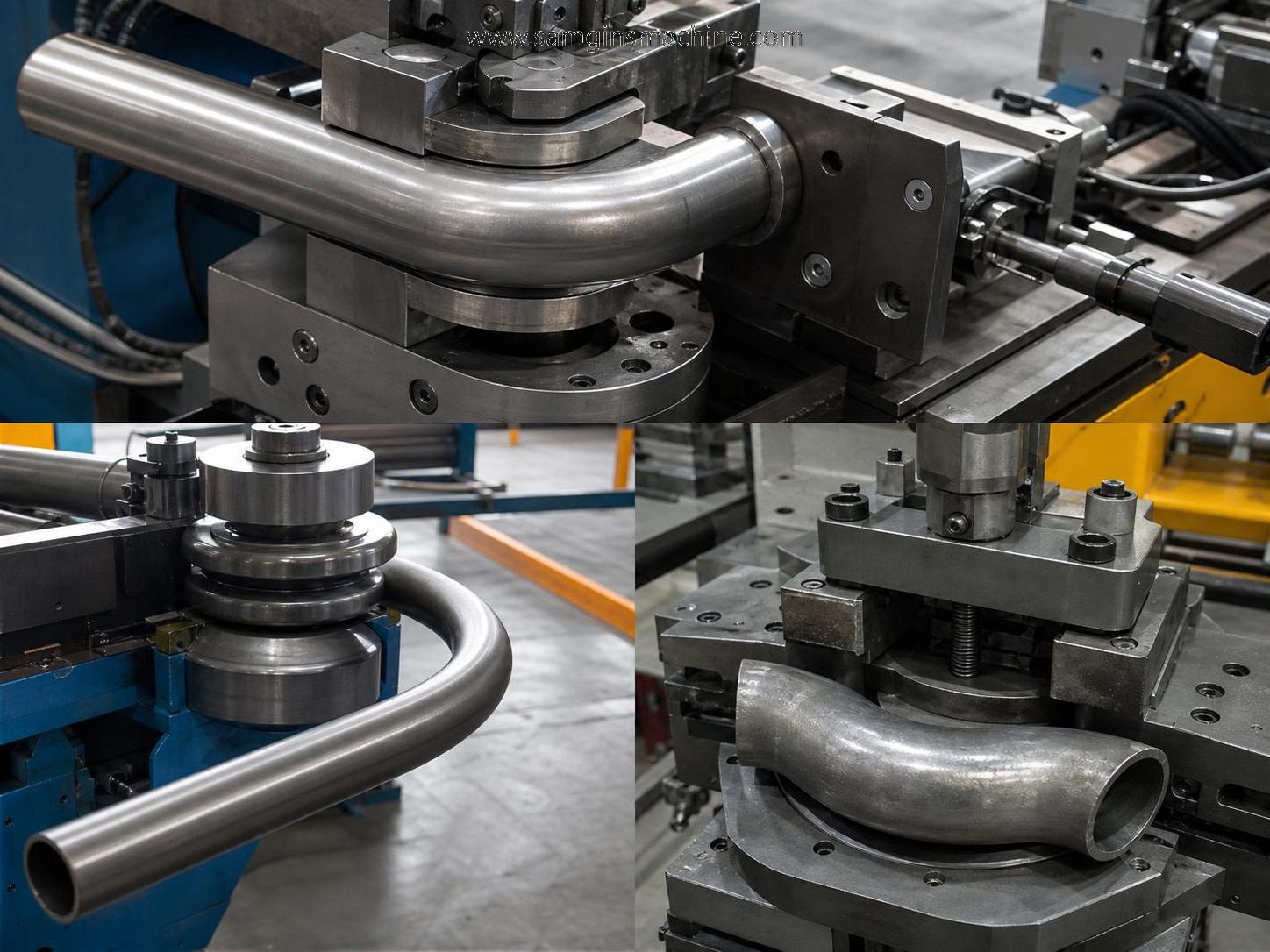
Choosing a Tube bender is rarely just a tooling decision. It affects bend accuracy, wall thinning, springback, cycle time, and even downstream welding fit-up. In metal fabrication, the differences between rotary draw, roll, and compression bending shape not only parts, but also quoting logic, production planning, and quality consistency.
That matters more now because tube components are used across frames, handrails, exhaust lines, furniture, agricultural equipment, and structural assemblies. A Tube bender that performs well in one job may be inefficient or unsuitable in another. Understanding the forming method behind the machine is the practical starting point.
Why bending method matters before machine selection
Tube bending always balances three things: shape accuracy, material behavior, and output speed. The process changes how force is applied to the tube, and that directly changes the result.
A small-radius bend in stainless steel needs very different control than a large sweeping bend in mild steel. The same Tube bender type will not handle both tasks with equal efficiency.
In production environments, this choice also influences scrap rate, tooling wear, operator setup time, and how easily parts match later stations such as welding, drilling, or assembly.
For companies supplying global markets, process stability matters even more. Wuxi Samgins International Trade Co.,Ltd has built its equipment business around that reality, covering bending, welding, cutting, rolling, milling, and other fabrication machinery under ISO9001-oriented production control and EU CE aligned standards.
Three common Tube bender types at a glance
Rotary draw, roll, and compression bending all curve tube, but they do it in different ways. Their strengths are tied to bend radius, repeatability, surface quality, and part geometry.
Rotary draw bending and where it stands out
Rotary draw bending is usually the benchmark when a part needs clean geometry and repeatable results. The tube is clamped and drawn around a fixed-radius die.
Because the material follows a controlled path, this method handles tight centerline radii better than most alternatives. It is common in automotive tubing, aerospace components, architectural fittings, and precision frames.
Mandrels and wiper dies are often added when wall collapse or wrinkling must be minimized. That improves quality, but also raises tooling complexity and maintenance needs.
A rotary draw Tube bender is usually the right choice when parts must fit jigs, fixtures, or robotic welding cells without repeated correction. This is especially important when dimensional drift creates rework in later processes.
Typical considerations
- Best for tight bends and repeat production
- Works well with stainless steel, carbon steel, and aluminum
- Requires accurate tooling selection by tube diameter and wall thickness
- Higher initial investment is justified by lower scrap in demanding jobs
Roll bending for large arcs and structural curves
Roll bending uses a set of rollers to gradually form the tube into a large-radius curve. Instead of making one sharp bend, the process creates a smooth, progressive arc.
This method is common in construction supports, handrails, ring sections, transport structures, greenhouse frames, and decorative metalwork. It is practical when long lengths and open curves matter more than tight-radius precision.
Compared with rotary draw bending, roll bending usually offers simpler tooling and good material flow for larger curves. However, controlling exact start and end positions can be more challenging.
A roll-type Tube bender becomes more attractive when the job requires repeated broad arcs in larger profiles, especially where appearance and overall radius consistency are more important than compact bend geometry.
Compression bending in simpler production work
Compression bending is one of the more straightforward methods. The tube is held against a form die while a bending arm compresses it around the die.
It is often used for simpler shapes, lower-volume jobs, and applications where minor ovality or dimensional variation is acceptable. Furniture parts, basic frames, and some consumer products may fit this approach.
The main appeal is cost efficiency. A compression Tube bender can be easier to operate and less expensive to install than more advanced systems.
The tradeoff is control. Tight bends, thin walls, and demanding tolerances can quickly expose the limits of this method, especially when appearance or weld alignment is critical.
What the industry is paying attention to now
The current discussion around Tube bender selection goes beyond bend shape alone. Fabrication lines increasingly connect cutting, bending, deburring, fit-up, and welding into one coordinated workflow.
That means bend consistency now has a direct link to automation performance. Poor repeatability creates downstream adjustment, slows fixtures, and increases weld defects.
In large assembly work, bending quality often determines whether robotic welding can run smoothly. For example, long structural parts may move from tube or profile forming into automated welding systems such as 9 axis gantry type welding robot, where seam tracking, zone-based operation, and stable positioning become more effective when upstream forming is controlled.
That connection is easy to underestimate. A bent part that looks acceptable by itself may still create costly misalignment once it enters a welding rail, servo slide carriage, or fixture-driven production stage.
How to judge the right Tube bender for a real job
Machine comparison is more useful when it starts with the part, not the catalog. Several factors narrow the choice quickly.
Key decision points
- Bend radius relative to tube diameter
- Material grade and wall thickness
- Tolerance requirements after springback
- Surface finish expectations
- Production volume and changeover frequency
- Whether parts move into automated welding or assembly
If the part has a tight radius, thin wall, and strict dimensional targets, rotary draw is usually the serious option. If the part needs long sweeping curves, roll bending is generally more logical.
If the geometry is basic and budget sensitivity is high, compression bending may be sufficient. The right answer is often less about machine popularity and more about acceptable deformation.
Looking at total process value, not only purchase cost
A lower-priced Tube bender may increase hidden costs through scrap, slower setup, re-bending, or poor fit in welding fixtures. That is why process cost often matters more than machine price alone.
Suppliers with broad fabrication equipment experience can often help connect those decisions. Companies working across pipe benders, shearing machines, plate rolling machines, CNC tools, laser systems, and welding automation usually see the production chain more clearly.
That broader view is useful when evaluating whether the bending stage supports later operations. In larger welded structures, for instance, automation platforms with 12-meter ground rails, multi-axis control, emergency stop protection, and automatic arc tracking benefit from consistent formed inputs.
A practical next step for evaluation
The clearest way to compare any Tube bender is to review actual part drawings, target radii, material data, and required output. From there, compare not only bend capability, but also setup time, tooling needs, and downstream fit.
A useful shortlist usually includes one precision-focused option, one high-throughput option, and one cost-sensitive option. That makes tradeoffs visible before capital is committed.
When the bending process is aligned with the full fabrication route, the result is better than a good curve. It is a more stable production system, with fewer surprises between forming, welding, and final delivery.
search
Products Navigation
Send Us A Message