




What Materials and Profiles Can a Bending Machine Handle in Industrial Production?
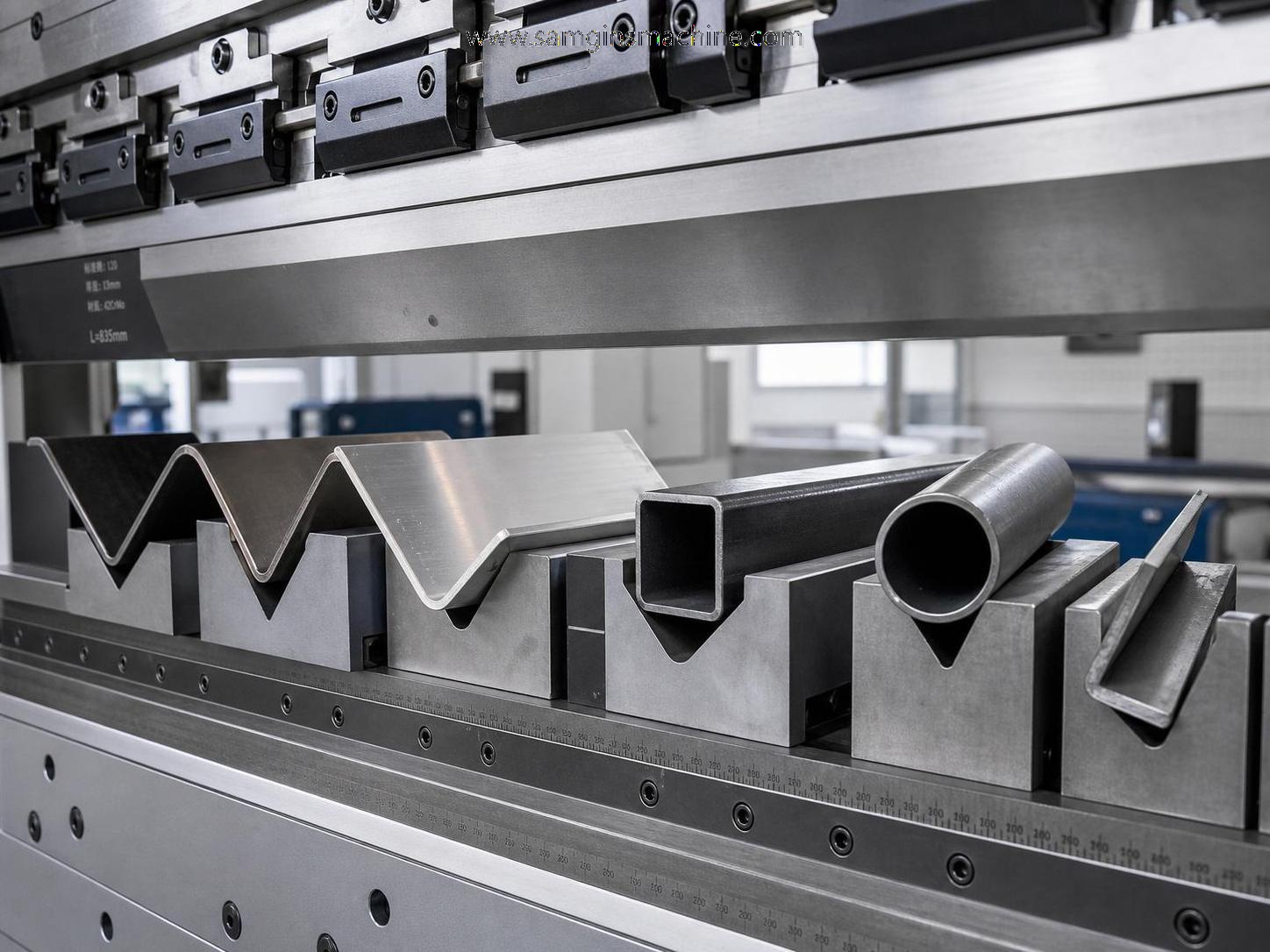
What Materials and Profiles Can a Bending Machine Handle in Industrial Production?
In industrial production, choosing the right Bending machine shapes cost, quality, and delivery speed.
It also decides whether one line can process mixed materials without constant downtime.
That matters when projects involve structural steel, stainless panels, aluminum parts, or pipe assemblies.
A modern Bending machine is no longer limited to simple sheet work.
With the right tooling, controls, and tonnage, it can support demanding production plans across industries.
The key is knowing which materials and profiles fit the machine, and where the limits begin.
Core Materials a Bending Machine Can Process
Most industrial Bending machine systems handle a wide range of metals.
The most common are carbon steel, stainless steel, aluminum, galvanized sheet, copper, and certain alloy materials.
Carbon Steel
Carbon steel is usually the easiest material for a Bending machine to handle.
It offers predictable springback and works well in general fabrication, frames, brackets, cabinets, and beam components.
For thicker plates, tonnage calculation becomes the first checkpoint.
Stainless Steel
Stainless steel is also common, but it requires more force than mild steel.
Its higher strength and springback mean tooling choice is more critical.
Surface protection matters too, especially for visible parts in food equipment or architectural work.
Aluminum
Aluminum is lighter and easier to form, but it can mark easily.
A Bending machine processing aluminum needs clean dies and stable angle control.
This is especially important for enclosures, transport parts, and profile-based assemblies.
Galvanized, Copper, and Special Alloys
Galvanized sheet bends well, but coating damage must be controlled.
Copper is softer and suits electrical components and decorative parts.
Some alloys are possible too, but they often need sample testing before volume production begins.
Profiles a Bending Machine Can Handle
Material is only half the decision.
Profile geometry often creates the real production challenge.
A Bending machine may be excellent for flat sheets, yet unsuitable for closed sections or large-radius tubes.
Sheet Metal Parts
Flat sheet remains the main application for a Bending machine.
This includes boxes, covers, doors, channels, trays, brackets, control cabinets, and machine housings.
These parts are usually processed on press brake systems with matched punches and dies.
Plates and Heavy Sections
Heavier plates can also be formed, provided the Bending machine has enough tonnage and bed length.
This is common in construction machinery, shipbuilding, energy equipment, and structural fabrication.
Pipes and Tubes
Round pipes, square tubes, and rectangular tubes usually need dedicated pipe benders.
Even so, they are part of the broader Bending machine category in many workshops.
These systems are used in automotive parts, furniture, handrails, exhaust systems, and process piping.
Profiles, Angles, and Structural Sections
Angle steel, channel steel, flat bars, and some custom profiles can also be bent.
However, section distortion and dimensional consistency become bigger concerns here.
In these cases, forming method, support fixtures, and bend radius control must be reviewed together.
What Actually Determines Bending Capacity
A Bending machine does not process materials by name alone.
Real capacity depends on several technical factors working together.
- Material thickness and tensile strength
- Part length and bend angle
- Required bend radius
- Tooling type and die opening
- Backgauge accuracy and repeatability
- Springback compensation
- Surface finish requirements
For example, stainless steel and aluminum may share the same thickness, but they will not behave the same.
That is why machine suppliers should review drawings, tolerances, and production targets before recommendation.
In practical terms, a capacity sheet is useful, but a forming trial is often more reliable.
How Different Industries Use Bending Machine Solutions
Application requirements change from one industry to another.
That is where Bending machine selection becomes a project decision, not just a purchase decision.
General Fabrication
Mixed-batch work demands flexibility.
Operators may switch between carbon steel cabinets, stainless covers, and aluminum panels within one shift.
Infrastructure and Structural Work
Large plates and long profiles call for stronger frames and longer working lengths.
Consistency becomes critical because downstream assembly leaves little room for angle error.
Transport and Rail Manufacturing
Railway and transport projects often combine long workpieces with strict welding and fit-up demands.
In these lines, bending quality affects later robotic welding stability.
A useful reference is the 7 axis railway type welding robot.
It supports workpieces up to 12000 mm in length, 1200 mm in width, and 650 mm in height.
That kind of setup shows why bending accuracy upstream matters so much in long-part production.
When bent parts enter automated welding, dimensional drift quickly turns into rework, stoppage, or poor seam tracking.
Common Risks When Matching Material to a Bending Machine
Several problems appear repeatedly in industrial projects.
- Underestimating tonnage for high-strength material
- Using standard tooling on sensitive surfaces
- Ignoring springback differences between materials
- Choosing a Bending machine based only on thickness
- Overlooking part geometry and flange interference
- Skipping trials for long or complex profiles
These issues usually show up late, often during assembly or welding.
That timing makes them expensive, especially in export projects with tight schedules.
A Practical Selection Checklist
When reviewing a Bending machine for industrial production, keep the evaluation practical.
- List all materials by grade, thickness, and annual volume
- Separate flat sheet work from pipe or profile bending
- Confirm longest part length and tightest bend radius
- Check whether visible surfaces need protection
- Review tolerance needs for downstream welding or assembly
- Ask for sample processing on real parts
- Compare controller usability, tooling availability, and service support
This approach reduces selection risk and makes cost comparisons more realistic.
It also helps align forming equipment with later cutting, welding, and finishing operations.
Final Takeaway
A Bending machine can handle far more than basic sheet metal when it is matched correctly to the job.
Carbon steel, stainless steel, aluminum, galvanized sheet, pipes, tubes, and structural profiles are all possible applications.
Still, material strength, part geometry, tooling, and downstream process needs must be reviewed together.
For industrial teams, the smartest decision is usually the one that balances flexibility, accuracy, and stable throughput.
That is especially true when bent parts feed automated systems such as the 7 axis railway type welding robot.
Before ordering, validate materials, profiles, and sample parts against the real production plan. That step usually saves the most time later.
search
Products Navigation
Send Us A Message