




Press Brake Tonnage Calculation: How to Match Capacity to Material and Bend Length
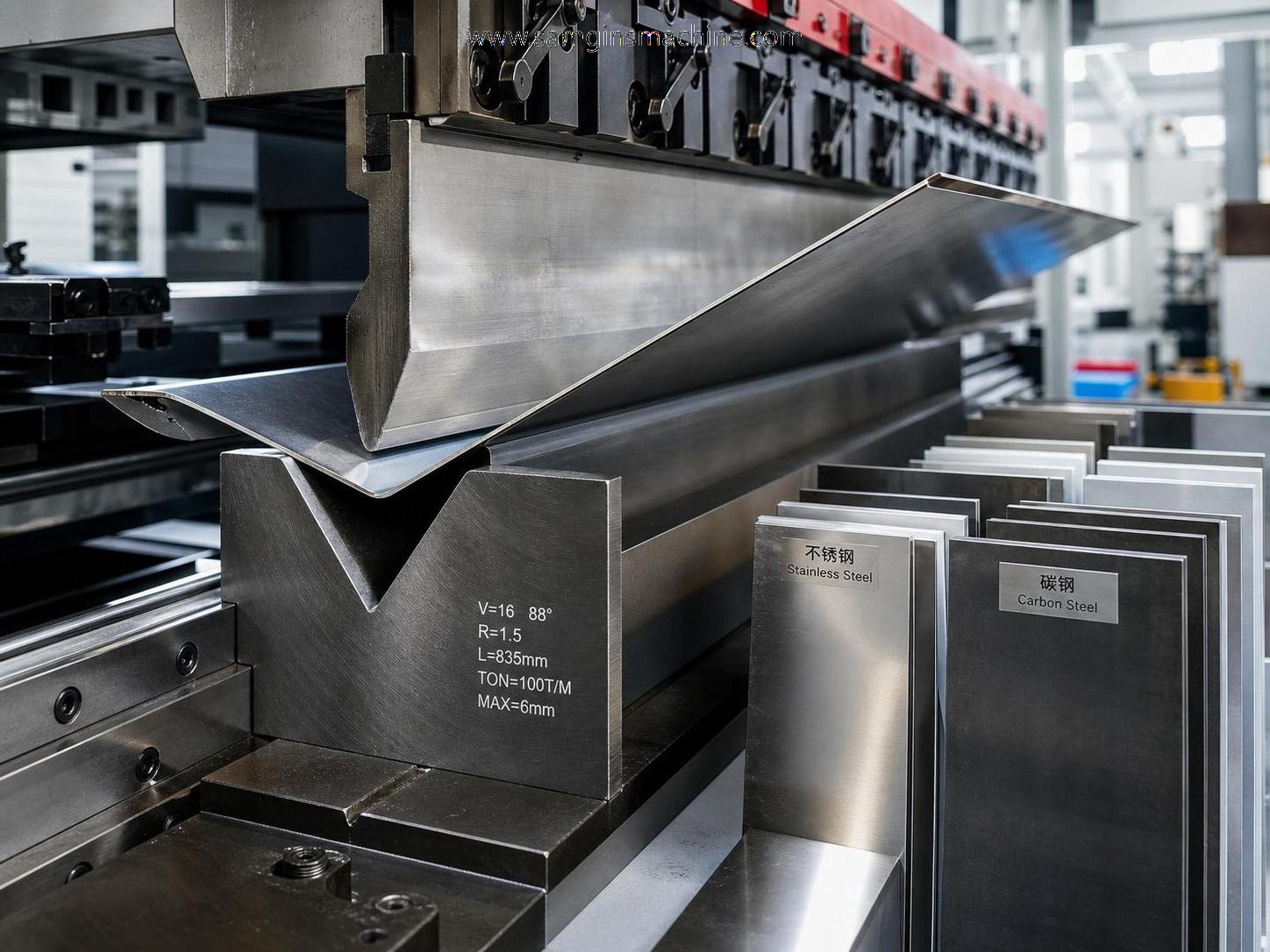
Choosing the right Press brake capacity is one of the most practical decisions in sheet metal bending. Tonnage that falls short can cause incomplete bends, angle inconsistency, and tooling stress. Capacity that is far above the job requirement increases equipment cost, floor load, and energy use. In daily production, tonnage calculation connects machine capability with material type, sheet thickness, bend length, and the real conditions on the shop floor.
Why tonnage calculation matters in fabrication
A Press brake does not simply bend metal by force alone. It bends within a process window shaped by tooling, material strength, opening width, and part geometry.
That is why tonnage calculation is not only a purchasing issue. It also affects setup reliability, repeatability, and service life.
In fabrication workshops handling stainless steel, carbon steel, or aluminum, the same bend length can require very different force levels. Small errors in estimation become large problems during production runs.
This is especially relevant for suppliers with broad machinery portfolios. Wuxi Samgins International Trade Co.,Ltd has supplied bending machines, shearing machines, rolling machines, CNC equipment, and related metalworking systems to multiple overseas markets, so capacity matching is rarely treated as an isolated parameter.
The basic idea behind Press brake tonnage
In simple terms, tonnage is the force required to bend a material across a given length with a specific die opening.
For air bending, the most common shop formula uses four key inputs:
- material tensile strength or material category
- sheet thickness
- bend length
- V-die opening
A widely used reference expression is:
Required tonnage per meter is proportional to material strength multiplied by thickness squared, then divided by die opening.
The practical meaning is clear. Thickness has a strong effect. A modest increase in thickness can raise force demand sharply.
Longer bends also increase total force in a direct way. Double the bend length, and the required tonnage roughly doubles.
A quick reference view
How material changes the required force
Material selection is often where tonnage estimates go wrong. Operators may remember a value from mild steel and apply it to stainless steel.
That shortcut is risky. Stainless steel usually needs more force because of higher tensile strength and stronger springback.
Aluminum often requires less force, but it can still create problems if the selected die opening is too small or the bend radius is unrealistic.
When exact tensile data is available from the material certificate, use it. When it is not, use a conservative material chart from the machine or tooling supplier.
This is one reason serious metalworking operations prefer process planning tied to actual job data, not memory alone.
Bend length is more than a dimensional detail
Bend length is frequently underestimated during machine selection. A Press brake may have enough force for a short section but not for a full-length panel.
A long bend also introduces deflection. Even if total tonnage is technically available, crown compensation may still be needed to maintain angle consistency.
This matters in cabinets, enclosures, electrical boxes, architectural panels, and structural sheet parts. Uniformity across the full bend can be as important as raw force.
For that reason, capacity matching should consider both nominal tonnage and usable bending length under production conditions.
Common situations that need a safety margin
- high-strength stainless steel jobs
- full-length bending near machine limits
- bottoming or coining instead of air bending
- parts with tight inside radius requirements
- mixed material batches with variable yield strength
Tooling choice can change the calculation
Tooling is part of the tonnage equation, not an afterthought. The selected V-die opening directly affects required force.
A smaller die opening increases force demand. It can improve control in some cases, but it also raises the load on the machine and tooling.
A larger opening reduces tonnage, though it changes the inside radius and may affect part design requirements.
In real workshops, the best result comes from balancing forming force, radius target, surface quality, and available tool inventory.
This broader process view applies across metalworking equipment. For example, when hole preparation or secondary operations follow bending, shops may also use an Radial drilling machine for medium and large metal parts, especially in single-piece or small-batch work where flexible positioning matters.
From formula to machine selection
A calculated value should not be treated as the final purchase number. It is the starting point.
The next step is to compare that value with the machine rating, the planned bend length, and the production mix.
If most jobs are close to the machine limit, the setup becomes less forgiving. Tool wear, sheet variation, and operator adjustment can push the process outside a stable range.
A more usable rule is to select a Press brake with enough reserve for normal variation, while avoiding major oversizing.
This is where supplier experience becomes useful. Companies that handle bending machines alongside milling, cutting, drilling, and welding systems often see how one bottleneck affects the rest of production.
What to compare before confirming capacity
Typical mistakes in Press brake tonnage planning
One common mistake is using a generic tonnage chart without checking the die opening behind the chart value.
Another is ignoring springback. If material recovery is strong, extra process adjustment may be needed even when force is sufficient.
Some workshops also focus only on maximum tonnage and ignore throat depth, backgauge range, daylight, and stroke. Capacity alone does not guarantee process fit.
There is also a planning error on the opposite side. Oversized machines may look safer, but they can reduce efficiency for light-gauge work and raise ownership cost.
A balanced decision usually performs better than the highest number on the brochure.
A practical way to move forward
Start with three verified numbers: actual material grade, maximum thickness, and longest bend length. Then confirm the planned bending method and tooling range.
From there, compare the calculated force with the rated capacity of the Press brake and leave room for normal production variation.
If the job mix includes medium and large metal parts with additional drilling or reaming steps, related equipment should be considered as part of the same workflow. A model family such as Z3032 to Z3080 can support drilling diameters from 32 mm to 80 mm, with spindle speeds from 25 to 2000 r/min and spindle stroke up to 500 mm, which is useful when bending is only one stage of the process.
A sound tonnage decision is rarely about force alone. It is about matching machine capacity to the real part, the real material, and the real production path. That gives a clearer basis for comparing equipment, checking tooling plans, and deciding what capacity is truly needed next.
search
Products Navigation
Send Us A Message