




How to Choose a Laser Cutting Machine for Sheet Metal Thickness and Production Volume
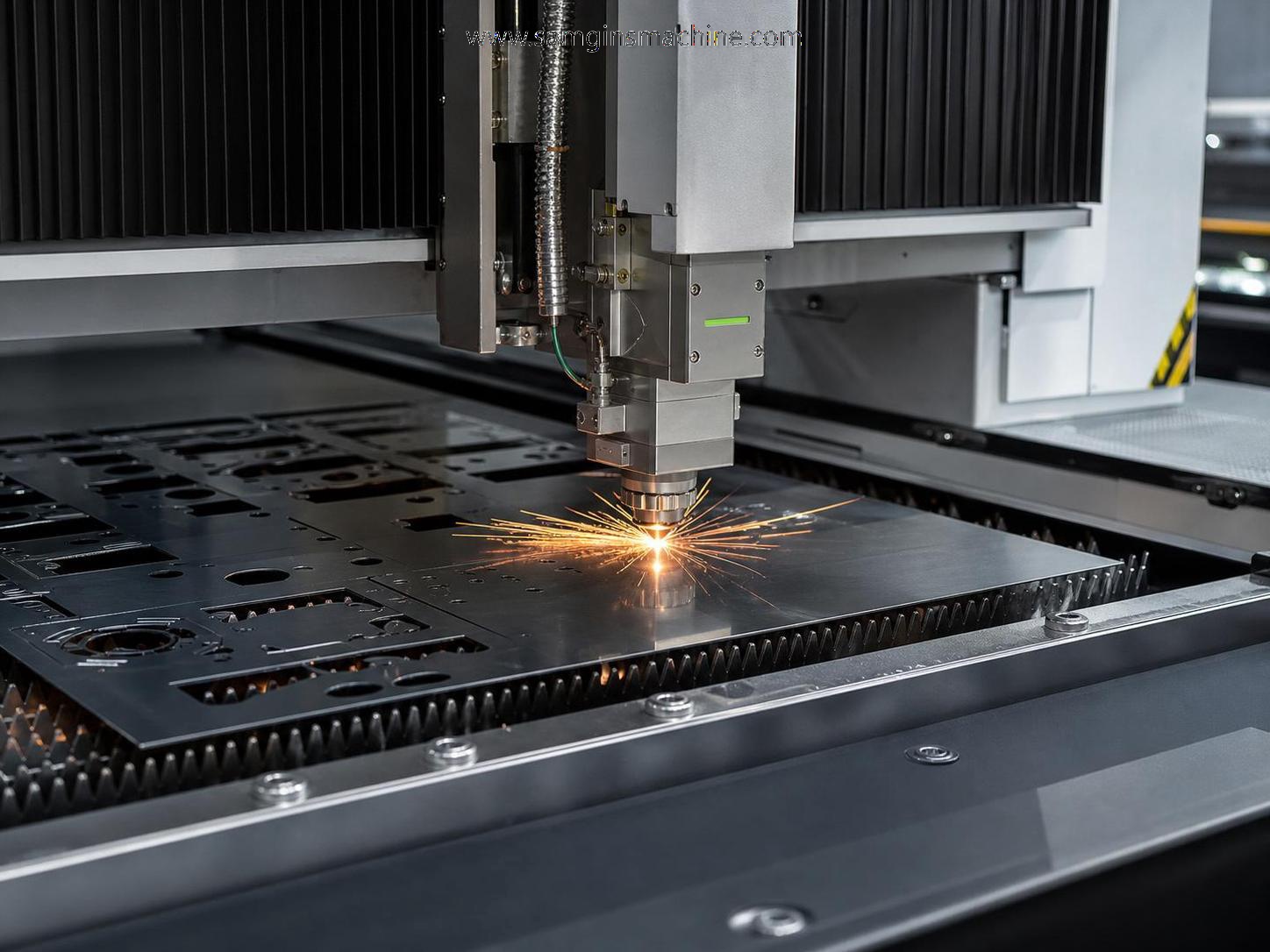
Choosing a Laser cutting machine for sheet metal is rarely about headline power alone. The real decision sits at the intersection of thickness range, daily output, edge quality, and how steadily the machine can perform over years of production.
That is why thickness and production volume should be evaluated together. A machine that cuts thin stainless steel beautifully may become inefficient on thicker carbon steel, while an oversized system can burden a workshop with unnecessary capital and operating cost.
In metal fabrication, this choice affects quoting accuracy, lead time, maintenance planning, and downstream processes such as bending, welding, deburring, and assembly. A good selection standard turns a Laser cutting machine into a stable production asset rather than a short-term purchase.
Why thickness and volume matter together
Sheet metal thickness determines the cutting challenge. It influences required laser power, assist gas demand, achievable speed, kerf stability, piercing time, and edge finish.
Production volume changes the economics. High-mix, low-volume work values flexibility and fast setup. Repetitive, high-volume work places greater weight on automation, uptime, nesting efficiency, and part consistency across long shifts.
A Laser cutting machine that fits both variables will usually produce the best total result. It aligns process capability with actual factory rhythm instead of isolated sample performance.
Typical mismatch problems
- Insufficient power for frequent thick-plate cutting, causing slow throughput and unstable edge quality.
- Oversized equipment dedicated to mostly thin sheets, increasing energy use and investment without clear return.
- Manual loading on jobs that require continuous output, creating bottlenecks outside the cutting head.
- Ignoring downstream requirements, then discovering burrs, heat effects, or dimensional variation disrupt later operations.
Start with the real material profile
The first useful step is to map actual jobs, not assumed jobs. Many buying mistakes begin when evaluation is based on the thickest occasional sheet rather than the monthly cutting mix.
List the proportion of carbon steel, stainless steel, aluminum, and coated sheets. Then record minimum and maximum thickness, tolerance expectations, and whether cosmetic edges matter.
This profile does more than select power. It shapes table size, head type, gas system, extraction design, software requirements, and the likely need for automation.
Power selection is only one part of the answer
Power rating gets most attention, but it should not be isolated from process behavior. Higher power generally extends thick-sheet capability and speed, yet real output also depends on acceleration, control algorithms, and cut parameter stability.
For thin-gauge production, a fast and responsive Laser cutting machine often delivers more value than a larger system that spends time on setup and low-utilization capacity. For thick material, insufficient power often shows up as slow piercing, poor edge quality, and inconsistent corners.
Practical power thinking
Usually, it is better to size the machine for the thickness range that represents the majority of revenue, then confirm whether peak-thickness jobs are regular enough to justify a higher specification.
This is also where supplier process experience matters. Wuxi Samgins International Trade Co.,Ltd, established in 2012 in Wuxi and operating under ISO9001 and EU CE-oriented standards, works across laser cutting, welding, forming, and machining equipment. That broader equipment background is valuable because cutting decisions rarely stand alone inside a fabrication line.
Volume changes the machine configuration
Production volume determines whether the bottleneck is the beam, the operator, or material flow. A Laser cutting machine for prototype work can succeed with simple loading and quick parameter adjustment.
The same machine may struggle in batch production if sheets wait for handling, sorting, or nozzle changes. At that point, automation becomes part of the cutting capacity.
Configurations that become important at higher volume
- Exchange table systems to reduce idle time between sheets.
- Automatic loading and unloading for continuous shifts.
- Stable nesting software to maximize sheet utilization.
- Remote diagnostics and maintenance access for uptime control.
- Consistent gas supply and fume extraction sized for long runs.
A useful evaluation question is simple: how many hours per shift is the Laser cutting machine actually cutting, and how many are lost around it? That answer often reveals whether automation or power should come first.
Look beyond the cut edge
The best machine choice should support the full manufacturing route. If parts move immediately into bending, welding, tapping, or coating, dimensional repeatability and surface condition can matter more than peak speed on a sample plate.
In practical production, cutting quality influences how much rework appears later. A poor match between nozzle control and material condition may increase spatter or burr formation, sending cost into deburring stations.
That broader line view is common in workshops producing fabricated assemblies, brackets, enclosures, and fastener-related metal parts. In such environments, complementary equipment can matter. For example, when sheet metal work feeds hardware or standard-part operations, a compact solution such as Z28-150 thread rolling machine may support thread production with cold-forming, non-chip processing, helping preserve material structure and improve fatigue performance in secondary components.
Key checkpoints before approval
A reliable evaluation should test the machine under realistic conditions, not ideal ones. Sample parts should include common geometries, corner features, holes, and the material grades used most often.
- Measure cut speed on your main thickness range, not only the maximum advertised range.
- Review piercing time, edge taper, burr level, and hole quality.
- Check repeatability over a longer run, especially after thermal load increases.
- Compare operating cost, including gas, power, consumables, and maintenance intervals.
- Confirm software usability, spare parts access, and technical support response.
- Match table size and floor layout to material flow, not only to available space.
What often gets underestimated
Control system maturity is one item. A capable Laser cutting machine needs stable parameter libraries, intuitive programming, and predictable performance across material batches.
Service depth is another. Suppliers with experience across CNC cutting machines, welding equipment, milling machines, lathes, deburring systems, and forming equipment can usually judge line compatibility more accurately than a single-product seller.
For parallel hardware operations, the same thinking applies to other equipment categories. A machine like the Z28-150, with 180KN rolling pressure, spindle speeds of 36, 47, 60, and 78 r/min, and manual, semi-automatic, and automatic modes, shows how process flexibility becomes important when batch size and part mix vary across a workshop.
Turning selection into a workable decision
The most effective way to choose a Laser cutting machine is to build a short decision matrix. Include actual thickness distribution, monthly output, key materials, required tolerances, automation needs, and expected utilization.
Then compare candidate machines by total production fit, not by brochure extremes. A balanced machine often wins because it protects both current orders and future process stability.
The next step is to prepare representative sample parts, verify running cost assumptions, and review how the machine will integrate with bending, welding, deburring, and any secondary forming processes already in use. That approach usually produces a clearer answer than comparing power ratings alone.
search
Products Navigation
Send Us A Message