




Are Chinese Pipe Bending Machines Compatible with ASME and API Standards?
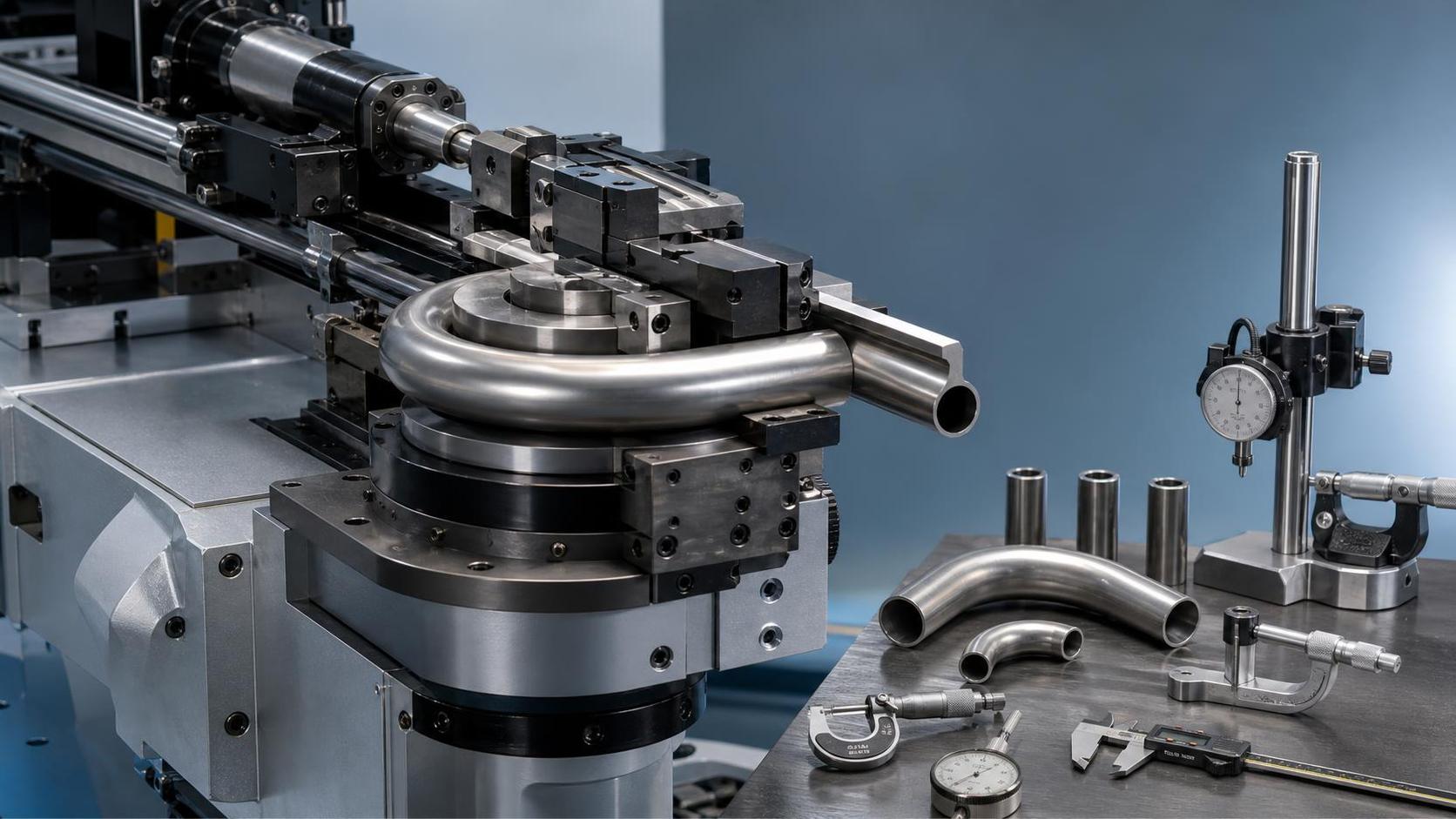
It usually starts with a practical problem, not a theoretical one. A project drawing calls for bends on carbon steel or stainless pipe, the piping class references ASME dimensions, the end user mentions API requirements, and then someone asks the question that slows everything down: are Chinese pipe bending machines compatible with ASME and API standards? If you are responsible for procurement, fabrication planning, or workshop output, that question is not about country of origin alone. It is about whether the machine can repeatedly produce bends that fit the code-controlled piping system you are building.
The confusion comes from the fact that ASME and API do not work like a simple machine stamp that can be attached to any equipment. Many buyers first look for a yes-or-no answer, but the real answer depends on the machine design, the bend process, the material range, the control capability, and the manufacturer’s ability to document what the machine can achieve. A pipe bender may be mechanically sound and still be unsuitable for a code-sensitive job if wall thinning, ovality, springback control, tooling precision, or traceable process qualification are not handled properly.
Where people often get the wrong idea
A common misunderstanding is to assume that if a machine is built in China, it must be difficult to align with ASME or API expectations. The opposite misunderstanding also exists: if a supplier says the machine is “for oil and gas,” then it must already satisfy every code-related demand. Both views are too simple.
ASME and API standards generally govern the piping system, the materials, dimensions, testing, fabrication requirements, and sometimes the process acceptance criteria. They do not automatically certify a bending machine just because it exists in the supply chain. So the real issue is not whether the machine has a nationality that matches the standard. The issue is whether the machine can be specified, configured, tooled, tested, and documented in a way that supports compliant fabrication.
That is why the better question is slightly different: can this specific machine, with this tooling and this control system, bend this specific pipe material and size range according to the fabrication and inspection requirements of the project? Once you ask it that way, the path becomes clearer.
The point where compatibility is actually decided
In workshop practice, compatibility is usually decided by five things.
First is dimensional capability. The machine must handle the required pipe outside diameter, wall thickness, bend radius, and centerline geometry without forcing the fabricator into workarounds. A machine that can only bend within a narrow radius window may not suit jobs where the piping specification demands larger CLR values or tight repeatability across mixed pipe schedules.
Second is material behavior control. Carbon steel, alloy steel, stainless steel, duplex, and other materials do not respond the same way during bending. If the machine cannot control pressure, feed, mandrel support, boost, and rotational positioning with enough precision, then bends may show unacceptable flattening, wrinkling, or wall reduction. Those issues matter because code-based fabrication is not only about the angle of the bend. It is also about the final condition of the pipe.
Third is tooling quality. Even a capable CNC pipe bender can underperform if the bend die, clamp die, pressure die, mandrel, or wiper die are poorly matched to the material and schedule. In many failed bending jobs, the machine itself gets blamed when the real problem is tooling mismatch or incomplete process setup.
Fourth is control and repeatability. If the project includes multiple spool pieces, field-fit constraints, or tie-ins to prefabricated assemblies, repeatability matters as much as raw forming power. CNC control, compensation for springback, stable axis coordination, and reliable program recall are often the difference between a machine that looks acceptable in a showroom and one that survives a real fabrication schedule.
Fifth is documentation and verification. This is where many sourcing decisions become risky. A supplier may say the machine can bend to your requirements, but if there is no clear discussion of tolerance, sample validation, inspection method, material applicability, and operator process control, then “compatible” remains just a sales word.
ASME and API are not interchangeable labels
When buyers ask whether a pipe bending machine is compatible with ASME and API standards, they often combine two separate concerns. ASME commonly influences dimensional standards, pressure-related design frameworks, and fabrication references in piping work. API is often associated with industry-specific requirements in oil and gas applications, where reliability, material integrity, and process suitability are under more scrutiny.
That means a machine may be suitable for general industrial piping but still need closer review before being used for a project tied to stricter oil and gas fabrication procedures. It also means that the machine alone is never the whole answer. Bend qualification may depend on the pipe specification, the project acceptance criteria, and any procedure approval or inspection regime required by the contractor or end user.
So if you are comparing machines, avoid asking only, “Is it ASME/API compatible?” Ask instead:
- Which pipe sizes and schedules can it bend within the required tolerance?
- Can it maintain acceptable ovality and wall condition for the materials in scope?
- What tooling is used for thin-wall versus heavy-wall pipe?
- How is springback compensated for different grades?
- Can the supplier support trial bending or sample verification before final acceptance?
- What manufacturing and quality controls are followed during machine production?
Those questions are much more useful than a general claim of compliance.
When a machine is likely to work well for code-sensitive bending
In practice, Chinese-built machines can absolutely be part of compliant fabrication work if they come from a manufacturer that understands industrial process requirements rather than only general metal forming. The strongest sign is not flashy language. It is whether the discussion quickly moves into technical details.
If the supplier asks for pipe specification, bend radius, material grade, expected production volume, lubrication approach, tolerances, and inspection method, that is usually a better sign than broad promises. It shows they understand that compatibility depends on the process envelope. If they avoid those details and keep repeating that the machine is “high quality,” the conversation is not mature enough yet.
Another useful sign is whether the machine builder works under organized production and recognized quality practices. In this field, disciplined production control and machine consistency matter because a pipe bending machine is not just a frame with motors attached. Alignment, rigidity, tooling interface accuracy, hydraulic or servo stability, and software reliability all affect the bend result. A manufacturer working with formal quality management and CE-oriented design practices may give buyers a more structured basis for evaluation, though that still does not replace project-specific validation.
A practical way to verify compatibility before purchase
Many people lose time because they evaluate pipe bending machines in the wrong order. They start with catalog size, then price, then delivery time, and only afterward ask whether the machine can support the standards tied to the job. It is usually safer to reverse that process.
Start from the fabrication requirement, not the machine brochure
Gather the actual bending conditions first: pipe material, OD, wall thickness, bend radius, bend angle range, straight length requirements, production repeatability, and any project limits on flattening or wall thinning. If API-linked work is involved, include whatever inspection and acceptance language appears in the fabrication package or purchaser requirement. Without this baseline, every machine will look “capable” in a generic way.
Ask for process fit, not generic compliance
Once your requirement is clear, ask the supplier to map the machine to that requirement. This should include machine model suitability, tooling concept, control functions, expected bend method, and whether mandrel bending is required. For some heavy-wall pipe jobs, a simpler configuration may be enough. For thinner-wall or higher-finish applications, more controlled tooling and axis coordination may be necessary.
Request sample strategy or trial confirmation
For demanding jobs, a trial bend or sample verification is often more meaningful than a long list of claims. That does not mean you need a dramatic full production test every time, but you do need some method to confirm that the machine and tooling combination can hold the required geometry and pipe condition. If you are handling mixed materials, verify each important combination rather than assuming one successful sample proves everything.
Review documentation habits
Look at how the supplier communicates tolerances, maintenance points, machine limitations, and operating parameters. A serious supplier is usually willing to discuss not only what the machine can do, but also where process limits begin. That kind of clarity reduces trouble later, especially when the machine will be used for production spools that must fit into a larger coded piping system.
Why problems still happen after a “good” machine is installed
Even when the machine itself is suitable, bending results can still fall short if the workflow around it is weak. This is one of the most overlooked parts of the question.
Operators may use the wrong tooling sequence for a material with high springback. Pipe heat number segregation may be ignored, even though different material lots behave differently in the bend. Lubrication may be inconsistent. Straight length allowances may be entered incorrectly into the CNC program. Inspection may focus only on bend angle while missing cross-sectional distortion. None of those problems mean the machine is incompatible with ASME or API-oriented work. They mean the bending process is not being controlled tightly enough.
That is why experienced buyers do not stop at machine selection. They also look at training, setup discipline, maintenance planning, and bend procedure consistency. In a fabrication shop, standards compatibility lives partly in the machine and partly in the way the machine is used.
Where a broader equipment background can help
Some suppliers in the machinery trade handle not only pipe benders but also CNC machine tools, welding equipment, cutting systems, plate processing equipment, and production line machinery. That broader exposure can be useful when your pipe bending work is part of a larger fabrication chain rather than a stand-alone operation. In real projects, bend quality interacts with fit-up, end preparation, cutting accuracy, and welding sequence. A supplier familiar with multiple fabrication steps may be better positioned to discuss the machine in its actual workshop context instead of treating it as an isolated product.
Still, that only helps if the conversation stays technical. A broad catalog does not prove bend suitability by itself. It simply means the supplier may understand how the machine fits into overall production flow, which can be valuable when aligning equipment capability with code-sensitive fabrication work.
So, are Chinese pipe bending machines compatible with ASME and API standards?
Yes, they can be, but not automatically and not by label alone. The reliable answer depends on whether the specific machine is engineered and configured for the relevant pipe sizes, materials, bend geometry, and process controls; whether the supplier can discuss those points clearly; and whether the fabrication team verifies performance against the real project requirements.
If you are trying to make a decision, the safest approach is to stop treating “Chinese” and “ASME/API” as opposing categories. Instead, treat the machine like any other industrial forming equipment that must be matched to a defined job. Compatibility is earned through capability, tooling, control, verification, and disciplined use.
That shift in thinking usually resolves the original worry. The question is no longer where the machine was built. The question becomes whether the machine can produce bends that your project can accept, repeatedly, with documentation and process control that hold up under real fabrication pressure. That is the standard worth buying against.
search
Products Navigation
Send Us A Message