




What Affects CNC Press Brake Accuracy in High-Mix Production?
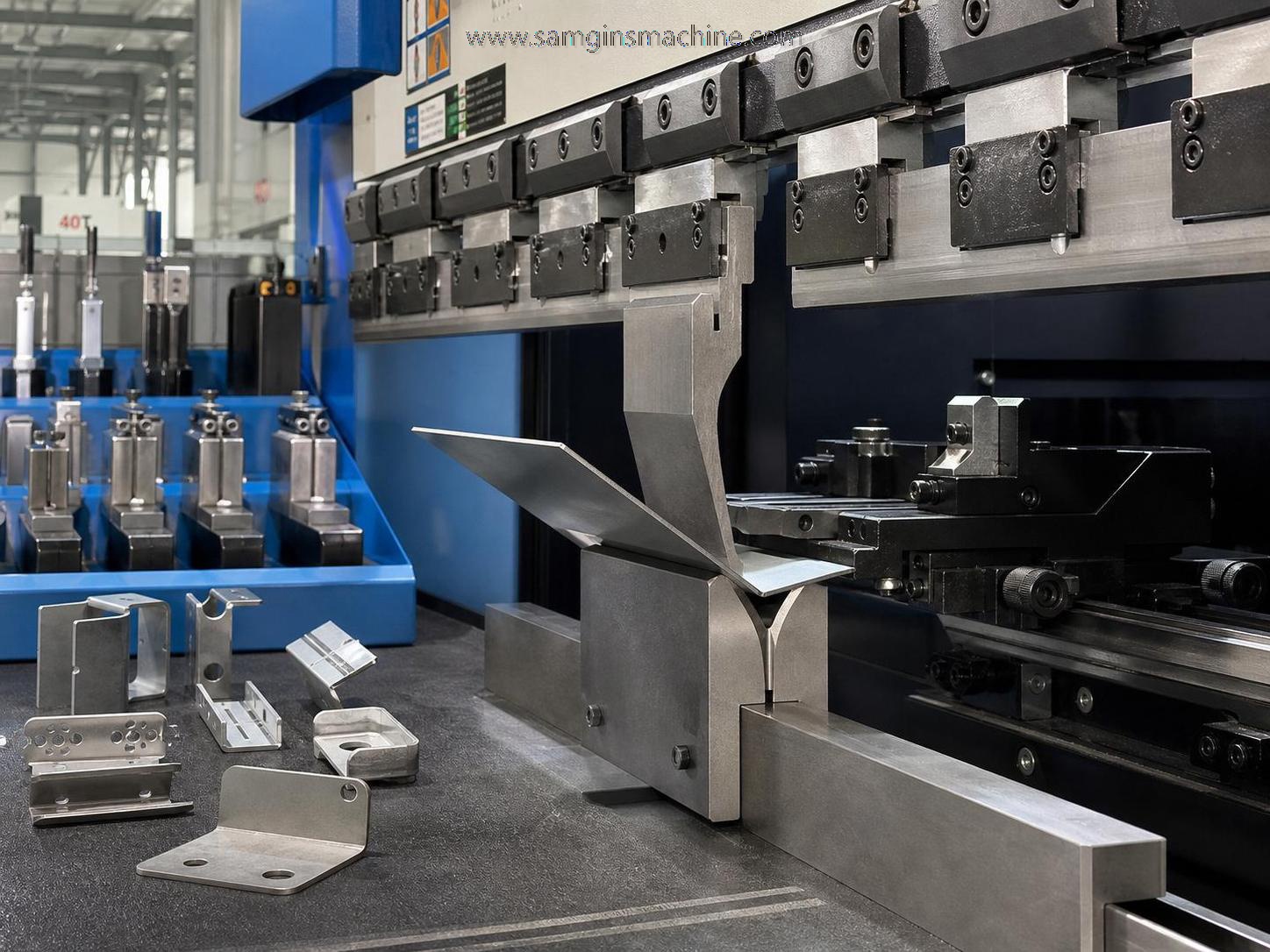
What Affects CNC Press Brake Accuracy in High-Mix Production?
In high-mix production, accuracy problems rarely come from one cause alone.
A CNC Press brake may pass one part and miss the next.
That usually happens when material, tooling, setup, and control conditions shift together.
In low-volume, high-variation work, those shifts happen more often.
As a result, bending precision becomes a management issue, not only a machine issue.
If the goal is stable output, every stage around the CNC Press brake must support repeatability.
Why Accuracy Gets Harder in High-Mix Bending
High-mix production means frequent material changes, part changes, and tooling changes.
Each change increases the chance of angle error, flange deviation, or part-to-part inconsistency.
Even small mistakes can create rework, scheduling pressure, and scrap.
More importantly, these problems often stay hidden until assembly or inspection.
That is why CNC Press brake accuracy matters far beyond the bending station.
It affects project timing, downstream fit-up, and final product quality.
The Main Accuracy Risks
- Variable material thickness and tensile strength
- Worn punches, dies, and clamping surfaces
- Poor ram parallelism or frame deflection
- Incorrect backgauge positioning
- Inconsistent crowning compensation
- Program errors during rapid changeovers
- Operator variation in setup and part handling
Machine Structure and Mechanical Condition
The first factor is machine rigidity.
If the frame deflects too much under load, bend angles drift across the workpiece length.
This becomes more visible on long parts and thicker plates.
A CNC Press brake with weak structural stability will struggle in mixed production.
Ram repeatability is equally important.
Hydraulic response, servo control, and guide wear all affect ram position accuracy.
When the stroke depth shifts slightly, the finished angle changes immediately.
In short runs, that can go unnoticed until several parts are already wrong.
Backgauge accuracy also deserves close attention.
If gauge fingers misalign or lose repeatability, flange dimensions will move out of tolerance.
In high-mix jobs, that problem grows because setups change all day.
What to Check Regularly
- Ram parallelism across full stroke length
- Hydraulic or servo repeatability under typical loads
- Backgauge positioning accuracy and finger alignment
- Wear on guides, clamps, and support arms
- Crowning system response on different part lengths
Tooling Quality and Setup Discipline
Tooling condition has a direct effect on CNC Press brake performance.
Worn punches or dies change contact geometry and produce unstable bend results.
Small surface damage can also mark parts or alter material flow during bending.
Setup discipline matters just as much as tooling quality.
If the wrong die opening is selected, bend allowance and springback will shift.
If segmented tools are not seated properly, alignment errors appear quickly.
These are common issues during rushed changeovers.
Surface quality after cutting also influences bend consistency.
Burrs at the edge can affect positioning and final fit.
For parts with strict cosmetic or assembly demands, post-cut finishing helps stabilize results.
In some workflows, a Standard Magnetic polishing machine is used before bending.
It can remove burrs, clean surfaces, and improve edge condition on metal parts.
That is especially useful for precision stampings and complex small workpieces.
Material Variation and Springback Control
Material variation is one of the most underestimated causes of bending error.
Two sheets with the same nominal grade may not bend the same way.
Thickness tolerance, hardness, grain direction, and coating all influence springback.
This is a major challenge for every CNC Press brake in mixed production.
When parts change often, operators cannot rely only on old bend data.
They need verified programs, test bends, and practical correction rules.
Offline calculations help, but real material feedback remains essential.
Practical Material Controls
- Group jobs by material grade and thickness where possible
- Record actual springback behavior by supplier batch
- Confirm grain direction for parts with tight angular tolerance
- Run first-piece inspection before full production release
- Update bending libraries using measured shop-floor data
Control System, Programming, and Data Accuracy
A modern CNC Press brake depends heavily on control quality.
If the controller calculates incorrect bend sequence or wrong compensation values, accuracy suffers.
The machine may still move correctly, but the part will still be wrong.
Programming mistakes are common in fast-turn environments.
An incorrect material entry or die selection can distort the entire bend plan.
That also means standardized data input is not optional.
It is one of the simplest ways to protect accuracy.
Angle measurement systems improve consistency further.
Real-time feedback allows the controller to correct variation during the bend cycle.
For high-value parts, this reduces trial-and-error and speeds first-pass success.
Operator Method and Changeover Management
Even advanced equipment depends on consistent human execution.
Operator technique affects part seating, orientation, support, and inspection judgment.
In a CNC Press brake cell, these details directly influence repeatability.
Changeovers are where many errors start.
When tooling, programs, and materials change within minutes, shortcuts become tempting.
That usually leads to skipped verification and unstable output.
A strong setup checklist is often more valuable than extra machine speed.
A Useful Changeover Checklist
- Verify program version and revision status
- Confirm material grade, thickness, and grain direction
- Check punch and die code against the setup sheet
- Inspect tooling seating and clamp security
- Run and measure the first-piece bend sequence
- Record corrections for the next repeat order
Maintenance, Surface Finish, and Process Stability
Predictive maintenance supports long-term CNC Press brake accuracy.
Without scheduled checks, wear develops gradually and becomes accepted as normal.
That is how repeatability declines without a clear warning sign.
Part cleanliness and finish also support stable bending.
Oil, scale, and burr residue can interfere with backgauge contact and handling.
For small precision components, controlled deburring can protect fit and appearance.
Equipment such as the Standard Magnetic polishing machine can support that step efficiently.
Its short processing cycle suits batch preparation before forming or assembly.
Manufacturers with broad equipment experience usually manage these linked processes better.
Wuxi Samgins International Trade Co.,Ltd supplies mechanical equipment across bending, cutting, welding, milling, and finishing applications.
Its production approach follows ISO9001 quality system practices and EU CE-oriented standards.
That broader process view matters when accuracy depends on more than one machine.
How to Improve CNC Press Brake Accuracy in Daily Operations
The most effective improvement strategy is practical and routine-based.
Do not treat CNC Press brake accuracy as a one-time calibration task.
Treat it as a controlled system that includes machine, tooling, material, data, and people.
- Standardize setup sheets and bending parameters
- Monitor actual angle results by job type
- Reduce unplanned tooling substitutions
- Create a clear maintenance and calibration schedule
- Train operators to diagnose error sources, not just correct symptoms
- Connect upstream cutting and deburring quality to bending control
When these controls are in place, the CNC Press brake becomes more predictable.
That improves first-pass yield, protects delivery dates, and lowers hidden production cost.
In high-mix manufacturing, that kind of accuracy is not a luxury. It is operating discipline turned into measurable output.
search
Products Navigation
Send Us A Message