




CNC Press Brake vs Hydraulic Press Brake: Which Fits Batch Production?
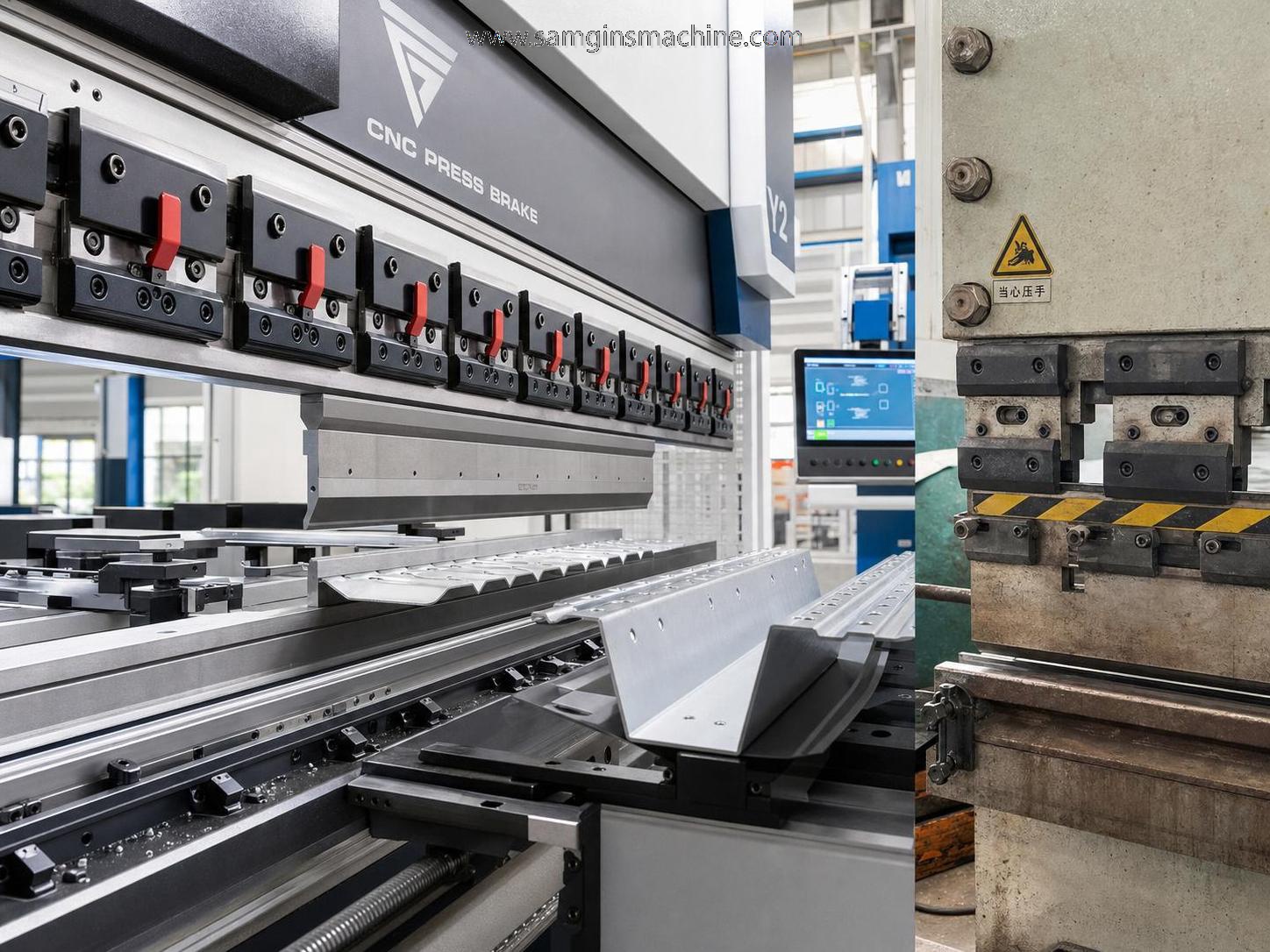
CNC Press Brake vs Hydraulic Press Brake: Which Fits Batch Production?
For batch production, machine choice affects more than bending speed.
It shapes part accuracy, operator workload, setup time, and scrap rate.
That is why the CNC Press brake versus hydraulic press brake question matters.
In many factories, both machines are called hydraulic press brakes.
But in real buying decisions, the difference usually centers on control level.
A conventional hydraulic press brake relies more on manual adjustment.
A CNC Press brake adds programmable control, repeatable positioning, and digital correction.
For technical evaluation, the right answer depends on batch size, tolerance, and product mix.
The goal is not to buy the most advanced machine.
The goal is to match bending capability with output targets and quality standards.
What Separates a CNC Press Brake from a Conventional Hydraulic Press Brake
The frame, hydraulic power, and tooling concept may look similar at first glance.
The real gap appears in control precision and process consistency.
A conventional hydraulic press brake often needs manual backgauge setting.
Angle correction may also depend heavily on operator judgment.
That can work well for simple jobs and stable part families.
A CNC Press brake stores programs for ram depth, backgauge position, and bend sequence.
Many models also support crowning control and angle compensation.
That reduces variation between shifts, operators, and repeat orders.
- Manual hydraulic press brake: lower automation, simpler operation logic, lower entry cost.
- CNC Press brake: higher repeatability, faster recipe change, stronger traceability.
- Manual hydraulic press brake: better for straightforward bends and lower mix production.
- CNC Press brake: better for frequent part switching and tighter tolerances.
Why Batch Production Changes the Decision
Batch production puts pressure on every repeated step.
Small time losses become major cost drivers over hundreds or thousands of parts.
This is where a CNC Press brake often gains a measurable advantage.
Programmed backgauge movement shortens setup and reduces manual rechecking.
Stored bend sequences also help maintain part quality across multiple production runs.
If the batch includes several part numbers, the value becomes even clearer.
A conventional hydraulic press brake can still be practical for stable, low-complexity work.
For example, one part shape, one material, and wide angle tolerance.
Once variation rises, manual adjustment begins to slow the whole line.
Key Batch Production Factors
- Number of part changeovers per shift
- Required first-pass yield
- Tolerance for bend angle and flange length
- Operator skill dependence
- Scrap cost for material thickness and surface finish
- Need for production record consistency
Productivity: Where the CNC Press Brake Usually Wins
Throughput is not only about cycle speed.
It also includes setup, correction, rework, and waiting between jobs.
A CNC Press brake usually improves all four areas.
Programs reduce trial bends, especially when tooling and material data are already known.
Backgauge automation cuts handling delays during multi-step parts.
That means more usable parts per hour, not just more ram strokes.
The advantage grows when orders repeat every week or every month.
Program recall removes much of the setup uncertainty.
That makes production planning easier and more predictable.
Precision, Scrap Control, and Quality Risk
In batch production, one wrong setup rarely stays isolated.
It can affect dozens of parts before the issue is noticed.
This is another reason many buyers favor a CNC Press brake.
Better control reduces angle drift and flange inconsistency.
That matters more when working with stainless steel, coated sheet, or narrow tolerances.
Material springback is also easier to manage through stored correction values.
A manual hydraulic press brake can still meet quality targets.
However, it usually needs more skilled attention and more frequent checks.
That increases the hidden cost of quality assurance.
Cost Evaluation Beyond Purchase Price
Purchase cost is important, but it is only the starting point.
For batch production, total cost should include labor, scrap, downtime, and learning curve.
A conventional hydraulic press brake often looks attractive in initial budgeting.
That is reasonable for limited output or simple part geometry.
But if production requires frequent job changes, the economics can shift quickly.
A CNC Press brake may recover its higher cost through saved setup hours alone.
Lower rework and more stable output further improve the return.
This is especially true where labor cost or scrap value is high.
Useful Cost Questions
- How many setup minutes are spent per part number today?
- How often do angle errors create rework or scrap?
- How much output depends on one experienced operator?
- What is the annual volume of repeat bending jobs?
- How much production loss occurs during shift handover?
When a Conventional Hydraulic Press Brake Still Makes Sense
Not every batch environment needs a fully featured CNC Press brake.
A conventional hydraulic press brake remains practical in several cases.
It fits shops producing simple profiles with long, stable production runs.
It also suits operations with moderate tolerance demands and limited capital budget.
If operator experience is strong and product variety is low, performance can be acceptable.
This option can be effective for backup capacity as well.
The limit appears when consistency must scale without relying on individual skill.
How This Decision Fits a Broader Fabrication Line
Bending does not stand alone in a modern fabrication plant.
Its output affects welding, assembly, and final dimensional control.
A more stable CNC Press brake often improves downstream performance too.
Accurate bends reduce fitting time and help robotic welding stay consistent.
For larger welded structures, that connection becomes even more obvious.
In integrated workshops, equipment selection often needs a line-level view.
For example, a bending cell may feed an automated welding station.
A solution like 9 axis cantilever type welding robot supports large workpieces and automatic seam correction.
Its 9-axis configuration and automatic workpiece locating highlight this broader automation trend.
When upstream bends stay consistent, downstream robotic welding usually performs better.
A Practical Selection Framework
A sound decision should come from production facts, not general preference.
Start with your current bending data and expected order pattern.
Then evaluate each machine against real operating conditions.
- Choose a CNC Press brake if repeat orders, mixed parts, and tolerance control are core priorities.
- Choose a conventional hydraulic press brake if parts are simple and changeovers are infrequent.
- Prioritize programmable control when labor stability is a concern.
- Review downstream effects on welding, assembly, and inspection.
- Compare total annual operating cost, not machine price alone.
Wuxi Samgins International Trade Co.,Ltd focuses on mechanical equipment for fabrication and processing industries.
Its product range covers bending machines, shearing machines, laser cutting equipment, welding robots, and CNC machine tools.
With ISO9001-based production organization and EU CE-oriented standards, the company supports buyers evaluating reliable equipment combinations.
That matters when a bending machine must fit an expanding production system.
In the end, the better machine is the one that keeps output stable under real batch pressure.
For most mixed and repeatable batch work, a CNC Press brake delivers the stronger long-term fit.
search
Products Navigation
Send Us A Message