




Press Brake Sheet Metal Bending: How to Control Springback and Angle Consistency
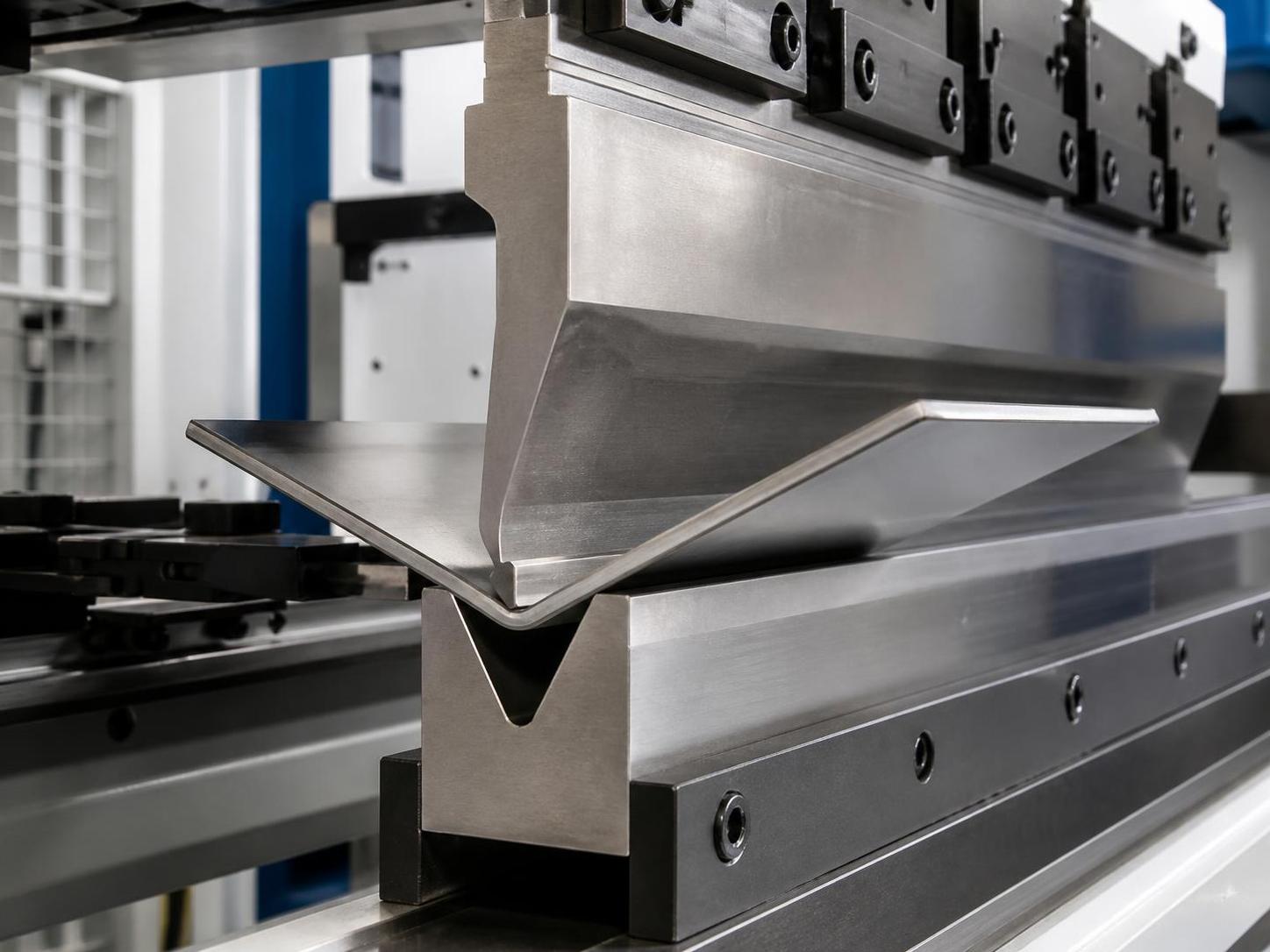
In press brake sheet metal bending, springback is not a side issue. It is one of the main reasons operators lose angle accuracy, slow down first-piece approval, and end up compensating by trial and error. Anyone searching this topic is usually trying to answer a practical question: why do parts that look correct under the punch come out different after release, and how can that variation be reduced across a full batch rather than corrected one piece at a time?
The short answer is that springback is not controlled by a single setting. It is the result of how material properties, bend geometry, tooling, machine condition, and operator method interact. If angle consistency matters for downstream fit-up, welding, enclosure assembly, or repeat orders, then springback deserves systematic control rather than occasional correction at the machine.
Why springback becomes a production problem
Every operator knows the basic phenomenon: after the load is removed, the sheet tries to recover elastically, and the bend opens up. What matters in production is not just that springback exists, but that it changes. It changes from coil to coil, from heat to heat, and sometimes from sheet to sheet in the same lot. That is why a bend program that ran well last month can suddenly start producing parts that are one or two degrees off.
For thin-gauge parts with generous inside radii, this may be manageable. For high-strength steel, stainless, aluminum, or parts with tight angular tolerances, it becomes much more sensitive. The issue is amplified when multiple bends stack up in one component. A small angle drift on the first bend can become a fit problem by the last operation.
What many shops underestimate is that springback variation often costs more than obvious scrap. It increases setup time, causes more first-off inspections, creates dependence on the most experienced operators, and makes output less predictable across shifts.
Material is usually the first variable, not the machine
When angle inconsistency appears, operators often start with machine compensation. That is understandable, but not always the right first move. In many cases, the largest source of variation is material behavior.
Yield strength, tensile strength, rolling direction, thickness tolerance, surface condition, and prior processing all affect how a part springs back. Two sheets with the same nominal thickness can still bend differently if their actual mechanical properties differ. High-strength materials generally spring back more. Aluminum can be especially inconsistent if temper and supplier variation are not tightly controlled. Stainless steel often requires more overbending than mild steel, and the process window can be narrower.
A useful operating habit is to stop treating all “same-spec” material as truly identical. If the job is angle-sensitive, verify:
- actual thickness rather than nominal thickness only;
- material grade and condition from the supplier documentation;
- whether the bend line is parallel or perpendicular to rolling direction;
- whether oxide, scale, oil, or surface damage may affect contact and friction.
That last point gets less attention than it should. Surface condition does not change springback alone, but it does influence how consistently the material seats in the tooling. In shops processing structural steel or scale-bearing plate before forming or finishing, upstream surface preparation can stabilize later operations. For example, where rust, scale, or heat-treatment residue are significant, a roller-type Shot blasting machine may be part of the broader process route, not for bending correction itself, but for delivering a cleaner and more uniform surface before subsequent fabrication and coating. That matters more in repeatable industrial production than in one-off job work.
Tooling choice affects angle repeatability more than many shops admit
In press brake sheet metal bending, the common advice is to “pick the right V-die.” That is correct but incomplete. Tooling selection is not only about whether the bend can be made. It directly affects bend force, radius formation, marking risk, and the amount of angular recovery after unloading.
As a rule, wider die openings tend to reduce tonnage but can increase springback and angle variation, especially on thin material. Narrower openings can improve control, but they raise forming force and may create unwanted inside radius or marking issues. The right balance depends on material type, thickness, required radius, and tolerance.
Operators should watch three tooling-related causes of inconsistent angle:
- mismatched punch and die geometry for the target radius or flange condition;
- worn shoulders, damaged punches, or inconsistent crowning surfaces;
- mixed tooling setups where replacement segments do not match the original profile closely enough.
This is where “it worked before” can mislead a shop. A tool set may still be usable for general work while already being too worn for tight-angle consistency. If the bend angle drifts across the length of the part, inspect tooling wear and bed deflection before assuming the material is entirely at fault.
Air bending, bottoming, and coining do not solve the same problem
One common misunderstanding is that springback can be solved simply by choosing a different bending method. In reality, each method changes the control strategy and the cost structure.
Air bending is flexible and efficient, which is why most shops rely on it. It also leaves more springback to manage because the final angle depends strongly on material behavior and ram depth. Bottoming reduces the influence of springback by forcing the material more firmly into the die, but it increases tonnage demand and reduces flexibility. Coining suppresses springback further by plastically compressing the bend zone, yet it requires significantly higher force and tool robustness, so it is not the default answer for most production environments.
For operators, the practical point is this: if the part tolerance is tight and material variation is high, the process window for air bending may become too narrow to manage efficiently. That does not mean air bending is wrong. It means the shop should decide whether process compensation, tooling strategy, or forming method needs to change to match the tolerance requirement.
Machine condition and setup still matter, especially across long parts
Even with stable material and correct tooling, a press brake will not hold angle consistency if the machine itself is not behaving predictably. Bed deflection, uneven crowning, axis positioning error, hydraulic variation, or backgauge inconsistency can all show up as angle problems.
On long workpieces, a part that measures correctly in the center but opens at the ends often indicates a crowning or deflection issue rather than random springback. On shorter parts, repeated angle shifts from part to part may point to axis repeatability, ram parallelism, or operator positioning method.
A disciplined setup check should include:
- tool clamping security and alignment;
- crowning or compensation settings matched to part length and load;
- ram repeatability over multiple strokes;
- backgauge finger condition and consistent part contact;
- whether the machine is reaching full programmed depth under actual load, not just at dry cycle.
Older machines can still produce good parts, but they usually require tighter process discipline. Shops sometimes try to fix a hardware repeatability problem with operator compensation. That may get the batch out the door, but it is not a stable production method.
Angle consistency comes from process control, not operator intuition alone
Experienced operators often develop a feel for how much extra bend a material needs. That experience is valuable, but relying on memory alone becomes risky when jobs change frequently or when multiple operators share the same machine.
A stronger approach is to convert experience into controlled process data. For recurring parts, record actual material type, thickness, die opening, punch radius, bend direction relative to grain, target angle, programmed depth, and accepted first-piece correction. This creates a usable setup history instead of forcing the next operator to rediscover the same compensation.
For shops handling mixed-material batches, angle measurement also matters. Handheld protractors are fine for general checks, but for tighter tolerance work, digital angle measurement or in-process angle correction systems can reduce setup cycles and improve repeatability. Whether that investment makes sense depends on batch size, tolerance demands, and labor cost, but the operational logic is straightforward: the more expensive angle variation becomes, the more justifiable real-time feedback becomes.
What to standardize on the shop floor
If a shop wants better control without overcomplicating daily work, a few standards usually deliver the biggest return:
- use verified bend charts as a starting point, then update them from actual production results;
- separate programs by material grade and thickness rather than using one “close enough” file;
- measure first-off parts at defined locations and orientations;
- control the sequence of multi-bend parts to reduce accumulated error;
- define when an operator may adjust depth and when the setup must be re-evaluated.
That last item is important. Shops lose consistency when every angle problem is handled as a local tweak instead of a traceable process issue.
Common claims that are only partly true
Several familiar statements circulate in fabrication shops, but they are only reliable in limited conditions.
“If thickness is the same, the bend result should be the same.”
Not necessarily. Mechanical properties and grain direction can change the outcome even when thickness matches.
“A CNC press brake will automatically keep angles consistent.”
Only if material, tooling, calibration, and setup discipline are also under control. CNC improves repeatability of motion, not the stability of every external variable.
“More tonnage means less springback.”
Only to a point, and only within the chosen forming method. Excess force does not replace proper tooling or process selection.
“Once the first part is correct, the batch is safe.”
That depends on material consistency, thermal drift, tool wear, and whether the part length or orientation changes during the run.
Where upstream and downstream processes affect bending quality
Operators sometimes treat bending as an isolated station, but angle consistency is often influenced by what happens before and after forming. Laser-cut edge quality, burr condition, heat input from prior operations, leveling quality, and residual stress in the blank can all change bend behavior. If blanks arrive with inconsistent flatness or stress distribution, the press brake operator inherits the problem.
This is also why fabrication lines should be reviewed as a chain rather than as separate machines. In some steel processing environments, surface cleaning and conditioning equipment such as a roller-type shot blasting line with adjustable impact force, dust collection, and continuous operation capability is selected not just for corrosion control, but to support more stable downstream finishing and fabrication flow. The benefit is indirect, but in heavy machinery, bridge fabrication, and structural workshops, indirect process stability often matters as much as a single machine specification.
What operators should watch when tolerances get tighter
If customer requirements move from general fabrication to tighter assembly tolerance, the control strategy should change with them. At that point, the question is no longer just how to make the bend, but how to reduce variability that was previously acceptable.
For operators and production managers, this is the more useful frame: do not ask only how much springback a material has. Ask how stable that springback is under your actual tooling, machine, and batch conditions. That is what determines whether the process is controllable in daily production.
In the end, press brake sheet metal bending becomes predictable when the shop stops chasing angle problems one correction at a time and starts treating them as a controlled interaction between material, tooling, machine, and method. Once that mindset is in place, springback is still present, but it stops being mysterious, and angle consistency becomes something the process can deliver rather than something the operator has to rescue.
search
Products Navigation
Send Us A Message