




How CNC Plate Bending Machines Improve Accuracy in Custom Metal Fabrication
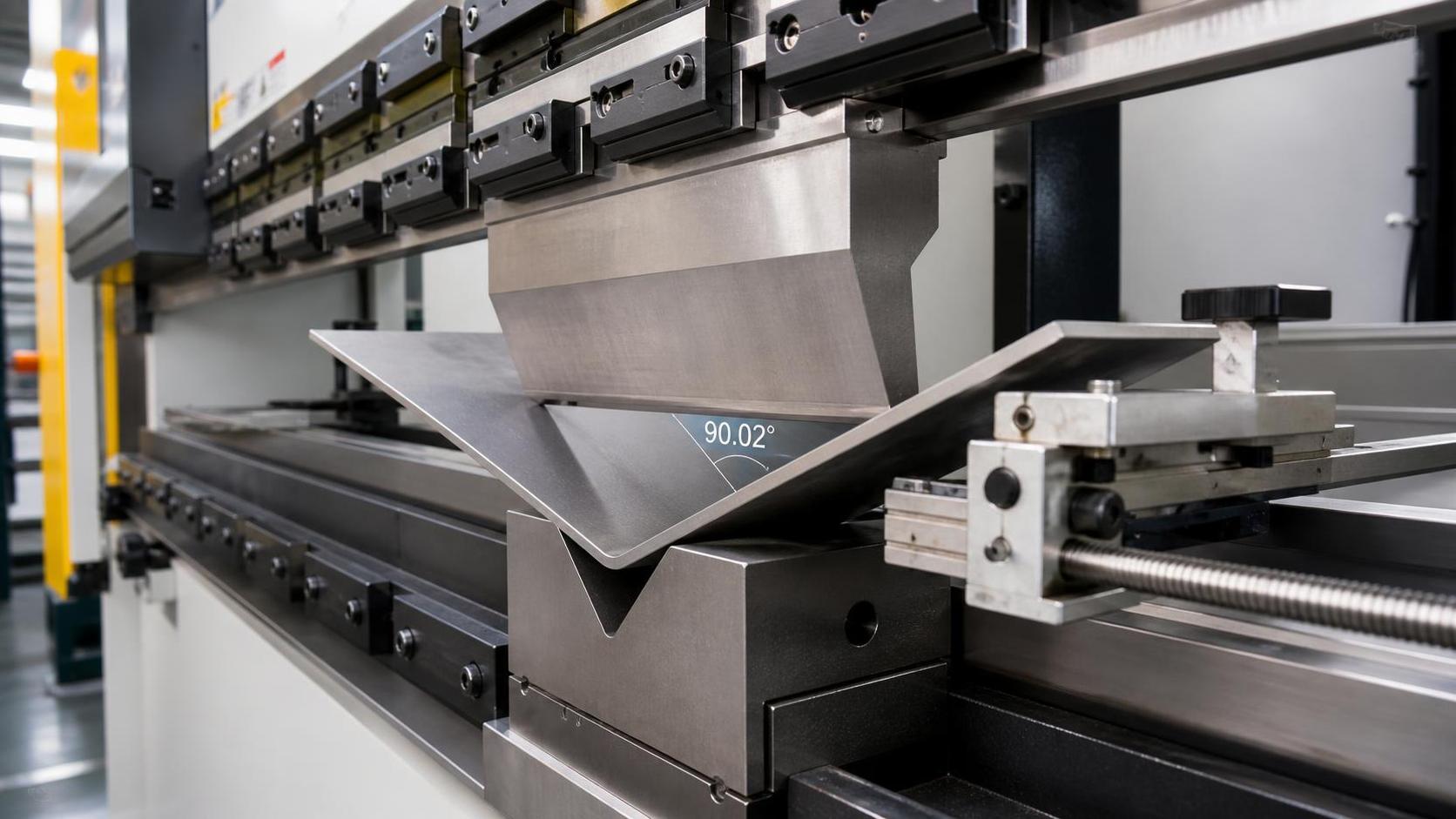
For technical evaluators in custom metal fabrication, accuracy is more than a quality target—it directly affects fit-up, repeatability, and downstream efficiency. CNC plate bending machines help manufacturers achieve tighter tolerances, consistent bend angles, and better material control across diverse production tasks. By combining automated precision with flexible programming, these systems reduce manual error and support reliable fabrication outcomes, making them a critical investment when assessing modern sheet and plate processing capabilities.
What Technical Evaluators Are Really Assessing
When users search for cnc plate bending machines, they are usually not looking for a basic definition. They want to understand how these systems improve measurable fabrication accuracy.
For technical evaluators, the real question is whether a machine can deliver consistent bend results across different materials, thicknesses, part geometries, and production volumes without excessive correction work.
That means the evaluation goes beyond tonnage or bed length. It includes angle repeatability, backgauge precision, tooling stability, operator dependence, and the machine’s ability to control springback.
In custom metal fabrication, these factors directly affect assembly quality. A small bend deviation can create fit-up issues, welding rework, misalignment, and wasted labor across the next production stages.
So the value of CNC technology is practical. It reduces variation, makes outcomes more predictable, and gives fabricators tighter control over both single-piece jobs and repeat production batches.
Why Accuracy Is Harder in Custom Fabrication Than in Standard Production
Custom fabrication environments are demanding because every job may involve different plate sizes, bend sequences, material grades, and tolerance requirements. That variability is where manual bending methods begin to lose stability.
Operators may need to adjust for stainless steel, carbon steel, aluminum, or high-strength material behavior. Even when drawings are correct, material inconsistency can still affect the final bend angle.
Small errors in setup also accumulate quickly. A slight backgauge positioning issue or uneven clamping force can turn into an out-of-spec component after several bends in a sequence.
For evaluators, this is why accuracy should be examined as a system result, not just a nominal machine specification. Real precision depends on control, repeatability, and process consistency under production conditions.
CNC plate bending machines address these problems by replacing manual judgment with programmed control, sensor-supported adjustments, and repeatable axis positioning throughout the bending cycle.
How CNC Plate Bending Machines Improve Bend Angle Consistency
One of the biggest contributors to fabrication accuracy is consistent bend angle control. In manual or semi-manual processes, the final angle depends heavily on operator skill and repeated trial adjustments.
With cnc plate bending machines, bend parameters are entered into the control system and applied consistently across each cycle. This reduces angle variation from part to part and shift to shift.
Modern systems often include programmable ram depth control, pressure management, and compensation functions. These features help the machine respond more precisely to material thickness and elastic recovery.
Springback is especially important in custom work. Different alloys and thickness ranges recover differently after load release, so machines that support programmable compensation have a clear advantage.
For technical review teams, a machine’s ability to maintain angle repeatability without repeated manual correction is one of the strongest indicators of practical accuracy performance.
Backgauge Precision Has a Direct Impact on Part Quality
Accurate bend angles alone are not enough. If flange lengths, hole-to-edge distances, or bend locations are inconsistent, final part quality will still suffer during assembly or secondary processing.
This is where CNC backgauge systems create substantial value. Multi-axis backgauges position the workpiece with far greater consistency than manual measuring and stopping methods.
Precise backgauge movement allows the operator to repeat complex bend sequences while maintaining dimensional control. It is particularly useful for parts with multiple bends and tight positional tolerances.
For evaluators, important checks include repeatability under continuous operation, movement speed without overshoot, and the system’s ability to maintain precision when processing mixed-part production schedules.
If the backgauge is rigid, responsive, and accurately programmed, dimensional error is reduced at the source rather than being discovered later during inspection or fit-up.
Tooling Control and Machine Rigidity Matter More Than Brochure Claims
Many buyers focus first on controller features, but mechanical structure remains fundamental. Even advanced programming cannot compensate for poor frame rigidity, unstable tooling, or inconsistent clamping.
A robust machine frame helps distribute force evenly during bending. This reduces deflection and supports more uniform results across the entire bending length, especially on larger plate components.
Tool alignment also affects repeatability. If punches and dies are not positioned consistently, the machine may produce variation even when the CNC program itself is correct.
Technical evaluators should look closely at crowning systems, clamping mechanisms, and the ease of tooling setup. These factors influence both accuracy and the time required to maintain it.
Machines built for industrial use should not only reach target tolerances in a demo. They should hold those tolerances reliably over repeated production cycles and across changing job requirements.
Programming Reduces Human Error in Complex Bend Sequences
Custom fabrication often involves multi-step parts where sequence control is critical. A single setup mistake early in the process can make all later bends inaccurate or impossible to complete.
CNC programming helps standardize the sequence, positioning, and bending logic. Instead of relying on memory or handwritten instructions, operators can follow a validated digital process.
This is especially useful when parts have many bends, changing orientations, or strict dimensional relationships. Stored programs support repeat production without rebuilding the process each time.
For technical evaluators, this means accuracy is no longer dependent on the best operator on the floor. The process becomes more transferable, repeatable, and scalable across teams and shifts.
That reduction in operator dependency can be just as important as raw machine precision, particularly for manufacturers facing labor turnover or expanding production capacity.
Material Handling and Process Flow Also Influence Final Accuracy
Accuracy does not come only from the press cycle itself. Workpiece handling, orientation changes, and transfer consistency all affect whether a precisely bent part remains within specification.
In broader fabrication environments, this same principle applies to larger structural workflows. Equipment integration often determines whether dimensional quality is preserved from one process to the next.
For example, in beam fabrication, an Horizontal H beam line improves process consistency by combining assembly, welding, flipping, conveying, and correction into a continuous controlled workflow.
Its horizontal assembly in one pass, PLC control, and reduced thermal deformation show the same industrial logic found in high-quality bending systems: fewer manual interruptions usually mean better dimensional reliability.
For evaluators comparing equipment categories, this is a useful lens. Machines that improve flow control often improve final accuracy because they reduce uncontrolled variation between process steps.
What Accuracy Improvements Mean for Downstream Operations
Better bending accuracy creates value well beyond the forming department. Parts that are bent correctly the first time move through welding, fastening, machining, coating, and assembly with fewer disruptions.
Improved fit-up reduces the need for forceful assembly correction. That lowers stress on components, reduces cosmetic damage, and helps maintain the intended geometry of the finished structure.
Accurate parts also simplify inspection. When variation is low, quality teams can spend less time sorting defects and more time confirming stable process capability.
For technical evaluators, this is where the business case becomes stronger. Even modest improvements in bend repeatability can produce meaningful gains in throughput, labor efficiency, and scrap reduction.
In custom production, where margins are often affected by rework and engineering complexity, these downstream gains may outweigh the machine’s headline specification differences.
How to Evaluate CNC Plate Bending Machines in Practical Terms
A serious evaluation should start with target part types, tolerance ranges, and material mix. The right machine for thin stainless enclosures may not be the right choice for thicker structural plate work.
Ask suppliers to demonstrate repeatability on representative parts, not only on simple sample bends. Test different materials, multiple bend positions, and repeated runs under realistic operating conditions.
Review backgauge design, crowning approach, controller usability, tooling compatibility, and maintenance accessibility. These factors influence whether theoretical accuracy can be sustained in daily production.
It is also worth reviewing software capability. Offline programming, bend simulation, and material libraries can reduce setup error and improve first-part success rates on custom jobs.
Finally, assess service support, training quality, and spare parts availability. A precise machine only creates value when it stays calibrated, supported, and usable by the production team over time.
When CNC Plate Bending Machines Deliver the Greatest Return
Not every fabrication shop needs the same level of automation. The strongest return usually appears where part complexity, accuracy expectations, and product variation create frequent manual setup challenges.
Shops producing customized brackets, enclosures, cabinets, supports, panels, or structural subcomponents often benefit because repeatability directly affects fit and downstream speed.
The return is also stronger when labor consistency is a concern. CNC control helps standardize quality across operators, making performance less vulnerable to skill gaps or turnover.
High-mix, medium-volume operations often see especially clear gains. They need flexibility, but they also cannot afford repeated trial bends, scrap, or bottlenecks caused by correction work.
For these users, cnc plate bending machines are not simply automation upgrades. They are process control assets that improve accuracy, predictability, and production confidence.
Conclusion
For technical evaluators in custom metal fabrication, the value of CNC bending technology is straightforward: it improves accuracy by controlling the variables that manual processes handle inconsistently.
That includes bend angle precision, backgauge repeatability, tooling consistency, sequence control, and compensation for material behavior. Together, these capabilities reduce error at the source.
The result is not only better-formed parts, but also smoother downstream operations, lower rework, and stronger process stability across custom production demands.
When evaluating cnc plate bending machines, the best decision comes from linking machine features to measurable fabrication outcomes. Accuracy is the priority, but repeatable accuracy is the real standard.
That is what makes CNC bending equipment a meaningful investment for manufacturers that need dependable results in modern custom metal fabrication.
search
Products Navigation
Send Us A Message