




Which Frame Welding Machine Fits Your Product Size, Joint Type, and Output Target?
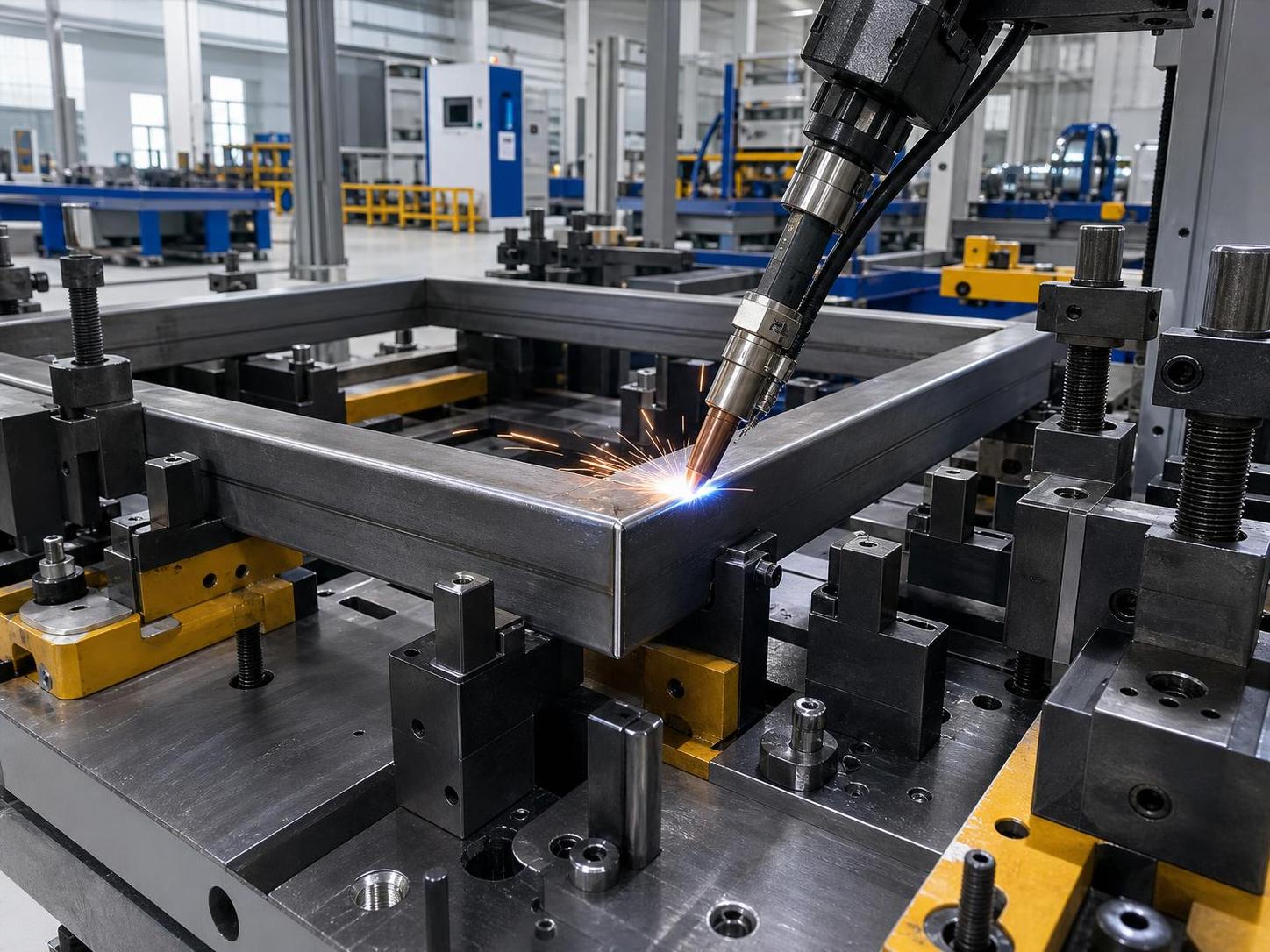
In frame fabrication, selection mistakes rarely show up on day one. They appear later as fit-up delays, rework at the corner joints, unstable cycle times, or an output target that looked reasonable on paper but keeps slipping in actual production. That is why choosing a frame welding machine is less about finding the “most advanced” model and more about matching the machine to the geometry of your product, the weld path it must handle, and the pace your workshop needs to sustain.
For technical evaluators, three questions usually drive the decision: What frame sizes will run most often? What joint configurations are involved? And how many parts must leave the line per shift, per week, or per month? Once those are clear, machine structure, clamping method, welding process, and automation level become much easier to judge.
Start with the real product envelope, not the maximum machine capacity
It is tempting to shortlist a machine by maximum width and length alone. But frame fabrication is rarely that simple. A machine that can physically accommodate a large frame may still be inefficient if your actual mix includes frequent changeovers, thin-wall profiles, or a high percentage of small and medium workpieces.
When evaluating machine size, look beyond the headline specification and define the full production envelope:
- Overall frame length, width, and height range
- Material section type: tube, angle, channel, box section, or plate-built frame
- Wall thickness variation across product families
- Need for single-station versus dual-station loading
- Allowance for fixtures, tack points, and torch access
A common mistake is buying for the largest occasional frame rather than the most frequent production mix. If 80% of output comes from medium-size rectangular frames, a highly optimized medium-range machine may outperform a larger universal model in both throughput and weld consistency. Oversizing can increase footprint, fixture complexity, and non-welding motion, all of which affect cost per part.
Joint type changes everything
Two products may share the same external dimensions and still require completely different welding solutions. The reason is joint design. Corner joints, T-joints, lap joints, miter joints, and multi-pass heavy-section connections each place different demands on positioning accuracy, torch travel, seam tracking, and heat input control.
If your frames rely mainly on standard 90-degree corner joints with repeatable dimensions, a dedicated or semi-automatic frame welding system can deliver stable results with relatively simple programming. If the product includes mixed joints, interrupted welds, internal corners, or access-restricted areas, flexibility becomes more valuable than raw speed.
Technical evaluators should map joint types against these machine capabilities:
- Positioning repeatability: critical for narrow fillet tolerances and aesthetic welds
- Torch accessibility: important for deep corners, boxed sections, and obstructed paths
- Multi-axis movement: useful when frames are not fully planar
- Seam correction or adaptive control: valuable when part variation is difficult to eliminate upstream
- Process suitability: MIG/MAG, TIG, or submerged arc depending on section thickness and weld requirements
In other words, the machine should fit the weld, not only the frame.
Output target is more than cycle time
When buyers discuss output, they often focus on welding speed. But in frame manufacturing, productive time is shaped by a chain of events: loading, clamping, alignment, tack welding, seam welding, unloading, fixture reset, and inspection. The fastest arc-on rate does not guarantee the best line performance if setup time remains high.
To estimate whether a frame welding machine can hit your output target, break the process into measurable elements:
- Average loading and locating time per frame
- Time needed to clamp and verify squareness
- Actual welding arc time
- Part rotation or repositioning time
- Post-weld handling and cooling constraints
- Changeover time between frame variants
This is especially important in mixed-model production. A machine may look excellent in a single-part demonstration but lose its advantage once real factory variation is introduced. For low-volume, high-mix environments, shorter setup and easier reprogramming may matter more than peak welding speed. For repetitive batches, dedicated fixtures and automated indexing usually bring stronger returns.
How to align machine type with manufacturing reality
There is no single best architecture for every frame workshop. The right choice depends on where your current bottleneck sits.
Manual or assisted frame welding stations still make sense when products change frequently, frame geometry is irregular, or lot sizes are small. They offer flexibility, but weld quality depends heavily on operator skill and consistency can drift across shifts.
Semi-automatic frame welding machines are often the practical middle ground. They improve alignment, repeatability, and weld travel consistency while keeping investment and programming complexity manageable. For many fabricators, this category offers the best balance between output improvement and operational flexibility.
Fully automatic or robotic frame welding systems become attractive when part families are stable, annual volume justifies dedicated engineering, and the cost of variation is high. They reduce dependence on manual welding skill, but only if upstream cutting, fit-up, and fixture control are already disciplined.
If upstream accuracy is poor, even an advanced welding cell will spend its time compensating for bad inputs rather than producing clean output.
Upstream preparation has a direct impact on welding performance
One point is often underestimated during machine selection: the welding station inherits every dimensional inconsistency created before the part reaches the arc. Uneven cut edges, inaccurate hole locations, and plate distortion increase fit-up time and reduce automation effectiveness.
In frame production lines where plates or connection components need precise drilling or milling before assembly, upstream machining quality can meaningfully affect weld repeatability. Equipment such as the High Speed CNC Drilling Milling Machine for Steel Plates is relevant in these workflows because accurate drilling, tapping, and milling on steel plates, flanges, and structural components helps maintain fixture consistency and assembly precision. For technical teams evaluating welding automation, this matters: better prepared parts generally mean less compensation at the weld stage.
That is especially true for frames used in building steel structures, power-related steel assemblies, and petrochemical equipment, where hole patterns, connection surfaces, and thickness control can influence final fit-up. A machining platform with automatic positioning, internal and external cooling, and automatic chip removal may not be part of the welding cell itself, but it can still raise the practical performance ceiling of the welding line.
Fixture strategy often decides whether the investment pays back
Ask two suppliers to quote the same frame welding machine and the difference may not be the welding source at all. It may be the fixture philosophy. A strong machine paired with weak workholding will underperform; a moderate machine with well-designed clamping can exceed expectations.
During evaluation, pay close attention to:
- How the frame is referenced: edge, centerline, hole pattern, or external stops
- Whether clamping controls distortion without overconstraining the part
- How fast fixtures can switch between product variants
- Whether the design supports future frame sizes without a full rebuild
- How easily operators can load, inspect, and remove parts
Frames are vulnerable to cumulative tolerance errors. A fixture that aligns one side well but allows drift at the opposite corner can create recurring diagonal deviation. In practice, fixture design is where many “good on paper” welding automation projects either stabilize or struggle.
What technical evaluators should ask suppliers before shortlisting
Supplier discussions become more useful when the questions are specific. Rather than asking whether a machine is “suitable for steel frames,” focus on the production logic behind the proposal.
- What frame families can run on one fixture set, and what requires dedicated tooling?
- How does the machine handle part variation at corner joints?
- What is the realistic cycle time including loading and unloading?
- What welding process is recommended for your section thickness range?
- How are distortion and squareness controlled during the weld sequence?
- How long does changeover take between product sizes?
- What maintenance points most affect uptime?
- Can the system scale later with additional stations, positioners, or robot integration?
These questions quickly reveal whether a supplier understands production behavior or is simply matching catalog specifications to your inquiry.
Selection trade-offs that are easy to miss
Every frame welding machine decision involves compromise. The challenge is making the right compromise for your manufacturing model.
If you choose maximum flexibility, you may give up some throughput. If you optimize around one product family, future variation may become expensive. If you automate too early without tightening part preparation, the system may spend too much time waiting for manual correction.
Another overlooked factor is operator adoption. A technically excellent system can still underdeliver if programming, loading logic, or troubleshooting is too demanding for the available team. Ease of operation is not a soft issue; it is a productivity issue. This is one reason many manufacturers prefer integrated solutions with straightforward controls and clear maintenance access.
In broader fabrication environments, companies often evaluate not just welding machines but adjacent process equipment together. For example, if frame components include machined plate details, a platform like High Speed CNC Drilling Milling Machine for Steel Plates can support more predictable pre-weld preparation across multiple workpiece sizes, from 1000 × 1000 mm up to 4000 × 1600 mm, with automated drilling and milling features that reduce manual intervention. This kind of process alignment can be just as important as the welding machine itself when output targets are tight.
A practical decision path
If you need a working shortlist method, build it around four filters.
Filter one: product mix. Separate standard high-volume frames from variable low-volume jobs. Do not assume one machine should serve both equally well.
Filter two: joint complexity. Rank your products by weld accessibility, tolerance sensitivity, and likelihood of distortion.
Filter three: output model. Define the target in completed acceptable frames, not just weld speed or machine hours.
Filter four: upstream readiness. Check whether cutting, drilling, milling, and fit-up quality are consistent enough to support the level of welding automation under consideration.
After that, compare machine proposals using a realistic part sample set, not only ideal drawings. Include your most common frame, your most difficult frame, and one version that represents expected future demand. That gives a far better picture of long-term suitability than a single demonstration part.
What the right choice usually looks like
The best machine is usually not the one with the most features. It is the one that fits the way your shop actually builds frames: the size range you run every week, the joints that create the most rework, the takt time your line can realistically support, and the skill level available on the floor.
For manufacturers and fabricators evaluating capital equipment, that broader systems view matters. Wuxi Samgins International Trade Co., Ltd supplies a range of fabrication and machining equipment for metal processing environments, from welding automation to CNC cutting and plate-processing machinery, with production organized in line with ISO9001 quality system requirements and EU CE standards. For technical buyers, this kind of multi-equipment perspective can be useful because welding performance is rarely isolated from the rest of the process chain.
In the end, selecting a frame welding machine is a decision about manufacturing fit. If the machine suits your product size, joint type, and output target at the same time, weld quality becomes more stable, planning becomes more credible, and expansion becomes easier to manage. That is the real benchmark of a sound investment.
search
Products Navigation
Send Us A Message