




Beam Production Line Supplier Selection: Lead Time, Service, and Lifecycle Cost
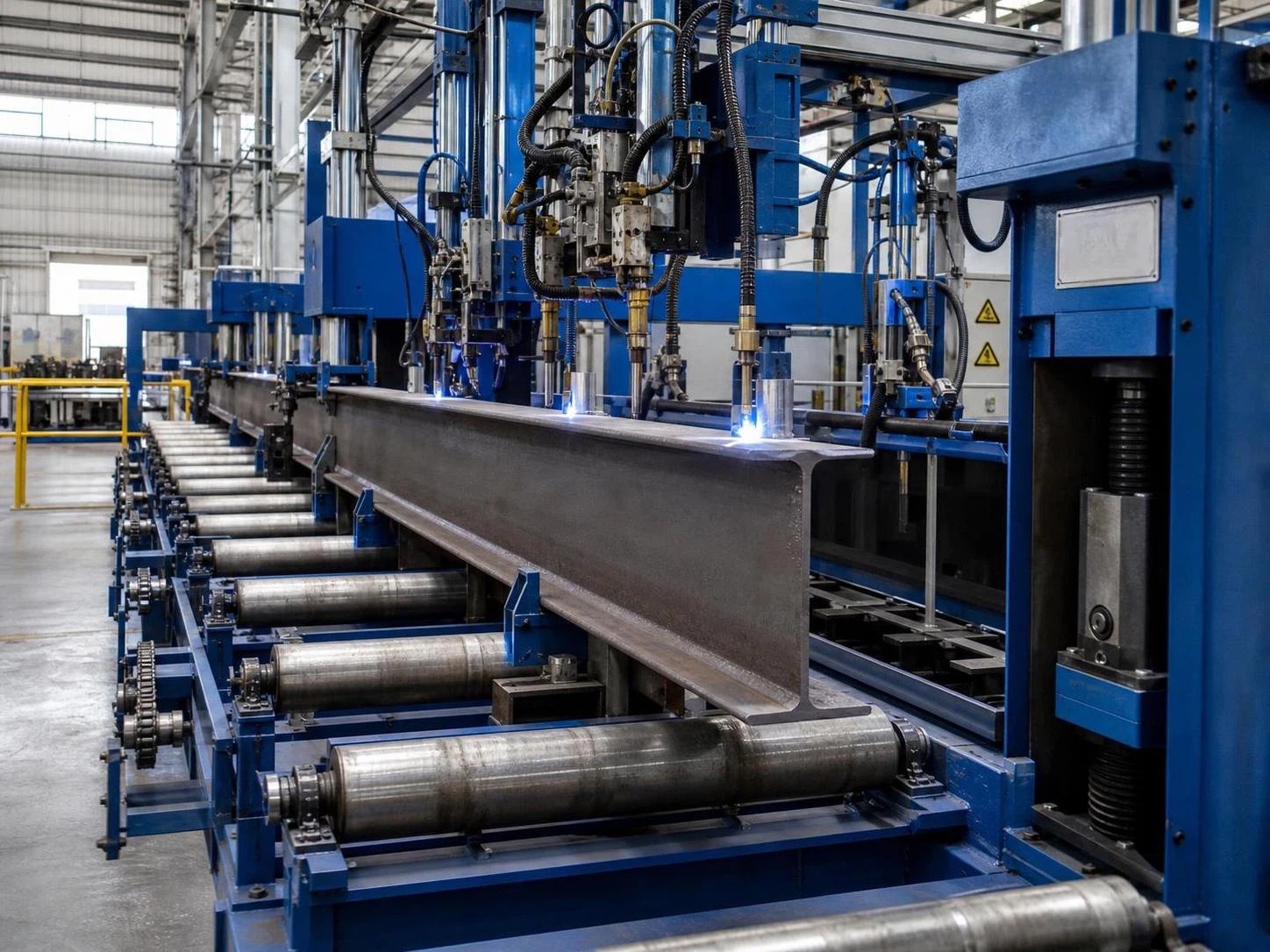
Most people searching for a beam production line supplier are not trying to compare catalog pages. They are trying to reduce project risk. The real question is usually this: which supplier can deliver a line that reaches production on time, keeps quality stable under real shop conditions, and does not become an expensive service problem six months after handover?
That is why purchase decisions in this segment should not be led by headline price alone. For beam fabrication, especially where H-beams, box beams, or heavy welded structures are part of a wider manufacturing flow, the supplier affects installation timing, operator ramp-up, spare parts continuity, maintenance response, and even downstream weld quality. A lower quotation can still produce a higher total cost if commissioning runs long, consumables are nonstandard, or the line cannot maintain repeatable accuracy under the buyer’s actual workload.
Lead time is not just delivery time
In supplier discussions, “lead time” is often reduced to the date the equipment leaves the factory. For business evaluators, that is too narrow. A beam production line creates value only when it is producing acceptable output at target rhythm. The useful lead time runs from purchase order to stable production.
That broader timeline usually includes design confirmation, electrical and mechanical configuration, manufacturing, internal testing, shipment, customs clearance for export projects, on-site installation, commissioning, operator training, and process tuning. Any weak point in that chain can shift project payback by weeks or months.
When comparing suppliers, it helps to ask three practical questions:
- What portion of the line is standardized, and what portion is engineered for this order?
- At what stage are layout drawings, utility requirements, and foundation details frozen?
- What evidence shows the supplier can keep the commissioning phase short?
A supplier with a slightly longer factory build schedule but a disciplined pre-installation process may outperform one promising faster shipment with vague site preparation guidance. In beam fabrication, delayed utility matching, missing fixtures, software parameter issues, or poorly coordinated welding integration often cause more disruption than the manufacturing lead time itself.
Service capability matters more than many RFQs admit
After-sales service is frequently treated as a checklist item in RFQs, but in practice it is one of the strongest predictors of lifecycle cost. Beam lines are not isolated machines. They are production systems combining conveying, positioning, welding, correction, material handling, electrical controls, and often CNC subsystems. Problems do not always appear as clear component failures. Sometimes they show up as unstable cycle time, dimensional drift, poor weld consistency, or recurrent alarms that operators bypass rather than solve.
That is why buyers should evaluate service in operational terms, not marketing terms. “Global support” means little without response structure. What matters is whether the supplier can provide remote diagnostics, English-language technical documentation where needed, spare parts identification, structured escalation, and access to engineers who understand both machine hardware and process behavior.
For overseas buyers especially, one useful distinction is whether the supplier mainly exports equipment or can also support exported equipment. Those are not the same capability. A company may have experience shipping machines to Southeast Asia, Europe, the Americas, or Oceania, yet the real test is how quickly it can resolve issues once the line is integrated into the customer’s plant.
Ask for detail on service coverage, not promises:
- Typical response time for remote troubleshooting
- Recommended spare parts package for the first 12 to 24 months
- Local partner availability or direct factory support model
- Training scope for operators, maintenance staff, and programmers
- Software backup, parameter recovery, and control system support procedures
If the answers stay general, that is already useful information.
Total lifecycle cost is where supplier differences become visible
In capital equipment buying, total lifecycle cost is easy to mention and easy to underestimate. For a beam production line, it should include far more than equipment price and freight. Energy use, consumables, routine maintenance, downtime exposure, labor intensity, rework rate, floor space efficiency, and upgrade flexibility all affect the real economics.
Some buyers focus heavily on achieving a lower initial purchase figure, especially when multiple suppliers appear to offer similar line layouts. The problem is that “similar” on paper may hide meaningful differences in frame rigidity, drive selection, rail design, component brand consistency, control architecture, and accessibility for maintenance. These details influence long-term stability and repair cost.
A useful commercial comparison often includes the following cost buckets:
This is also where adjacent process equipment deserves attention. In many heavy fabrication environments, edge preparation has direct influence on welding efficiency and downstream quality. For example, where the production mix includes tanks, pressure vessels, or heavy structural sections, buyers may evaluate dedicated beveling and edge milling solutions alongside the main line. A machine such as Beveling & Milling Edge For Heavy Tank is relevant not because it replaces a beam line, but because one-pass bevel formation, reduced secondary grinding, and broader material adaptability can change labor and quality economics across the fabrication workflow.
Do not assume every “complete line” fits your production reality
One common mistake in supplier selection is assuming a complete beam production line is automatically the best answer. In reality, the right configuration depends on throughput target, beam size range, welding specification, labor skill level, and how variable the order mix is.
A plant producing long runs of similar sections may benefit from a more integrated and automated line. A plant with frequent size changes, mixed material batches, or irregular heavy components may need a more modular arrangement that sacrifices some nominal speed for flexibility and shorter changeover. Buyers should be cautious about buying automation capacity that looks impressive during demonstration but adds complexity without lifting actual plant utilization.
This is where process mapping helps more than catalog comparison. Before supplier negotiation, define:
- Expected annual tonnage and realistic utilization rate
- Typical beam dimensions, thicknesses, and tolerances
- Material grades in normal production, not exceptional cases only
- Welding process requirements and quality standard expectations
- Labor availability by shift and maintenance capability on site
- Planned future expansion or product diversification
Without that baseline, it is difficult to judge whether a supplier is offering a production solution or simply maximizing equipment scope.
Technical discussions should expose risk, not just capability
Many technical proposals sound convincing because they list functions: automatic conveying, CNC control, welding integration, correction units, and so on. Capability matters, but evaluators should push further and ask where the failure points are likely to appear in daily use.
For example, what happens when beam straightness varies more than expected? How tolerant is the system to upstream material inconsistency? How much operator intervention is needed during size changeover? Which components are proprietary, and which use standard market parts? What alarms stop production completely, and which can be managed without waiting for factory support?
These questions often reveal the difference between a supplier that knows workshop reality and one that mainly sells by specification sheet.
It can also be helpful to examine how the supplier designs for structural stability and maintenance practicality in related heavy-plate processing equipment. On edge preparation machinery, for instance, features such as stress-relieved welded frames, vibration-resistant guide rail arrangements, variable feed control, detachable heat-treated rails, or standard indexable inserts are not just engineering details. They indicate whether the manufacturer is thinking about deformation control, serviceability, and long-run process stability. That kind of design logic often carries over into larger fabrication systems as well.
Compliance and documentation should be treated as operating tools
For cross-border purchasing, compliance claims such as ISO9001-based production management or CE-related conformity may be relevant, but buyers should avoid treating them as a substitute for machine-specific verification. Certification language can support confidence, yet it does not answer whether the delivered line matches your electrical standard, guarding requirement, documentation expectation, or operator safety process.
Request the documentation that your team will actually use:
- General layout and foundation drawings
- Utility consumption and connection requirements
- Electrical schematics and control architecture overview
- Preventive maintenance schedule
- Recommended spare parts list
- Acceptance criteria for factory and site tests
If these materials arrive late, incomplete, or inconsistent during quotation stage, that often predicts avoidable friction later in the project.
Reference checks should focus on operational fit
Reference projects are useful, but only when they are comparable. A supplier may have many installations, yet not in your production range, geography, or quality environment. The most valuable references are those that resemble your plant conditions: similar beam sizes, similar labor structure, similar customer quality expectations, and similar after-sales distance.
Instead of only asking whether the customer is satisfied, ask what happened in the first six months. Was commissioning longer than planned? Were spare parts easy to source? Did actual throughput match quotation assumptions? How often was remote support needed? What parts of the system required operator workarounds?
That kind of feedback is more useful than a generic positive endorsement.
How business evaluators can compare suppliers more effectively
At a practical level, supplier selection becomes clearer when commercial, technical, and service factors are weighted together. A structured scorecard is often more reliable than informal preference, especially when several bidders appear close on price.
Typical evaluation dimensions include:
- Ability to meet target production and quality requirements
- Confidence in lead time and commissioning readiness
- Service responsiveness and spare parts support model
- Transparency of technical proposal and exclusions
- Lifecycle cost position, not just bid price
- Flexibility for future product changes
- Export experience and communication efficiency
The point is not to create a perfect formula. It is to prevent one attractive number from overpowering the full decision.
For buyers reviewing a beam production line supplier, the strongest choice is usually the one that makes fewer assumptions invisible. Reliable lead time, credible service structure, and a defensible lifecycle cost model are what turn equipment procurement into production capacity. Everything else is presentation.
search
Products Navigation
Send Us A Message