




How to Select a Hydraulic Sheet Metal Guillotine for Thickness, Width, and Output
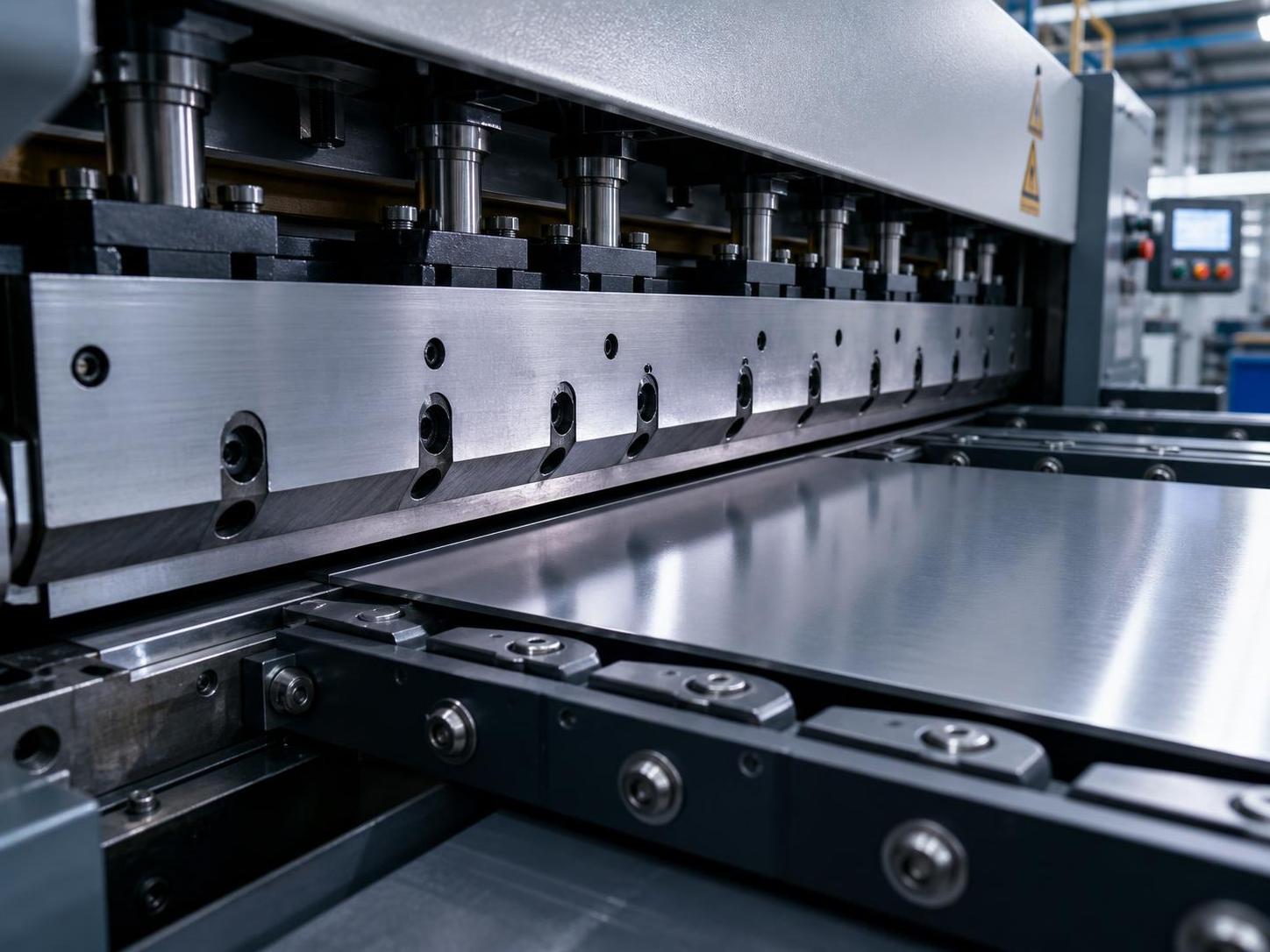
If you are comparing a hydraulic sheet metal guillotine, the real question is not just “What thickness can it cut?” It is whether the machine can cut your actual material mix, your real sheet width, and your daily output without slowing the line or creating quality problems. Buyers often focus on the maximum cutting number in the brochure, then find out later that edge quality drops, cycle time is too slow, or the machine is oversized for the work. A better selection process starts from the jobs you run most often, not the most impressive specification on the page.
In practical purchasing, thickness, width, and output always affect each other. A guillotine that handles thicker plate may not deliver the speed you want on long batches of thinner sheet. A machine that looks fast on paper may become inefficient if the backgauge travel, blade clearance adjustment, or material handling setup does not match your workflow. That is why a hydraulic sheet metal guillotine should be chosen as part of a production process, not as a standalone piece of equipment.
Start with the jobs you run 80% of the time
Many procurement mistakes begin with a “just in case” mindset. A buyer sees occasional demand for thicker material and purchases around that rare requirement. The result is often higher cost, more floor space, more power consumption, and lower efficiency on the work that actually pays the bills.
A more reliable way is to map your routine production like this:
- Material type: mild steel, stainless steel, aluminum, or mixed jobs
- Common thickness range: not only maximum thickness, but the most frequent thickness
- Maximum sheet width and the usual cutting width
- Batch size: small-lot, medium-lot, or repeated production
- Downstream requirement: welding, bending, painting, assembly, or cosmetic finish
That last point matters more than many teams expect. If cut parts go directly into bending or visible assembly, edge straightness and burr control become more important than headline cutting force.
A short answer buyers can use: choose the machine for your normal workload first, then leave reasonable margin for peak jobs. Buying around rare extremes usually hurts total efficiency more than it helps.
How to judge thickness capacity without overbuying
Thickness is the first filter, but it should never be read in isolation. When a supplier lists cutting capacity, that number is usually tied to a certain material type and tensile strength. Mild steel, stainless steel, and aluminum do not behave the same way under shear. A machine rated for one thickness in mild steel may need a different expectation for stainless.
For buyers, the safer question is: what material are we cutting, at what strength, and at what cut length? A machine can appear capable at short lengths and lighter duty cycles, then struggle when asked to run full-width sheets continuously.
There are three practical rules here.
- Do not size only by maximum thickness. Size by your most common thickness plus the heaviest material you regularly process.
- Ask for capacity by material type, not one generic figure.
- Leave operating margin. Running constantly at the machine’s top limit is rarely the best long-term plan for blade life, hydraulic stability, or edge quality.
If your shop mostly cuts 2 mm to 6 mm carbon steel with occasional 8 mm work, the right choice is often not the same as a shop that routinely cuts near the upper limit every shift. The machine may look similar in a catalog, but the wear pattern and productivity outcome will not be.
The width decision is really about stability and handling
Buyers often treat sheet width as a simple pass-or-fail number: can the machine cut 2500 mm, 3200 mm, or 4000 mm? In reality, width influences more than access. It affects frame rigidity, cut consistency across the full length, installation space, feeding efficiency, and operator handling.
If your product mix includes long sheets, pay attention to what happens at full cutting width, not just at shorter test pieces. Long cuts expose machine rigidity issues faster. They also magnify problems with sheet support and backgauge accuracy.
Before you decide on width, confirm:
- Maximum sheet size you purchase and store
- Whether full-width cuts are common or only occasional
- Available infeed and outfeed space
- Whether operators load manually or with supporting devices
Some buyers select a wider machine to “stay flexible,” but if the extra width is rarely used and the plant layout becomes awkward, the gain is mostly theoretical. Wider is not automatically better. Wider only helps when the business genuinely uses that capacity.
Output is where many comparisons become misleading
Two machines can have similar thickness and width ratings and still produce very different daily output. That is because output depends on the entire cutting cycle, not just blade movement.
When evaluating output, look beyond strokes per minute. Ask how long it takes to position the sheet, adjust the backgauge, set blade clearance, change material thickness, and remove finished parts. In repeated production, those “small” seconds decide whether the machine supports your line or becomes a bottleneck.
For procurement teams, output usually comes down to four questions:
- How often does the job setup change?
- How tight is the dimensional tolerance requirement?
- How many cuts per shift are realistic, not theoretical?
- Can one operator keep the machine fed without fatigue or waiting time?
If your orders involve frequent changeovers and mixed sizes, easy setup may be more valuable than maximum cutting speed. If the work is repetitive and standardized, then stable cycling and material flow deserve more weight.
Features that matter in a hydraulic sheet metal guillotine
Not every option improves buying value. Some do; some only make the quote look more advanced. The features below usually have a direct effect on daily use.
Backgauge accuracy and repeatability. This affects part consistency more than many first-time buyers realize. If your operators need to measure and correct repeatedly, output drops fast.
Blade clearance adjustment. Different materials and thicknesses need appropriate clearance. On mixed-material work, easier adjustment can save time and reduce edge defects.
Hold-down stability. Good hold-down performance helps control sheet movement, especially on thinner or wider workpieces.
Control system usability. A practical control interface matters if you run different jobs in the same shift. Overly complex controls can slow simple work.
Maintenance access. Blade changes, hydraulic inspection, lubrication points, and wear-part access should be easy to manage. Procurement should care about this because difficult maintenance becomes hidden cost.
Safety and compliance. Safety guarding, emergency stops, and standard compliance should be verified against your destination market and plant requirements. For export projects or regulated customers, this is not a formality.
Wuxi Samgins International Trade Co.,Ltd has been supplying metalworking equipment since 2012, covering shearing machines, bending machines, CNC cutting systems, deburring equipment, and related production-line machinery. For buyers, that kind of broader equipment background can be useful because guillotine selection often connects to the next process, not just the cut itself. If a supplier only discusses the shear in isolation, the advice may be incomplete.
The hidden cost is often after the cut
Here is a detail that experienced buyers usually check early: what condition does the cut edge leave for the next process?
If parts go to welding, assembly, or visible finishing, burrs and sharp edges may create secondary work. In that case, the cheapest shearing decision on day one can become the expensive process on day two. For some operations, especially when different cutting methods are used in the same workshop, it makes sense to evaluate deburring capacity alongside the guillotine purchase.
For example, if your line also handles parts from shearing, laser cutting, plasma cutting, or flame cutting, a finishing unit such as RNS 800 Sheet metal deburring machine may be relevant as a downstream support process rather than as a replacement for careful shearing selection. Its stated application range covers burr removal, surface finishing, descaling, and edge treatment on metal sheets, with processing width up to 800 mm and thickness from 0.5 mm to 40 mm. That matters mainly for buyers who are trying to reduce manual edge cleanup and stabilize finish quality across mixed part sources. If your work is heavy plate with minimal finish requirements, this may be less important.
Common buying mistakes
One common mistake is trusting only the maximum capacity figure. Another is ignoring the material mix. Stainless steel jobs, cosmetic sheet parts, and frequent short batches put different demands on the same machine.
A third mistake is not checking the surrounding workflow. A hydraulic sheet metal guillotine can be technically correct and still commercially wrong if sheet loading is awkward, the operator cannot maintain pace, or downstream deburring adds too much labor.
I would also be careful with very low-priced offers that provide little detail on hydraulic components, control brand, blade specification, or service support. A guillotine is not a complicated machine in principle, but stable long-term performance still depends on build quality and support discipline.
How procurement teams can compare suppliers more usefully
When you send inquiries, give suppliers the same job profile. Do not just ask for “price for a 6 x 3200 machine.” Ask them to respond to your actual materials, width range, production rhythm, accuracy expectations, and destination standards. That makes the comparison much more useful.
A practical RFQ should include:
- Main material types and thickness range
- Maximum and typical sheet width
- Estimated cuts per shift or per day
- Tolerance expectations
- Whether the machine will run single-shift or multi-shift
- Power supply and installation constraints
- Required standards or certifications to be verified with the supplier
Then ask for blade life assumptions, recommended spare parts, maintenance interval guidance, and delivery scope. If a quotation is vague on these points, the “low” price may not stay low for long.
When a bigger machine is the wrong machine
There is a persistent belief that buying larger capacity is automatically safer. Sometimes it is. Often it just means tying up budget in capability that does not return value.
If your orders are mainly thin sheet, moderate width, and repetitive volume, a right-sized machine usually gives better operating economics than an oversized model. The larger unit may consume more resources and still not improve your actual throughput. Bigger helps when your business model really needs the range, not when the requirement is hypothetical.
The best buying decisions usually come from a simple discipline: match the machine to the production reality, then check whether it will still make sense three to five years from now.
Before placing the order, confirm one last time what success should look like: consistent cuts at your normal thickness, reliable performance at your normal width, and output that fits the rest of the line. If a hydraulic sheet metal guillotine can do those three things well, it is probably the right machine. If it only looks impressive in the catalog, keep comparing.
FAQ
Should I choose by maximum thickness or by my usual material range?
Choose by your usual range first, then leave margin for regular peak jobs. Sizing around rare extremes often reduces overall value.
Does a wider machine always improve flexibility?
Only if you regularly cut wider sheets. Otherwise, it can add cost, space pressure, and handling complexity without improving output.
What matters more for output: speed or setup time?
For repetitive work, speed matters. For mixed jobs and frequent changeovers, setup time and backgauge usability often matter more.
When should I care about deburring after shearing?
When parts move into welding, visible assembly, coating, or manual handling. Burrs and sharp edges can add labor and affect finish quality.
Internal Link Anchor Text Suggestions
- sheet metal shearing machine buying guide: guide or category page
- how to choose a press brake for production needs: related selection article
- deburring solutions for laser and sheared parts: product or solution page
- metal fabrication line equipment from cutting to finishing: overview page
Suggested External Source Directions
- brand official technical documentation for shearing machines
- industry association guidance on metal fabrication safety and machinery use
- official standards or regulatory pages related to machine safety and compliance
search
Products Navigation
Send Us A Message