




Hydraulic Swing Beam Guillotine vs Guillotine Shear: Which Cuts Better for Mild Steel?
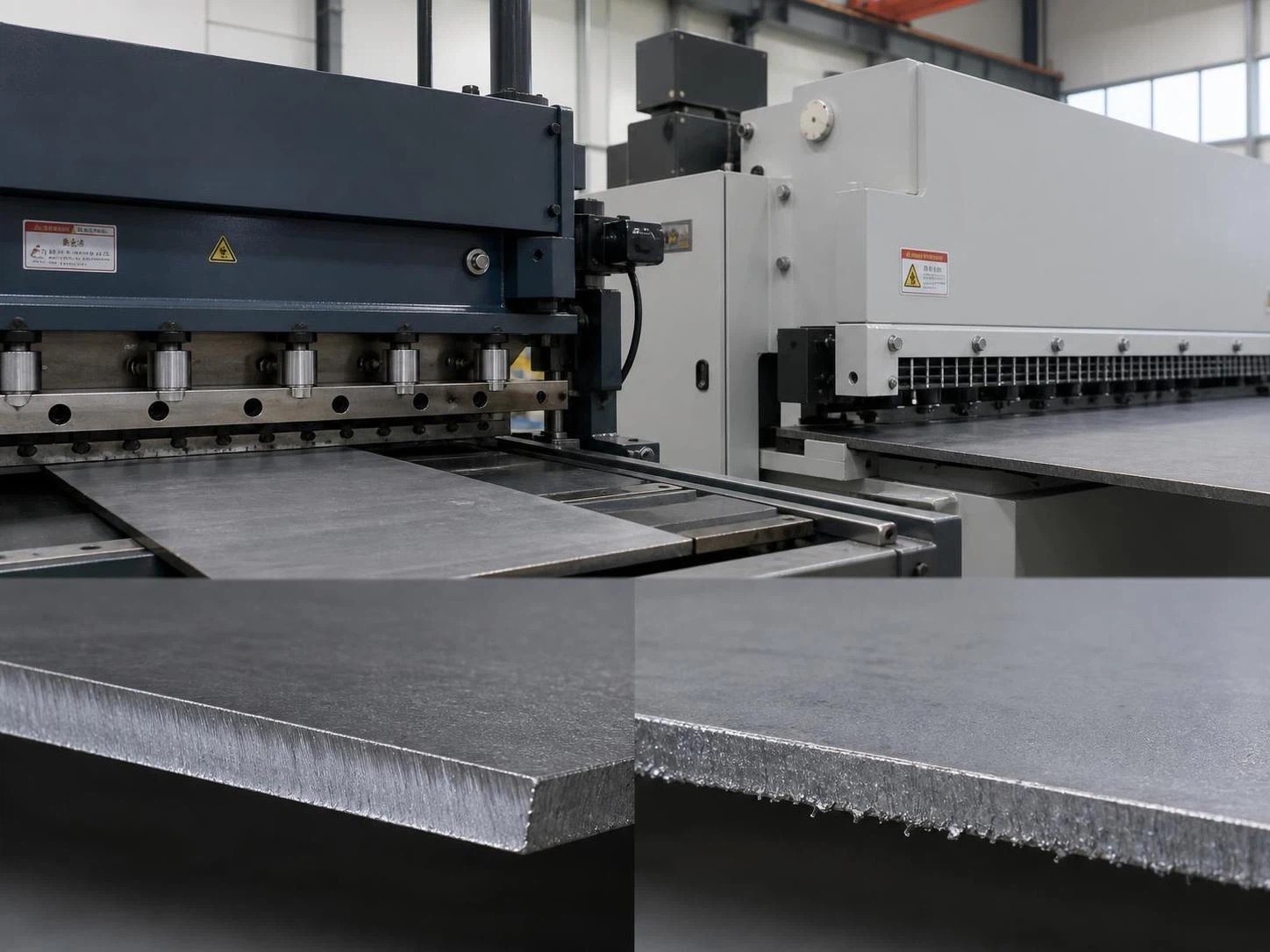
When comparing a hydraulic swing beam guillotine with a guillotine shear for mild steel, technical evaluators need more than nominal cutting force and maximum thickness figures. In real production, the better machine is the one that maintains straightness, controls burr formation, supports the required tolerance band, and does so at an acceptable operating cost over time. For mild steel fabrication, the question is not simply which machine “cuts better,” but which design cuts better under your plate range, batch pattern, downstream process, and maintenance conditions.
That distinction matters because mild steel is forgiving compared with stainless or aluminum, yet it still exposes machine limitations quickly. If the shear introduces twist, taper, excessive bow, or inconsistent edge quality, those defects are usually carried into bending, fit-up, welding, and assembly. Shops often discover too late that a machine with attractive headline specifications performs poorly once production shifts from occasional rough blanking to repeat work with tighter dimensional expectations.
Why these two machines are often confused
In market language, “guillotine shear” is sometimes used broadly for hydraulic plate shearing machines of several architectures. In stricter technical usage, buyers usually mean a hydraulic swing beam guillotine on one side and a hydraulic variable-rake or straight-moving guillotine shear on the other. Both are hydraulic shearing solutions for sheet and plate, but the blade motion is different, and that difference drives cutting behavior.
A hydraulic swing beam guillotine uses a beam that pivots through an arc during cutting. The design is mechanically simpler and widely used in general sheet metal work. A guillotine shear, in the narrower sense, moves the upper blade more vertically relative to the lower blade, typically with guidance designed to maintain a more controlled blade relationship across the stroke.
For mild steel, both can produce acceptable parts. The better choice depends on whether the shop values lower acquisition cost and general-purpose usability, or tighter control over edge quality and consistency across thickness variation.
What “cuts better” actually means in mild steel processing
Technical evaluation should define cutting quality before comparing machine types. In mild steel, “better” usually includes five measurable outcomes:
- Edge squareness and straightness
- Burr height and fracture zone condition
- Repeatability over batch production
- Flatness distortion after shearing
- Suitability for downstream bending, welding, or machining
If the material is being cut into blanks for structural components where edges will later be welded or machined, a certain amount of burr or edge deformation may be acceptable. If the parts go directly into press brake operations or visible assemblies, the standard becomes stricter. This is why technical teams should not compare shears using only thickness capacity and blade length.
Where the hydraulic swing beam guillotine performs well
The hydraulic swing beam guillotine remains popular because it is practical, robust, and cost-effective for a large share of mild steel applications. For workshops processing standard low-carbon steel sheets in moderate thicknesses, it often provides enough precision without the cost premium of a more rigid guillotine configuration.
Its main strengths are usually:
- Simpler mechanical structure
- Lower initial investment
- Relatively straightforward operation and maintenance
- Good suitability for general fabrication work
In many fabrication environments, especially those cutting mild steel for welded frames, support brackets, agricultural parts, HVAC panels, or general workshop components, the swing beam design is sufficient. If part tolerances are not exceptionally tight and the edge will not serve as a final precision reference, the performance-to-cost ratio can be very attractive.
Another practical advantage is that many operators and maintenance teams are already familiar with the hydraulic swing beam guillotine. That reduces commissioning risk, training burden, and troubleshooting time, especially in facilities where machine uptime matters more than pushing the limit of cut quality.
Where the guillotine shear usually has the advantage
If the comparison is strictly about cut quality on mild steel, the guillotine shear often has the technical edge, especially when material thickness varies, part dimensions are long, or downstream operations demand more consistent blank condition.
Because the upper blade movement is more controlled in a near-vertical path, blade clearance and rake behavior can be managed more consistently across the cut. In practice, this often translates into:
- Better edge geometry
- Lower tendency toward twisting on narrower strips
- More stable repeatability on thicker mild steel
- Improved performance where tighter tolerances are needed
This does not mean every guillotine shear will outperform every swing beam machine. Build quality, guide design, hydraulic stability, blade condition, hold-down effectiveness, and machine setup all matter. But when both machines are from comparable quality levels, the guillotine design usually wins in precision-oriented cutting.
The real issue: blade path, clearance, and deflection
The core engineering difference is not branding language but blade motion under load. Swing beam machines follow an arc, which changes the geometry of the cut slightly throughout the stroke. For many mild steel jobs, that change is acceptable. But when sheets become thicker, narrower, or more sensitive to distortion, the arc motion can make edge consistency harder to maintain.
Guillotine shears are generally preferred where evaluators want tighter control over blade clearance and less variation in cutting action from one section of the blade to another. Mild steel does not eliminate this issue; it simply makes the problem less obvious until precision requirements rise.
Deflection is another point often overlooked during procurement. A machine may be rated for a given thickness, but cut quality near the upper end of capacity is not always commercially acceptable. Technical evaluators should ask suppliers for performance expectations not just at maximum rated thickness, but within the normal operating range the plant will actually use. A machine that cuts 6 mm mild steel acceptably all day may be a safer choice than one nominally rated higher but producing inferior edge quality near its limit.
How thickness range changes the decision
For thin to medium mild steel, especially in general fabrication, a swing beam machine often performs well enough. The cost advantage can be decisive if the application does not require precision blanking.
As thickness increases, or when the factory handles a wider range of plate dimensions and part widths, guillotine shears tend to justify their higher cost. The reason is not only cutting force, but process stability. In thicker material, poor blade control shows up more clearly in burr, bow, and inconsistent fracture surfaces.
Evaluators should also consider whether the plant cuts mostly full-width sheets or frequently shears narrow strips and small blanks. Narrow pieces are more sensitive to movement and distortion during cutting. A guillotine shear usually handles that scenario better.
Downstream impact is often more expensive than the machine itself
Shops sometimes underestimate how shearing quality affects later operations. Mild steel edges that are slightly out of square may still look acceptable at the shear, but they can create alignment problems in welding fixtures, reduce bending consistency, or increase rework at fit-up stations.
This is especially relevant in pressure vessel, pipeline, and steel structure production, where dimensional consistency influences welding productivity. In those environments, shearing is only one step in a larger fabrication chain. Many plants that automate welding with column-and-boom systems or rotators eventually realize that upstream blank quality matters more than expected. For example, facilities integrating an Welding manipulator with positioners and roller beds for longitudinal or circumferential seams often need more stable part geometry to avoid cumulative alignment errors. That does not mean a precision shear is always mandatory, but it does mean the cut edge should be evaluated in the context of the whole process, not as an isolated machine output.
Maintenance and adjustment: a hidden selection factor
From a technical management perspective, the machine that cuts better on day one is not always the one that cuts better after two years. Blade gap adjustment, guide wear, hydraulic stability, hold-down reliability, and frame rigidity all influence long-term performance.
Swing beam machines usually appeal to buyers seeking easier maintenance and lower complexity. That can be a valid advantage in regions or factories where advanced service support is limited. A simpler architecture is easier to keep productive.
Guillotine shears, however, can reward disciplined maintenance with more stable output over time. If a plant has competent service personnel, regular inspection routines, and strong process control, the higher precision potential is more likely to be realized in practice.
This is where supplier evaluation becomes critical. Technical teams should verify not only CE claims or quality certifications where relevant, but also practical details such as spare parts availability, blade specification, hydraulic component brands, guide system durability, and whether adjustment procedures are operator-friendly. Published standards and certifications can indicate manufacturing discipline, but they do not replace a realistic review of machine serviceability.
Questions that expose the better choice faster than brochure data
During evaluation, the most useful questions are usually operational rather than promotional:
- What mild steel thickness range represents 80% of actual production?
- What edge quality is required before deburring or secondary finishing?
- Will the cut edge be used for direct bending or fit-up?
- How often are narrow strips or short blanks produced?
- What is the acceptable level of bow, twist, and burr?
- How skilled is the maintenance team in blade setup and hydraulic troubleshooting?
- Is the machine selected for present demand only, or for a future move toward tighter fabrication control?
These questions often lead to a clearer answer than comparing maximum shearing capacities line by line.
Common buying mistakes in mild steel shearing projects
One common mistake is buying for maximum thickness rather than dominant production thickness. Another is assuming all mild steel behaves similarly. In reality, sheet width, surface condition, incoming flatness, and grade variation can influence the visible cutting result.
A third mistake is evaluating the shear without considering the plant’s upstream and downstream equipment balance. In some production systems, improving shearing quality reduces problems at welding, straightening, and assembly far more than expected. In others, the application is rough fabrication, and the premium for a higher-precision guillotine is difficult to recover.
There is also a tendency to overfocus on machine type and underfocus on execution quality. A well-built swing beam from a serious manufacturer may outperform a poorly built guillotine shear. Technical evaluation should always include frame construction, hydraulics, blade quality, controls, hold-down design, and evidence from test cuts in the buyer’s actual mild steel range.
So which cuts better for mild steel?
If the question is purely about potential cut quality, consistency, and control, the guillotine shear generally cuts better for mild steel. It is usually the stronger option where tolerance discipline, edge condition, and downstream precision matter.
If the question is about practical value in general fabrication, the hydraulic swing beam guillotine often delivers the better balance. It can be the smarter selection for shops processing routine mild steel work where acceptable quality, ease of maintenance, and lower capital cost are more important than achieving the best possible edge.
The most reliable conclusion is this: choose the guillotine shear when your process is sensitive to edge accuracy, distortion, and repeatability; choose the hydraulic swing beam guillotine when your production is broader, less tolerance-driven, and cost efficiency matters more than marginal gains in cut quality.
For technical evaluators, the decision should be validated with controlled trial cuts on representative mild steel sheets, measured not only at the shear but after bending, welding, or assembly. That is where the real difference between these two machine types becomes commercially visible.
search
Products Navigation
Send Us A Message