




Why Hydraulic Metal Guillotine Blades Chip Early and How to Extend Service Life
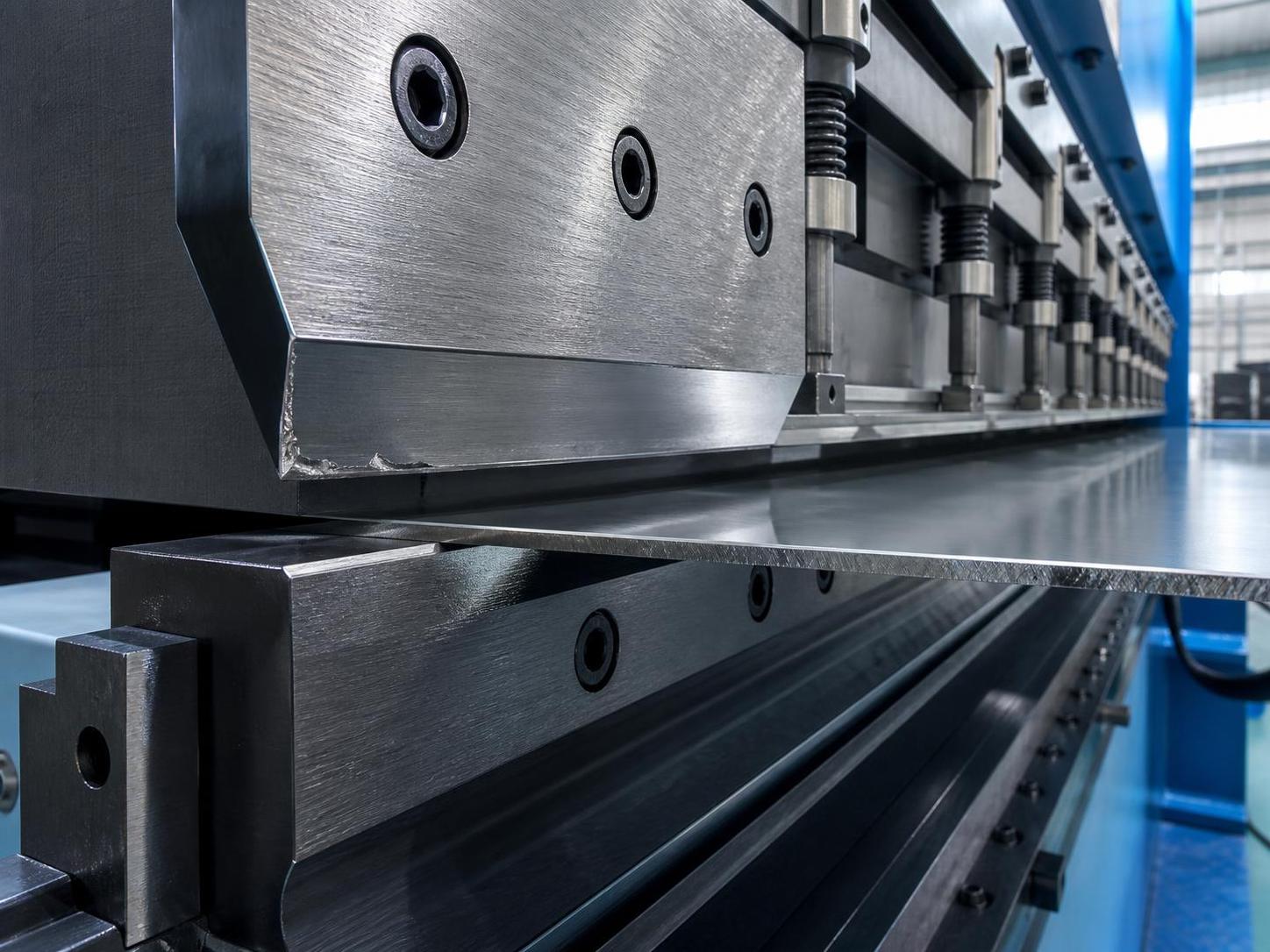
Why hydraulic metal guillotine blades chip earlier than expected
Early chipping on a hydraulic metal guillotine is rarely caused by one single mistake. In most workshops, it comes from a combination of material mismatch, setup deviation, edge impact, and maintenance habits that looked harmless at the time. The trouble is that once a blade starts chipping, the damage tends to spread fast. A small nick becomes a line on the cut edge, then operators increase clearance or pressure to “push through,” and the machine enters a cycle of rough cutting, burrs, and avoidable downtime.
For maintenance teams, the practical question is not just why the blade failed, but what changed in the machine or production routine before the failure showed up. That is usually where the real answer sits.
Chipping is often impact damage, not normal wear
A lot of people describe blade failure as “wear,” but chipping is different. Normal wear is gradual dulling. Chipping means the cutting edge experienced a localized overload. On a shearing machine, that overload may come from hitting hard spots in the plate, cutting material outside the blade’s intended range, or from mechanical conditions that force one part of the blade to take more load than the rest.
This distinction matters. If the edge is only dull, sharpening intervals and lubrication routines may solve the issue. If pieces are breaking away from the edge, sharpening alone will not fix the root cause. The next set of blades may fail in the same way after a short run.
The common causes maintenance teams should check first
Blade clearance is usually near the top of the list. If clearance is too tight for the sheet thickness and material grade, the blade edge sees excessive compressive stress and can chip, especially on stainless steel or higher-strength plate. If clearance is too large, the cut becomes unstable, the fracture zone increases, and impact loading rises at specific points of the blade. Neither condition is healthy for edge life.
Material variation is another big one. In real production, “same thickness” does not always mean same cutting behavior. Carbon steel, stainless steel, and aluminum respond very differently. Surface scale, work-hardening, prior flame cutting, or welded areas can also change local hardness. A hydraulic metal guillotine set up for mild steel may struggle if production quietly shifts to tougher or less uniform material.
Then there is hold-down performance. If the hold-down system does not clamp evenly, the plate can lift or move at the moment of cut. That movement creates micro-impact on the blade edge. Operators may only notice that the cut quality looks inconsistent from one side to the other, but maintenance should read that as a warning sign.
Mechanical alignment also gets overlooked because the machine may still be “working.” Ram parallelism, gibs, guide wear, backgauge interference, and table condition all affect how the load is distributed across the blade length. One chipped section in the same location again and again is often a machine condition problem, not bad luck.
What early chipping usually looks like in the field
The pattern of damage tells a story. A few examples:
- Chipping near one end of the blade often points to misalignment, uneven clearance, or off-center cutting habits.
- Random small chips along the full length may suggest contaminated material, hard inclusions, or cutting conditions beyond the blade grade.
- A repeated chip at the sheet entry point can indicate impact loading from poor feed control or plate not sitting flat.
- Fast edge breakdown after regrinding may mean too much material was removed, the edge geometry changed, or the sharpening quality introduced heat damage.
This is where experienced maintenance staff usually outperform generic checklists. The machine leaves clues. The cut face, burr pattern, sound during shearing, and location of the chip all matter.
Operator habits can shorten blade life more than expected
Even a well-built machine will not protect blades from rough operating habits. Cutting stacks or mixed materials without confirming capacity is one obvious example. Another is using one clearance setting for everything just to save setup time. That shortcut is expensive when maintenance has to replace blades early.
There is also the issue of narrow strip cutting. Repeatedly shearing very narrow strips can change how force travels through the blade and table, especially if support is poor. On some jobs, it is not the total tonnage but the way the load is concentrated that starts the chipping problem.
A related mistake appears upstream. If plates arrive with poor edge condition from earlier processing, the guillotine blade inherits that problem. In fabrication lines that include bevel preparation or edge conditioning, cleaner incoming edges often mean more predictable shearing. That is one reason some plants pay closer attention to plate preparation equipment, such as Turn Type Plate Edge Milling Machine systems, especially when processing carbon steel, stainless steel, or aluminum plates in varied thicknesses. Stable upstream edge quality does not replace good shearing practice, but it can remove one variable.
Blade material and regrinding quality matter more than brochure claims
Not all blades behave the same, even when they look similar on paper. Heat treatment consistency, hardness balance, toughness, and grinding finish all affect resistance to chipping. A very hard blade may hold sharpness well but can become more brittle in demanding service. A tougher blade may tolerate shock better but dull sooner. There is no universal “best” choice without knowing sheet type, thickness range, production rhythm, and how disciplined the setup process is.
Regrinding is another point where service life is often lost. If the grinder overheats the edge, leaves poor surface finish, or changes the cutting angle unintentionally, the blade goes back into production already weakened. Teams sometimes blame the steel grade of the blade when the more immediate issue was sharpening quality control.
When buying replacement parts or complete shearing equipment, it helps to work with suppliers who actually understand machine-tool application rather than only shipping parts. Companies with broader exposure to fabrication equipment tend to see these cross-process problems more clearly. Wuxi Samgins International Trade Co.,Ltd, for example, works across shearing machines, bending machines, CNC cutting equipment, milling machines, deburring systems, and other metal processing machinery, which is often useful when the blade issue is not isolated to the blade itself but linked to the full line condition.
A practical inspection routine that catches problems earlier
If blades are chipping too soon, a useful maintenance routine is to stop looking only at the damaged edge and inspect the whole cutting condition around it:
- Verify actual plate thickness and material against the machine setup used that shift.
- Measure blade clearance rather than assuming the setting scale is accurate.
- Check ram parallelism and guide wear, especially if the chip location repeats.
- Inspect hold-down cylinders, pads, and pressure consistency.
- Look at table flatness and support condition for long or wide sheets.
- Review whether the blades were rotated, reinstalled, or reground recently.
- Compare the failed edge with recent cut samples for burr height, twist, and fracture zone changes.
This kind of routine is not glamorous, but it works. In many shops, the reason blade life improves is not a new blade brand. It is that someone finally measured what had been guessed for months.
How to extend service life without overcomplicating the process
The most reliable improvements are usually simple and repeatable. Match clearance to material and thickness each time the job changes. Keep records of what settings were used when chipping occurred. Train operators to stop when they hear abnormal impact or see one-sided burr formation. Rotate or regrind blades before severe damage spreads. And do not treat all plate conditions as equivalent just because the nominal dimensions match.
For long workpieces, support and feed stability deserve extra attention. Any whipping, dragging, or poor seating increases edge shock. This principle shows up not only in shearing but across plate processing equipment. Machines designed with stable guide systems, accurate positioning, and controlled feed tend to protect tooling better over time. You can see the same design logic in bevel preparation equipment used for extra-long workpieces, where feed speed may be controlled in a range like 0.13 to 1.0 m/min and support structures are built specifically to reduce vibration.
One more point: do not wait for visible chipping to start corrective action. By the time the damage is easy to see, cut quality has already been compromised and the machine has probably been transmitting unhealthy load for some time.
When the issue is not the blade at all
Sometimes the blade is only where the failure becomes visible. The root cause may be inconsistent incoming plate, unsuitable upstream cutting, unstable handling, or a machine that has drifted out of adjustment after years of production. That is why maintenance decisions should be made in context. A hydraulic metal guillotine does not work in isolation, especially in plants running multiple fabrication steps under tight schedules.
If early chipping keeps returning after blade replacement and proper sharpening, it is worth stepping back and reviewing the line as a system. Check setup discipline, material variation, support conditions, and mechanical accuracy together. In practice, blade life improves when the process becomes more stable, not when people simply install a harder blade and hope for the best.
search
Products Navigation
Send Us A Message