




Hydraulic Guillotine Shears in HVAC Duct Production: How to Improve Cut Consistency
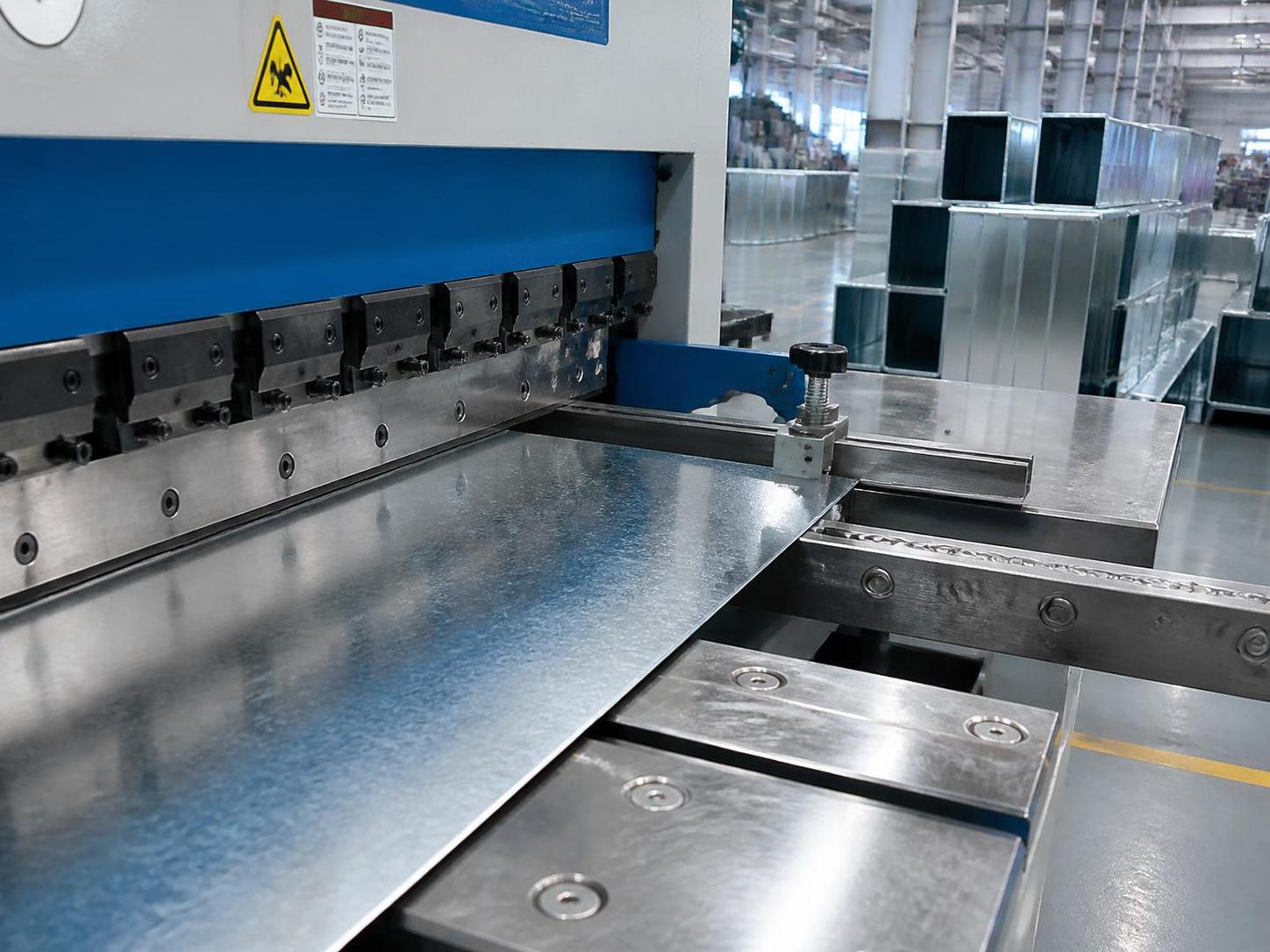
In HVAC duct shops, people often notice cut inconsistency long before they trace it back to the shear. A stack of galvanized sheets may look fine at loading, but once parts move to folding, lock-forming, or fitting, small differences start showing up: one panel is slightly out of square, another has a burr-heavy edge, and another seems to drift just enough to slow assembly. The problem is not always dramatic. In many factories, it shows up as repeated micro-delays, extra checking, and avoidable rework.
That is why hydraulic guillotine shears matter more than they first appear. In duct production, the shearing step sets the baseline for what happens next. If the cut length, straightness, and edge condition vary from batch to batch, downstream stations absorb the cost. Better cut consistency is not just a machine topic; it is a process control issue that affects throughput, labor rhythm, sealing quality, and material usage.
Where uneven cutting usually starts
A common mistake is to blame all inconsistency on operator technique. Operator handling does matter, but in practice the causes are often shared across machine condition, material behavior, setup discipline, and production pressure. When a shop is trying to keep pace with mixed duct sizes and frequent material changes, even a capable machine can start producing uneven results if the setup is drifting.
One of the first places to look is blade condition. A hydraulic guillotine shear can still cut when the blades are worn, but that does not mean it is cutting well. Dull or unevenly worn blades often lead to rougher edges, increased burrs, and small deviations in cut quality across the sheet width. If one side of the blade wear pattern differs from the other, the cut may appear acceptable on short pieces while becoming more noticeable on longer panels used in rectangular duct sections.
Blade clearance is another frequent source of trouble. If clearance is too tight for the sheet thickness, the edge can deform and tool wear can accelerate. If it is too loose, the cut edge may tear rather than shear cleanly. Shops producing HVAC ductwork often process different gauges in short runs, so a clearance setting that worked well earlier in the day may no longer be suitable a few hours later.
Then there is hold-down performance. When the sheet is not clamped evenly before the blade descends, slight movement can occur during the cut. That movement may be hard to detect visually, especially with thin sheet metal, yet it shows up later as dimensional variation or squareness issues. In a duct line, where repeat parts need to match one another, that small shift becomes expensive.
The signs that point back to the shear, not later stations
Some production issues look like forming or assembly problems but actually begin at cutting. If corners fail to align consistently after bending, if seam preparation varies more than expected, or if workers keep re-measuring parts before sending them forward, it is worth stepping back to the shear.
Several patterns tend to appear together. One is repeated adjustment at the backgauge because operators no longer trust the first setting. Another is quality variation between the first few pieces and the middle of the batch. A third is acceptable dimensions combined with poor edge quality, which usually means the part “measures right” but does not behave right in later steps.
For shops managing production schedules, this distinction is important. If the root cause is cut consistency, adding more inspections downstream only treats the symptom. The real gain comes from stabilizing the shearing process so fewer defects are created in the first place.
Start with the setup discipline that people skip when production gets busy
When output pressure increases, setup shortcuts become tempting. Material is loaded quickly, a previous parameter is reused, and the run begins because the dimensions look close enough. This is often where consistency starts to slip.
A more reliable approach is to treat each material change as a fresh setup event, even if the thickness difference seems small. Confirm the sheet type, actual thickness range, blade clearance, hold-down condition, and backgauge reference before full production begins. In HVAC work, many parts are repetitive, so people assume the process is stable. But a repetitive part made from a slightly different coil can behave differently during shearing.
It also helps to check whether the sheet is lying flat and feeding square to the gauge. If the incoming material has residual stress, waviness, or minor camber, the machine may still cut it, but repeatability will suffer. That is why some factories improve shear consistency not only by adjusting the shear itself, but by tightening upstream sheet handling and leveling practices.
Backgauge repeatability deserves more attention than it usually gets
In many workshops, the backgauge is treated as a simple positioning feature. In reality, it is one of the main control points for repeatable length. If there is play, contamination, poor alignment, or inconsistent stop contact, cut length can vary even when the hydraulic system is functioning normally.
For thin duct materials, a practical issue is sheet flex during positioning. If operators push the sheet with different force each time, or if support tables do not keep the sheet level, the contact against the gauge may not be consistent. This is especially noticeable on larger blanks. Improving support on the infeed side and standardizing how material is presented to the gauge can reduce variation without changing the machine itself.
Another useful habit is to verify not only nominal length, but diagonal agreement on test pieces. A part can pass a basic length check and still create trouble later because it is not square enough for accurate folding and fitting.
Cut consistency improves when maintenance is tied to symptoms, not just calendar dates
Routine maintenance matters, but in sheet metal production it helps to connect maintenance tasks to actual quality symptoms. If burr levels rise, if edge distortion becomes more visible, or if operators report that certain lengths are harder to hold, do not wait for a scheduled service window before investigating.
Hydraulic system stability should be part of that review. Pressure irregularity, valve response issues, or delayed motion can influence how smoothly the cut is executed. The machine may still run every cycle, but small instability in the cutting stroke can reduce repeatability. The same goes for hold-down components, guide surfaces, and blade seating. Consistency depends on more than whether the machine starts and stops correctly.
This is also where documentation helps. Not long reports, just practical records: which material was running, which blade position was used, whether burrs increased, whether adjustment solved the issue. Over time, these notes make it easier to identify whether the problem follows a certain gauge, a certain blade condition, or a certain production shift.
Material behavior is often the hidden variable
Not every inconsistency comes from the machine. HVAC duct production commonly involves different sheet finishes, coating conditions, and batch-to-batch variations. Two sheets with the same nominal thickness do not always respond the same way under the blade. Some produce cleaner separation; some are more prone to edge deformation or slight movement under clamping.
That is why a stable process should include material verification, not just machine verification. If a shop is receiving mixed sheet sources or variable flatness, expecting identical cutting behavior without setup refinement is unrealistic. The better response is to build a fast validation routine before the run starts: cut a few pieces, inspect edge condition, check repeat length, and confirm squareness before releasing the batch.
In larger production environments, this way of thinking often extends beyond the duct line itself. Factories that process both light sheet metal and structural steel sometimes discover that consistency comes from aligning the whole production philosophy: define setup standards, parameter control, and equipment roles clearly. That is also why some operations looking at process flow improvements may review other integrated equipment, such as 3 in 1 H beam welding machine units used in H beam production, where assembly, welding, and correction are combined to reduce transfer-related variation. It is a different application, but the management lesson is similar: fewer uncontrolled handoffs usually mean better repeatability.
Practical adjustments that usually make the biggest difference
If cut inconsistency is already affecting duct production, the most effective response is usually not a complete overhaul. More often, several targeted corrections restore control.
First, inspect blade wear pattern instead of asking only whether the blade is “old” or “new.” Uneven wear tells you more than age alone. Second, match blade clearance to the actual material being processed, not to the previous job. Third, confirm that hold-down pressure is acting evenly across the working width. Fourth, verify that the support surfaces allow the sheet to reach the gauge without twisting or sagging.
Fifth, reduce avoidable variation in handling. If one operator nudges sheets lightly and another forces them hard against the stop, the process is no longer truly repeatable. A short internal standard for loading, gauging, and test-cut approval can improve consistency more than people expect. This does not have to become a complex control document. It just needs to define the few actions that must happen the same way each time.
Finally, separate dimensional problems from edge-quality problems during troubleshooting. If the length is unstable, focus first on gauge, sheet presentation, and movement during clamping. If the length is stable but the edge is poor, focus on blade condition, clearance, and cut stroke quality. Treating both issues as one general “shear problem” slows diagnosis.
When production mix is changing frequently
Shops with a high mix of duct sizes tend to suffer more from inconsistency because setup changes happen so often. In that environment, the goal is not only accurate cutting, but quick return to accurate cutting after every changeover.
A useful method is to keep setup references close to the machine for common materials and part families. This might include preferred clearance ranges, blade rotation history, or known points where burrs begin to rise. When these references are easy to access, the team is less likely to rely on memory. That matters on busy shifts, where small assumptions accumulate into measurable variation.
It may also be worth reviewing whether the shear is being used for jobs outside the range where it performs most consistently. Sometimes quality problems are really application-matching problems. If sheet size, thickness, or production mode is pushing the machine toward its less stable zone, process planning should reflect that rather than expecting the same outcome on every job type.
Knowing when the issue is process-related and when the machine needs intervention
Not every inconsistency can be corrected through setup discipline alone. If blade alignment cannot be maintained, if the backgauge loses repeatability after adjustment, or if hydraulic motion feels inconsistent across cycles, deeper service work may be necessary. The key is to reach that conclusion with evidence rather than frustration.
For managers coordinating equipment decisions, this is often the turning point. If the team has already stabilized material handling, standardized setup, confirmed blade condition, and verified gauge behavior, yet the output still varies, then machine-level inspection becomes justified. That is a much better basis for maintenance planning than reacting only to complaints from downstream stations.
The same logic applies when evaluating production equipment more broadly. Whether the process involves light-gauge duct cutting or larger fabrication systems such as a 3 in 1 H beam welding machine, consistency usually comes from matching machine capability, setup discipline, and process flow rather than focusing on one factor in isolation.
For HVAC duct production, better cutting results usually begin with small corrections made at the right points: sharper attention to blade condition, more deliberate clearance setting, steadier sheet support, and less guesswork in daily setup. When those areas are controlled, hydraulic guillotine shears tend to produce the kind of repeatable cuts that make the rest of the line run more smoothly.
search
Products Navigation
Send Us A Message