




Key Safety and Inspection Points for a Hydraulic Guillotine Shearing Machine
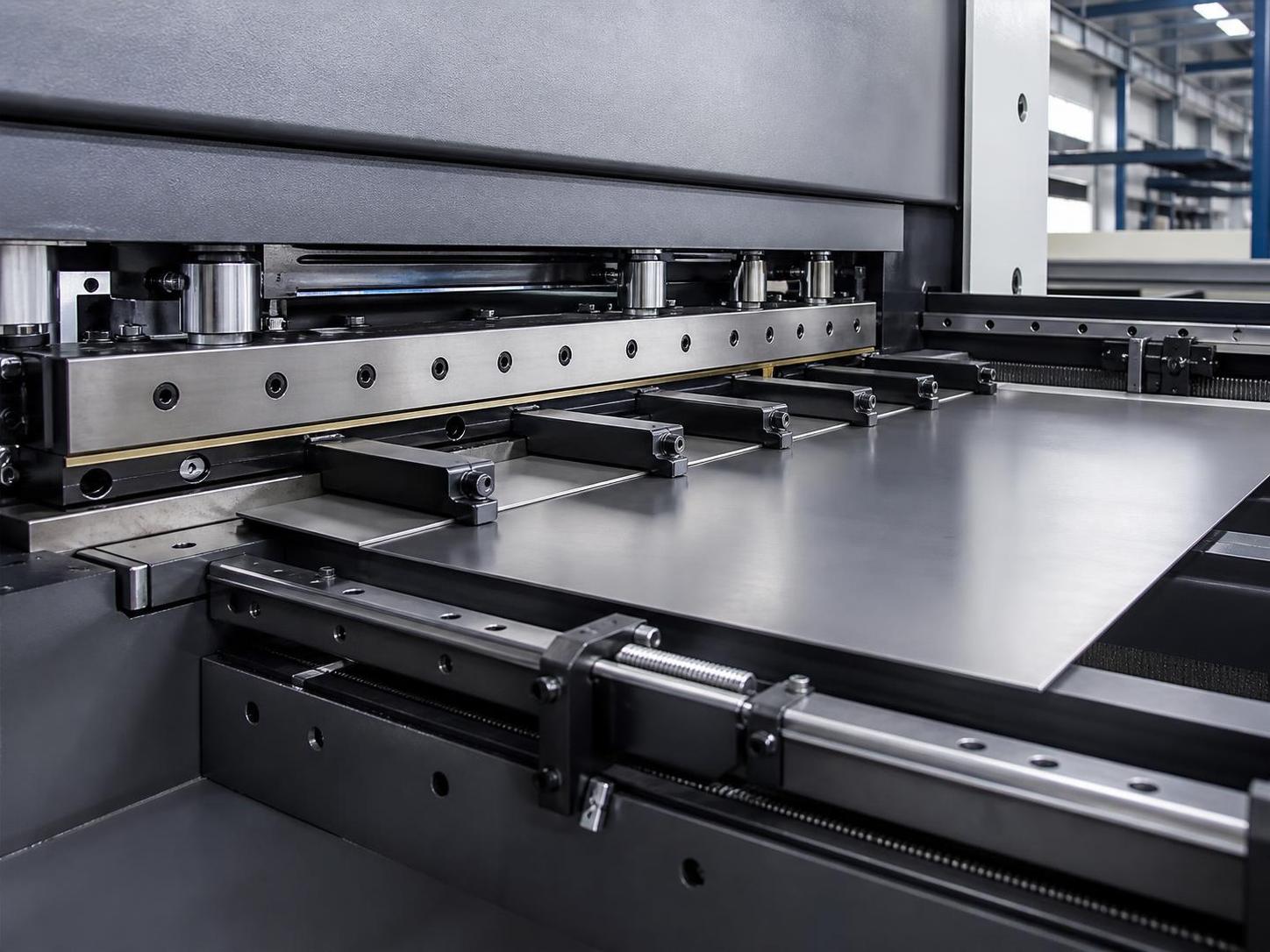
For quality control and safety managers, a hydraulic guillotine shearing machine is rarely just another fabrication asset. It is a point where operator exposure, cut quality, tooling wear, hydraulic reliability, and compliance obligations all converge. In practice, most people searching this topic are not looking for a basic machine definition. They are trying to understand what must be checked before a problem becomes an injury, a quality escape, or an avoidable shutdown.
That matters because shearing risk is often underestimated. Compared with more visibly complex equipment such as laser systems or robotic cells, a guillotine shear can appear mechanically straightforward. Yet the hazard profile is serious: exposed cutting zones, hold-down movement, backgauge travel, hydraulic pressure, stored energy, sharp material edges, and the tendency of operators to bypass routine checks when production is under time pressure. A machine that still “cuts fine” may already be drifting away from acceptable safety and inspection condition.
Why this machine deserves closer control attention
A hydraulic guillotine shearing machine affects two critical outcomes at the same time: workplace safety and dimensional consistency. In many sheet metal shops, these are managed separately, with safety teams focusing on guarding and lockout, while quality teams focus on burrs, bowing, squareness, and blade condition. That separation is a mistake. The same underlying issues, such as poor blade clearance, unstable hold-down force, hydraulic leakage, worn backgauge components, or delayed maintenance, can produce both unsafe behavior and nonconforming parts.
For example, when cut quality deteriorates, operators may start compensating manually by repositioning sheets closer to the blade line, supporting material in awkward ways, or making repeated trimming cuts. Those workarounds increase hand exposure and handling risk. Likewise, when guarding or light protection devices interrupt production too often because of poor adjustment, some sites begin treating the safety system as a nuisance rather than a control. That cultural shift is often the early warning sign of a future incident.
Start with the compliance baseline, but do not stop there
For a standard-certification-oriented review, the first question is whether the machine’s design, installation, and operating condition align with applicable local requirements, internal EHS rules, and any customer-mandated audit criteria. For exported or imported equipment, claims around CE or ISO-related quality management should be treated as part of the documentation package, not as proof that the machine is currently safe in operation. A declaration, nameplate, or supplier brochure does not replace an on-site verification of guarding, control logic, emergency stops, electrical integrity, and maintenance condition.
QC and safety managers should therefore separate three layers of verification:
- Document compliance: manuals, electrical drawings, hydraulic schematics, maintenance records, declarations, and training logs.
- Technical condition: the actual state of guards, blade assembly, hydraulics, controls, interlocks, and support systems.
- Operational control: whether real operators use the machine within safe loading, handling, and inspection routines.
Many internal audits fail because they stay at the first layer. On paper, everything exists. On the shop floor, the foot switch may be damaged, the rear guarding may have been removed for access, or the blade gap setting may be adjusted by feel without any documented acceptance criteria.
The highest-priority safety inspection points
The front cutting zone is the obvious focus, but it should not be the only one. A competent inspection should review the machine as a sequence of operator interactions.
1. Point-of-operation protection
The cutting area must prevent hands or fingers from entering the danger zone during the shearing stroke. Depending on machine design, protection may rely on finger guards, hold-down arrangements, fixed barriers, or other safeguarding measures. The key inspection issue is not whether a guard exists, but whether it actually limits access under realistic working conditions, including thin sheet handling, narrow strips, and offcut removal.
Pay attention to signs that operators habitually reach under guards to align short workpieces. This is one of the most common mismatches between machine design and shop-floor behavior.
2. Emergency stop and control response
Emergency stop devices should be accessible, clearly identified, and tested for response. But it is equally important to confirm that stopping performance is meaningful. A slow or inconsistent response, particularly on older hydraulic systems, may indicate valve issues, control wear, or inadequate maintenance. Where two-hand, pedal, or other actuation methods are used, their condition and logic must be checked in the context of the full cycle, not just as isolated components.
3. Rear zone and backgauge hazards
Safety reviews often underweight the rear of the machine. The backgauge can create crush or entrapment risks, especially during maintenance, setup, jam clearing, or when personnel access the rear area in tight workshops. Rear guarding, access limitation, and maintenance lockout procedures should be assessed carefully. If operators or technicians can reach moving backgauge assemblies without isolation, the risk is not theoretical.
4. Hold-down system condition
The hold-downs must secure material consistently before and during the cut. Uneven pressure, delayed contact, or worn contact surfaces can let sheets shift, kick, or lift. From a quality standpoint this affects straightness and repeatability. From a safety standpoint it increases unpredictable material movement. Inspect for hydraulic imbalance, seal wear, contamination, and any evidence that operators compensate by over-supporting the sheet manually.
5. Hydraulic system integrity
Leaks are not just housekeeping issues. They may indicate seal deterioration, hose aging, pressure instability, or maintenance deferral. A hydraulic guillotine shear depends on controlled force and motion; unstable hydraulic behavior can affect stroke repeatability, clamp action, and stopping characteristics. Inspections should include hoses, fittings, cylinders, reservoirs, pressure behavior, oil cleanliness, and unusual temperature rise. Oil on the floor also adds slip risk around a machine already handling sharp-edged blanks.
6. Blade condition and blade clearance setting
Blade inspection is sometimes treated as a pure quality item, but poor blade condition changes machine behavior. Excessive wear, chipping, poor parallelism, or incorrect clearance can increase cutting load, worsen burr formation, distort the sheet, and encourage operators to use unsuitable material thicknesses or repeat cuts. Those same conditions can also create abnormal vibration, noise, or unexpected part movement.
Clearance should be verified against material type and thickness rather than left at a single “general-purpose” setting. The widespread assumption that experienced operators can judge acceptable clearance by cut appearance alone is only partly true. By the time edge defects are visible, blade and drive components may already be under unnecessary stress.
Inspection points that directly affect quality escape risk
Quality managers usually notice a shear when downstream complaints begin: parts arrive at bending, welding, or assembly with dimensional inconsistency, twist, camber, or heavy burrs. By then the machine has often been running out of control for some time. A stronger approach is to inspect the inputs that predict those failures.
- Backgauge repeatability and positioning accuracy across the full travel range.
- Squareness of cut relative to side gauge or reference alignment.
- Blade sharpness and uniform wear pattern across the working length.
- Hold-down pressure consistency on narrow, wide, thin, and coated materials.
- Surface marking on sensitive sheets caused by clamps or dirty supports.
- Table, support arm, and guide condition affecting sheet feed stability.
- Offcut handling that may bend, scratch, or contaminate finished blanks.
These checks are especially important when the shear feeds a process that has low tolerance for edge quality variation, such as cosmetic panel fabrication or precision bending. A burr that appears manageable at the shear can become a fixture seating problem or a weld preparation issue later.
What should be in a practical audit routine
A usable inspection routine should not be so complex that it collapses under production pressure. For most facilities, a layered rhythm works better than a single long checklist.
Daily operator checks
- Guard condition and proper positioning.
- Emergency stop function check.
- Visible hydraulic leaks or abnormal noise.
- Pedal, buttons, and control panel responsiveness.
- Basic cut sample review for burr, bowing, and dimensional drift.
- Work area cleanliness, scrap accumulation, and floor condition.
Weekly or shift-supervisor checks
- Fastener loosening, unusual vibration, and clamp condition.
- Backgauge alignment and repeatability verification.
- Blade mounting condition and signs of uneven wear.
- Rear guarding condition and access control.
- Review of operator-reported abnormalities that were temporarily tolerated.
Periodic technical inspection
- Hydraulic pressure stability and component condition.
- Electrical cabinet cleanliness and connector integrity.
- Interlock logic and stop-circuit validation.
- Blade clearance calibration and cut quality correlation.
- Foundation, levelness, and structural deformation checks where relevant.
- Maintenance record review for repeat failures and recurring adjustments.
The important point is traceability. If a machine repeatedly requires the same adjustment, the issue is not “solved” each time it is reset. That pattern usually indicates wear, contamination, operator misuse, or a mismatch between machine capacity and actual production demand.
Common assumptions that do not hold up in real workshops
Several ideas circulate widely in fabrication environments but create blind spots in audits.
“If the machine has CE marking, the safety side is covered.”
Not necessarily. Marking and supplied documents may support conformity at the time of placing on the market, but site modifications, maintenance history, local integration, and actual operating behavior determine current risk.
“Cut quality problems are mainly an operator issue.”
Sometimes, but repeated edge defects often point to machine condition, blade setup, hold-down inconsistency, or material variation. Blaming operators too early usually delays the real fix.
“A shear is simpler and lower risk than CNC equipment.”
It may be simpler in control architecture, but that does not make the hazard lower. Simpler machines are often approached with less caution, which can increase exposure.
“If maintenance has no major breakdown record, the machine is fine.”
A lack of catastrophic failure records says little about guarding integrity, stopping performance, blade wear, or chronic quality drift.
How standards thinking should influence procurement and retrofit decisions
When evaluating a new or replacement hydraulic guillotine shearing machine, QC and safety managers should influence the decision earlier than they often do. Procurement discussions tend to focus on cutting capacity, stroke rate, and price. Those matter, but they do not reveal whether the machine will be easy to inspect, maintain, and keep compliant over time.
Useful questions include:
- How accessible are blade adjustment points, and can they be set repeatably?
- Does the guard design support the actual mix of sheet sizes and operator tasks?
- How are rear hazards controlled during normal operation and maintenance?
- Are diagnostic functions available for hydraulic and control faults?
- What documentation is supplied for validation, training, and preventive maintenance?
- How easy is it to verify backgauge accuracy after service or blade change?
- Which wear parts and hydraulic components are locally supportable?
This is where adjacent equipment experience can be useful. In other forming systems, buyers increasingly value not just machine output, but also diagnosability, repeatability, and maintainability. For example, some users considering a NC hydraulic pipe bending machine pay close attention to PLC-based operation, self-diagnostics, servo-controlled positioning, and durable tooling because these features reduce setup error and make fault identification faster. The same mindset is worth applying to a shear: a machine that is easier to inspect and verify usually remains safer and more consistent in production.
Where risk often increases after installation
The period after commissioning is often more dangerous than acceptance testing suggests. Once production begins, several pressures appear at the same time: mixed material batches, urgent orders, inexperienced operators, improvised handling methods for large sheets, and maintenance postponed until the next planned stop. Under those conditions, even a well-specified machine can drift into unsafe practice.
Particular attention should be paid when:
- the material mix expands to thinner, thicker, coated, or higher-strength sheets than originally planned;
- operators process short offcuts or narrow strips more frequently;
- output targets increase and inspection intervals are quietly stretched;
- the machine is moved, re-leveled, or integrated into a new line layout;
- guards are modified to improve access or speed.
Each of these changes can alter both the safety profile and the cut result, even if no one formally classifies the change as significant.
What a good next step looks like for QC and safety managers
A useful next step is not another generic checklist downloaded from the internet. It is a machine-specific review that connects safety controls with process capability. In practical terms, that means selecting one hydraulic guillotine shearing machine, walking the full operating cycle, checking real operator behavior, verifying stop and guard performance, reviewing maintenance history, and correlating those findings with actual cut defects and rework patterns.
If that review shows recurring burr issues, inconsistent blank dimensions, oil leakage, frequent manual repositioning, or missing rear safeguards, the machine should be treated as a combined EHS and quality priority. That usually produces faster and more durable corrective action than leaving each department to solve only its own half of the problem.
For most fabrication sites, the question is not whether the hydraulic guillotine shearing machine is important enough to inspect closely. It is whether the organization is still treating it as a basic utility asset when it should be managed as a controlled risk point in the production system.
search
Products Navigation
Send Us A Message