




How to Evaluate Accuracy, Rake Angle, and Backgauge on a Hydraulic Guillotine Shear Machine
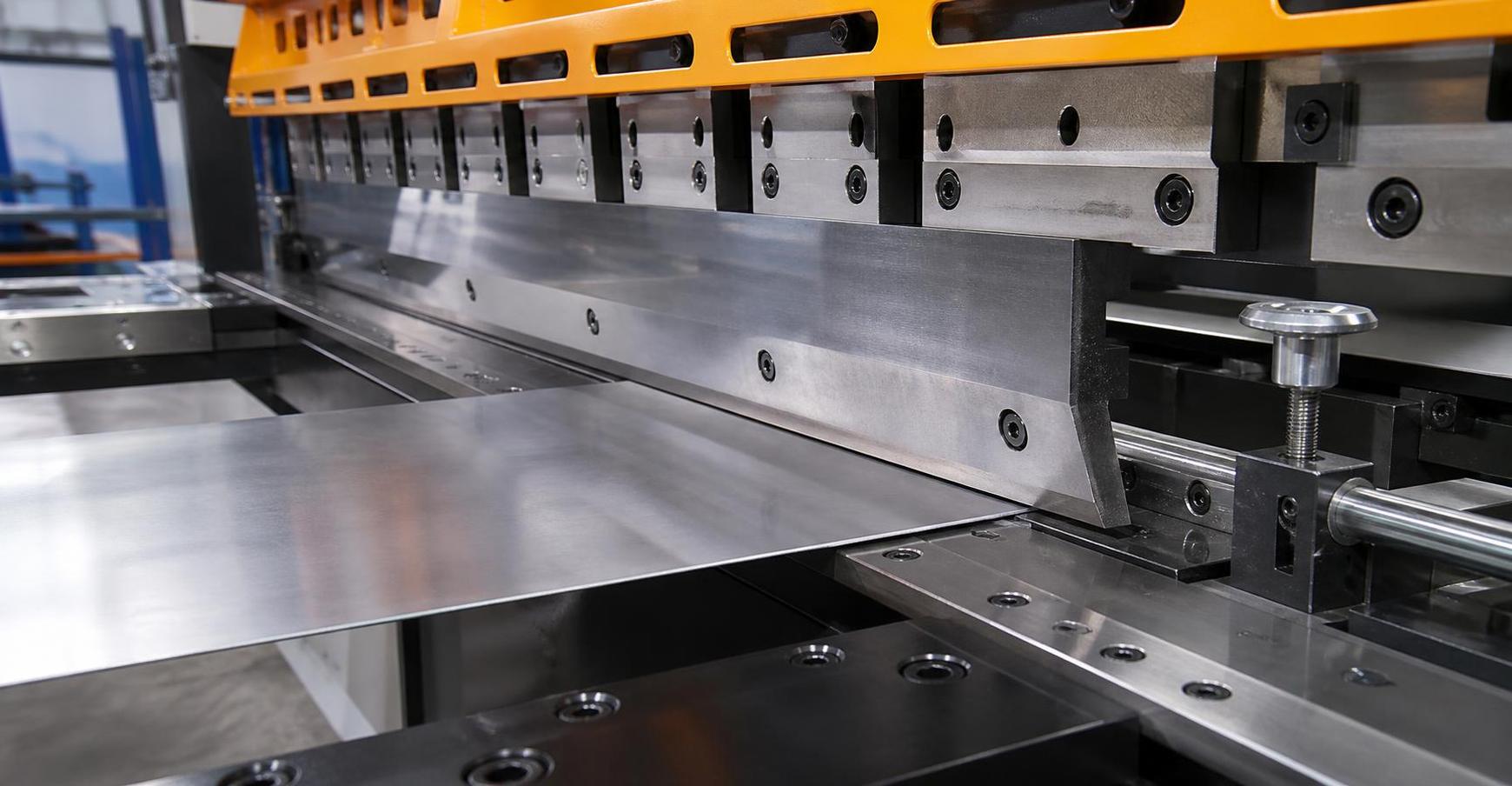
When evaluating a hydraulic guillotine shear machine, technical assessors must look beyond basic cutting capacity and focus on accuracy, rake angle, and backgauge performance. These factors directly influence cut quality, material utilization, repeatability, and production efficiency. Understanding how each parameter affects real-world operation helps buyers and engineers select equipment that meets precision standards, processing demands, and long-term manufacturing goals.
What Technical Assessors Are Really Looking For
The core search intent behind this topic is practical evaluation. Readers are not looking for a generic definition of a hydraulic guillotine shear machine.
They want to know how to judge whether one machine can deliver stable cutting accuracy, suitable rake angle behavior, and reliable backgauge positioning in daily production.
For technical assessors, the real concern is not brochure language. It is whether the machine can hold tolerances, reduce rework, protect sheet quality, and remain consistent under different materials and batch sizes.
That means the most useful evaluation method is one based on measurable indicators, realistic tests, and a clear understanding of how machine design affects operating results.
Why Accuracy Matters More Than Rated Cutting Thickness
Many buyers start by checking maximum cutting thickness, motor power, and table length. Those figures matter, but they do not tell the full story.
In real fabrication work, a hydraulic guillotine shear machine creates value when it produces straight, repeatable cuts with minimal burr, distortion, and dimensional deviation.
Accuracy affects downstream bending, welding, assembly, and fit-up. If blank dimensions vary, every later process becomes slower and more expensive.
For this reason, accuracy should be evaluated as a system result. It depends on frame rigidity, blade quality, blade clearance setting, hydraulic stability, hold-down performance, and backgauge precision.
A machine may claim strong cutting force, yet still perform poorly if the frame deflects under load or if the gauge system cannot repeat positions consistently.
How to Evaluate Cutting Accuracy in Practical Terms
Technical assessors should begin with a test-cut approach rather than relying only on catalog tolerances. Ask for sample cutting data on materials close to your actual production mix.
Important test conditions include sheet thickness, material grade, sheet width, strip width, and cut length. Accuracy results can change significantly when these variables change.
The first point to verify is dimensional accuracy. Measure whether the cut blank matches the target size across repeated cycles, not just on one successful sample.
The second point is straightness. A part may be dimensionally close at two ends, yet still show bowing or deviation along the cut line.
The third point is edge quality. Look for burr height, edge rollover, local tearing, and twist. These signs reveal whether blade condition and machine setup are truly suitable.
The fourth point is repeatability over time. A machine that performs well for five cuts but drifts after one hour may not be acceptable for batch production.
Assessors should also observe vibration, clamping uniformity, and sheet movement during cutting. These operating details often explain why nominally similar machines produce very different results.
What Rake Angle Actually Changes During Shearing
Rake angle is one of the most misunderstood parameters in shear selection. It is not simply a design number on a specification sheet.
In a hydraulic guillotine shear machine, rake angle determines how the upper blade enters the material progressively along the cutting line. This directly affects cutting force and cut behavior.
A larger rake angle usually lowers peak cutting force because the blade engages the sheet gradually instead of across the full width at once.
This can help when processing thicker plates or when trying to reduce required machine tonnage. However, the benefit comes with tradeoffs.
As rake angle increases, the material may experience more distortion, especially on narrow strips, thin sheets, or softer materials. That can reduce flatness and affect downstream handling.
A smaller rake angle often improves cut geometry and reduces twist, but it may require greater cutting force and a stronger overall structure.
So the right question is not whether a higher or lower rake angle is better. The correct question is whether the rake angle suits your actual material range and quality target.
How to Judge Whether the Rake Angle Is Suitable
Start by matching the machine to the dominant jobs in your workshop. If most work involves medium-thickness carbon steel plates, the acceptable rake angle range may differ from a line focused on thin stainless sheets.
Ask the supplier which materials and thicknesses were used to define the standard rake angle. A useful answer should be specific, not promotional.
If adjustable rake angle is available, assess whether adjustment is convenient, stable, and necessary for your process. More adjustment is not automatically more value.
For many users, a stable fixed setup with proven performance on target material can be better than a theoretically flexible system that is difficult to maintain.
During trials, compare part flatness, strip twist, and edge shape across different thicknesses. These results will tell you more than a standalone angle value ever can.
Also evaluate energy efficiency and hydraulic load behavior. An appropriate rake angle can lower stress on the drive system, but only if the overall machine structure is properly matched.
Why Backgauge Performance Is Often the Deciding Factor
If accuracy is the outcome and rake angle is a cutting behavior factor, the backgauge is the positioning foundation behind repeatable production.
In many factories, the backgauge determines whether a hydraulic guillotine shear machine is truly productive or merely capable of making cuts.
A weak backgauge system causes dimension drift, inconsistent squareness, slow setup, and operator intervention. These problems reduce throughput even when the cutting beam itself is strong.
Technical assessors should pay close attention to gauge drive design, guide accuracy, screw quality, servo or motor configuration, positioning speed, and control responsiveness.
The most important issue is repeatable positioning under real use. The gauge must stop at the correct point, hold position, and return accurately over repeated cycles.
Gauge rigidity matters as well. On larger sheets, backgauge components must resist deflection and maintain alignment when the material contacts the stops.
Backgauge Checks That Reveal Real Machine Capability
The first check is positioning accuracy over multiple target distances. Test both short and longer dimensions instead of only one common setting.
The second check is repeatability. Run repeated cuts at the same backgauge value and record whether results remain stable within the required tolerance band.
The third check is squareness support. Evaluate whether the gauge and support arms help maintain a true reference when handling larger plates.
The fourth check is speed versus stability. Some systems move quickly but settle poorly, which creates cycle-time gains on paper and dimensional losses in practice.
The fifth check is programmability. For production environments with varied batches, an intuitive controller and reliable positioning memory can reduce setup time substantially.
This matters even more when the shear is part of a larger fabrication flow. In automated steel processing, positioning discipline directly affects later operations and overall line efficiency.
For example, manufacturers working with beam fabrication may also evaluate integrated equipment such as Horizontal H beam line solutions, where repeatable positioning and reduced deformation are equally important to output quality.
How Accuracy, Rake Angle, and Backgauge Work Together
These three factors should never be reviewed in isolation. A good backgauge cannot compensate for poor rake angle selection, and a good rake angle cannot solve a weak frame or unstable blade clearance.
Likewise, a machine with strong mechanical structure may still disappoint if the gauge system introduces dimensional inconsistency in actual operation.
The best evaluation method is to treat the hydraulic guillotine shear machine as a process platform rather than a single cutting device.
Assessors should consider the relationship between material type, thickness range, required tolerance, operator skill level, production volume, and downstream process sensitivity.
When these variables are considered together, machine selection becomes much more accurate and less dependent on marketing claims.
Questions Technical Assessors Should Ask Suppliers
Ask for tolerance data under defined cutting conditions. General claims of high precision are not enough for a technical decision.
Request sample parts from materials similar to your own, along with details about blade condition, machine settings, and operating speed during testing.
Confirm whether rake angle is fixed or adjustable, and ask what effect that configuration has on thin sheet flatness and thick plate load performance.
Review the backgauge drive type, maximum travel, repeatability specification, and controller brand. These details affect both reliability and maintenance support.
Ask how blade clearance is adjusted and how easy it is for operators to maintain correct settings during product changes.
It is also worth discussing service access, spare parts availability, hydraulic component brands, electrical standards, and long-term calibration stability.
Companies with broad fabrication equipment experience often understand these cross-process concerns better because they see how cutting quality affects later stages such as welding, assembly, and section production.
That broader perspective is important in modern workshops where shearing equipment may support lines for plates, structural parts, or even systems adjacent to products like a Horizontal H beam line.
Common Evaluation Mistakes to Avoid
One common mistake is choosing based mainly on maximum thickness capacity. Overspecifying force while ignoring precision often leads to unnecessary cost and disappointing cut quality.
Another mistake is evaluating only one material type. Machines behave differently across stainless steel, carbon steel, aluminum, and different sheet thicknesses.
A third mistake is trusting no-load positioning claims for the backgauge without checking loaded production behavior and repeated operation.
Some buyers also overlook operator usability. Even a technically capable machine can underperform if setup logic is confusing or adjustment procedures are too slow.
Finally, assessors sometimes ignore how the machine fits into the wider factory process. Good shearing performance should reduce workload in later handling, forming, and welding steps.
A Practical Decision Framework for Selection
Start with your dominant workpieces, tolerance requirements, and daily batch structure. This defines the precision and flexibility level the machine must deliver.
Then evaluate test cuts for dimensional accuracy, straightness, burr condition, and repeatability. These are the direct indicators of useful performance.
Next, assess whether the rake angle configuration matches your material profile and whether it supports the balance you need between force reduction and part flatness.
After that, verify backgauge accuracy, repeatability, speed, and control usability because these determine how well theoretical machine capability becomes actual production output.
Finally, review reliability, maintenance access, and supplier support. A technically sound machine is only valuable if it remains stable across long production cycles.
Conclusion
To evaluate a hydraulic guillotine shear machine correctly, technical assessors should focus on how accuracy, rake angle, and backgauge performance interact in real production conditions.
Accuracy determines whether parts meet requirements. Rake angle affects force, distortion, and suitability for different materials. Backgauge performance controls repeatability and practical throughput.
When these factors are tested systematically, buyers can move beyond brochure comparisons and make decisions based on measurable manufacturing value.
The best machine is not simply the one with the biggest capacity. It is the one that delivers stable precision, efficient operation, and dependable results for the work your factory actually performs.
search
Products Navigation
Send Us A Message