




Hydraulic Guillotine Machine Price Factors: What Buyers Should Compare Beyond Cost
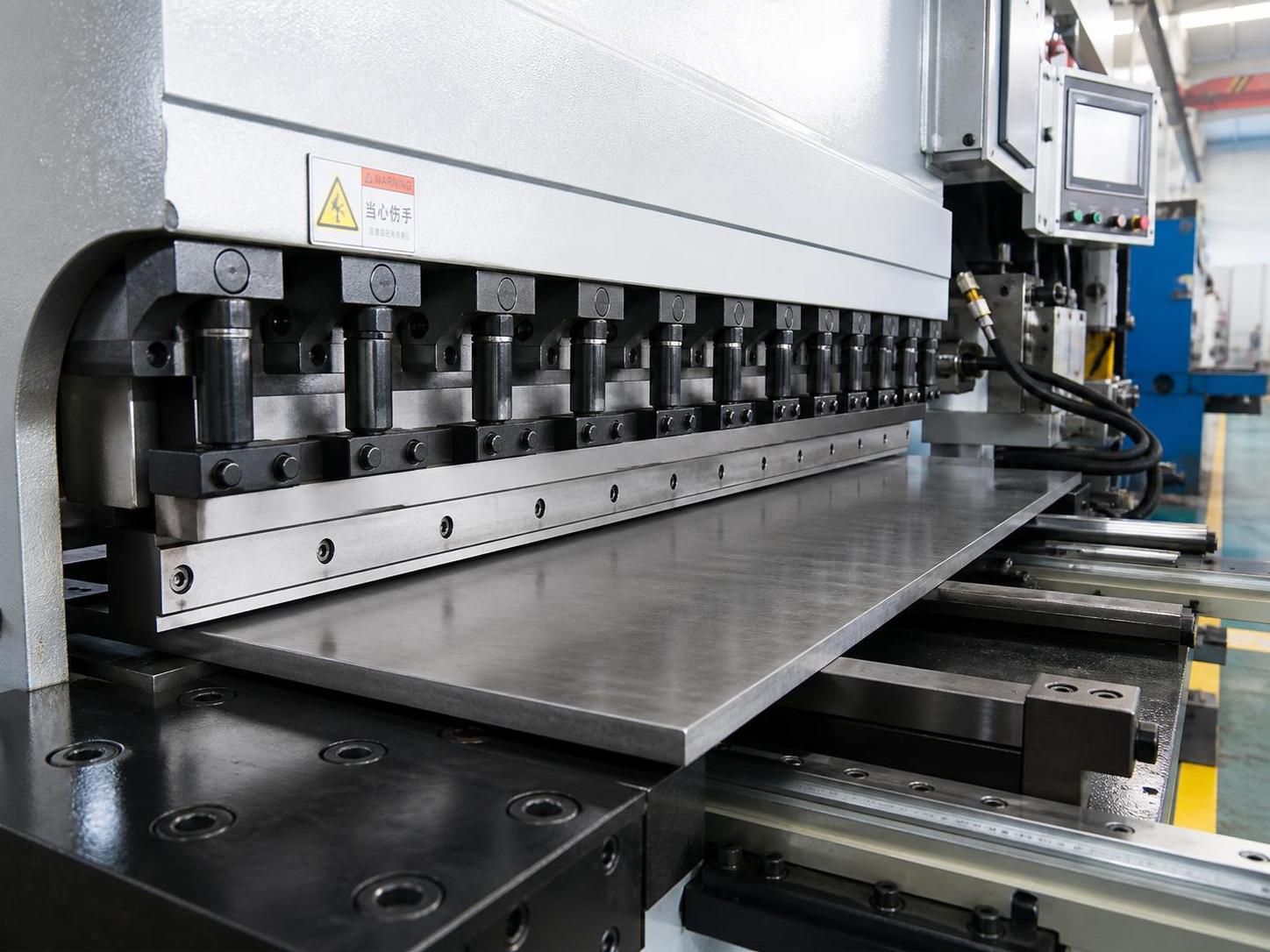
Quoted price often gets the first round of attention in a hydraulic guillotine machine comparison, yet the lower figure can become expensive once plate thickness variation, rework, blade consumption, downtime, and installation constraints enter the real calculation. A machine that looks economical on paper may cut slowly under load, lose straightness across long sheets, or require frequent hydraulic and blade-related intervention. In metal fabrication, these hidden costs usually appear after delivery, when changing machines is no longer simple.
The more useful question is whether the machine can hold stable cutting quality across the actual material range: mild steel, stainless steel, aluminum, thin sheet, and heavier plate if required. A price discussion without that context is incomplete. Hydraulic guillotine machine offers should therefore be compared against the production mix, not against a generic catalog line.
Cutting accuracy changes the real cost of every sheet
Shearing quality depends on more than the published maximum cutting thickness. Straightness, squareness, burr level, edge deformation, and repeatability matter because they affect the next process. If the sheet will go to bending, welding, rolling, or fit-up assembly, a poor sheared edge can create cumulative error. That usually shows up as mismatch at the weld seam, wider assembly gap, or extra edge preparation before downstream work.
During comparison, it is worth asking how the machine behaves at both the lower and upper ends of its working range. Some units perform acceptably in mid-range carbon steel but lose edge quality when processing stainless steel or thinner reflective materials that mark easily. Others may technically cut thicker plate but produce more twist or burr, especially near full cutting length. A lower purchase price does not offset frequent secondary dressing, scrap risk, or slower throughput at the next station.
Clearance adjustment also deserves attention. If blade clearance is inconvenient to set, or if adjustment repeatability is weak, the machine may never stay in its optimum condition for different thicknesses. This becomes a practical cost issue where mixed jobs are common.
Frame rigidity is not a cosmetic detail
For a hydraulic guillotine machine, frame construction determines whether the blade path remains stable when the machine is under real cutting force. A heavy, properly stress-relieved frame generally resists deformation better over time than a lighter structure that only looks adequate in static inspection. This matters more on longer machines and on jobs involving thicker plate, where deflection can influence cut consistency from one side to the other.
Weld quality, heat treatment practice, and guide structure should be treated as commercial factors, not only engineering details. If the frame moves, alignment changes. If alignment changes, blade wear becomes uneven. Once wear becomes uneven, maintenance intervals shorten and edge quality becomes harder to control. These issues rarely appear in a basic quotation, but they alter lifecycle cost quickly.
It is also sensible to review foundation and floor requirements before purchase. A machine with higher structural mass may need more planning for placement, anchoring, and handling. Ignoring those logistics can delay commissioning and add unplanned site cost.
Blade life should be compared as a running expense
Two machines with similar cutting capacity can have very different blade economics. Blade material, hardness consistency, mounting precision, and the ease of reversing or replacing cutting edges all influence actual operating cost. When blade access is awkward, routine maintenance takes longer and operators may postpone necessary adjustments, which then affects quality.
Material mix matters here as well. Stainless steel, higher-strength sheet, or work with frequent thickness changes can accelerate wear if setup discipline is poor. If the machine is expected to run mixed batches, blade system design becomes more important than a simple “blade included” statement in the offer.
Questions around spare blade availability should be specific: whether replacement sets are standardized, whether regrinding is practical, and whether lead times for wear parts are predictable. A low machine price combined with long waits for blades is not a strong commercial position for scheduled production.
The hydraulic system deserves closer reading than the headline capacity
Hydraulic power quality influences cutting force stability, return speed, noise level, oil temperature behavior, and long-term leakage risk. Comparing motor size alone does not reveal much. The better comparison looks at valve reliability, seal quality, hose routing, filtration arrangement, oil cooling where applicable, and access points for service.
If the system layout is crowded or maintenance access is poor, even ordinary service tasks become slower. That increases stoppage time and makes preventive maintenance less likely to happen on schedule. A clean hydraulic design with logical component placement usually reduces troubleshooting time, especially when pressure irregularity or oil contamination needs investigation.
Ambient temperature and workload pattern also affect this decision. In some shops, long continuous shearing runs can raise oil temperature enough to influence performance. Where the local environment is hot, dusty, or unstable in power quality, machine selection should reflect those conditions rather than catalog assumptions.
Controls affect setup time more than many quotations admit
Backgauge accuracy, stroke control, angle setting, blade clearance input, and job memory all shape production speed. On repetitive jobs, a well-integrated control package can reduce setup loss far more than a small difference in purchase price. On varied jobs, the advantage comes from adjustment speed and lower dependency on manual trial cuts.
That does not automatically mean the most advanced interface is the best choice. The more relevant question is whether the controls fit the work pattern. If the machine mostly runs repeated lengths and standard materials, a stable and straightforward controller may be enough. If batch variety is high, or if multiple operators will share the machine, better programmability and parameter recall can prevent avoidable inconsistency.
Backgauge construction should be examined physically where possible. Movement smoothness, repeat positioning, support for larger sheets, and resistance to vibration all matter. A control screen may look modern while the backgauge mechanics remain the weak point.
Tooling and downstream process fit should enter the evaluation early
Shearing rarely stands alone. The edge condition created by the machine must match the next operation. If the plate is destined for precision welding, vessel fabrication, or bevel preparation, the acceptable burr and distortion level may be tighter than for general cutting. In those workflows, the shearing line should be considered together with subsequent edge-processing equipment.
For example, when plate edges move from cutting into beveling for storage tanks, pressure vessels, or heavy structural parts, process continuity becomes more valuable than isolated machine price. In such cases, an edge milling stage such as Beveling & Milling Edge For Heavy Tank may be relevant where carbon steel, stainless steel, or aluminum plates need straight, inclined, U-shaped, V-shaped, or K-shaped bevels in one pass, with angle adjustment commonly reaching 0° to 90° depending on configuration. That comparison is not about product promotion; it reflects a practical point: if the shearing machine introduces avoidable edge distortion, later milling or beveling capacity may be used to correct defects rather than perform value-adding work.
Installation, transport, and commissioning can change the budget late
Machine cost should be reviewed together with packing method, transport dimensions, lifting requirements, and site access. Long-bed hydraulic guillotine machine models may create unloading and internal movement issues that are easy to underestimate. Door width, crane coverage, floor bearing capacity, and power supply readiness should be confirmed before shipment.
Commissioning scope also varies. Some offers include only basic startup, while others may cover alignment verification, hydraulic filling, parameter setting, and initial cutting tests. If this scope is vague, the final installed cost can drift upward through third-party labor or project delay.
Electrical compatibility should not be treated as a minor note. Voltage, frequency, grounding practice, and local safety device expectations should be aligned in advance. Otherwise, modifications may be required on arrival, especially when equipment crosses regions.
Compliance documents matter because they reduce commercial uncertainty
Documentation quality is often a reliable signal of manufacturing discipline. The useful package includes general arrangement drawings, electrical diagrams, hydraulic schematics, foundation information where needed, operation manuals, wear-part lists, and declared compliance documents relevant to the target market. Missing or incomplete documents increase risk during installation, internal approval, customs handling, and later maintenance.
It is also worth confirming whether guarding, emergency stop layout, pedal control arrangement, and hold-down configuration match the site’s safety expectations. Even when a machine can be modified later, retrofit work tends to cost more and disrupts the launch schedule.
After-sales support should be measured in response structure, not slogans
Support quality is easier to compare when broken into practical points: spare part identification, troubleshooting method, remote diagnosis capability if controls allow it, service language clarity, and the ability to supply replacement hydraulic or electrical components without long interpretation cycles. A technically capable machine with weak parts support can become a planning problem.
Lead times deserve careful reading, especially for valves, seals, blades, controller modules, and backgauge components. A quotation that looks complete may still leave these items loosely defined. The question is not whether support exists in general terms, but whether the machine can return to service predictably after a fault.
Several common misjudgments distort price comparison
- Comparing only maximum thickness while ignoring the material grade and full working width at which that thickness is expected.
- Accepting a controller specification without examining the backgauge mechanics that actually determine repeat accuracy.
- Assuming all blade systems have similar service cost, even when replacement practice and wear behavior are quite different.
- Treating freight, rigging, electrical adaptation, oil filling, and commissioning as separate issues instead of part of acquisition cost.
- Reviewing the shearing machine in isolation when the next process is sensitive to burr, twist, or edge deformation.
A stronger comparison usually comes from matching each quotation against the actual cutting schedule, downstream process tolerance, plant conditions, and service expectations. Once those points are visible, price becomes easier to interpret. Sometimes the lower quote remains the sensible choice. Sometimes it only appears cheaper because too many operating costs are still hidden outside the offer.
search
Products Navigation
Send Us A Message