




Is a Hydraulic Guillotine Worth the Investment for Small and Mid-Size Fabrication Shops?
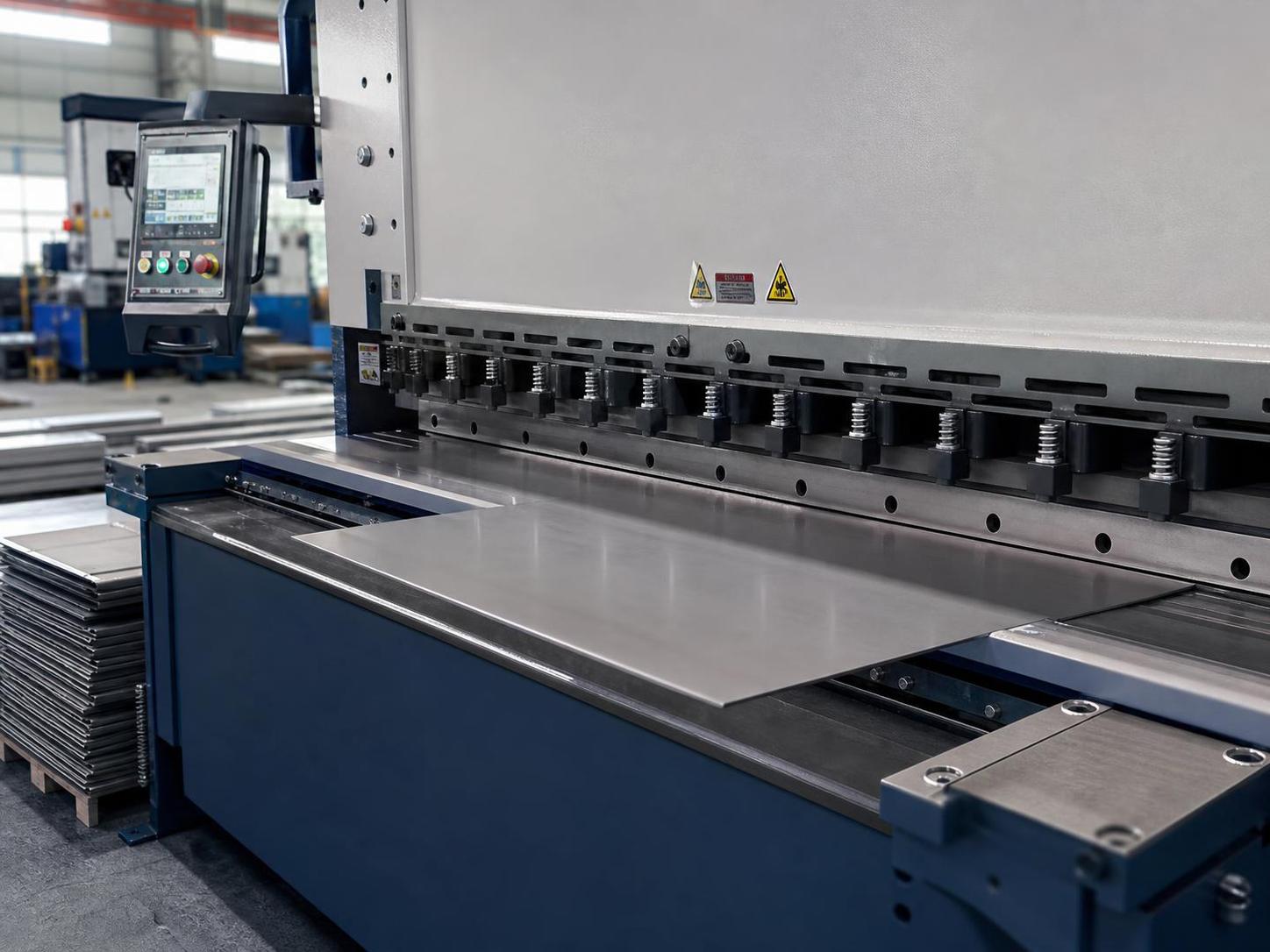
For small and mid-size fabrication shops, choosing the right metalworking equipment can directly affect productivity, quality, and long-term profitability. A hydraulic guillotine is often seen as a practical solution for accurate and efficient sheet metal cutting, but is it truly worth the investment? This article explores the key cost, performance, and operational factors business decision-makers should evaluate before purchasing.
For many smaller fabrication businesses, the real question is not whether a hydraulic guillotine works well. In most cases, it does. The harder question is whether owning one improves margins more than alternative ways of processing sheet metal. That distinction matters, because a machine that looks affordable on a quotation can still become an underused asset, while a higher-priced machine can produce a strong return if it removes production bottlenecks, reduces labor dependence, and improves cut consistency across routine jobs.
What decision-makers are really buying
A hydraulic guillotine is not just a sheet cutting machine. It is a capacity decision. It changes how a shop handles throughput, nesting flow, operator workload, scheduling, scrap control, and downstream forming accuracy. In small and mid-size operations, these effects are often more important than the machine’s nominal cutting force or maximum sheet thickness.
If a shop mainly processes mild steel sheets in repeated sizes, with daily demand for straight cuts before bending, welding, or rolling, a hydraulic guillotine can become a core production asset. If the work mix is irregular, low volume, or increasingly dependent on complex contours, the same investment may be harder to justify.
That is why the buying decision should start from job structure, not machine specifications.
Where a hydraulic guillotine usually makes sense
The strongest business case appears in shops with predictable cutting demand. This includes contract fabricators producing cabinets, frames, brackets, enclosures, tanks, ducts, base plates, and general structural sheet components. In these environments, straight-line cutting is frequent, cycle time matters, and operators benefit from simple setup and repeatability.
Hydraulic guillotines are especially attractive when a shop faces one or more of the following conditions:
- Regular outsourcing of sheet cutting that causes lead-time delays
- Heavy dependence on manual or semi-manual cutting methods with variable accuracy
- Frequent rework caused by poor edge quality or dimensional inconsistency
- Growing order volume that exceeds the practical capacity of legacy equipment
- Rising labor cost that makes operator efficiency more valuable
In these cases, the machine’s value comes from process stability as much as from speed. Small shops often underestimate how much hidden cost sits in “acceptable” production losses: waiting for outsourced parts, handling damaged edges, correcting bend deviations caused by inconsistent blanks, or assigning skilled workers to basic cutting tasks.
When the investment is less compelling
Not every fabrication shop should buy a hydraulic guillotine, even if the machine is competitively priced.
The economics weaken when the product mix is dominated by complex geometries better suited to laser or plasma cutting, or when sheet processing volume is too low to justify machine ownership. A shop doing mostly one-off prototypes may gain more flexibility from subcontracting or from investing in a more versatile cutting platform.
There is also a common strategic mistake: buying a guillotine because it seems like a lower-cost alternative to CNC cutting, without checking whether the customer base is shifting toward precision parts with holes, contours, and reduced secondary operations. A hydraulic guillotine is efficient for straight cuts. It is not a substitute for every cutting requirement.
For some businesses, the better capital allocation may be upstream or downstream equipment. For example, if cutting is already under control but forming accuracy is the bottleneck, investment in rolling or bending may unlock more value. In plate work, shops producing cylindrical or conical parts may see stronger returns from equipment such as a CNC Bending machine with 4 roller, particularly where dimensional accuracy and edge-forming capability affect finished part quality.
The cost picture is wider than purchase price
Decision-makers evaluating a hydraulic guillotine on capital cost alone often miss the larger financial picture. A proper assessment should include at least five cost layers:
- Machine acquisition and freight
- Installation, commissioning, and operator training
- Tooling, wear parts, hydraulic oil, and maintenance
- Power consumption and floor-space opportunity cost
- Downtime risk and service response capability
On paper, hydraulic guillotines are often easier to justify than more complex CNC cutting systems because they carry lower acquisition cost and lower programming complexity. But the total cost advantage depends heavily on machine quality, blade life, hydraulic system reliability, and the availability of local or remote technical support.
For small and mid-size firms, after-sales support can be more important than a modest discount in purchase price. A machine that is down for several days during a busy delivery period is not just a maintenance problem; it becomes a customer service problem, a planning problem, and in some cases a cash-flow problem.
Productivity gains are real, but they vary by workload
The typical promise behind a hydraulic guillotine is faster cutting with cleaner results. That promise is often valid, but the actual gain depends on what the machine replaces.
If the current process is manual shearing, oxy-fuel rough cutting, or frequent outsourcing, the jump in productivity can be significant. If the shop already has an efficient cutting arrangement and is simply looking for incremental improvement, the payback period may be longer.
Business owners should model three realistic scenarios:
- Current workload at present order levels
- Expected workload if existing customers increase volume
- Target workload if the company wins larger or more repeatable contracts
This matters because many equipment purchases are justified on today’s jobs while their true value comes from tomorrow’s sales capability. A hydraulic guillotine can help a shop quote larger batch work more confidently, especially when lead time and repeatability influence buying decisions from industrial customers.
Accuracy matters beyond cutting
One of the less discussed reasons to invest in a hydraulic guillotine is its effect on downstream process quality. Poor blank accuracy does not stop at the cut edge. It shows up later in bending inconsistency, assembly mismatch, welding correction time, and final inspection failures.
For decision-makers, this means the machine’s value should be assessed across the production chain. If the shop cuts parts that later go into press brake operations, rolled sections, or welded assemblies, consistent shearing improves process predictability. That benefit is difficult to capture in a simple ROI spreadsheet, but it is very visible on the shop floor.
In metal fabrication, cutting, bending, and rolling are closely linked. Shops that process heavier plate or produce formed shells often evaluate guillotines alongside rolling systems. In such cases, a machine like the CNC Bending machine with 4 roller may enter the discussion not as a competing purchase, but as part of a broader capacity plan. Its four-roller configuration is relevant where better dimensional accuracy and improved handling of leading and trailing ends reduce secondary work in cylindrical, conical, or arc-shaped components.
Hydraulic guillotine versus alternative options
For procurement decisions, comparison is more useful than isolated evaluation.
A mechanical shear may offer lower initial cost, but it is often less flexible in modern mixed-production environments and may not deliver the same level of control or smooth operation for varied workloads. Laser cutting offers much greater geometry flexibility and can eliminate some secondary processes, but acquisition and operating costs are much higher, and it may be unnecessary if most cuts are straight. Plasma systems fit certain thicker plate applications but typically do not serve as a direct substitute when cut edge quality and precision sheet processing are priorities.
So the question is not “Is a hydraulic guillotine the best cutting technology?” It is “Is it the best fit for the majority of profitable jobs this shop has, or wants to win?”
The risk of buying too much machine
Over-specification is common in this segment. A shop may purchase based on maximum possible sheet thickness rather than actual production history. That often leads to excess capital tied up in a machine whose capacity is rarely used, while larger size may also increase installation demands, energy use, and maintenance burden.
Decision-makers should review at least 12 months of actual material data before finalizing capacity. What thicknesses account for most revenue? What sheet widths are genuinely common? What percentage of jobs require near-maximum capacity? If the answer is small, buying purely for occasional edge-case work may not be rational unless those jobs carry unusually high margins.
Supplier selection is part of the investment decision
In international sourcing, the machine and the supplier are inseparable. Buyers should assess build quality, controls, hydraulic components, frame rigidity, blade material, and safety configuration, but they should also evaluate documentation quality, commissioning support, spare parts response, and compliance evidence.
Where CE marking or related conformity claims are involved, buyers should verify what is actually provided and for which market configuration. If specific regulatory documentation is required in the destination country, details should be checked before ordering. If any certification scope is unclear, it should be treated as 【待核实】 until confirmed in writing.
For import buyers, practical questions often reveal more than brochures do:
- How quickly can consumables and wear parts be supplied?
- Is remote troubleshooting available in English?
- What is included in startup support?
- Can the supplier provide references for similar installations?
- How are warranty claims handled across borders?
How to judge likely payback
The most reliable payback model is operational, not theoretical. Estimate the value of reduced outsourcing, lower scrap, shorter production lead times, and increased output per operator. Then test whether the shop has enough recurring workload to capture those benefits consistently.
A hydraulic guillotine is often worth the investment when it does at least two of the following:
- Replaces a costly outsourced cutting dependency
- Removes a persistent bottleneck in batch production
- Improves blank consistency enough to reduce downstream rework
- Supports faster quote turnaround for repeat industrial jobs
- Allows labor to shift from low-value cutting tasks to higher-skill work
If none of these apply clearly, the machine may still be useful, but the investment case becomes weaker.
The bottom line for small and mid-size shops
A hydraulic guillotine is usually a sound investment for small and mid-size fabrication shops that process a steady volume of straight-cut sheet metal parts and need more control over lead time, quality, and labor efficiency. It is less compelling for businesses dominated by low-volume custom work or by parts requiring complex contours.
The smartest buyers do not treat the machine as a standalone purchase. They evaluate it as part of a production system: how material enters the shop, how parts move to bending or rolling, where delays occur, and which equipment best improves margin rather than simply adding capacity.
In that sense, the answer is not universal. A hydraulic guillotine is worth the investment when it matches the shop’s real job mix, supports future order strategy, and comes from a supplier that can support the asset throughout its service life. Without those conditions, even a technically capable machine can become an expensive compromise.
search
Products Navigation
Send Us A Message