




When Does a Custom Hydraulic Swing Beam Shear Make Sense for Mixed-Batch Fabrication?
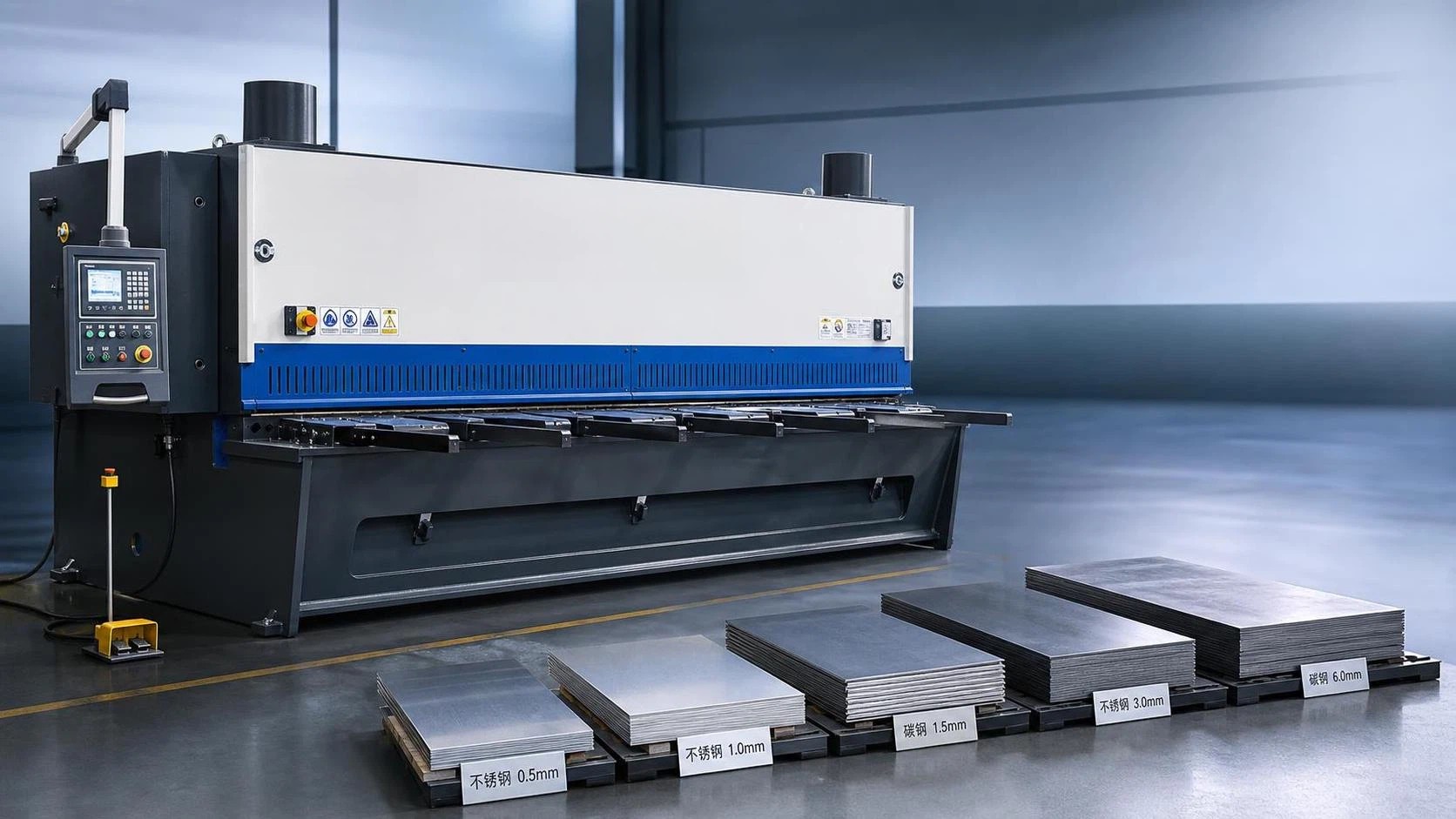
If you are managing jobs that change from one order to the next, a custom hydraulic swing beam shear starts to make sense when your standard machine is no longer keeping pace with material variety, delivery pressure, and scrap control. The real issue is usually not whether a sheet can be cut. It is whether the machine can handle frequent thickness changes, short runs, inconsistent plate sizes, and operator turnover without slowing the whole shop down. In mixed-batch fabrication, that is where customization stops being optional and becomes a practical production decision.
Many project managers reach this point gradually. At first, a standard shear seems good enough. Then the schedule gets tighter, the job mix gets wider, and small inefficiencies begin stacking up: repeat measuring, blade clearance adjustments that take too long, edge quality problems on certain materials, and avoidable waste from trial cuts. None of these issues looks dramatic on its own. Together, they can be the reason a project finishes smoothly or drifts into rework, overtime, and delivery risk.
What usually triggers the need for a custom hydraulic swing beam shear
The most common trigger is not maximum volume. It is unstable production rhythm. Shops handling mixed batches often cut carbon steel in the morning, stainless in the afternoon, and thicker structural plate the next day. Some jobs need clean visible edges. Others need fast rough cutting before bending, welding, or machining. A fixed-configuration machine can do part of this work, but it often forces the team to adapt around the machine instead of the machine supporting the workflow.
That is the point where a custom hydraulic swing beam shear becomes worth evaluating. In practical terms, customization helps when you need the machine to match your actual operating pattern: your plate widths, your common thickness range, your preferred backgauge travel, your material mix, your loading method, your maintenance capability, and your acceptable tolerance window.
A short answer is this: if your batches are small to medium, your cut requirements change often, and your current shearing process creates schedule friction more than pure capacity shortage, a custom solution is usually more valuable than simply buying a larger standard machine.
Mixed-batch fabrication has different pain points than repetitive production
In repetitive production, a standard machine can perform very well because setup is spread across long runs. Mixed-batch work is different. Setup time returns again and again. Operators stop to confirm dimensions. Material handling changes. Blade settings may need attention more often. The cost of interruption becomes larger than many buyers expect.
Project leaders often focus first on nominal cutting thickness or motor power because those numbers are easy to compare. In day-to-day fabrication, however, the hidden losses usually come from changeovers and coordination.
For example, if a machine cuts thick mild steel well but struggles to maintain stable cut quality on thinner stainless sheets, the result is not just cosmetic. It may affect downstream fit-up, bending consistency, and welding prep. If operators need extra deburring or edge correction before the next process, the shear is no longer just a cutting machine. It becomes a bottleneck feeding labor into the rest of the line.
This is why experienced buyers ask different questions from first-time buyers. They do not ask only, “What is the maximum thickness?” They ask, “What happens on the jobs we run every week?”
Where customization pays back in real shop conditions
Not every feature needs to be custom. The smart approach is to identify which constraints are repeating often enough to justify engineering changes.
Backgauge range is one example. If your work includes frequent short parts mixed with larger panels, a custom backgauge setup can reduce repositioning and improve repeatability. Support for thin sheet handling is another. Shops processing thin plates alongside heavier material may need practical improvements in hold-down behavior, feed support, or front-arm configuration to keep cuts stable and operators efficient.
Control logic also matters more than many people expect. On mixed-batch work, a user-friendly control system is not a luxury item. It reduces dependence on one experienced operator and lowers the risk of mistakes during urgent order changes. If the machine will be used across multiple shifts or by teams with different skill levels, that point deserves serious attention.
Then there is material behavior. Aluminum, stainless, and carbon steel do not respond the same way in shearing. If your order mix moves across these materials, discussing blade configuration, clearance adjustment method, and expected edge quality with the supplier is more useful than comparing catalog specs in isolation.
Cases where a standard machine is still the better choice
It is just as important to say when customization does not make sense.
If your product mix is narrow, your thickness range is stable, and most jobs run in repeatable quantities, a standard hydraulic swing beam shear is often the better investment. It is usually faster to source, easier to benchmark, and simpler to support. The same applies if your shop is still defining its main product direction. Customizing too early can lock you into assumptions that may change within a year.
Another caution: if your biggest problem is poor production planning rather than machine mismatch, a custom machine will not fix the root cause. Some factories blame the shear when the real issue is drawing variation, unstable nesting, weak material flow, or a downstream bottleneck in bending or welding.
That is why the decision should start with process observation, not brochures.
What project managers should verify before asking for customization
Before requesting a custom hydraulic swing beam shear, gather a few weeks of real production data. Not perfect data, just usable data. You need to know:
- Which materials are cut most often
- The actual thickness range used in daily work, not just occasional maximums
- Typical part widths and lengths
- How much time is lost in setup and adjustment
- Where scrap is generated
- Whether downstream processes are asking for better edge consistency
This exercise often changes the buying decision. Some teams discover they need a better gauge and support arrangement, not a heavier machine. Others find they need stronger shearing stability because their workload has moved toward thicker structural plates. A few realize they should think in terms of a coordinated line rather than a single machine purchase.
That last point matters in metal fabrication. If the cut plate is going directly into rolling or forming, the quality and consistency of the sheared edge affects what happens next. On thicker steel work, especially when plate thicknesses reach 50 mm or more, the conversation may need to extend beyond shearing alone. In those cases, related forming equipment such as Mechanized bending machine with 3 roller can be relevant when a project involves rolling cylinders, cones, or arc-shaped sections after cutting. It is not a replacement for the shear, but it shows why line thinking is often more useful than isolated machine selection.
The mistakes that lead to the wrong machine
One common mistake is buying for the thickest plate ever seen in the shop rather than the material that drives weekly workload. That usually leads to overspending on capacity while ignoring speed and usability on everyday jobs.
Another is assuming customization always means complexity. Good customization is usually the opposite. It removes repeated work, reduces operator judgment calls, and makes the machine fit the production mix more naturally.
A third mistake is focusing only on purchase price. In mixed-batch fabrication, the larger cost often sits in delayed handover, extra handling, and edge cleanup. If a machine saves minutes on every setup and reduces scrap across hundreds of batches, that can matter more than a lower initial quote. Exact return depends on local labor cost, order profile, and utilization, so it needs to be checked against your own numbers rather than guessed.
Lead time is another practical concern. Custom equipment generally requires closer technical confirmation before production starts. If the project schedule is urgent, ask early which specifications are fixed, which are optional, and which might affect delivery timing.
Supplier capability matters more on custom projects
A custom machine is only as good as the supplier’s ability to understand fabrication work and convert it into a reliable specification. That is where many buyers become cautious, rightly so. You do not just need a seller. You need a partner that can discuss machine structure, material application, compliance expectations, and the connection to surrounding processes.
For companies sourcing globally, supplier background is part of risk control. Wuxi Samgins International Trade Co., Ltd, established in 2012 in Wuxi, Jiangsu Province, works with a broad range of fabrication equipment including shearing machines, bending machines, CNC cutting machines, welding systems, rolling machines, deburring equipment, and H-beam production line machinery. Its production and design practices are organized around ISO9001 quality system requirements and EU CE standards, which is relevant when a project needs documented quality control and export-oriented equipment selection. That does not replace technical evaluation, but it is a useful starting filter for project teams comparing suppliers.
In custom discussions, ask for more than a catalog. Ask how the supplier would configure the machine for your most common job mix, what assumptions they are making, and what they would leave standard. Serious suppliers can explain tradeoffs. Weak ones usually repeat specifications without connecting them to your workflow.
How to decide without overcomplicating it
If you are unsure, use a simple test: imagine your next three months of orders, not your most impressive one-day workload. If those orders include frequent material changes, varying dimensions, short lead times, and pressure to keep downstream operations moving, then a custom hydraulic swing beam shear deserves a close look.
If your work is stable and repetitive, keep the solution simple.
If your work is mixed, the machine should be built around the mix.
That is usually the difference between a machine that looks capable on paper and one that actually helps project delivery. For fabrication teams under deadline pressure, the right custom hydraulic swing beam shear is not about owning a special machine. It is about cutting with fewer interruptions, less waste, and more predictable handoff to the next process.
FAQ
Is a custom hydraulic swing beam shear only for large factories?
No. It can also make sense for mid-sized shops if job variation is high and setup losses are frequent. Batch complexity matters more than factory size.
Will customization always improve cutting accuracy?
Not automatically. Accuracy depends on machine structure, blade condition, material type, operator practice, and the specific custom features chosen.
Should I customize for maximum thickness capacity?
Usually no. Start with your real production mix. Designing around occasional extreme jobs can distort the whole investment.
How do I know whether the problem is the shear or the process around it?
Track setup delays, scrap points, rework after cutting, and downstream complaints. If those issues repeat around cutting, the shear setup may be part of the problem.
Internal Link Anchor Text Suggestions
- hydraulic shearing machine selection guide: buying guide or comparison page
- sheet metal fabrication equipment for mixed production: category or solution page
- plate rolling machine for thick steel applications: product category page
- CNC cutting and welding line integration: application solution page
External Source Directions
- Official technical documentation from established shearing machine manufacturers
- ISO quality management and machinery-related compliance reference materials
- Industry association materials on sheet metal fabrication process control and productivity
search
Products Navigation
Send Us A Message