




CNC Plate Bending Machine Selection Guide: Key Parameters That Affect Accuracy
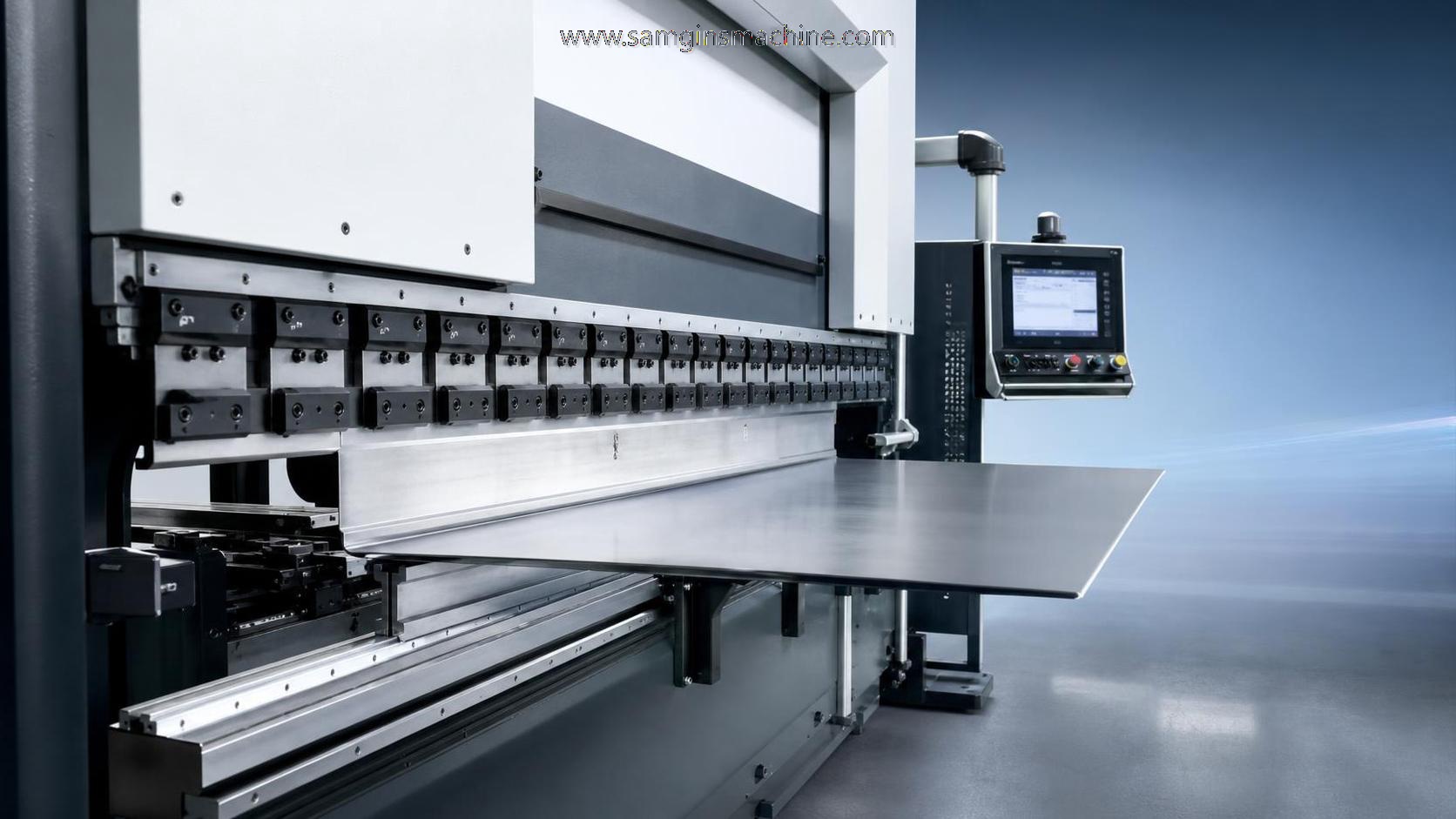
Why Accuracy Starts the Selection Process
A cnc plate bending machine is rarely judged by tonnage alone. In real production, the more important question is whether it can hold angle accuracy across different plate sizes, materials, and batch volumes.
That is why machine selection matters early. A small deviation in bend angle can affect welding fit-up, assembly tolerance, coating quality, and final dimensional consistency.
For fabrication lines handling structural parts, cabinets, brackets, frames, or heavy sheet components, bending precision is tied directly to downstream efficiency. Rework usually costs more than the original bending cycle.
This is especially relevant in manufacturing and processing machinery, where production teams often need stable output over long operating periods rather than short-term peak performance.
A capable cnc plate bending machine should therefore be evaluated as a system. Frame design, control logic, tooling, backgauge motion, hydraulic stability, and operator interaction all shape the final result.
What a Technical Comparison Should Really Measure
Accuracy in bending has two layers. One is geometric accuracy at the moment of forming. The other is repeatability from part to part, shift to shift, and material lot to material lot.
Many comparisons fail because they focus on catalog values without checking how the machine behaves under load. A cnc plate bending machine may look similar on paper yet perform very differently on the shop floor.
The most useful evaluation combines machine structure, control capability, process adaptability, and service reliability. That broader view is more practical than comparing only speed or nominal pressure.
Key dimensions of evaluation
Frame Rigidity and Deflection Compensation
The frame is the physical base of any cnc plate bending machine. If the frame twists or deflects too much under load, angle variation appears across the bend length.
This issue becomes more visible on longer workpieces or thicker plate. Even a strong hydraulic system cannot fully correct a weak structure.
A useful review should check whether the frame is welded with controlled process discipline, machined after welding, and treated to minimize residual stress. These details influence long-term dimensional stability.
Compensation systems also matter. Mechanical crowning or CNC-controlled crowning helps offset bed deflection, especially when the machine runs varied part lengths rather than one repeated component.
When comparing options, do not ask only whether compensation exists. Ask how precisely it can be adjusted and whether it is linked to the bending program.
CNC Control, Axis Coordination, and Repeatability
The CNC unit determines how accurately the machine can translate program data into motion. On a modern cnc plate bending machine, this includes ram position, backgauge travel, bend sequence, and correction input.
Control quality is not only about a large screen or convenient interface. It is about how well the machine manages axis synchronization and compensates for process variation.
Repeatability depends heavily on Y-axis consistency. If the left and right cylinders or servo drives do not track together, the angle may drift across the part.
Backgauge design deserves equal attention. A rigid gauge beam, stable fingers, and reliable drive transmission support precise flange depth and reduce cumulative positioning error.
- Check the number of controlled axes and whether they match actual part complexity.
- Review stored program capacity and offline programming options.
- Confirm that manual correction can be fed back into future runs.
- Assess whether the interface supports fast setup without increasing operator error.
Tooling, Material Variation, and Bend Quality
A cnc plate bending machine may be mechanically sound yet still produce unstable results if tooling selection is poor. Punch radius, die opening, tool alignment, and clamping quality all affect bend formation.
Material behavior also changes the result. Yield strength, plate thickness tolerance, grain direction, and springback can shift the final angle even when the same program is used.
That is why process flexibility matters. The machine should support fast tool changes, reliable centering, and practical angle correction when switching between carbon steel, stainless steel, or aluminum.
In mixed fabrication environments, bending accuracy also affects adjacent processes. Clean, consistent bends simplify robotic welding, assembly, and fixture loading.
For example, production lines that also use 7 axis cantilever type welding robot systems often benefit from tighter upstream bending control, because better fit-up reduces manual correction during weld preparation.
Typical sources of angle deviation
- Inconsistent material thickness within a batch
- Improper die opening for the target bend radius
- Tool wear or poor tool seating
- Unstable ram synchronization
- Insufficient crowning adjustment
- Backgauge positioning error during multiple bends
Matching Machine Capability to Production Reality
Selection should reflect the actual workload, not only the maximum theoretical part. A cnc plate bending machine for heavy plate jobs is not automatically the best choice for frequent small-batch changeovers.
Part mix usually changes the decision. High-mix production values setup speed, program reuse, and operator guidance. Long-run production often values thermal stability and cycle repeatability more strongly.
The surrounding line should also be considered. Wuxi Samgins International Trade Co.,Ltd works across bending, cutting, welding, milling, shearing, rolling, deburring, and other fabrication equipment, so machine evaluation is often more reliable when viewed as part of a connected workflow.
That broader perspective matters when exported projects or multi-machine layouts require consistent standards. ISO9001-oriented process control and CE-focused design expectations usually support more predictable equipment performance over time.
In practical terms, the selected cnc plate bending machine should fit available floor space, material handling logic, operator skill level, and target quality documentation.
Questions Worth Asking Before Final Comparison
A serious evaluation becomes easier when questions are framed around measurable results. This keeps the process grounded and avoids buying on appearance alone.
- What angle tolerance can be maintained across full bending length?
- How does the cnc plate bending machine perform on different plate grades?
- What is the verified backgauge repeatability in continuous production?
- How quickly can tooling be changed without losing alignment?
- What maintenance points affect hydraulic or servo accuracy over time?
- Is there local or remote support for commissioning, training, and troubleshooting?
Where welding is part of the same production route, related automation capability may also influence the final equipment mix. A line using a second 7 axis cantilever type welding robot for large workpieces over 12 meters can benefit from more stable bending dimensions before assembly.
That does not turn the bending machine into a welding asset. It simply shows how dimensional control at one station affects throughput at the next.
A Practical Next Step
The best cnc plate bending machine choice usually comes from a short list built around actual parts, tolerance expectations, and process flow. Sample bends, repeatability checks, and tooling reviews reveal more than brochure claims.
A useful next step is to map the main workpiece range, required bend accuracy, material types, and downstream joining needs. After that, compare machines by structural strength, control precision, correction capability, and service support.
When those factors are judged together, cnc plate bending machine selection becomes less about headline specifications and more about dependable manufacturing performance.
search
Products Navigation
Send Us A Message