




How to Prevent Burrs When Shearing Stainless Steel Sheets
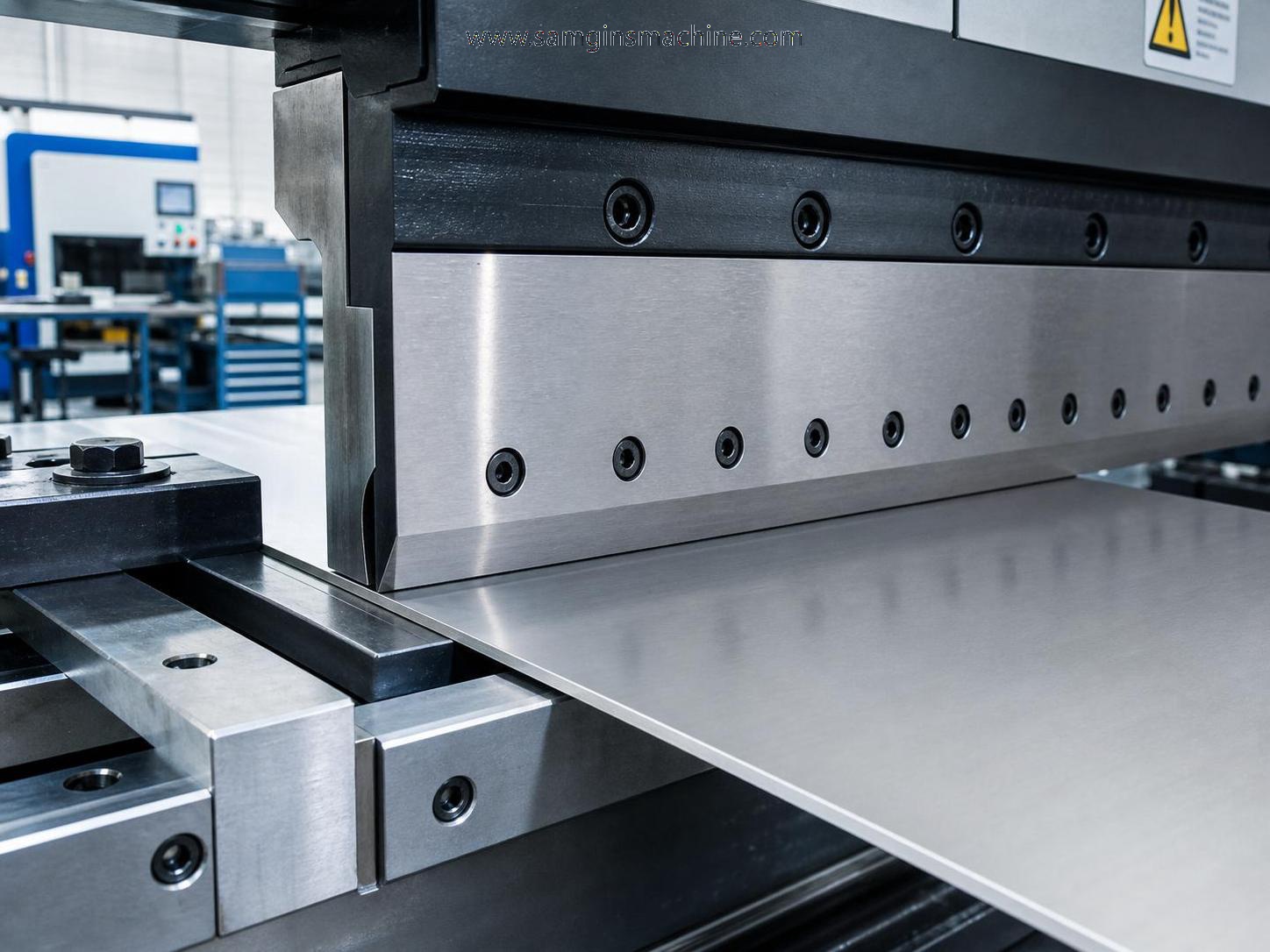
Why do burrs appear when shearing stainless steel sheets?
Burrs are usually a sign that the cut did not separate cleanly.
On stainless steel, the issue becomes more obvious because the material is tough, elastic, and sensitive to blade condition.
In daily production, burrs mean more than rough edges.
They increase deburring time, create handling risks, and can affect downstream bending, welding, or coating quality.
That is why many workshops focus early on the hydraulic shearing machine for stainless steel, not only on output speed.
The main causes are usually practical rather than mysterious.
- Blade clearance is too large or inconsistent across the cutting length.
- Blade edges are worn, chipped, or incorrectly ground.
- Hold-down pressure is insufficient, so the sheet lifts during cutting.
- The sheet surface is warped, work-hardened, or covered with scale.
- The machine frame or guide system has lost alignment.
A clean cut comes from balance.
The blade, clearance, pressure, angle, and sheet condition must work together at the same moment.
Is blade clearance really the first setting to check?
In most cases, yes.
If the clearance is too wide, stainless steel stretches before it fractures.
That creates a torn edge and visible burrs.
If it is too tight, the blade wears faster and can leave drag marks.
A common mistake is using the same clearance for mild steel and stainless steel.
Stainless generally needs more careful adjustment because of its strength and springback.
The more reliable approach is to set clearance by sheet thickness and grade, then confirm with test cuts.
For example, thin stainless sheets often show burrs quickly if the setup drifts even slightly.
A hydraulic shearing machine for stainless steel with accurate clearance adjustment saves time here.
It reduces operator guesswork and keeps the edge quality more repeatable from batch to batch.
It helps to treat clearance as a controlled parameter, not a one-time setting.
A quick judging table for burr-related issues
The symptoms below can help narrow down the reason before adjusting the machine.
What machine features help reduce burrs on stainless steel?
Not every shearing machine behaves the same way on stainless steel.
When the workload includes frequent stainless cutting, machine stability matters more than basic tonnage alone.
A suitable hydraulic shearing machine for stainless steel should offer precise blade gap control, reliable hold-down cylinders, and a rigid frame.
Stable backgauge accuracy also matters because poor positioning can shift sheet stress during the cut.
Operators often notice that cleaner cuts come from machines with smoother hydraulic response and less vibration.
This is one reason suppliers with long experience in metal fabrication equipment tend to focus on complete line matching.
Wuxi Samgins International Trade Co., Ltd has supplied shearing, leveling, deburring, laser cutting, and other metalworking equipment to multiple overseas markets.
That broader equipment background is useful because burr prevention rarely depends on one machine alone.
In mixed production lines, it is also common to compare shearing with laser processing for different part shapes.
For tubular or profile work, Pipe cnc fiber laser cutting machine offers a different route.
Its non-contact cutting, positioning accuracy up to ±0.01mm, and narrow kerf can reduce secondary edge treatment on suitable jobs.
That does not replace shearing for flat sheet blanks, but it shows how edge quality planning should follow the part type.
Can blade material and maintenance change edge quality that much?
Absolutely.
Stainless steel puts higher demands on blade hardness, toughness, and grinding accuracy than softer materials do.
Even a good hydraulic shearing machine for stainless steel will produce burrs if the blade edge is already rounded.
What often happens in practice is gradual decline.
The first few sheets look acceptable, then burr height increases, and finally the cut begins to tear.
Waiting until that point usually raises tooling cost, not lowers it.
A better routine includes:
- Checking the blade edge regularly under good lighting.
- Rotating or reginding blades before severe burrs appear.
- Recording blade life by material grade and thickness.
- Inspecting bolt torque and blade seating after maintenance.
Needless regrinding can shorten blade life, but delayed regrinding affects every cut afterward.
The best balance usually comes from tracking edge condition against actual burr trends.
What operating mistakes cause burrs even on a good machine?
Machine quality helps, but burrs often come from small operating errors.
One common issue is cutting warped or unsupported sheets.
If the sheet lifts, the blade does not enter the material evenly.
Another problem is trying to push worn settings across different thicknesses without adjustment.
That may work for low-demand parts, but stainless shows the weakness quickly.
A few habits reduce trouble:
- Keep support tables level and clean to prevent sheet rocking.
- Verify hold-down action before long cuts.
- Separate stainless jobs by grade and thickness where possible.
- Run a short sample cut after adjustment, not after a full batch starts.
- Check whether burrs appear consistently or only at entry or exit points.
That last point matters.
Localized burrs often point to support or alignment problems, not only blade wear.
In actual application, clean shearing depends on setup discipline as much as machine specification.
How should you choose a hydraulic shearing machine for stainless steel?
The better question is not only whether the machine can cut stainless steel.
It is whether it can cut your stainless grades, thickness range, and batch pattern with stable burr control.
A practical evaluation usually includes these points:
It is also worth checking whether the supplier understands the full fabrication flow.
Companies working under ISO9001 management and CE-oriented production standards often provide more predictable documentation and setup support.
Where production includes both flat sheets and profiles, matching the shearing process with laser options can improve the overall edge-quality strategy.
For example, the CNC-6024 configuration in the Pipe cnc fiber laser cutting machine range supports 20-240mm tubes, 6000mm pipe length, and high-speed cutting above 100m/min.
That kind of complementary equipment planning can reduce unnecessary secondary finishing across different product types.
What is the most reliable way to keep burrs under control over time?
The answer is consistency, not one adjustment.
Burr prevention works best when setup, maintenance, and material handling are managed together.
A hydraulic shearing machine for stainless steel performs well when the blade gap is matched, blades are sharp, hold-down pressure is stable, and sheet support is correct.
If burrs keep returning, do not treat them only as a deburring problem.
Trace them back to the cut itself.
A useful next step is to build a simple control sheet.
Record stainless grade, thickness, clearance setting, blade life, burr condition, and any support issues after each test batch.
That makes future adjustments faster and more objective.
When choosing or upgrading a hydraulic shearing machine for stainless steel, compare machines by real cut quality, adjustment convenience, maintenance rhythm, and how well they fit the rest of the line.
That is usually the shortest path to cleaner edges, longer blade life, and fewer avoidable finishing costs.
search
Products Navigation
Send Us A Message