




Cutting Carbon Steel with a Hydraulic Shearing Machine: Key Performance Factors
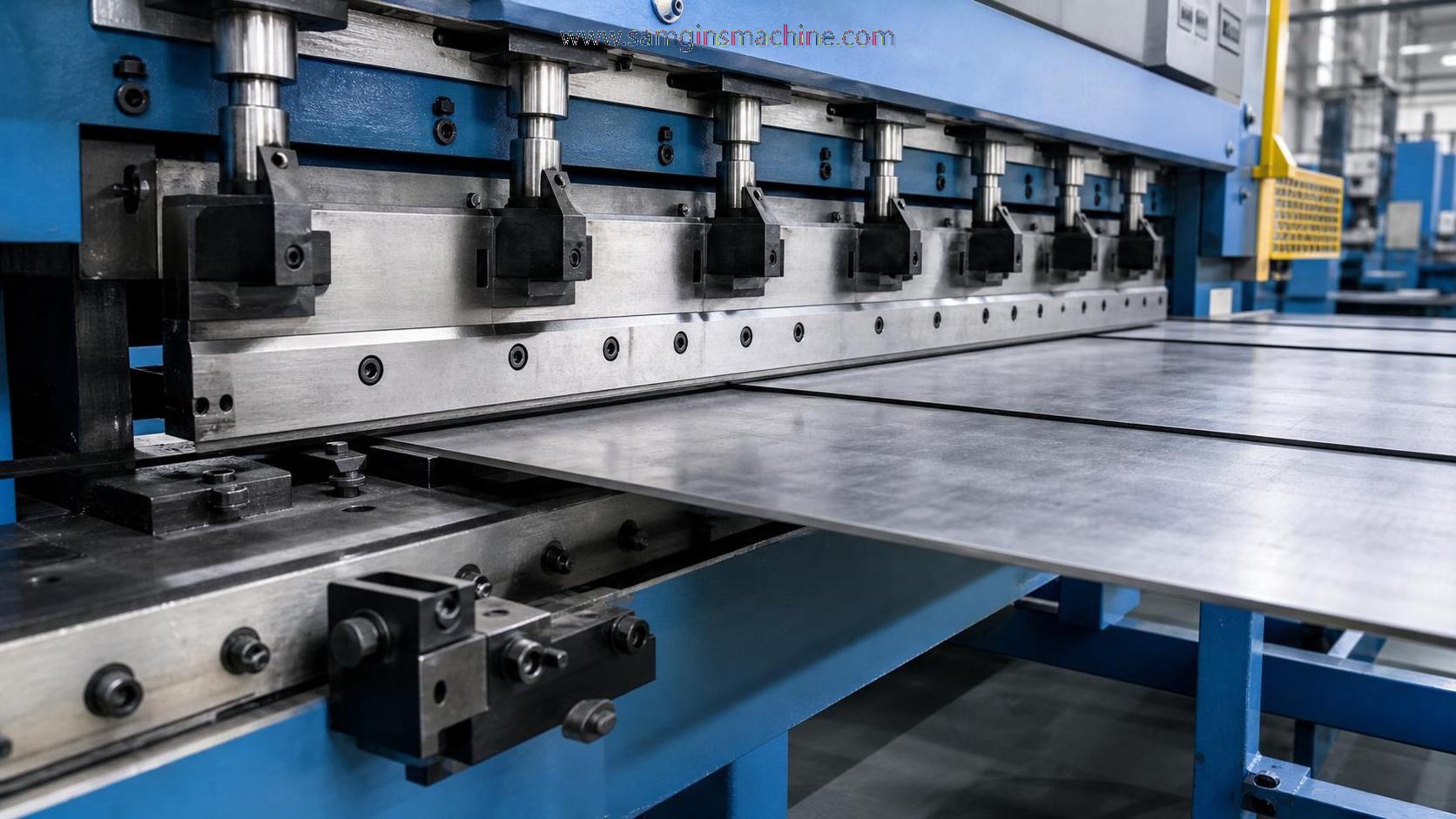
Cutting Carbon Steel with a Hydraulic Shearing Machine: Key Performance Factors
When evaluating a hydraulic shearing machine for carbon steel, performance depends on more than rated force.
Blade clearance, frame rigidity, control accuracy, and thickness range directly shape cut quality and operating cost.
In real fabrication work, these factors determine whether a machine stays stable under continuous production.
That is why choosing a hydraulic shearing machine for carbon steel should start with process capability, not only price or tonnage.
Why Carbon Steel Shearing Demands More Than Basic Force
Carbon steel is widely used, but its behavior changes with thickness, strength level, and plate condition.
A machine that cuts thin mild steel cleanly may struggle with thicker sheets or higher tensile grades.
This is where technical evaluation becomes practical.
The right hydraulic shearing machine for carbon steel should deliver repeatable edges, controlled distortion, and steady cycle time.
It should also maintain those results after long production runs, not only during a showroom test.
1. Cutting Force Must Match Real Material Conditions
Rated cutting force is the first number most buyers check.
It matters, but it should be matched against real plate width, thickness, and tensile strength.
If the safety margin is too small, the machine will cut, but edge quality will usually suffer.
A properly sized hydraulic shearing machine for carbon steel should avoid overload near maximum capacity.
It should handle normal production loads with reserve capacity for grade variation.
- Check maximum thickness at full cutting length, not short-piece conditions.
- Confirm the material strength basis behind the published capacity.
- Review pressure stability during repeated full-load cycles.
- Ask whether hydraulic seals and valves are rated for sustained industrial use.
2. Blade Clearance Has a Direct Effect on Edge Quality
Blade clearance is one of the most decisive settings in carbon steel shearing.
If clearance is too small, blade wear rises fast and the plate may drag.
If clearance is too large, burrs increase and fracture zones become rougher.
For a hydraulic shearing machine for carbon steel, adjustable and accurate blade clearance is essential.
This is especially true when one line processes mixed gauges during the same shift.
Machines with quick, repeatable adjustment reduce setup error and scrap.
What to verify
- Manual or automatic clearance adjustment method.
- Repeatability of settings across operators.
- Actual burr level on representative carbon steel samples.
- Blade life under your expected production mix.
3. Frame Rigidity Controls Accuracy Over Time
Frame rigidity is often underestimated during initial sourcing.
Yet it strongly affects straightness, blade alignment, and long-term consistency.
Under load, a weak frame can deflect enough to create uneven cuts across the plate width.
A robust hydraulic shearing machine for carbon steel needs welded or reinforced structural design with controlled stress treatment.
That helps the machine keep tolerance after months of heavy operation.
This issue is not limited to shearing alone.
Across metal forming and finishing equipment, rigidity usually separates stable production assets from maintenance-heavy ones.
For example, ZC28-6.3 thread rolling machine is valued partly because rigid structure supports precision rolling on carbon steel and alloy steel parts.
4. Hold-Down System and Back Gauge Accuracy Matter in Daily Production
A strong hold-down system prevents sheet movement during the cut.
Without stable clamping, even a powerful machine will produce inconsistent results.
Marking should also be controlled, especially on visible parts or downstream bending components.
The back gauge is equally important.
For a hydraulic shearing machine for carbon steel, gauge positioning accuracy drives part length consistency.
A fast but unstable gauge creates waste quickly.
Servo-controlled systems usually offer better repeatability for mixed-batch production.
Practical checkpoints
- Back gauge repeatability at short and long dimensions.
- Hold-down pressure distribution across full sheet width.
- Ease of programming frequent cut sizes.
- Operator visibility and access during alignment.
5. Blade Material and Maintenance Strategy Affect Total Cost
A low purchase price can become expensive when blade life is short.
Blade material, heat treatment, and sharpening intervals all influence production cost.
For continuous carbon steel work, blades should balance hardness with toughness.
Otherwise, edges chip, dull unevenly, or require frequent removal.
A hydraulic shearing machine for carbon steel should also allow practical blade access for fast servicing.
Downtime is a hidden cost that technical reviews should quantify early.
6. Control System Quality Influences Efficiency and Operator Error
Modern controls do more than display numbers.
They simplify setup, store jobs, and improve repeatability between shifts.
For a hydraulic shearing machine for carbon steel, good controls reduce dependence on operator memory.
That becomes more valuable when batches change often or tolerances are tight.
In practical terms, cleaner programming means fewer setup mistakes and less scrap at startup.
A supplier with broad equipment experience usually understands this workflow better.
Wuxi Samgins International Trade Co.,Ltd supplies metalworking equipment across cutting, welding, forming, and machining categories.
Its portfolio and ISO9001- and CE-aligned production approach can be useful when comparing system consistency across multiple machine types.
7. Material Handling, Safety, and Workflow Compatibility Should Not Be Secondary
A machine may meet technical cutting requirements and still slow the workshop.
Loading space, discharge flow, and operator access shape actual throughput.
This is especially clear with large carbon steel sheets.
A hydraulic shearing machine for carbon steel should fit the upstream and downstream process layout.
That includes conveyors, stacking, bending, welding, or further machining.
Safety systems also need review beyond compliance labels.
- Check guarding around moving components and pinch points.
- Review emergency stop response and restart logic.
- Assess whether support arms or feeding aids are needed.
- Verify floor space with maintenance access included.
How to Compare Machines More Effectively
A technical review works best when it uses your real parts and production rhythm.
Sample tests should include the actual carbon steel grades, widths, and edge quality targets you expect.
It also helps to compare energy use, noise, setup time, and maintenance access side by side.
- Define the maximum and normal carbon steel workload separately.
- Request trial cuts using your preferred thickness range.
- Inspect burr level, straightness, and plate distortion after cutting.
- Review hydraulic, electrical, and blade service points.
- Estimate cost per part, not only machine purchase cost.
Final Takeaway
The best hydraulic shearing machine for carbon steel is the one that stays accurate under daily production pressure.
Cutting force matters, but blade clearance, structural rigidity, gauge precision, and serviceability usually decide long-term value.
From a sourcing perspective, the most reliable decision comes from testing real material and checking the full workflow.
When those factors are reviewed carefully, equipment selection becomes more predictable, and production performance becomes easier to defend with data.
search
Products Navigation
Send Us A Message