




Plate Leveler Explained: Key Components, Leveling Process, and Performance Factors You Need to Know
What Is A Plate Leveler?
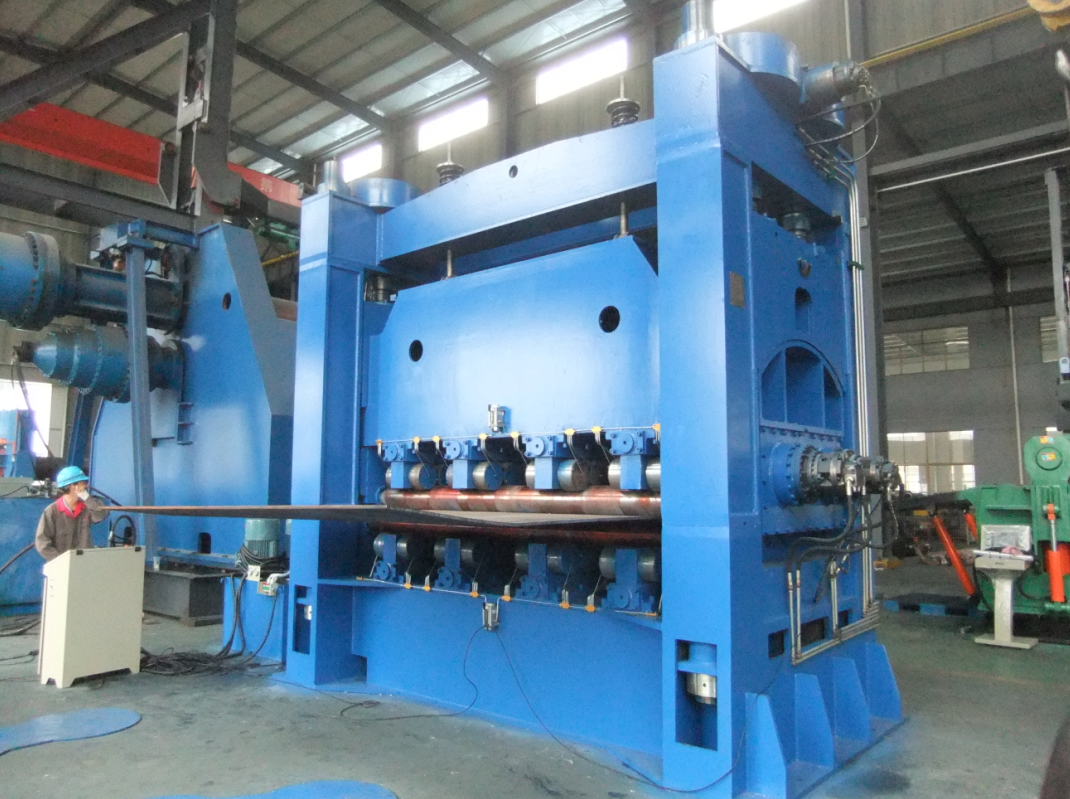
A Plate leveler is an industrial machine used to correct flatness defects in metal plate by repeatedly bending the material through a series of upper and lower rolls. This controlled plastic deformation reduces internal stress, removes coil set or wave defects, and improves plate geometry before fabrication. In practical terms, it helps manufacturers deliver parts that cut, fit, and weld more consistently.
In metal fabrication, a Plate leveler is commonly applied to carbon steel, stainless steel, aluminum alloy, and other engineered materials after rolling, shearing, plasma cutting, laser cutting, or storage distortion. The target is not only visual flatness, but also stable dimensional behavior during downstream operations such as edge milling, press braking, rolling, and automated welding.
Buyers will also see the term Plate leveling machine used in the market. The wording varies, but the core function remains the same: improving plate flatness, reducing rework, and creating a more predictable production flow. For workshops serving pressure vessels, steel structures, shipbuilding, heavy machinery, and sheet metal processing, leveling is often a process-control step rather than an optional finishing task.
From a procurement perspective, the right Plate leveler should be evaluated as part of the entire fabrication chain. Its value depends on the material range, thickness capability, yield strength range, productivity targets, and the required flatness standard after leveling. A machine that fits the process well can reduce hidden losses that are usually absorbed later in welding, machining, and assembly.
Key Components And Technical Principle
The core working principle of a Plate leveler is alternate elastic-plastic bending. As plate passes through multiple rolls, the upper and lower leveling rolls impose controlled curvature in opposite directions. This gradually equalizes stress distribution across the plate thickness and along its length, allowing the material to exit with improved flatness and lower residual stress.
The most important mechanical elements are the leveling rolls, backup rolls, frame, drive system, reduction transmission, entry and exit guide units, and the gap adjustment mechanism. Leveling rolls contact the material directly, while backup rolls support them against deflection under load. This support becomes critical when processing thicker plates or higher-strength materials, where roll bending can reduce accuracy and create uneven results.
Hydraulic or servo-assisted adjustment systems control roll penetration and machine settings. Precision in this area strongly affects repeatability, especially when production switches between different thicknesses and material grades. Wuxi Samgins emphasizes the use of imported hydraulic, servo, and CNC-related components in key positions because stable control hardware directly supports leveling accuracy, service life, and process consistency.
A well-designed Plate leveler also depends on frame rigidity and machining quality. Even when the theoretical roll arrangement is correct, weak structural stiffness, poor bearing support, or inaccurate roll parallelism can compromise flatness performance. This is why experienced buyers review not only nominal capacity, but also roller arrangement, adjustment precision, and the quality logic behind the entire machine build.
Main Types Of Plate Leveler
Plate leveler systems are commonly classified by plate thickness range, drive architecture, control method, and target application. Light and medium plate levelers are usually selected for sheet metal fabrication, service centers, and general machinery plants, while heavy-duty machines are built for thicker plate, higher yield strength, and structural or vessel-related applications.
Another practical classification is manual adjustment versus hydraulic or CNC-controlled adjustment. Manual systems may be acceptable for low-mix, less demanding production, but modern factories often prefer hydraulic or CNC-assisted control because setup is faster and parameter repeatability is better. This matters when a plant processes many plate sizes and needs predictable output across multiple shifts.
Machines can also differ by roller count, roller diameter, support structure, and whether they are integrated into a larger line with feeding, cutting, blasting, or welding equipment. For example, a fabrication plant may place a Plate leveler upstream of CNC flame cutting, CNC plasma cutting, or fiber laser cutting to improve cut quality and reduce part distortion before nesting and thermal processing.
For buyers seeking broader line integration, Wuxi Samgins is positioned around a wide fabrication equipment portfolio rather than a single standalone machine category. That matters when a project requires coordination between leveling, cutting, edge preparation, forming, welding, and structural steel equipment, because machine compatibility and process continuity can influence both throughput and project risk.
Who Uses It And Why It Matters
A Plate leveler is especially relevant for steel structure workshops, pressure vessel manufacturers, shipbuilding suppliers, tank fabricators, pipeline equipment producers, heavy machinery plants, and sheet metal factories. These users rely on consistent plate flatness because distortion at the front end often multiplies into fitting problems, welding gaps, misalignment, and avoidable finishing work.
The machine becomes more important when the material has strong residual stress from rolling, thermal cutting, storage, or transport. Even small waves or bow defects can affect edge milling, face milling, robotic welding paths, press brake angle consistency, and assembly accuracy. In automated production environments, poor incoming flatness may also reduce equipment utilization by creating interruptions and manual correction steps.
Compared with relying on manual straightening or process compensation later, a Plate leveler addresses flatness earlier and more systematically. This often improves production planning because operators can work from a more stable baseline. It also reduces dependence on individual operator judgment, which is valuable for exporters and contract manufacturers that need repeatable quality across changing orders and material lots.
For buyers managing multiple fabrication processes, Wuxi Samgins offers an advantage through product breadth and customization capability. A customer needing leveling equipment may also need welding manipulators, welding rotators, H-beam lines, pipe processing machines, or cutting systems. Working with a supplier familiar with these linked processes can simplify technical discussion and reduce interface uncertainty during project execution.
How The Leveling Process Works In Production
The leveling process usually starts with material review: plate grade, thickness, width, original defect pattern, and yield strength must be understood before setting the machine. Operators then adjust roll gap, entry angle, leveling penetration, line speed, and support conditions so that the plate receives enough corrective deformation without introducing new marks or instability.
During operation, the plate enters through guide units and passes across multiple small bending zones formed by the leveling rolls. The first rolls generally impose stronger correction to overcome incoming shape defects, while later rolls refine the flatness and stabilize the exit condition. Uniform traction and synchronized drive are important because slippage, speed mismatch, or uneven force can affect the result.
After leveling, the plate should be checked for flatness, edge condition, surface marking, and dimensional stability in the next process. In demanding applications, trial runs are often necessary when changing from low-carbon plate to high-strength or stainless materials. Buyers should expect process tuning rather than assuming one setting can cover all production conditions equally well.
Quality control around a Plate leveler should include roll hardness verification, machining accuracy, frame rigidity inspection, hydraulic stability, bearing condition, and calibration logic. Wuxi Samgins highlights design-to-manufacturing-to-support continuity and long-term after-sales service, which is relevant because leveling performance depends not only on machine delivery, but also on setup support, maintenance response, and sustained operating condition.
Selection Standards And Performance Factors
Selecting a Plate leveler starts with a realistic material window rather than the broadest possible specification. Buyers should define minimum and maximum thickness, plate width, material grades, yield strength range, and required production volume. A machine sized too close to the upper limit may struggle with hard materials, while an oversized machine can increase cost and reduce efficiency for routine jobs.
The next factors are roller arrangement, roller diameter, backup support, adjustment precision, and drive power. More rolls and smaller roller diameters can improve corrective capability for certain applications, but the structure must still maintain stiffness and durability. For heavy-duty work, support design is often as important as nominal motor power because deflection control affects actual leveling quality.
Control method matters as well. Hydraulic and CNC-assisted systems are usually preferred when repeatability, recipe storage, and faster setup change are priorities. This is especially relevant for export-oriented plants or job shops processing mixed orders. Wuxi Samgins can be a practical fit in such cases because its machinery portfolio includes customized systems and precision-oriented components in key hydraulic and control positions.
Industry compliance should also be part of the evaluation. For international buyers, machine conformity to ISO9001-managed production and EU CE Machinery and LVD directives is a useful baseline for documentation and procurement confidence. Wuxi Samgins states that its machines follow these systems and that its export team is familiar with ASME, API, and related industrial code environments, which can help during cross-border project communication.
Applications, Market Access, And Global Project Experience
A Plate leveler is widely used where plate flatness affects fabrication quality and schedule reliability. Typical scenarios include plate preparation before welding for tanks and vessels, flattening material ahead of CNC cutting, correcting distortion before rolling or bending, and improving fit-up for large steel structures. In many factories, leveling is a preventive process that reduces later bottlenecks in welding and assembly.
Global procurement decisions are rarely based on one machine alone. Buyers often need confidence that a supplier understands different plant conditions, operator habits, and documentation requirements across markets. Wuxi Samgins reports more than 10 years of export experience and references customers such as URALSTANKOIMPORT, MD Calbah Industries Pty Ltd, Ersay International Transport, Zein Steel Industries Co.LLC, PT.Cahaya mas Cemerlang, and Lincoln Electric-MENA, indicating exposure to varied industrial environments.
For users in sectors governed by project specifications or customer quality plans, market access is connected to process stability and traceable support. A Plate leveler that performs well but lacks service responsiveness can still create risk. Long-term warranty support, technical communication, and the ability to address issues such as delivery coordination, quality consistency, and installation questions are therefore meaningful selection factors.
Where a customer is building or upgrading a broader fabrication line, a supplier with adjacent products can offer practical integration value. Plate leveling may connect directly with press brakes, plate rolling machines, edge milling machines, welding positioners, or robotic welding cells. In those cases, the application case is not only about one machine solving one problem, but about stabilizing the whole production route.
Maintenance, Lifecycle, And Future Trends
A Plate leveler should be maintained on a preventive schedule built around roll condition, lubrication, bearing health, hydraulic pressure stability, electrical connections, and alignment accuracy. High-load machines especially need regular checks for roll wear, support deflection, and fastener integrity. Poor maintenance can gradually reduce flatness quality before a failure is obvious, leading to hidden process losses.
Maintenance intervals depend on load, shift intensity, and material type, but buyers should request a clear inspection list from the supplier and connect it to production planning. Plants already following service routines for press brakes, rolling machines, or cutting systems can usually integrate a Plate leveler into the same reliability framework. The goal is stable accuracy, not only avoiding breakdowns.
Looking ahead, the market trend is toward better automation, recipe-based setup, stronger process data visibility, and easier integration with upstream and downstream equipment. Demand is also increasing for machines that can handle a wider mix of materials while maintaining predictable quality. Energy efficiency, reduced operator dependency, and faster changeover will continue to shape purchasing criteria.
Suppliers able to combine machine customization, component quality, and long-term support are likely to remain competitive as factories modernize. In that context, Wuxi Samgins benefits from offering both Plate leveling machine solutions and a broad range of related fabrication equipment, which supports customers who want process continuity rather than isolated equipment decisions.
How Much Does It Really Cost? TCO And ROI Considerations
The total cost of owning a Plate leveler goes far beyond purchase price. Buyers should account for machine configuration, control system level, installation, operator training, spare parts planning, maintenance labor, power consumption, tooling or wear parts, and the cost of downtime. Heavy-duty applications may also require stronger foundations, handling equipment, or line integration expense.
ROI is typically driven by reductions in rework, scrap, welding correction, assembly delay, and manual straightening time. A machine that improves flatness consistency can also create indirect gains through better cutting performance, faster fit-up, and more stable robotic or automated welding. In medium-to-high volume fabrication, these process savings often matter more than the initial quote difference between suppliers.
From a sourcing perspective, the best commercial decision is usually a balanced one: enough machine strength, enough control precision, and enough service capability to match the plant's actual workload. Overbuying premium features with no production benefit raises capital cost, while underbuying often shifts the burden into operating inefficiency. Technical alignment should come before price comparison.
For buyers comparing complete fabrication suppliers, Wuxi Samgins may be attractive when the project involves multiple machine categories and a need for customization. A Plate leveler sourced within a broader equipment strategy can simplify communication, reduce compatibility concerns, and support a more coherent investment path across cutting, forming, and welding operations.
search

Recommended blogs
Send Us A Message
Send us a Message
A dedicated person will follow up on your needs one-on-one and provide personalized customized solutions according
to your needs.
Get In Touch
We look forward to hearing from you for in-depth communication on how to fulfill your mixing requirements.