




800mm Sheet Metal Buffing Machine: Output and Finish Trade-Offs
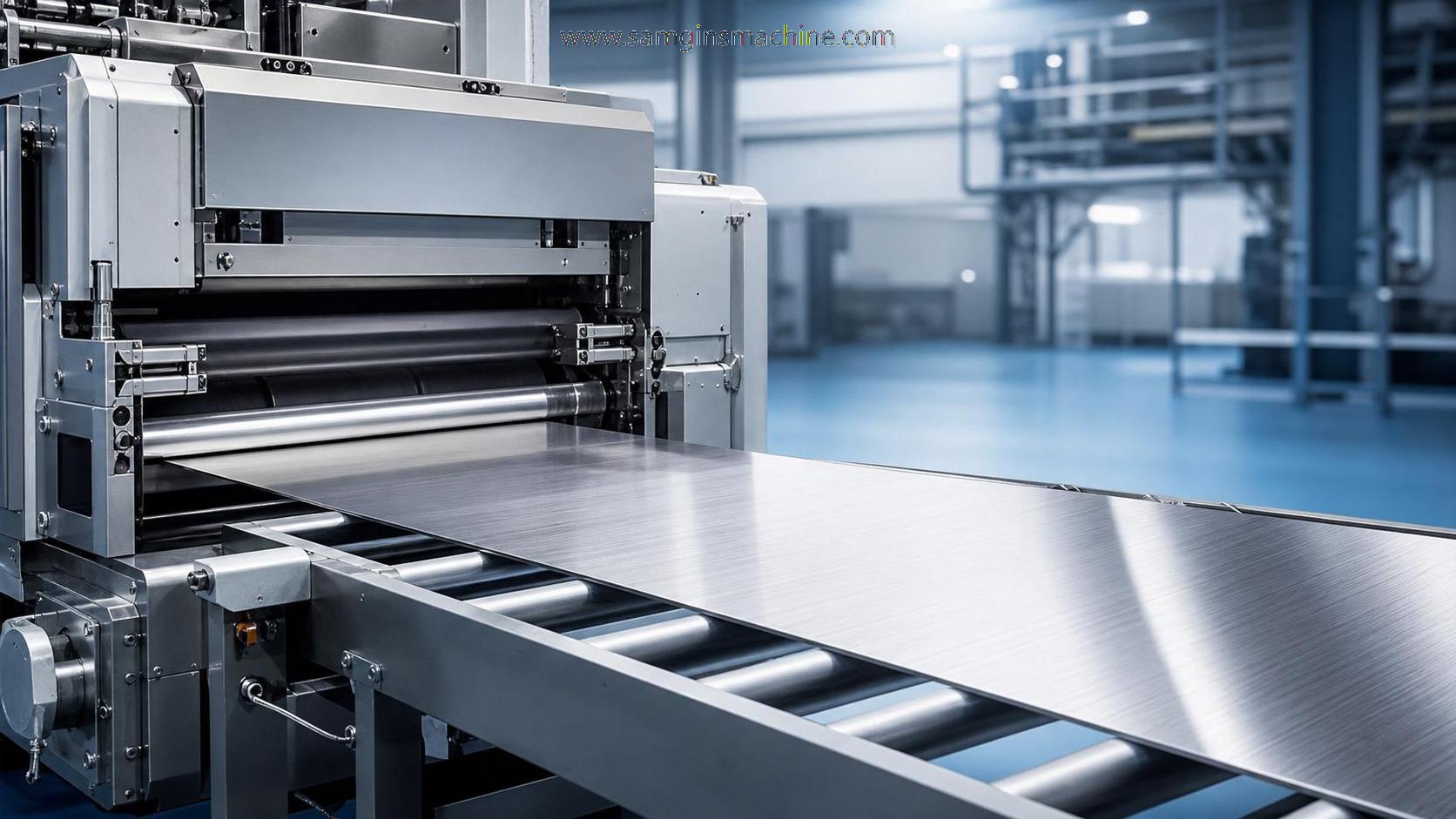
Balancing output and finish is a familiar issue in sheet metal processing, especially when wider panels move through production in steady volumes. The 800mm Sheet metal buffing machine sits in that practical middle ground, where capacity, surface consistency, and operating cost all need to align.
For operations handling visible metal parts, coated substrates, appliance panels, cabinets, or fabricated components, surface quality is not a cosmetic afterthought. It influences downstream welding, coating adhesion, assembly fit, and the perceived value of the finished product.
That is why the discussion around an 800mm Sheet metal buffing machine is rarely just about speed. The real decision is how much finish quality can be achieved at the required throughput, without creating bottlenecks or unstable processing costs.
Why 800mm width matters in production planning
An 800mm working width suits many common sheet and strip applications. It covers a useful range of medium and wide workpieces without pushing the machine into the cost structure of larger specialty finishing lines.
In practical terms, this width often supports better material flow for service centers, fabrication workshops, and integrated production lines. It gives enough flexibility for multiple part families while keeping machine footprint and power demand more manageable.
The 800mm Sheet metal buffing machine is therefore relevant when a business wants repeatable finishing on broad surfaces, but still needs disciplined capital allocation. It can serve as a finishing node rather than an oversized standalone investment.
Output and finish are linked, not separate targets
Higher throughput usually means faster feed rates, fewer passes, and tighter cycle expectations. Better finish usually asks for more contact time, more stable abrasive action, and stricter control of vibration, pressure, and heat.
This creates the central trade-off. If the line is pushed for volume, finish uniformity may decline. If the setup is tuned for premium appearance, output may drop below the level needed for competitive production.
The 800mm Sheet metal buffing machine becomes valuable when it allows that trade-off to be adjusted deliberately, instead of forcing a business into one extreme. Good equipment should let operators tune feed rate, abrasive configuration, pressure, and pass sequence around a defined result.
What usually changes when output rises
- Surface roughness may become less consistent across the sheet width.
- Edge zones may show uneven contact or visible variation.
- Abrasive wear tends to increase, shortening stable production windows.
- Heat generation can affect sensitive materials or thin sheets.
- Rework risk may increase, offsetting apparent speed gains.
The finish standard should be defined before machine comparison
Many buying decisions go wrong because the finish requirement is described too loosely. “Smooth,” “uniform,” or “good-looking” are not enough if the line will handle different materials, thicknesses, and downstream processes.
A more useful approach is to define the target in operational terms. That may include burr removal level, scratch pattern consistency, Ra range, reflectivity, coating readiness, or visual acceptance under specific lighting conditions.
Once the finish target is clear, the 800mm Sheet metal buffing machine can be evaluated on the right basis. Otherwise, output claims and polishing claims remain difficult to compare across suppliers.
Where the trade-offs show up most clearly
Not every application asks for the same finish logic. Some parts need deburring and light surface cleaning. Others need visible directional finishing before painting, coating, or direct delivery.
In high-volume structural work, the 800mm Sheet metal buffing machine may be judged mainly by stable output and burr control. In architectural or decorative fabrication, the same machine will be judged more heavily on finish uniformity and rework avoidance.
This is also why upstream and downstream compatibility matters. A finishing machine should not be chosen in isolation from cutting, bending, welding, or coating stages.
For example, facilities processing carbon steel often pair finishing decisions with cutting capability. In that broader flow, equipment such as the Cnc flame cutting machine supports planar contour cutting, multi-torch straight bar work, and economical processing of thicker carbon steel plates before finishing steps are considered.
Typical use directions
- Pre-coating preparation for flat steel or stainless components.
- Post-cut surface refinement after laser, plasma, or flame processes.
- Visible panel finishing where scratch pattern consistency matters.
- General deburring and oxide reduction for fabrication lines.
- Intermediate finishing before forming, welding, or assembly.
What decision quality looks like in real operations
A sound machine decision usually starts with process mapping, not brochure comparison. The question is not simply whether an 800mm Sheet metal buffing machine can run fast. The question is whether it can run at the required finish level for the actual product mix.
Useful evaluation should include material type, sheet width variation, incoming edge condition, burr profile, oxide presence, target finish, shift structure, and maintenance resources. These details shape the real economics far more than headline speed alone.
A lower nominal speed may produce better cost results if it reduces consumable waste and rework. A higher nominal speed may still be the right choice when finish tolerance is less demanding and line balance depends on faster throughput.
Questions worth testing before approval
- Can the target finish be maintained through a full shift?
- How does the machine perform on different sheet thicknesses?
- What is the consumable cost per square meter?
- How long does abrasive replacement take in normal conditions?
- Does finish quality remain consistent at wider workpiece edges?
- Can the machine integrate with upstream cutting and downstream coating?
Why supplier context still matters
Machine value is influenced by more than the polishing unit itself. Process understanding, equipment matching, export experience, and technical communication all affect the final outcome.
Wuxi Samgins International Trade Co., Ltd, established in 2012 in Wuxi, operates in a manufacturing center with convenient access to Shanghai. Its portfolio spans welding equipment, CNC cutting systems, milling machines, machine tools, deburring equipment, bending and rolling machinery, and related metalworking solutions.
That broader equipment background is relevant because finishing rarely stands alone. It usually needs to fit into a chain that may include cutting, leveling, edge preparation, fabrication, and inspection. Companies working under ISO9001 systems and EU CE expectations often place more emphasis on this whole-line compatibility.
A related example is the second role of a Cnc flame cutting machine in heavier carbon steel processing, where bilateral drive, rack-and-pinion motion, CAD/CAM contour cutting, and optional torch height control help establish consistent upstream quality before surface treatment begins.
How to judge the next step
The strongest case for an 800mm Sheet metal buffing machine appears when finishing quality affects product acceptance, but output pressure remains high enough that manual polishing is no longer economical or stable.
At that point, the decision should be framed around three things: required finish result, realistic hourly throughput, and full operating cost over time. Those factors reveal whether the machine improves total production performance or only shifts cost from one stage to another.
A useful next move is to review actual part samples, define measurable finish targets, and compare trial results at more than one feed rate. That creates a clearer basis for choosing an 800mm Sheet metal buffing machine that fits production goals without overbuying or under-specifying the line.
search
Products Navigation
Send Us A Message