




Thread Forming Machine Basics: Process, Speed, and Limits
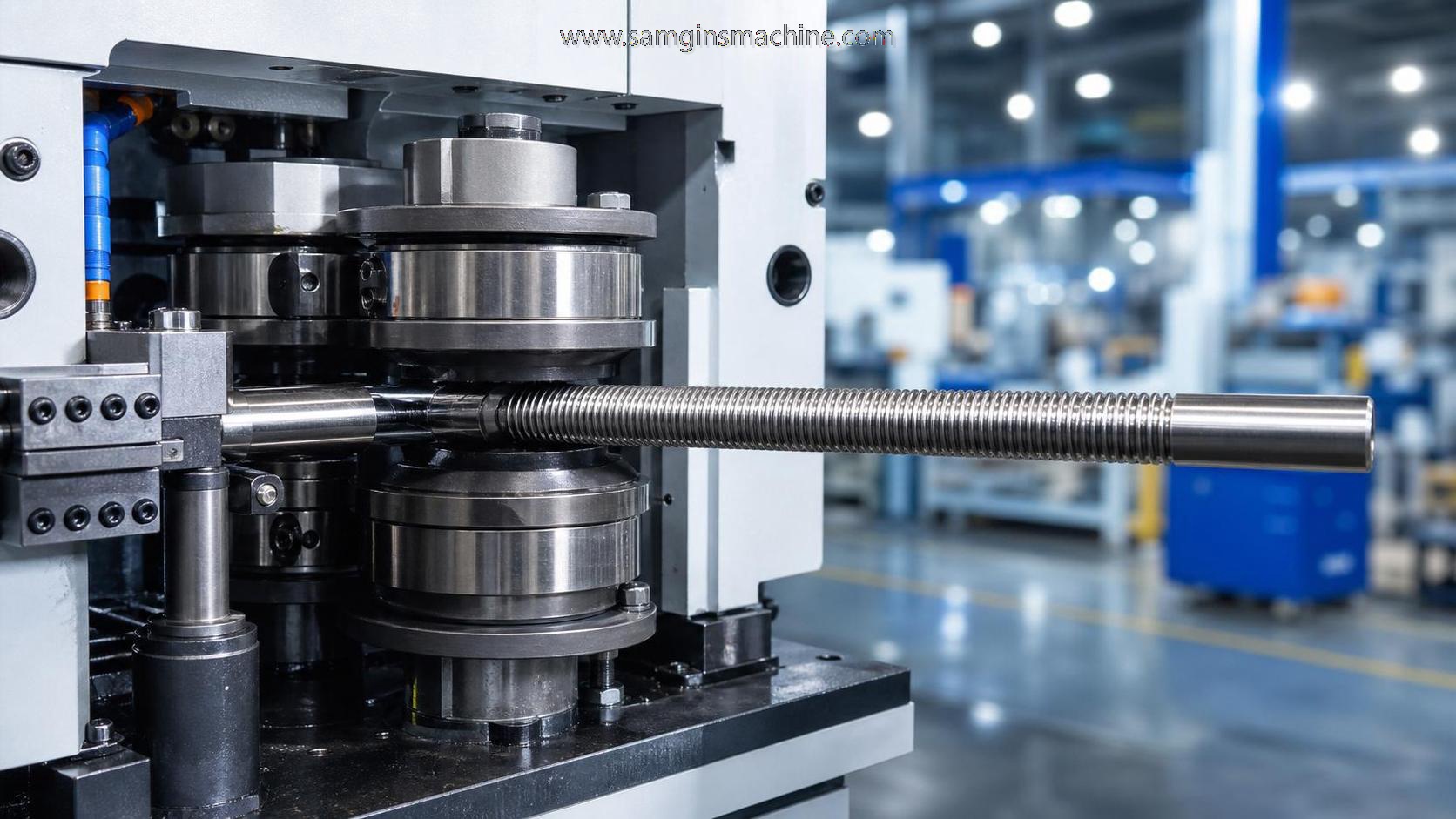
Why does a thread forming machine matter in metalworking?
A thread forming machine creates threads by displacing material instead of cutting it away. That difference sounds simple, but it changes strength, speed, surface finish, and waste generation.
In practical terms, formed threads are often denser and smoother. They can perform well in high-volume production where repeatability matters more than occasional manual flexibility.
This is why the topic keeps appearing in searches about fasteners, shaft processing, and automated metalworking lines. People are usually trying to understand process basics before comparing machines.
For companies involved in fabrication equipment, this question also connects with the wider production chain. Wuxi Samgins International Trade Co., Ltd., established in 2012 in Wuxi, works across welding, cutting, milling, rolling, and thread rolling equipment, so thread forming is rarely viewed as an isolated step.
A good evaluation usually starts with three points: how the process works, how fast it can run, and where its limits begin to appear.
How is thread forming different from thread cutting?
The most direct answer is that thread cutting removes metal, while a thread forming machine presses the material into shape using dies or rollers.
Because the grain flow is not interrupted in the same way, formed threads often show better fatigue resistance. The surface can also be smoother, which helps in repeated assembly.
That said, the process is not universal. Thread cutting remains useful for brittle materials, low-volume custom work, or shapes that do not respond well to plastic deformation.
A thread forming machine is usually favored when the material is ductile enough and the production run justifies dedicated tooling and setup control.
This comparison is useful because many selection mistakes come from assuming both methods behave the same in production. They do not.
What actually controls thread forming speed?
People often ask for a simple RPM number, but speed depends on much more than spindle rotation. Material grade, thread size, lubrication, die geometry, and machine rigidity all matter.
A thread forming machine can run very quickly in carbon steel or other ductile metals when lubrication is stable and part feeding is consistent. In those conditions, the process becomes highly efficient.
The limit usually appears when heat rises, dies wear, or the material resists deformation. Then the machine may still run, but thread accuracy and tool life begin to fall.
In real production, the best speed is not the maximum mechanical speed. It is the highest stable speed that still protects pitch accuracy, profile consistency, and downstream assembly performance.
- Smaller threads usually allow higher output rates.
- Better lubrication often extends die life before quality loss appears.
- Servo control and stable feeding reduce variation between parts.
- A rigid frame helps maintain repeatability during long runs.
This same production logic is visible in other fabrication equipment. For example, Standard NC Face milling machine systems also depend on rigid construction, accurate control, and fast job changeover rather than headline speed alone.
Where does a thread forming machine work best, and where does it struggle?
The process works best on ductile materials that can flow under pressure. Low and medium carbon steels, certain stainless grades, aluminum alloys, and copper alloys are common examples.
It also suits repetitive parts. Screws, bolts, studs, automotive fittings, appliance components, and hardware for assembly lines are typical applications.
The limits become clearer with brittle materials, hardened stock, extreme wall thickness constraints, or part geometries that do not support stable rolling pressure.
Another common issue is assuming every blank is ready for thread forming. Blank diameter must be controlled carefully. If it is wrong, the finished thread profile will also be wrong.
That is why thread forming decisions should be linked to the whole process route, including upstream turning, chamfering, heat treatment, and final inspection.
A quick judgment table for common limits
What should be checked before choosing a thread forming machine?
A useful selection starts with the part, not the catalog. Thread diameter, pitch, length, material condition, and annual output should be defined before comparing machine models.
After that, look at the machine structure. Feed accuracy, drive stability, die change convenience, lubrication management, and operator access will affect daily performance more than brochure language.
It is also worth checking how the machine fits into surrounding operations. A line producing beams, columns, or other structural parts may need different workflow logic than a line dedicated to fasteners.
That broader integration view explains why equipment suppliers with experience across cutting, milling, welding, and forming can be useful during evaluation. Cross-process knowledge helps avoid isolated decisions.
- Confirm the material range, including hardness variation.
- Check achievable tolerance, not only nominal thread size.
- Review die availability and replacement cycle.
- Ask how speed changes under full production load.
- Verify safety, maintenance access, and training needs.
In related fabrication work, equipment such as the Standard NC Face milling machine shows the same principle. Advanced CNC control, rigid materials, and stable guide rails matter because process accuracy is built into the structure.
Which mistakes cause most performance problems?
One frequent mistake is chasing speed without watching thread quality. Faster output looks attractive, but poor flank shape or inconsistent pitch creates hidden costs later.
Another issue is weak blank control. Thread forming depends on material volume moving into the profile. If the starting diameter drifts, results drift with it.
Lubrication is also underestimated. In a thread forming machine, lubrication is not a minor support detail. It directly affects friction, heat, die wear, and surface finish.
Some users also assume maintenance can be delayed because the process seems clean. In reality, alignment, die condition, drive components, and cooling behavior need regular checks.
Finally, there is the comparison mistake: evaluating the machine only by purchase price. A lower-priced unit may cost more through shorter die life, lower consistency, and unstable line performance.
So, how should the next evaluation step be handled?
Start by listing the actual thread specifications, materials, and monthly output targets. That makes the thread forming machine discussion much more concrete.
Then compare process routes, not just machine names. Ask whether thread forming truly fits the material behavior, dimensional needs, and production rhythm.
If two options appear similar, focus on stability indicators. Tool life, lubrication control, setup repeatability, and inspection results usually reveal the better long-term choice.
The core point is straightforward. A thread forming machine can deliver strong, precise threads at high speed, but only when material, tooling, and process control are aligned.
For further comparison, it helps to review the full production chain, including upstream machining and downstream assembly demands, then build a shortlist around verified technical limits rather than assumptions.
search
Products Navigation
Send Us A Message