




Bolt Thread Rolling Machine Buying Guide for 2026
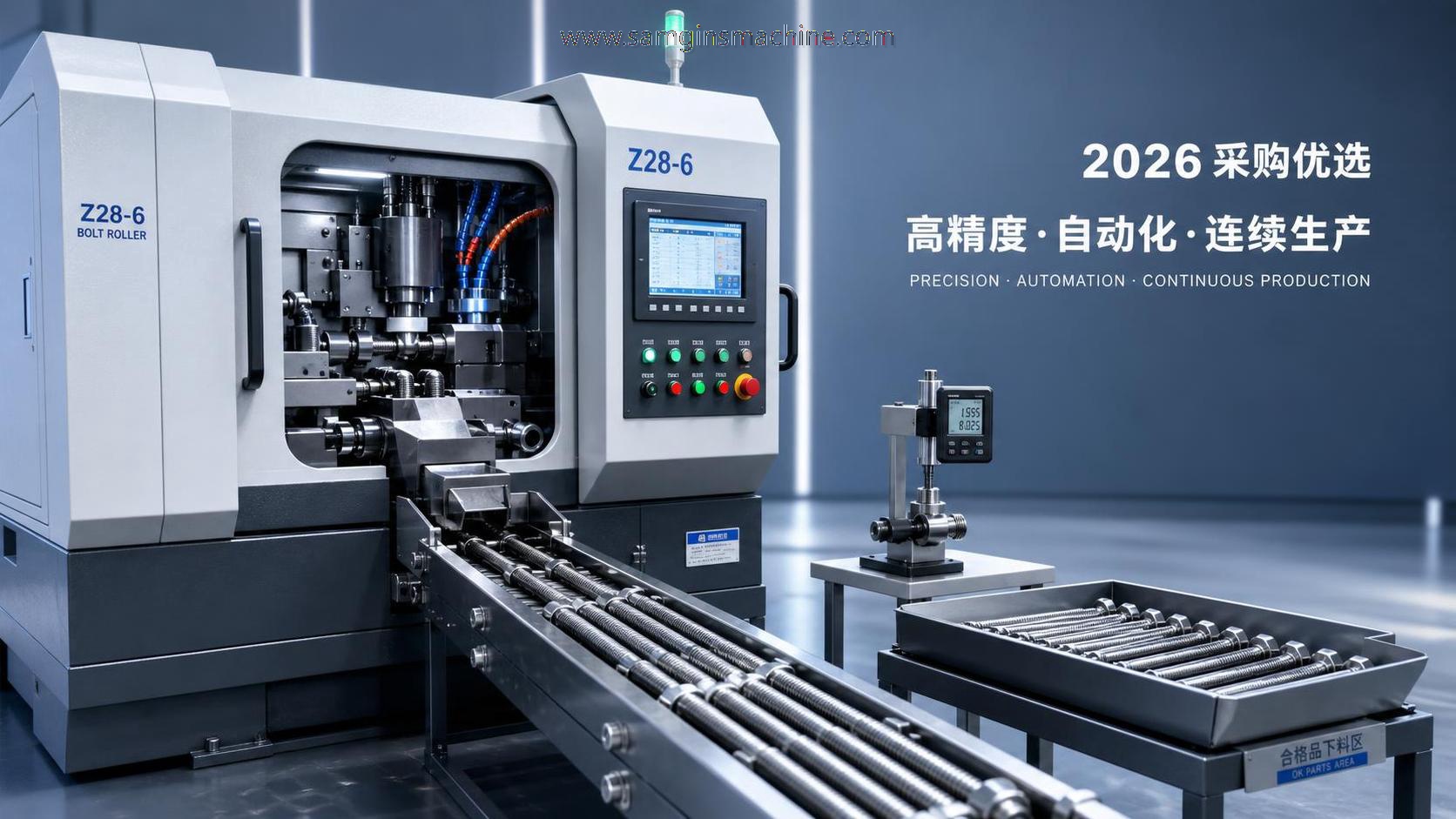
Bolt Thread Rolling Machine Buying Guide for 2026
Choosing a bolt thread rolling machine in 2026 is no longer just about finding the lowest quote.
A cheaper machine can become expensive fast if thread quality drifts, tooling wears early, or downtime interrupts delivery schedules.
That is why serious buyers now look at total value, not only purchase price.
A reliable bolt thread rolling machine should deliver stable thread accuracy, practical automation, strong frame rigidity, and support that continues after installation.
In real sourcing work, these details affect output, scrap rate, labor needs, and maintenance cost more than most catalogs suggest.
This guide breaks down the key buying points, supplier signals, and cost factors that matter before placing an order.
Why 2026 Is Different for Bolt Thread Rolling Machine Buyers
The market has shifted in a few important ways.
More factories want faster changeovers, lower labor dependence, and tighter control over consistency.
That means a bolt thread rolling machine is now expected to do more than form threads.
It also needs to fit into a broader production flow, often linked with cutting, feeding, inspection, and packing.
A stronger signal is the growing focus on traceable quality.
Customers in automotive, construction fasteners, and industrial hardware expect repeatable dimensions and smoother surface finish.
This makes machine stability, die quality, and control logic far more important than headline speed alone.
Start with the Right Production Requirement
Before comparing suppliers, define the production target in plain numbers.
This step prevents buying a bolt thread rolling machine that looks capable but does not match daily factory needs.
- Bolt diameter range and thread length
- Material type, including carbon steel, stainless steel, or alloy steel
- Required output per hour and per shift
- Tolerance expectations and inspection method
- Available floor space, power supply, and operator level
Without these inputs, machine comparisons stay too general.
With them, you can quickly eliminate models that are too light, too slow, or too complex.
Key Technical Factors That Affect Long-Term Value
Thread Accuracy and Surface Finish
A bolt thread rolling machine should consistently produce clean and uniform threads.
Ask how the supplier controls pitch accuracy, thread profile, and roundness during continuous production.
Good results usually come from rigid machine structure, reliable spindle performance, and quality rolling dies.
Machine Rigidity and Durability
Frame strength matters more when production volume increases.
A rigid bolt thread rolling machine holds alignment better and reduces vibration under load.
That directly supports stable thread formation and longer tooling life.
Automation Level
Automation should match production reality, not marketing language.
Useful features include automatic feeding, recipe storage, fault alarms, and easy parameter adjustment.
If labor is tight, a more automated bolt thread rolling machine may reduce operating cost within a short period.
Changeover Time
This point is often underestimated during buying discussions.
If orders vary by diameter and thread specification, setup speed strongly affects real productivity.
Ask for actual changeover steps, not a general promise.
How to Compare Suppliers Beyond the Quotation
A quotation sheet rarely shows the full buying risk.
The better approach is to assess supplier capability from several angles.
- Check manufacturing experience in thread rolling equipment.
- Review exported markets and familiarity with international standards.
- Confirm quality control process and component sourcing.
- Request machine running videos with similar bolt sizes.
- Ask what spare parts are stocked and how fast they ship.
Wuxi Samgins International Trade Co.,Ltd works from Wuxi, Jiangsu Province, close to Shanghai.
The company focuses on mechanical equipment and related products for global markets.
Its product range covers welding equipment, CNC cutting machines, milling machines, lathes, laser cutting machines, thread rolling machines, and more.
Production and design are organized according to ISO9001 quality system practices and EU CE standards.
That matters when evaluating supplier discipline, documentation, and consistency over time.
Cost Analysis: What a Bolt Thread Rolling Machine Really Costs
The purchase price is only the visible part of the investment.
The real cost of a bolt thread rolling machine includes operation, maintenance, tooling, and production losses.
- Initial machine price
- Rolling dies and replacement schedule
- Power consumption and lubrication
- Operator training and setup time
- Unplanned downtime and repair response
- Scrap caused by inconsistent threads
A lower-priced bolt thread rolling machine may still cost more over two or three years.
That usually happens when die wear is high, adjustments are frequent, or after-sales support is slow.
For a better comparison, build a simple total cost model before final approval.
Questions Worth Asking Before You Place the Order
A strong buying process depends on clear technical questions.
These questions help reveal whether a bolt thread rolling machine is truly suitable.
- What bolt sizes and materials has this model already handled?
- What is the expected output under normal factory conditions?
- Which parts wear fastest, and what is their average life?
- How is thread quality verified during acceptance testing?
- What training, manuals, and remote support are included?
- How long will spare parts remain available after purchase?
Specific answers are usually a good sign.
Vague answers often point to future delays, hidden costs, or unsuitable machine configuration.
Do Not Ignore Upstream and Downstream Equipment
A bolt thread rolling machine performs best when surrounding processes are stable.
In many lines, raw material preparation and cutoff quality directly affect thread rolling results.
That is why some buyers review complementary equipment during the same sourcing cycle.
For example, a Band Saw Machine can support cutting bars, pipes, and other profiles with steady feed control.
When equipped with CNC control, it can improve upstream cutting precision and reduce variation before rolling.
This broader view often improves the return on a bolt thread rolling machine investment.
Common Buying Mistakes in 2026
Several mistakes keep appearing in equipment purchases.
- Choosing by speed rating without checking stable accuracy
- Ignoring tooling cost and die replacement frequency
- Accepting general after-sales promises without service terms
- Skipping sample testing on actual bolt materials
- Buying a bolt thread rolling machine with more automation than needed
The last point matters because unnecessary complexity can increase maintenance needs and operator dependence.
The best machine is the one that fits production clearly and runs predictably every day.
A Practical Shortlist for Final Decision
Before signing, review the shortlist using a simple final filter.
- Match the bolt thread rolling machine to actual product range.
- Verify acceptance standards for thread quality and output.
- Confirm spare parts, training, and warranty terms in writing.
- Estimate total cost for at least 24 months of operation.
- Check whether the supplier can support future line expansion.
A bolt thread rolling machine is a production asset, not a one-time purchase line.
When technical fit, service reliability, and long-term cost align, the buying decision becomes much more defensible.
In 2026, that is the clearest path to securing stable output, predictable cost, and better value from every machine investment.
search
Products Navigation
Send Us A Message