




800mm Sheet Metal Surface Polishing Machine Applications
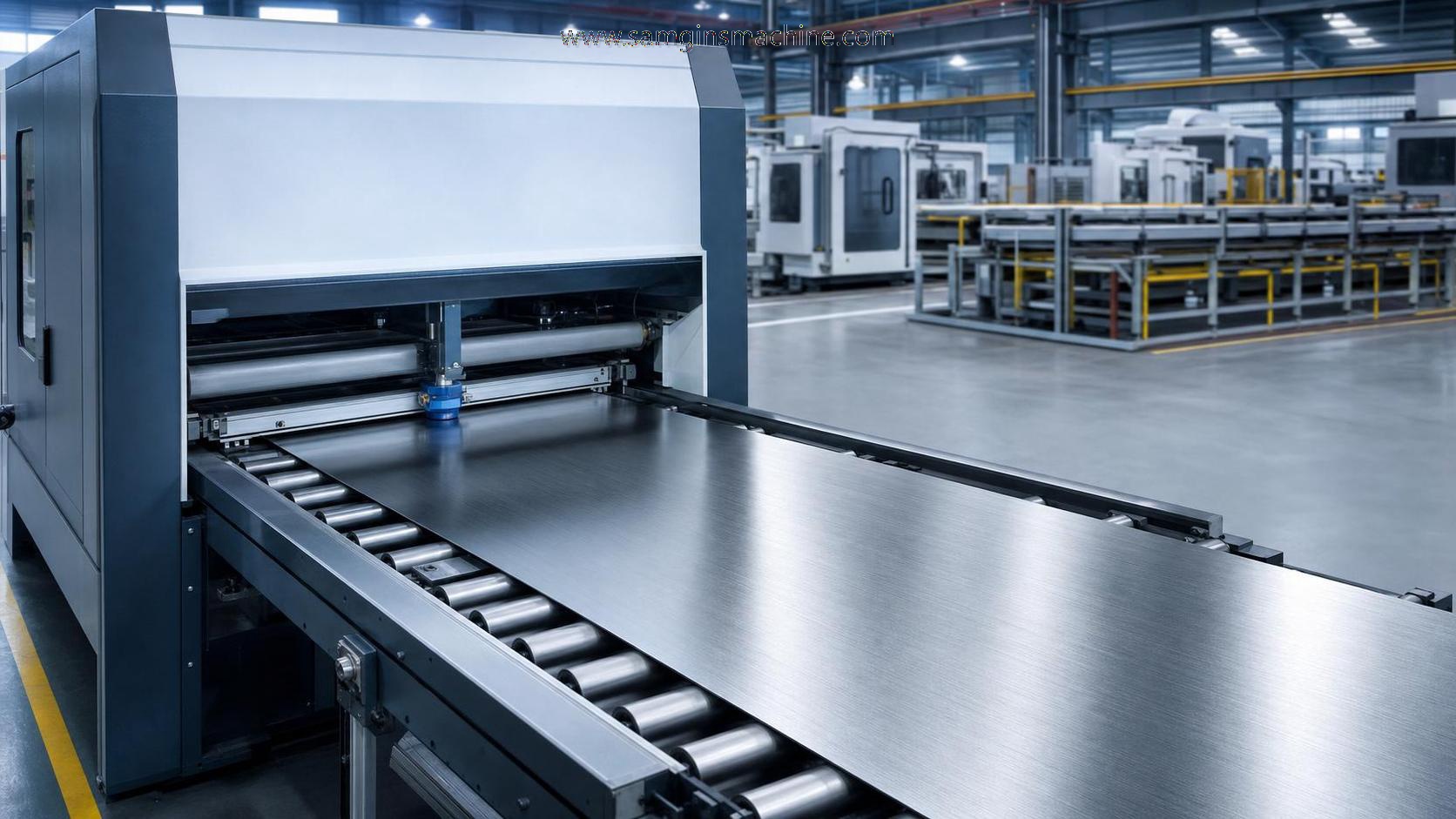
800mm Sheet Metal Surface Polishing Machine Applications
For operators seeking smoother finishes, higher efficiency, and reliable performance, the 800mm Sheet metal surface polishing machine is widely used across sheet metal processing lines.
It improves surface quality, reduces manual effort, and supports stable production in precision finishing tasks across modern fabrication workshops.
In day-to-day production, surface polishing is not just about appearance.
It affects coating adhesion, welding preparation, part cleanliness, and final product consistency.
That is why the 800mm Sheet metal surface polishing machine has become a practical solution in many metalworking environments.
Wuxi Samgins International Trade Co.,Ltd supplies a broad range of fabrication equipment for global users.
Based in Wuxi, Jiangsu, the company serves customers with ISO9001-focused production control and EU CE-oriented quality standards.
Its experience across cutting, welding, leveling, deburring, bending, and milling equipment also helps users build more connected processing lines.
Why This Polishing Width Matters
An 800mm working width fits many common sheet metal sizes used in cabinets, panels, doors, covers, and structural components.
It gives enough coverage for medium-width parts without taking the floor space of a larger finishing machine.
This balance is useful when workshops need output and flexibility at the same time.
The 800mm Sheet metal surface polishing machine is often chosen for lines handling stainless steel, carbon steel, aluminum sheets, and formed plate parts.
It can support pre-paint treatment, oxide removal, scratch blending, and post-cut surface refinement.
From recent production trends, more factories want one machine that can support several finishing steps with fewer manual corrections.
Common Applications In Metal Processing
The 800mm Sheet metal surface polishing machine is used in many practical applications, especially where finish quality affects assembly or appearance.
- Removing burr marks and light oxidation after cutting operations.
- Preparing sheet surfaces before powder coating, painting, or film lamination.
- Improving decorative finishes for visible stainless steel products.
- Blending surface defects before bending, welding, or final assembly.
- Cleaning hot-worked or processed sheets for downstream operations.
- Smoothing flat parts used in electrical enclosures, appliances, and machinery panels.
In actual workshop flow, polishing often comes after cutting and before coating or assembly.
This means the polishing stage must keep pace with upstream equipment.
If the surface step is too slow, the entire line starts to lose efficiency.
Where It Solves Real Production Problems
Many users shift to an 800mm Sheet metal surface polishing machine after running into repeated manual finishing issues.
Typical problems include uneven polishing pressure, inconsistent grain patterns, labor fatigue, and unstable daily output.
A machine-based process helps reduce these variables.
More importantly, it creates a repeatable finishing standard that can be followed across shifts.
This matters when product batches must match in texture, reflectivity, or coating readiness.
A clearer signal in the market is the move toward lower rework rates.
Poor surface finishing can cause paint defects, visible scratches, or poor sealing in assembled products.
Using the right 800mm Sheet metal surface polishing machine helps address those risks earlier in the process.
How It Fits Into A Complete Fabrication Line
Surface polishing rarely works as an isolated task.
It performs best when matched with cutting, leveling, deburring, and forming equipment in a planned workflow.
For example, a fabrication line may begin with plate cutting, continue with edge treatment, and then move to surface finishing.
In some projects, users also combine polishing with heavy plate preparation handled by Cnc flame cutting machine systems.
That setup is useful when carbon steel parts need contour cutting first, then later surface conditioning before welding or coating.
This also means polishing choices should consider upstream cutting quality.
If cut edges create heavy heat scale or rough marks, the finishing load naturally increases.
A Practical Flow Example
- Cut raw sheet or plate to size.
- Remove large burrs or slag where needed.
- Run flat parts through the 800mm Sheet metal surface polishing machine.
- Check finish uniformity and surface cleanliness.
- Send parts to bending, welding, coating, or assembly.
Key Benefits For Daily Operation
A good finishing machine should improve both product quality and workflow control.
The 800mm Sheet metal surface polishing machine is valued because it supports several measurable gains.
- More uniform surface roughness across batches.
- Lower reliance on handheld grinding and polishing.
- Better preparation for coating and adhesive processes.
- Reduced labor intensity in repetitive finishing jobs.
- Improved throughput for medium-width sheet components.
- Cleaner process control with fewer visible finishing differences.
These benefits are especially important in contract manufacturing, where batch changes happen often and finish standards vary by customer.
A stable polishing process makes those changes easier to manage.
Selection Points Before Use
Choosing an 800mm Sheet metal surface polishing machine should start with the actual part mix, not just the machine width.
A few checkpoints usually make the decision more practical.
- Material type: stainless steel, carbon steel, aluminum, or mixed production.
- Surface target: deburring, brushing, oxide removal, or pre-coating finish.
- Part thickness and flatness consistency.
- Expected daily volume and takt time requirements.
- Consumable replacement frequency and maintenance access.
- Compatibility with upstream cutting and downstream forming steps.
This is also where supplier experience matters.
Companies serving wider fabrication needs can usually suggest a more realistic line layout.
That saves time when matching polishing equipment with cutting, welding, and plate processing machines.
Operating Tips For Better Results
Even a well-configured 800mm Sheet metal surface polishing machine needs stable operating habits.
Small process adjustments often have a direct effect on finish quality.
- Keep sheet surfaces free from large particles before feeding.
- Match belt or abrasive type to the required finish level.
- Control feed speed based on material hardness and defect depth.
- Inspect wear parts regularly to avoid uneven contact.
- Check sample parts at shift start and after consumable changes.
- Record recurring defects to improve machine settings over time.
In practical terms, consistency usually comes from discipline more than speed.
A slightly slower but repeatable process often outperforms fast polishing followed by manual rework.
Why It Remains A Strong Application Choice
The 800mm Sheet metal surface polishing machine stays relevant because it answers a very practical manufacturing need.
It helps users control finish quality, reduce labor pressure, and keep production flow more predictable.
That makes it useful in fabrication shops, enclosure production, machinery manufacturing, and general sheet metal processing.
When combined with reliable upstream equipment and clear process settings, the result is usually lower rework and stronger batch consistency.
For businesses expanding their metalworking capacity, this kind of polishing solution is less about appearance alone and more about process control.
A careful evaluation of materials, production goals, and line integration will show where the 800mm Sheet metal surface polishing machine can deliver the most value.
search
Products Navigation
Send Us A Message