




Before Buying Thickness Cutting Machines: Key Specs That Affect Cost and Output
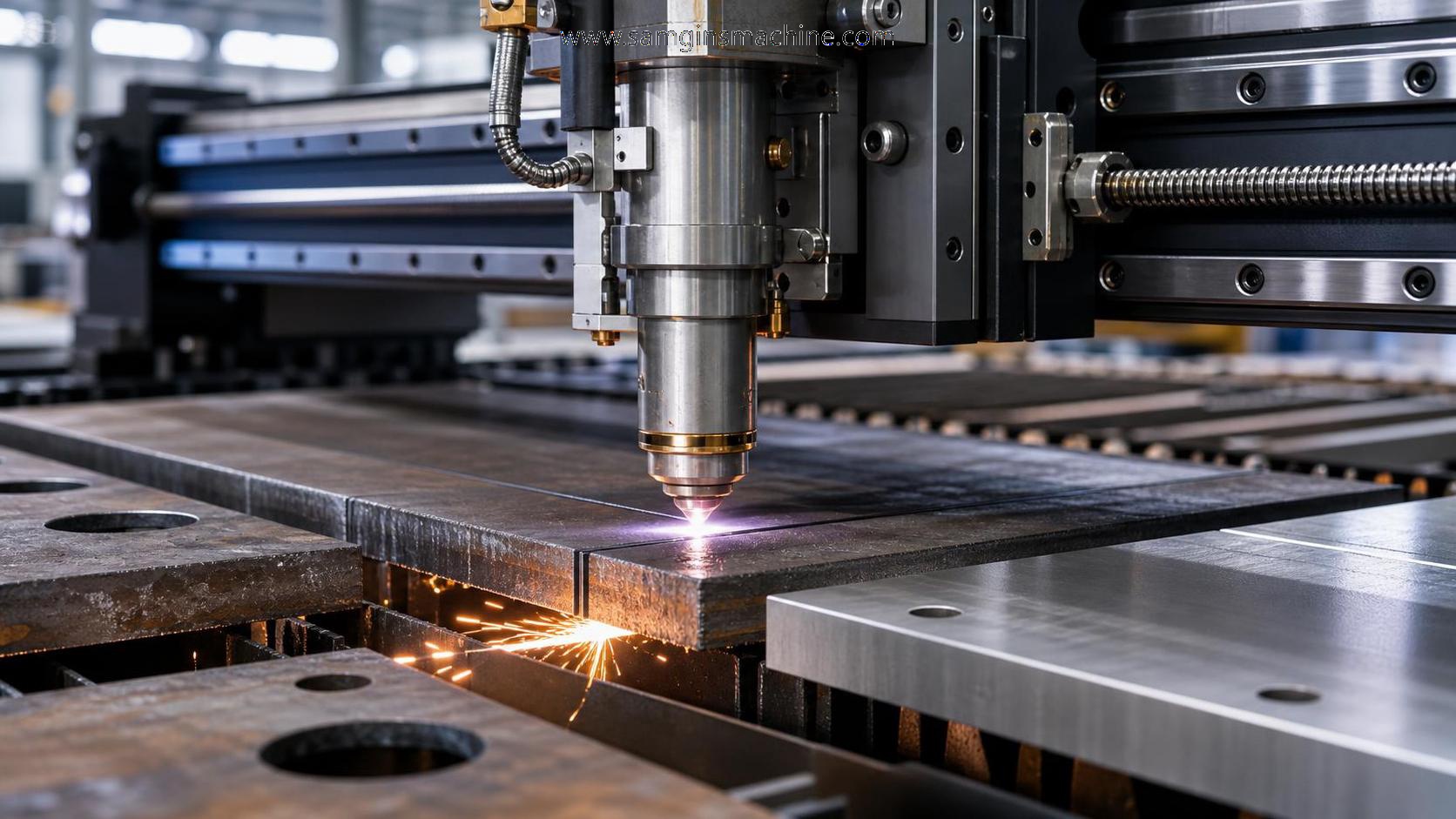
Before Buying Thickness Cutting Machines: Key Specs That Affect Cost and Output
Before investing in thickness cutting machines, procurement teams need to look beyond the price tag. Cutting capacity, material compatibility, precision, automation level, and long-term operating costs all have a direct impact on output and return on investment. Understanding these key specifications helps buyers compare options more effectively, reduce production risks, and choose equipment that matches both budget and manufacturing goals.
If you are buying for a workshop, fabrication line, or structural steel project, the quickest way to overspend is to compare machines by headline power and quoted price alone. In practice, thickness cutting machines only make money when they match your real plate range, material type, drawing tolerance, downstream process, and shift rhythm. Buyers who skip that homework often end up with a machine that looks capable on paper but slows production, creates rework, or costs more in consumables than expected.
This is the checklist I would use before asking suppliers for final quotations.
Start with the real thickness range, not the maximum advertised number
Every supplier can show a maximum cutting thickness. That figure matters, but it should not drive the purchase by itself. What matters more is the thickness range you will cut every week. A machine that can cut 50 mm plate but performs best at 12-25 mm is a different investment from one designed for stable output on thick structural material.
Ask your production team for an actual mix: minimum thickness, common thickness, occasional peak thickness, and material grade. Then ask suppliers for cutting speed, edge quality, pierce performance, and consumable life within that real range. If they only repeat the maximum thickness, push further. Maximum capability does not tell you what your cost per meter will look like.
- Check the thickness used in 70% to 80% of orders.
- Separate mild steel, stainless steel, and aluminum if your shop handles more than one material.
- Confirm whether quoted speed is production speed or just travel speed.
- Ask how edge quality changes at the upper end of the machine's range.
Material type changes the economics more than many buyers expect
Thickness cutting machines are often discussed as if thickness is the only variable. It is not. Carbon steel, stainless steel, galvanized sheet, and aluminum behave differently in cutting, and those differences show up in speed, dross, heat input, consumable wear, and post-processing time.
For procurement, the practical question is simple: what material mix will this machine actually run? If your workload is mostly structural steel, your decision criteria will be different from a shop doing thin stainless parts with appearance requirements. Buyers sometimes purchase a machine optimized for one material family and then discover that another important product line runs slower, with worse edges and more cleanup. The machine is not defective. It is just the wrong fit.
If your orders vary a lot, ask for sample cuts on your own drawings and your own material grades. That is far more useful than a polished generic demo.
Pay attention to precision where it affects downstream cost
Some buyers ask for the tightest possible accuracy because it sounds safer. That usually pushes price upward without adding much value. The better question is where precision affects the next process. If cut parts go into welding fixtures, robotic assembly, beveling, machining, or direct installation on site, dimensional consistency matters a lot. If parts will be manually fitted and heavily reworked anyway, paying a premium for extreme tolerance may not pay back.
Also ask how the supplier defines precision. Positioning accuracy, repeatability, kerf compensation, and finished edge condition are related, but they are not the same thing. A quotation that mentions "high precision" without test conditions is too vague to support a purchase decision.
Automation level should match labor reality, not just budget approval
A lower-cost machine can become expensive very quickly if it needs too much operator intervention. This is especially true when experienced operators are hard to retain, or when production depends on repeat orders and stable throughput. Nesting software, automatic height control, fast parameter setup, material handling support, and fault diagnostics all affect how many productive hours you get in a shift.
I would not ask, "Does it have automation?" I would ask, "Which actions still depend on operator judgment, and how much does output drop when the operator is average rather than excellent?" That usually reveals more about real operating cost than the brochure does.
A similar logic applies in adjacent fabrication equipment. For example, in H-beam processing, equipment such as Standard gantry h beam welding machine is often valued less for a single headline spec than for how much it reduces manual correction and keeps output stable. Features like automatic centering, seam tracking, NC control, and simultaneous welding of two workpieces can shift labor planning in a very practical way. The same mindset helps when screening thickness cutting machines: look for functions that remove daily variation, not just functions that sound advanced.
Consumables and utilities deserve their own line in the comparison sheet
Procurement teams often compare capital price carefully and then treat running cost as a rough estimate. That is where many buying decisions go wrong. Thickness cutting machines can differ significantly in nozzle life, electrode consumption, gas usage, power demand, filter replacement, and maintenance intervals. Even when the purchase price difference looks meaningful, the total cost picture can reverse after a year of normal production.
Get suppliers to quote the items below in writing, based on your material and thickness range where possible:
- Expected life of key consumables under standard production conditions
- Recommended gas types and estimated consumption
- Power requirements and any special electrical conditions
- Preventive maintenance intervals
- Stocking lead time for wear parts
If a supplier gives only broad estimates, mark that item as 【待核实】 in your internal comparison. That keeps assumptions from quietly turning into approved budgets.
Table size, loading method, and plant layout can quietly limit output
A machine can have excellent cutting specs and still underperform because sheet loading, unloading, and part sorting are awkward. Procurement people usually notice this late, when installation drawings are already under review. Check usable cutting area, access around the machine, crane or forklift movement, scrap removal, dust extraction routing, and whether future automation can be added without moving half the workshop.
This matters even more when the machine sits inside a larger fabrication flow that includes drilling, welding, edge prep, rolling, or assembly. A bottleneck between operations costs more than a slightly higher machine price.
Do not ignore software compatibility and programming workflow
Many buyers focus on the machine body and power source, then discover the programming side is clumsy. If your team works from CAD/CAM data, nesting software, ERP-linked job release, or digital part libraries, software compatibility has direct cost implications. Extra manual conversion work means slower quoting, slower release to production, and more chances for programming errors.
Ask whether the control system supports the file formats your engineering team actually uses. Confirm whether training is included, whether updates are available, and whether remote troubleshooting is possible. None of that is glamorous, but it affects uptime.
Service response matters more for export buyers and remote factories
For buyers outside the supplier's local market, after-sales support should be reviewed with the same seriousness as technical specs. Time zone gaps, spare parts shipping, commissioning support, and remote diagnosis all influence the real risk of downtime. A strong machine with weak support can become an expensive pause in production.
Wuxi Samgins International Trade Co.,Ltd has experience supplying mechanical equipment across Southeast Asia, Europe, the Americas, and Oceania, and states that production and design are organized in line with ISO9001 quality system certification and EU CE standards. That is useful context, but procurement still needs to verify what applies to the specific machine model, delivery scope, and destination market. Certification claims should always be checked against actual documentation for the quoted equipment.
A practical buying question is this: if the machine stops on Tuesday afternoon, who responds, how fast, and with what authority to solve it?
Request a quotation package that makes comparison possible
Suppliers cannot give a precise offer if the inquiry is vague, and buyers cannot compare offers if each one is based on different assumptions. Send a structured RFQ. It saves time on both sides.
- Define your common material types and thickness range.
- State your typical sheet or plate sizes.
- Mention expected daily or monthly throughput.
- List accuracy or edge-quality requirements tied to downstream operations.
- Ask for machine configuration, utility requirements, spare parts list, training scope, and warranty terms in one package.
When offers come back, avoid comparing only the bottom-line number. Normalize the comparison: same scope, same assumptions, same consumables basis, same service terms.
One last check before approval
The best thickness cutting machines for procurement are rarely the cheapest or the most feature-heavy. They are the ones that fit your material mix, keep output predictable, and do not surprise you six months later with hidden running costs or weak support. Before placing the order, ask your team one blunt question: where will this machine save time, and where could it still create friction? If the answer is specific, you are close to a sound decision. If the answer is vague, the quotation is probably ahead of the evaluation.
That extra round of checking is usually cheaper than buying the wrong machine and discovering the gap under production pressure.
search
Products Navigation
Send Us A Message