




4 Roll Bending Machine vs 3 Roll: Which Is Better for Precision Plate Forming?
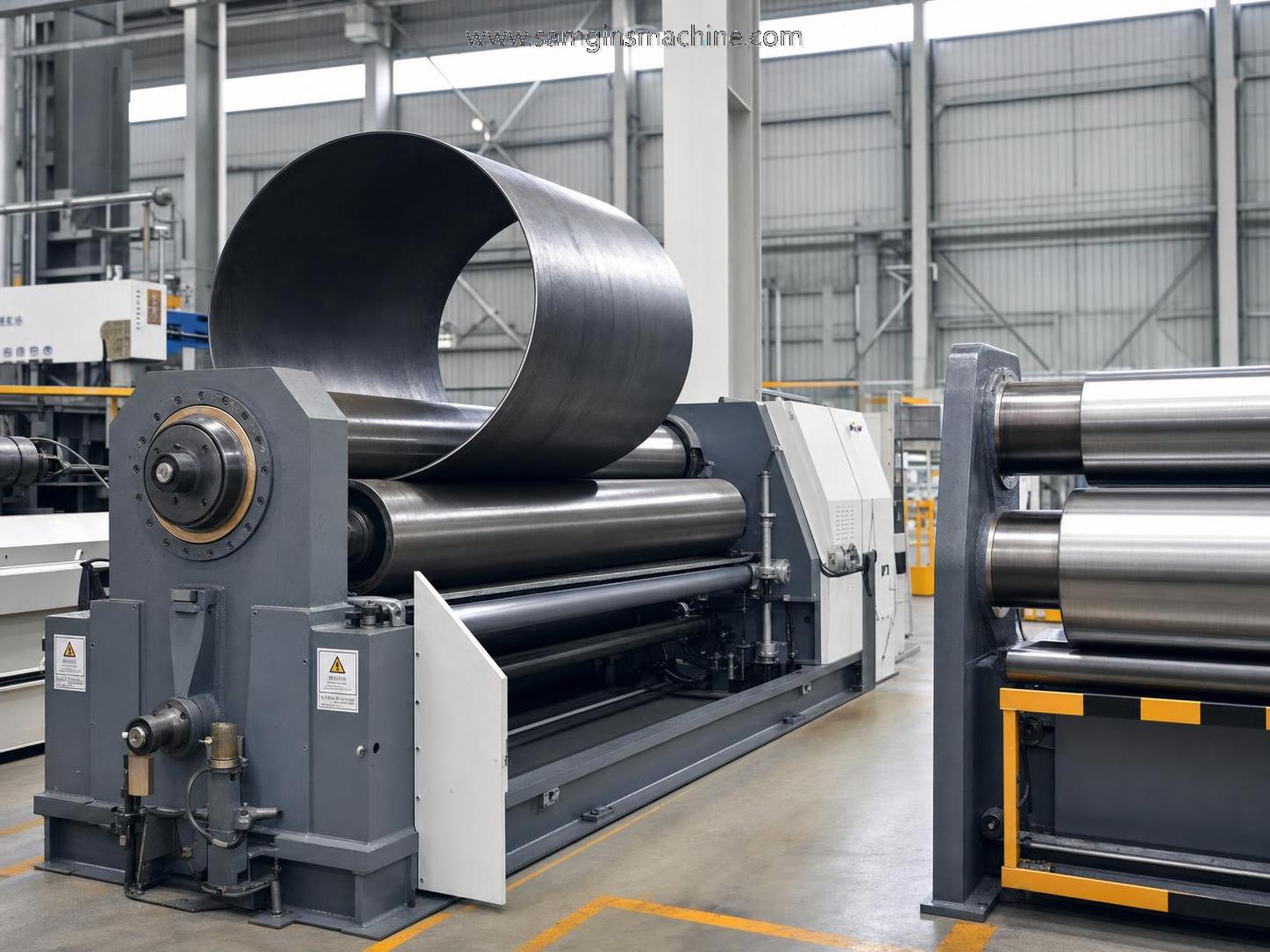
4 Roll Bending Machine vs 3 Roll: Which Is Better for Precision Plate Forming?
When evaluating plate forming equipment, the choice between a 4 roll bending machine and a 3-roll model directly affects precision, setup efficiency, and repeatability. For technical assessment teams, understanding how each system handles alignment, pre-bending, and complex rolling tasks is essential to selecting the right solution for modern fabrication requirements.
If your job is to assess equipment rather than just compare brochures, the real question is not which machine is “better” in general. It is which one creates fewer process variables for your plate thickness range, part geometry, operator skill level, and throughput target. In most precision-driven shops, a 4 roll bending machine has a clear advantage. But that does not mean a 3-roll machine is obsolete. It means the decision should be tied to the parts you actually need to ship.
Start with the accuracy problem, not the machine layout
A lot of buying mistakes happen because teams begin with machine configuration names instead of bending requirements. Before comparing frame structures, ask three direct questions:
- How tight is the acceptable out-of-round tolerance after rolling?
- How much flat end can the finished part tolerate after pre-bending?
- Will operators run repeat batches, one-off jobs, or mixed materials all day?
If your parts include shells for pressure-related fabrication, structural cones, tanks, or rolled sections that later need accurate fit-up for welding, the machine’s ability to control plate alignment and reduce manual repositioning matters more than the headline rolling capacity. That is where 4-roll systems usually earn their place.
Where a 4-roll machine usually wins
For precision plate forming, a 4 roll bending machine tends to be easier to control because the plate can be clamped between the top roll and lower roll while the side rolls perform the bending work. That sounds simple, but in practice it changes the whole setup behavior. The plate is better contained from the start, alignment is more stable, and the operator spends less time fighting plate slip during pre-bending.
- Better initial squaring: If plate entry alignment is critical, four-roll designs reduce the chance of skewing, especially on longer or heavier sheets.
- More efficient pre-bending: Both ends can typically be pre-bent with fewer handling steps. That helps reduce flat ends and improves downstream fit-up.
- Less dependence on operator touch: In shops where operator experience varies by shift, four-roll machines usually produce more consistent outcomes.
- Faster repeat work: For recurring part sizes, the setup logic is usually easier to standardize.
This is why many technical teams treat four-roll equipment as the safer option when repeatability matters more than minimum purchase price.
Where a 3-roll machine still makes sense
A 3-roll machine can still be the right buy if your product mix is forgiving, your operators are experienced, and your process allows more manual correction. It may also suit workshops that handle lower volumes or do not need especially tight repeatability from batch to batch.
The problem is not that 3-roll systems cannot produce good parts. They can. The issue is that they usually ask more from the setup, more from the operator, and sometimes more from material handling. If your technical review is focused on reducing process variation, these extra dependencies should be written down, not brushed aside as “operator skill.” That phrase often hides a capacity risk.
Use this checklist during evaluation
The cleanest way to compare the two is to score them against actual production conditions.
- Check how the plate is held during feeding and pre-bending.
If the plate can shift easily before the radius develops, your precision risk goes up immediately. Four-roll machines usually control this better. - Look at flat-end performance.
Do not accept vague claims. Ask for a sample based on your thickness range and rolling diameter. If suppliers avoid discussing residual straight portions, that is a warning sign. - Test repeatability across multiple parts, not one sample.
One acceptable cylinder proves very little. A proper evaluation needs repeated rolling of the same spec to reveal drift, setup sensitivity, and operator dependence. - Review correction time after the first pass.
Some machines look fine until you count how often the plate must be re-fed or manually adjusted. That time adds up faster than many purchasing teams expect. - Check material range honestly.
Mild steel behavior is not enough. If you roll stainless, high-strength plate, or mixed thicknesses, ask for evaluation under those conditions. Material springback can change the whole picture. - Ask how much performance depends on operator experience.
This is one of the most practical questions in any capital equipment review. A machine that only performs well with your best operator is not a stable production solution.
A quick comparison that usually reflects shop reality
That table is not a rulebook. It is a starting point. Actual results still depend on machine build quality, roll geometry, control system, frame stiffness, and the realism of the supplier’s testing conditions.
Do not overlook the control system and handling logic
Technical teams often spend a lot of time discussing roll count and too little time on controls. That is a mistake. A well-configured control system can reduce trial-and-error, support recipe storage, and improve part-to-part consistency. For shops that already run programmable forming equipment, this matters more than the mechanical headline alone.
This is one reason many buyers also compare adjacent forming equipment when standardizing their workshop. For example, in tube or pipe applications, a programmable setup such as the NC hydraulic pipe bending machine may be attractive because it combines PLC control, servo-managed rotation, stored programs, and self-diagnostics in a way that reduces daily setup friction. It is a different process from plate rolling, of course, but the selection logic is similar: stable control usually beats heroic operator correction.
Supplier claims need verification, especially for export projects
If the equipment is being purchased for overseas production or for customers who care about documentation quality, ask early about manufacturing controls, applicable standards, and delivered technical files. Wuxi Samgins International Trade Co.,Ltd states that production and design are organized according to ISO9001 quality system certification and EU CE standards. That is useful information, but technical reviewers should still verify what documentation applies to the specific machine under quotation, because conformity scope and delivered evidence can differ by model and destination market.
The same caution applies to component sourcing. Imported key components, hydraulic systems, hardened dies, and branded controls can improve reliability, but those details should appear in the final technical offer, not only in promotional materials. If a hardness value, control function, or component brand matters to your acceptance criteria, mark it as a quotation item and confirm it before purchase.
Questions worth asking before you sign off
- Can the machine demonstrate your minimum diameter and your thickest routine plate, not just a favorable sample?
- What is the operator sequence for pre-bending both ends?
- How is repeatability maintained between shifts?
- What support is available for installation, commissioning, and control parameter setup?
- Which acceptance checks are included at FAT or SAT, if those stages are part of your purchase process?【待核实】
These are not “extra” questions. They are the questions that usually expose whether a machine will behave well in production or only in a showroom demonstration.
So, which is better?
For precision plate forming, the answer is usually the 4 roll bending machine. It gives technical assessment teams a more controllable process, better alignment behavior, cleaner pre-bending workflow, and less reliance on operator rescue work. If your success metric is repeatable geometry with fewer adjustments, four-roll equipment is often the stronger decision.
Choose a 3-roll machine when your budget is tighter, your tolerance window is more forgiving, or your operators already know how to get consistent results from that platform. Just do not assume lower upfront cost means lower production cost. In many shops, the real expense shows up later in setup time, corrections, scrap risk, and uneven repeatability.
If you are writing an internal recommendation, keep it simple: match the machine to the tolerance, the material behavior, the operator reality, and the batch pattern. That is usually where the right answer becomes obvious.
search
Products Navigation
Send Us A Message