




How a 4 Roll Bending Machine Improves Pre-Bending Accuracy and Production Efficiency
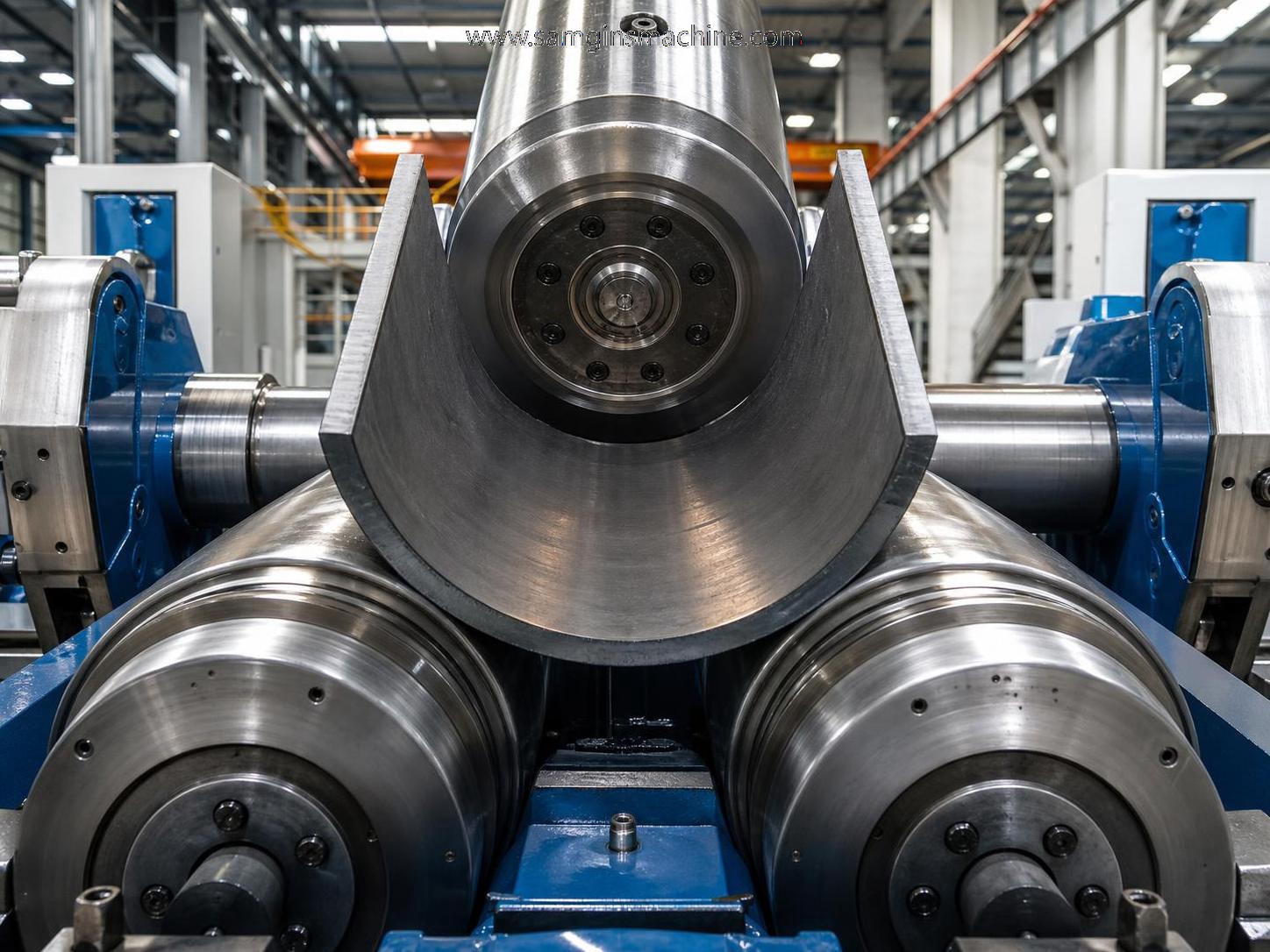
How a 4 Roll Bending Machine Improves Pre-Bending Accuracy and Production Efficiency
For project managers and engineering leaders seeking tighter tolerances and faster throughput, a 4 roll bending machine offers a practical edge in modern metal fabrication. By improving pre-bending accuracy, reducing material waste, and streamlining plate rolling operations, it helps manufacturers achieve more consistent results with less rework. This article explores how the technology supports higher production efficiency and more reliable project delivery.
Where the difference shows up first: the plate edge
The value of a 4 roll bending machine usually becomes obvious before the first shell is even closed. In most rolling jobs, the biggest argument is not about whether the plate can be bent. It is about what happens at the leading and trailing edges, how much straight length remains after rolling, and how much time the operator spends correcting that condition downstream. On tanks, pressure-related shells, duct sections, wind tower segments, and general cylindrical fabrications, poor pre-bending accuracy tends to create the same chain of problems: large flat ends, repeated rerolling, torch correction, fit-up delays at welding, and avoidable scrap when tolerance margins are already tight.
A 4 roll bending machine changes that workflow because the plate is clamped between the upper roll and lower roll early in the cycle. That stable grip matters. It reduces the tendency of the plate to slip during initial forming, which is one reason pre-bending is usually more predictable than on simpler roll arrangements. In practical shop conditions, that means operators spend less time chasing the correct start point, especially on heavier plates or on workpieces with surfaces that are not perfectly clean. When production targets depend on repeatability across a batch, not just one acceptable part, this control is what separates efficient rolling from skilled improvisation.
Why pre-bending accuracy matters more than many buyers expect
Pre-bending accuracy is often discussed as a quality issue, but it is just as much a scheduling issue. If the rolled section still carries long unbent flats at both ends, those flats have to be handled somewhere else in the process. Sometimes they are trimmed off, which increases material consumption. Sometimes they are forced during fit-up, which can load the seam and complicate welding alignment. In jobs with multiple shell sections that must stack or flange accurately, small edge errors are not isolated errors. They accumulate.
This is why a 4 roll bending machine is often a better fit for work requiring frequent diameter changes, shorter setup windows, or more demanding seam preparation. The side rolls can be positioned to support more controlled pre-bending at both ends without removing and reorienting the plate as often as older rolling methods may require. For contractors working on mixed-order production rather than one long standard run, that reduction in handling can matter more than headline rolling capacity.
There is also a less visible benefit: better pre-bending simplifies inspection. When the rolled geometry is closer to target from the start, checking diameter, roundness, and seam gap becomes a confirmation step rather than a troubleshooting exercise. That difference shortens the loop between rolling and welding, which is where many fabrication shops either protect margin or lose it.
Not every shop gains in the same way
The efficiency gain from a 4 roll bending machine is not identical across all applications. A shop rolling thin stainless covers, mild steel ventilation sections, and occasional heavy wall shells will not use the machine in the same way as a line dedicated to structural cans or conical transitions. The machine is particularly useful where material flow is interrupted by frequent repositioning, frequent trial passes, or inconsistent operator judgment. If those are the bottlenecks, four-roll geometry can remove them.
On the other hand, if production is dominated by very simple parts with wide tolerance bands and minimal pre-bending demands, the business case should be judged carefully against actual throughput data, plate range, and labor structure. The machine improves control, but it does not replace the need to match roll diameter, plate thickness, yield strength, and final radius to the real job mix. Shops sometimes overestimate output gains by looking only at rolling speed, when loading, alignment, crane access, and downstream welding rhythm are the real limiting factors.
What site conditions decide the real outcome
On paper, a rolling machine may look ideal. On the shop floor, several ordinary constraints decide whether it performs as expected. Plate length and weight affect not just forming load but also how safely and accurately material can be introduced into the rolls. If the workshop relies on overhead cranes, the hook path and turning radius around the machine matter. If the plate arrives with cut-edge distortion, scale, or inconsistent flatness, even a capable machine will spend more time compensating for upstream variation.
Floor and foundation conditions deserve more attention than they often get. For heavier fabrication, machine stability influences repeatability over long shifts. So does maintenance discipline. Roll parallelism, lubrication routines, hydraulic condition, and calibration practices all shape whether the theoretical advantage of a 4 roll bending machine remains visible six months after installation. The shops that get stable output are usually the ones that treat the machine as part of a process chain, not a standalone fix.
This is also where supplier experience matters. Companies such as Wuxi Samgins International Trade Co.,Ltd, with exposure to automatic welding equipment, CNC cutting systems, plate rolling machines, milling machines, and H-beam production line equipment, tend to see the machine in context. That matters because rolling accuracy is often limited by adjacent steps: plate preparation, edge quality, handling method, and welding sequence. A machine can be selected correctly and still underperform if those surrounding conditions are ignored.
Production efficiency is not just faster rolling
When manufacturers talk about efficiency, the conversation often goes straight to cycle time. That is only part of the picture. In real fabrication, output improves when unnecessary motion disappears. A 4 roll bending machine supports this by holding the plate more securely during the forming sequence, which usually reduces repeated feeding, manual correction, and operator hesitation at the edge-bending stage. Less handling means fewer opportunities to mark the material, fewer pauses for rechecking, and less dependence on one highly experienced operator for acceptable results.
There is a useful parallel in other cold-forming processes. In thread production, for example, manufacturers often move from cutting to rolling because the process is cleaner, faster, and more material-efficient when part geometry and material conditions are appropriate. Equipment such as the ZC28-12.5 thread rolling machine is used for precision external threads on carbon steels, alloy steels, and non-ferrous metals, with advantages tied to cold forming, good dimensional consistency, and support for manual, semi-automatic, or automatic operation depending on the model. The comparison is not about using identical technology. It is about a shared production logic: when forming replaces correction-heavy methods, throughput usually improves because the process becomes more controlled, not simply because the machine moves faster.
Common misjudgments before purchase
One common mistake is to size the machine only around maximum plate thickness. That number matters, but it does not explain the full working range. The actual job mix may include different widths, different radii, higher-strength materials, and variable edge quality. Another mistake is assuming automation alone will guarantee precision. If the incoming plate is inconsistent or if the operator does not understand springback behavior, digital controls cannot remove the physics of the material.
Buyers also sometimes overlook what “efficiency” means for their own plant. In a pressure vessel workshop, efficiency may mean fewer seam adjustments and better shell matching. In architectural metalwork, it may mean handling visible surfaces with less rework. In general structural fabrication, it may mean producing acceptable cylinders quickly with less setup delay between batches. The machine can support all of these, but the evaluation criteria are not identical.
Certification and compliance should be part of that evaluation as well. For export-oriented manufacturers, equipment built under ISO9001 quality system control and aligned with EU CE expectations can simplify internal approval and documentation review, especially where machine safety and traceability are examined more closely by end customers or project auditors. That does not replace a technical assessment, but it reduces uncertainty around baseline manufacturing discipline.
A practical way to judge fit before making the decision
A useful evaluation starts with five questions. What percentage of your rolled parts are delayed by poor edge forming? How often do operators rerun a plate to correct geometry? How much material is routinely trimmed because of straight ends? Are welding teams compensating for rolling errors during fit-up? And does the current process depend too heavily on one or two experienced operators? If the answers point to repeat correction, inconsistent pre-bending, and labor-intensive handling, a 4 roll bending machine is usually worth serious consideration.
After that, review the actual plates, not just the product catalog. Thickness range, width, material strength, minimum diameter, surface condition, crane access, and desired output rhythm should all be checked together. That is the level where good machine selection happens. Not in broad claims about productivity, and not in isolated capacity numbers. In fabrication, the right rolling solution is the one that makes the next operation easier and the final part more predictable. That is where better pre-bending accuracy turns into real production efficiency.
search
Products Navigation
Send Us A Message