




4 Roll Bending Machine Buying Guide: Plate Thickness, Width, and Control Options
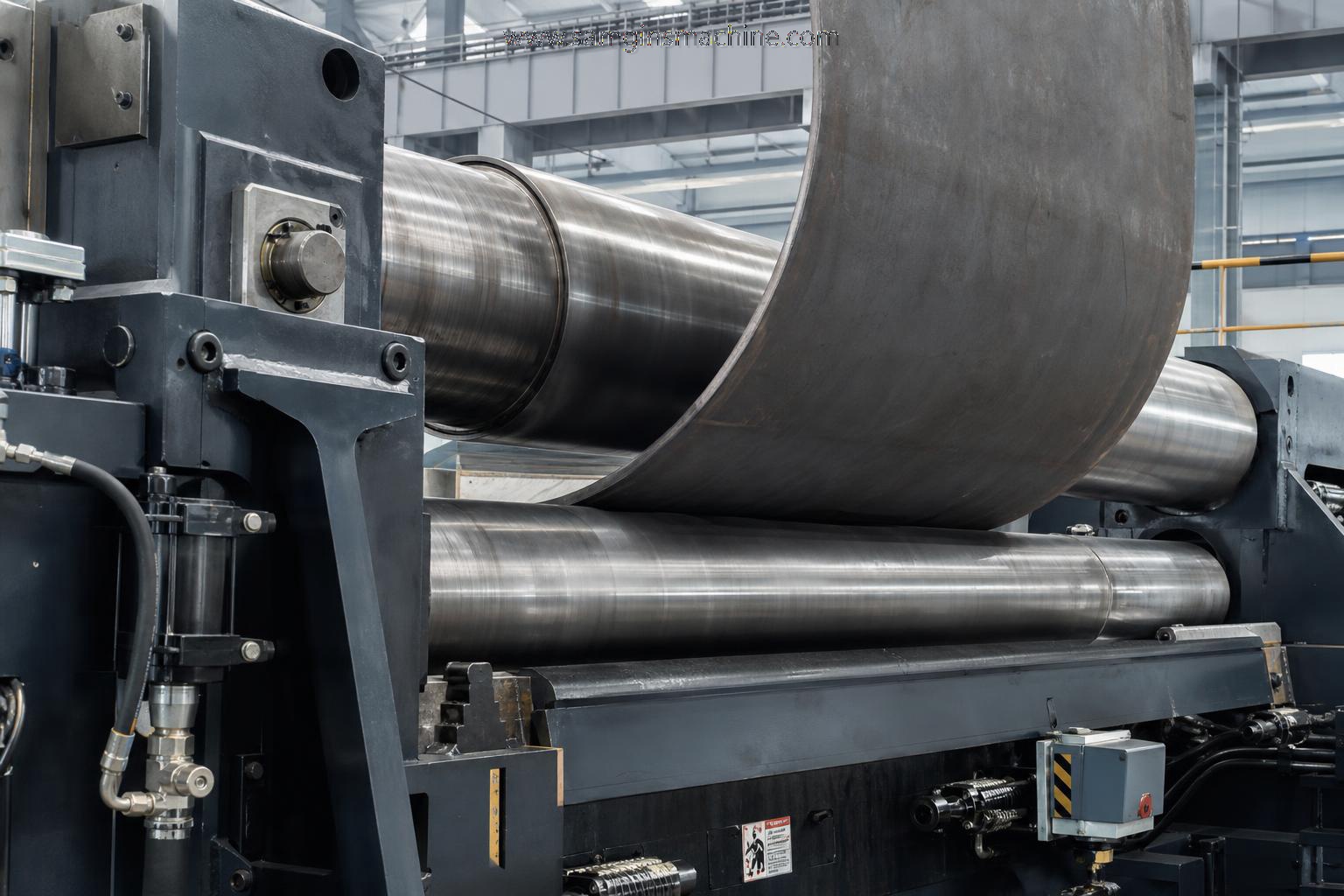
4 Roll Bending Machine Buying Guide: Plate Thickness, Width, and Control Options
Choosing the right 4 roll bending machine can directly affect forming accuracy, production efficiency, and long-term operating costs. For procurement professionals comparing suppliers, understanding key factors such as plate thickness capacity, working width, and control options is essential to making a cost-effective investment. This guide outlines the core specifications and practical considerations that help you select equipment suited to your production needs.
If you are sourcing a 4 roll bending machine, the mistake to avoid is buying from the brochure headline alone. Rated capacity looks simple on paper, but real performance depends on material grade, plate width, target diameter, operator skill, and how the machine is configured. Buyers who have been through a few installations usually start with production reality, not with the biggest tonnage they can afford.
Start with the thickest real job, not the occasional one
Suppliers will often list a maximum bending thickness and a pre-bending thickness. Those are not the same thing, and for a 4 roll bending machine the pre-bending figure usually matters more in daily work. If your shop needs tight edge straightness before closing the shell, ask for both values clearly, and ask under what material condition they apply.
A common purchasing error is using mild steel as the only reference. If your production includes stainless steel, high-strength plate, or mixed batches from different mills, capacity margins disappear quickly. The practical check is simple: prepare three or four actual plate specifications from your order history, including thickness, width, yield strength if available, and minimum rolling diameter. Ask each supplier to confirm performance against those exact jobs in writing. If they only answer with a catalog range, that is not enough for procurement approval.
- Check whether quoted thickness is for full-width plate or reduced width.
- Confirm pre-bending capacity separately from rolling capacity.
- Ask whether the rating assumes carbon steel only.
- Verify minimum achievable shell diameter at your target thickness.
That last point gets missed a lot. A machine may handle the thickness, but not the diameter you need without multiple passes, heat assistance, or unacceptable flat ends.
Width matters more than many buyers expect
Working width is not just a dimensional checkbox. It affects frame rigidity, roller deflection, floor space, loading method, and power consumption. Buying extra width “just in case” sounds safe, but oversized machines can raise purchase cost, foundation requirements, and energy use without helping output.
A better way is to review your actual nesting and order profile. If most jobs sit between 1500 mm and 2000 mm, and only a few reach above that, the decision becomes commercial: is it cheaper to outsource occasional oversized work or invest in a larger 4 roll bending machine that runs below capacity most of the year?
Also ask about crowned rolls or compensation methods if you are processing wider plates where barrel distortion may affect roundness. Some suppliers include this as standard on heavier models; some do not. It is worth checking before comparing prices line by line.
Do not compare machines without defining your tolerance target
Procurement teams often ask for “good accuracy,” but that phrase is too vague to protect a purchase. Roundness tolerance, repeatability, edge alignment, and springback control should all be discussed early. If the finished part goes into pressure vessel fabrication, structural steel work, tanks, cones, or general sheet metal shells, the tolerance expectation changes, and so should the machine specification.
When a supplier says their machine is suitable for your industry, ask what controls the repeatability: roll positioning accuracy, hydraulic stability, encoder feedback, operator compensation, or CNC recipe storage. This is where cheap and expensive offers often separate. The lower quotation may still be right for the job, but only if your production can absorb more manual adjustment and rework.
Control options should match your batch pattern
Not every buyer needs a high-end CNC package. For short runs with experienced operators, a basic NC or manual-assisted system may be enough. For repeat orders, limited labor, or multi-shift production, programmable control usually pays back faster than people expect because it cuts setup variation and trial rolling time.
The buying question is not “Which control is best?” It is “How much are inconsistent setup, scrap, and operator dependency costing us now?” Once that is quantified, the control decision becomes easier.
Look closely at the hydraulic and mechanical build
On a 4 roll bending machine, frame rigidity, bearing quality, hydraulic component brand, roll material, heat treatment, and synchronization design all affect long-term stability. These details are less visible in a quotation sheet, but they show up later as maintenance calls, drift in accuracy, or short seal life.
Ask for the component list. Ask for roll hardness data if available. Ask which parts are sourced externally and which are made in-house. If the supplier cannot explain the structure clearly, service later may be equally unclear. This is particularly relevant when comparing export-oriented manufacturers. A company with solid machining and assembly discipline usually answers these questions without hesitation.
Wuxi Samgins International Trade Co.,Ltd, based in Wuxi near Shanghai, works across a broad range of fabrication equipment including plate rolling machines, CNC cutting machines, welding equipment, lathes, deburring systems, pipe benders, and other metalworking machinery. For procurement teams, that kind of product range can be useful when evaluating line compatibility, because suppliers with wider fabrication exposure often understand upstream and downstream process constraints better. Even so, each machine proposal still needs technical verification against your part list.
Certification and compliance are procurement issues, not just technical ones
If the equipment is headed to Europe or into a plant with strict internal audit requirements, ask early about CE-related documentation scope and what is actually provided with the machine. The company profile mentions production and design organized in accordance with ISO9001 quality system certification and EU CE standards, but for any purchase order you still need the exact document package confirmed for the specific model. That includes manuals, electrical drawings, safety labeling, and declaration materials where applicable. Do not leave this until shipment week.
A cheap machine can become expensive if customs clearance, site acceptance, or internal EHS approval gets delayed over missing paperwork.
Think beyond the roller: loading, handling, and downstream flow
Many buyers focus on the bending unit and forget everything around it. Plate loading method, overhead crane access, side support, top support, unloading of large cylinders, and alignment with welding stations all affect actual throughput. A machine that looks fast in a demo can slow your shop down if handling is awkward.
This is also where related equipment planning matters. In some production environments, thread forming, edge preparation, and rolling sit within the same fabrication chain. For example, if your facility also produces fasteners or structural assemblies, a supplier relationship that covers adjacent processes may simplify sourcing and after-sales coordination. One example from the same product ecosystem is the Z28-500 thread rolling machine, used for precision external threads, anchor bolts, T-shaped screws, and larger pitch workpieces, with manual, semi-automatic, and automatic modes. It is not directly related to plate rolling capacity, but it does show the kind of broader metal forming support some buyers prefer when consolidating vendors.
Ask suppliers for proof in the form that matters
Video is helpful, but test standards matter more. If possible, request a trial using a material grade and dimension close to your real production. If an on-site test is not practical, ask for raw test footage rather than edited marketing clips. You want to see plate feeding, pre-bending, multiple passes if needed, finished diameter checking, and how the operator corrects springback.
Also ask what is included in commissioning and training. Some suppliers quote attractively and then charge separately for installation support, software changes, or operator training days. Those costs belong in the procurement comparison sheet.
Use a total cost view before making the award
The purchase price is only one line. For a 4 roll bending machine, the more useful commercial comparison includes tooling or standard accessories, electrical standard compatibility, freight, foundation work, commissioning, spare parts package, expected maintenance interval, and delivery reliability. If your project deadline is tight, delivery risk can outweigh a modest unit price difference.
- Include consumables and recommended spare parts in the first-year budget.
- Check response time for service support in your region.
- Confirm voltage, control language, and drawing format before contract release.
- Ask whether acceptance is done at supplier site, your site, or both.
One practical tip: when two quotations are close, the better supplier is often the one whose exceptions are clearly stated. Hidden exclusions usually cost more later.
What should be on your final procurement checklist
Before issuing the purchase order, make sure your team has confirmed the actual plate thickness range, full working width, minimum rolling diameter, material type assumptions, control level, included accessories, acceptance criteria, documentation package, installation scope, and after-sales terms. If any of those items is still described loosely, you are not finished negotiating.
A good 4 roll bending machine purchase is rarely about finding the lowest quote. It is about matching the machine to the parts you really run, the labor you actually have, and the quality level your downstream process can tolerate. Get those three aligned, and the buying decision becomes much more straightforward.
search
Products Navigation
Send Us A Message