




How Does a 4 Roll Bending Machine Work? Key Mechanics and Forming Advantages
How Does a 4 Roll Bending Machine Work? Key Mechanics and Forming Advantages
A 4 roll bending machine is widely used in metal fabrication for its precision, efficiency, and ability to handle complex plate rolling tasks. For buyers and engineers researching forming equipment, understanding how this machine works can reveal why it delivers better alignment, faster pre-bending, and more stable results than traditional alternatives. This article explains its core mechanics and the practical forming advantages it offers in modern manufacturing.
If you are comparing plate rolling equipment, the main thing to understand is this: a 4 roll bending machine does more than bend a sheet into a cylinder. Its real value is control. That control shows up in plate feeding, edge alignment, pre-bending quality, repeatability, and how much manual correction the operator has to do afterward. People often focus on maximum thickness first. In practice, the machine layout and how it moves the plate matter just as much.
Start with the basic working principle
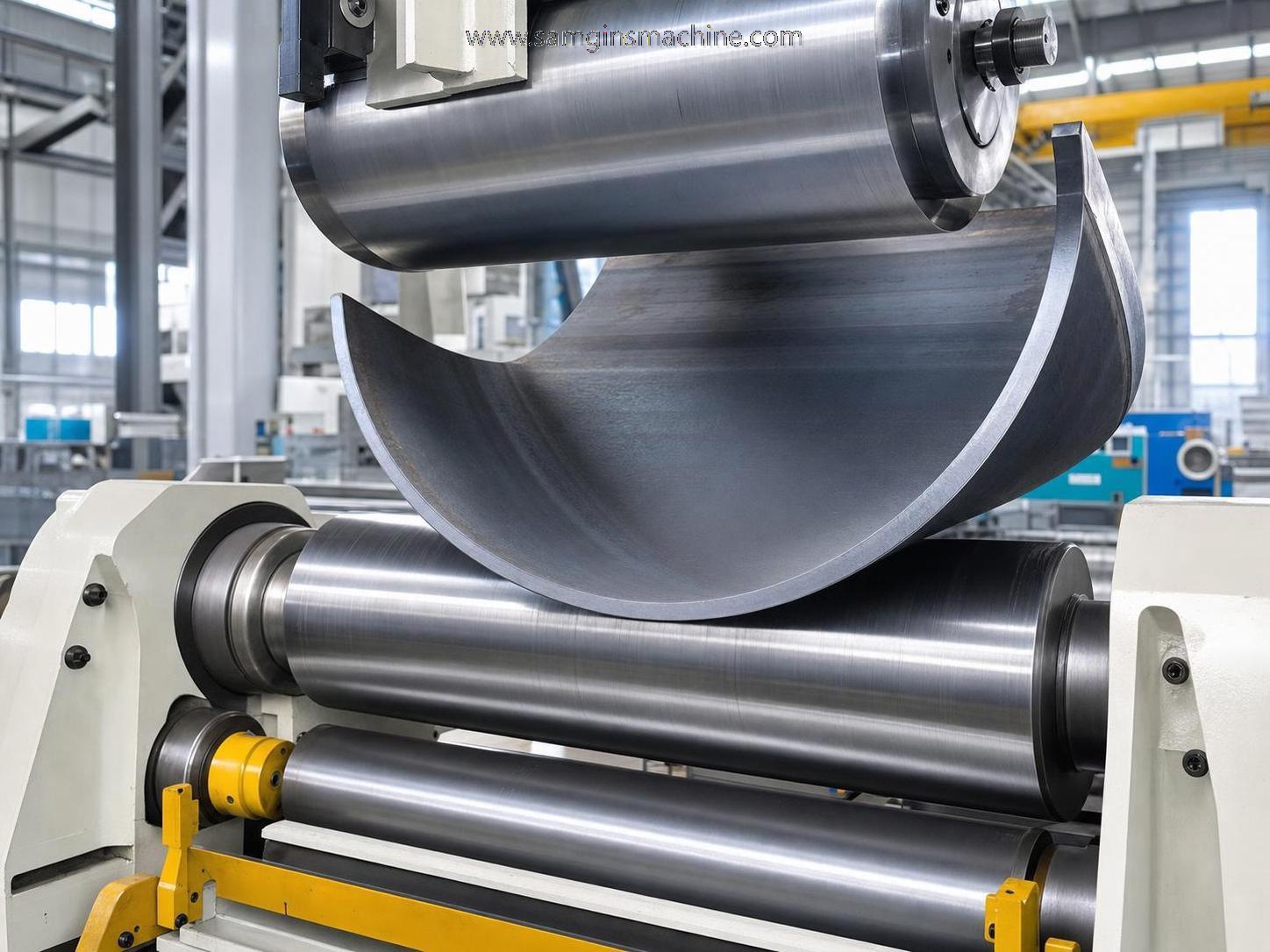
A 4 roll bending machine typically uses one top roll, one bottom roll, and two side rolls. The top and bottom rolls grip the plate. The side rolls move upward and inward to create the bending force. That sounds simple, but it changes the workflow in a useful way: the plate can be clamped securely from the beginning, so the operator does not spend as much time trying to keep the material from slipping or drifting during the first bend.
This is one reason many shops prefer a 4 roll bending machine over older 3-roll designs for routine production. On many 3-roll machines, initial positioning can take more operator judgment, especially when the plate is large, thin, or prone to wandering. With four rolls, the plate is usually pinched between the top and bottom rolls first, then the side rolls do the forming. That sequence makes it easier to control both the leading edge and the trailing edge.
If you are trying to picture the process on the shop floor, think of it as a staged movement:
- The plate is fed into the machine and clamped.
- One side roll raises to pre-bend the leading edge.
- The plate rotates through the rolls while bending force increases gradually.
- The opposite side roll handles the trailing edge pre-bend.
- The machine continues rolling until the required diameter or radius is reached.
That clamping-first approach is the mechanical advantage that drives most of the downstream benefits.
Check how the machine handles pre-bending
When buyers ask whether a machine can make a “good cylinder,” they are often really asking about flat ends. Pre-bending quality is what reduces those straight, unformed sections at the plate edges. On a poorly matched setup, those flat ends stay too long, and the operator has to compensate later with extra passes, re-rolling, or welding adjustments.
A 4 roll bending machine is strong here because it can pre-bend both ends with fewer handling steps. That matters in tank fabrication, duct sections, cones, and pressure-related components where fit-up quality affects everything that comes next. It does not mean every part will come off the machine perfect. Plate material, yield strength, width-to-thickness ratio, and operator settings still matter. But the machine architecture gives you a better starting point.
A practical checkpoint: ask how much flat end remains after pre-bending for the thickness range you actually run most often. Do not judge using only the machine's maximum rated capacity. Capacity charts often describe upper limits, not the range where the machine performs most comfortably.
Watch plate alignment more closely than people usually do
Misalignment is one of the most expensive “small” problems in rolling. A plate that walks sideways during rolling can create taper, poor seam matching, and wasted time at assembly. The reason many operators like 4-roll systems is that the continuous pinch between top and bottom rolls helps hold the plate in position while the side rolls form it.
That does not remove the need for proper feeding. It just gives the machine a better chance to keep the job stable once the plate is engaged. For wide plates or higher-volume work, this is more than a convenience issue. It affects scrap risk and downstream welding accuracy.
If you are evaluating equipment, look for these signs of good alignment control:
- The plate can be fed and clamped without repeated manual repositioning.
- The seam closes consistently instead of spiraling.
- The operator does not need excessive corrective passes for standard jobs.
- Thin plate does not drift excessively under normal settings.
If a demonstration only shows thick, easy material, ask to see something closer to your daily workload.
Do not separate mechanics from material behavior
The machine bends the plate, but the material decides how cooperative the process will be. Carbon steel, stainless steel, and aluminum do not spring back the same way. Harder materials or high-strength grades may require more compensation, different roll positioning, and tighter process control. A 4 roll bending machine helps because it applies bending in a more controlled and repeatable manner, but it cannot erase material physics.
This is where less experienced buyers get caught. They compare only nominal thickness and width, then assume similar results across all materials. That is risky. If your product mix includes stainless steel or parts with tighter roundness requirements, the conversation should include springback, minimum achievable diameter, and whether the machine control system supports repeat jobs well.
Where specifications are not fully documented, keep the claim conservative and mark it for verification. For example, exact radius performance at the edge of the capacity range is something that should be confirmed with actual samples or factory test conditions【待核实】.
The forming advantages are real, but only if they match your work
People often describe 4-roll machines as more precise and more efficient, which is generally fair. But those words become useful only when translated into shop-floor outcomes.
For custom fabrication shops, the time savings often come from setup stability. For production lines, they come from consistency. Those are not the same benefit, and it is worth being clear about which one matters more to you.
A good rolling line is usually supported by upstream and downstream prep
This is a detail many articles skip. Plate rolling quality does not begin at the rolls. Edge condition, dimensional accuracy, and weld prep can all affect the final result. If the plate arrives with inconsistent edges, burrs, or poor bevel preparation, you may still get a bent shell, but fit-up and welding quality will suffer later.
In heavier fabrication environments such as pressure vessels, boilers, shipbuilding, and heavy machinery, shops often evaluate rolling equipment alongside edge preparation equipment for that reason. For example, an Pipe Cutting & Beveling Machine may be relevant where the workflow also requires straight, inclined, or U/V/K-shaped bevels in one pass. Based on the provided product data, that machine is intended for carbon steel, stainless steel, and aluminum, with standard processing thickness from 6–80mm, heavy-duty versions up to 6–400mm, bevel angle adjustment from 0° to 90°, and VFD-controlled feed at 0.13–1.0 m/min. Those numbers should still be checked against the actual job and tooling setup, but they give a useful picture of where it fits.
The point is not to mix machines for the sake of it. The point is that cleaner prep tends to make rolling, seam alignment, and welding go more smoothly.
What to ask before you decide a machine is “precise”
Precision in plate rolling is not one number. Ask what kind of precision the supplier means. Roundness? Repeatability across batches? Edge straightness after pre-bending? Final diameter tolerance? Different shops care about different outputs.
- What is the common material range actually being processed, not just the maximum rating?
- How is side-roll synchronization controlled?
- Can the machine store repeat settings for recurring diameters?
- How much operator intervention is typically needed for pre-bending and closure?
- What support is available for installation, training, and after-sales troubleshooting?
Those questions usually reveal more than a generic brochure ever will.
A few risk points worth checking early
One is overbuying. Some buyers choose a machine based on rare heavy jobs and then use it mostly for lighter material, where control at the lower end becomes just as important as force at the upper end. Another is underestimating handling requirements. Large plates may need support tables, feeding devices, or crane coordination to get the expected productivity from the roller itself.
Also check how the manufacturer defines standards and quality practices. In this market, statements around ISO9001 systems and CE-related design are common, but the scope and applicability should always match the machine being supplied and the destination market. Where documentation is important for your project, request the exact file set rather than relying on general claims.
Wuxi Samgins International Trade Co.,Ltd, based in Wuxi, Jiangsu, reports experience in selling a broad range of fabrication and machine tool equipment, including plate rolling machines, bending machines, CNC cutting equipment, welding systems, and related production line machinery. The company states that production and design are organized according to ISO9001 quality system certification and EU CE standards. As with any industrial purchase, the right next step is to match those general capabilities to the specific model, part drawings, material grades, and acceptance requirements you actually have.
What a practical decision usually comes down to
If you are still at the research stage, judge a 4 roll bending machine less by headline claims and more by how calmly it solves the everyday problems: holding the plate, keeping alignment, reducing flat ends, and producing repeatable curves without too much operator correction.
That is why these machines are widely used. Not because the concept is complicated, but because the mechanics are practical. The top and bottom rolls secure the material. The side rolls shape it with more control. The result, when the machine is properly matched to the job, is smoother pre-bending, better forming stability, and fewer surprises during fit-up.
Before shortlisting a model, prepare three things: your real material range, your target diameters, and the level of roundness or seam fit-up your downstream process needs. Bring those into the discussion, and it becomes much easier to tell whether a given 4 roll bending machine is genuinely suitable or just looks good on paper.
search
Products Navigation
Send Us A Message