




What Do Thickness Cutting Machines Handle Best Across Steel, Aluminum, and Copper?
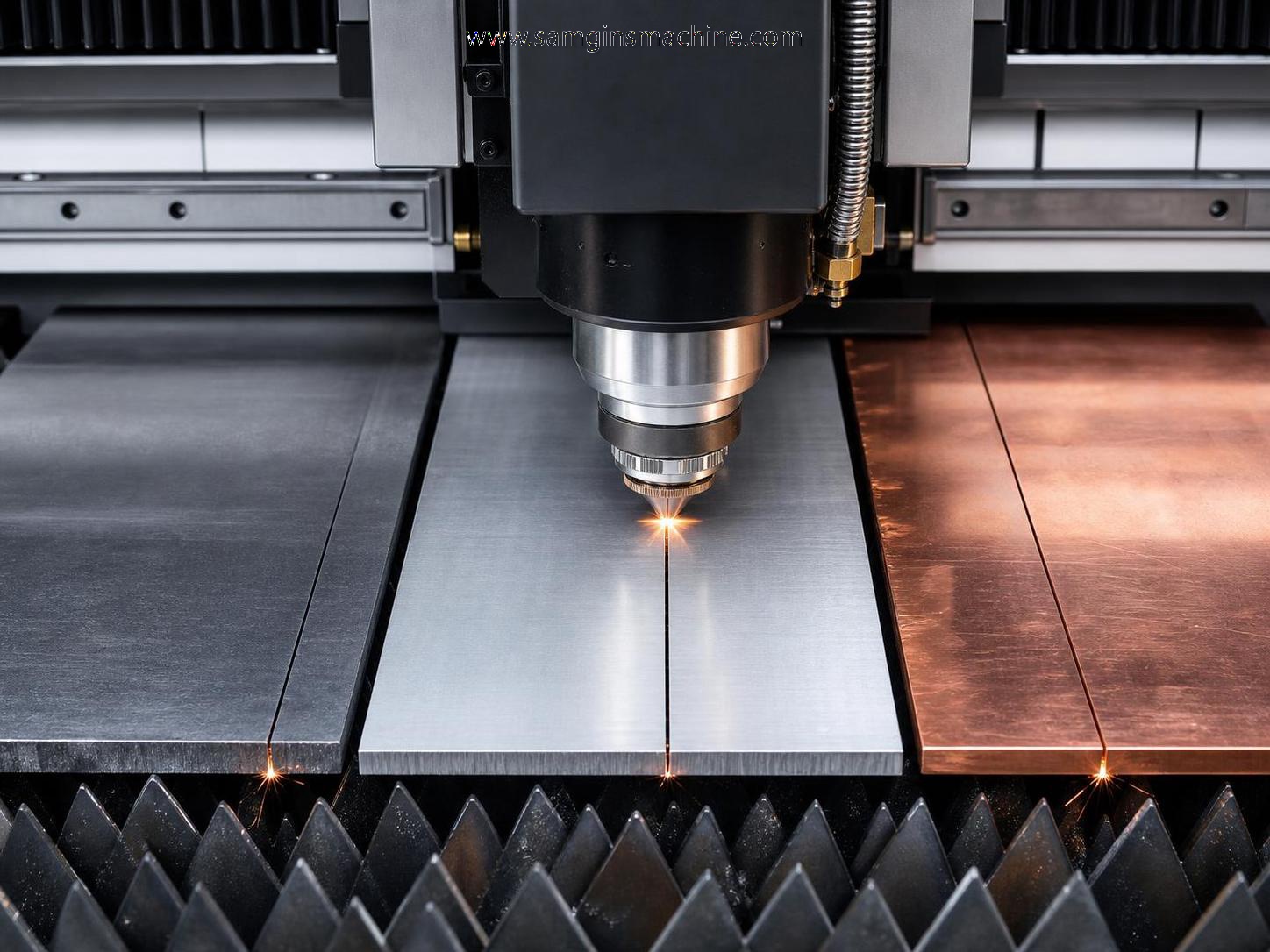
What Do Thickness Cutting Machines Handle Best Across Steel, Aluminum, and Copper?
When working with steel, aluminum, and copper, choosing the right thickness cutting machines can directly affect cut quality, speed, and production cost. For manufacturers and buyers comparing equipment options, understanding which materials and thickness ranges these machines handle best is essential for making efficient, reliable decisions in modern metal fabrication.
The mistake I see most often is simple: people ask one machine to be equally good at every metal and every thickness. That is rarely how real production works. A machine may cut mild steel cleanly at one thickness range, then struggle with reflective copper, or slow down badly on thicker aluminum plate. If you are still in the comparison stage, the better question is not “Which machine cuts metal?” It is “Which machine stays stable, economical, and consistent on the material mix I actually run?”
For most buyers researching thickness cutting machines, this is the practical checklist worth using before you talk about brand, power source, or automation level.
Start with the metal, not the machine brochure
Steel, aluminum, and copper do not behave the same under heat, pressure, or cutting speed.
- Steel is usually the most forgiving place to compare machine performance, especially carbon steel. It gives buyers a clearer sense of pierce stability, edge straightness, dross level, and speed consistency.
- Aluminum cuts fast in many setups, but it transfers heat differently and can expose weak gas control, poor parameter matching, or unstable motion systems.
- Copper is where many assumptions break down. Its reflectivity and thermal conductivity can make some cutting setups less stable or less efficient, especially if the equipment configuration was really optimized for steel first.
So before comparing models, write down your actual material mix by percentage. If your workshop cuts 70% carbon steel, 20% aluminum, and 10% copper, that points to one decision path. If copper and aluminum are your margin products, the same “best-selling” machine may stop being the right fit.
Check the thickness range you need every week, not the maximum on paper
A published maximum cutting thickness is not the whole story. In real fabrication, the more useful number is the range where the machine keeps acceptable edge quality, reasonable speed, and repeatable results shift after shift.
If you only occasionally cut thick plate, buying for headline maximum thickness can leave you with a slower, more expensive setup for everyday jobs. Many shops are better served by a machine that performs strongly in the middle of their workload rather than one that looks impressive at the limit.
A useful buyer check is this:
- List your top three materials.
- List the thicknesses you process most often, not the rare exceptions.
- Ask suppliers for sample cuts or parameter references within those exact ranges.
- Look for the operating “sweet spot,” not just the upper limit.
That one step filters out a lot of poor-fit equipment surprisingly quickly.
For steel, stability usually matters more than raw speed claims
In steel processing, especially carbon steel, thickness cutting machines are often expected to cover the broadest workload. This is why steel is usually the baseline material for judging machine value. You want consistent piercing, manageable consumable wear, clean kerf geometry, and cut edges that do not create extra downstream grinding or fitting work.
For thinner steel, speed and nesting efficiency become more important. For thicker steel, machine rigidity, process stability, and thermal control become more visible. A machine that looks fast on a short demo may still cause trouble if it leaves heavy slag at the bottom edge or if bevel changes appear across long runs.
If your work includes structural parts, base plates, brackets, or welded assemblies, ask one extra question: how much post-cut cleanup is acceptable in your production flow? That answer often matters more than a few seconds saved in cutting time.
Aluminum rewards the right setup and punishes casual parameter choices
Aluminum is often described as easy because it can be cut efficiently, but that is only partly true. In practice, it is sensitive to process tuning. Thickness, alloy condition, surface film, assist gas selection, and heat buildup can all affect the final edge.
When aluminum parts are used in enclosures, automotive components, or decorative panels, cosmetic edge quality may matter almost as much as dimensional accuracy. If that is your use case, ask for samples from the same thickness and a similar finish condition. Mill-finished and coated material can behave differently enough to change your real-world result.
A common buying error is assuming that because a machine can process aluminum, it will process your aluminum economically. Watch the scrap rate, burr tendency, and consistency on corners and small holes. Those details usually show where the hidden cost sits.
Copper needs extra caution, especially if you only cut it occasionally
Copper is often a special-case material in metal shops. If it is only a small part of your order mix, do not assume your main setup will handle it with the same efficiency as steel. Depending on machine type, power configuration, optics or torch design, and process controls, copper may require more careful validation. Some suppliers are very clear about this; some are not.
This is one area where you should ask direct questions instead of general ones:
- Has this machine been regularly configured for copper cutting?
- What thickness range is considered practical rather than theoretical?
- Are there any extra protection or parameter requirements for reflective materials? Some details here may be model-specific and should be treated as 【待核实】 unless supported by the supplier’s technical documents.
If the answers stay vague, take that as a useful signal.
Do not separate cutting quality from downstream work
This is where experienced buyers usually save money. A cut part is rarely the end of the process. It may still need welding, bending, edge preparation, deburring, threading, coating, or assembly. That means the “best” thickness cutting machines are not just the ones that cut; they are the ones that leave the part ready for the next operation with minimal correction.
For example, if your workflow includes fastener production or secondary forming, a cleaner, more dimensionally consistent blank can reduce trouble later. In some factories, cutting is only one stage in a broader metalworking line that may also include machines such as the Z28-250 thread rolling machine, which is designed for cold-forming external threads on carbon steel, alloy steel, and non-ferrous metals in hardware construction, automotive and motorcycle parts manufacturing, traffic power equipment, and standard parts production. It is not a cutting machine, but it is a useful reminder that part quality upstream affects what happens next.
If your parts move from cutting to forming or rolling, watch for edge defects, heat-affected distortion, and dimensional variation. Those are the issues that quietly slow a production line.
Compare machine types by process fit, not by popularity
In this market, buyers may be looking at laser cutting machines, plasma systems, flame cutting setups, or other CNC cutting equipment. Each process has material and thickness ranges where it makes more sense. The right choice depends on what you value most: edge quality, speed, operating cost, tolerance expectations, or ability to switch between materials.
This kind of comparison usually tells you more than a catalog feature list.
Look at support, standards, and export readiness early
For importers and overseas buyers, machine capability is only half the job. Documentation, electrical configuration, spare parts support, and compliance expectations can all affect deployment speed. Wuxi Samgins International Trade Co.,Ltd, for example, positions its equipment around organized production and design aligned with ISO9001 quality system certification and EU CE standards. That does not automatically validate every model for every market use case, but it does give buyers a useful starting point for asking the right documentation questions.
If you are sourcing for Southeast Asia, Europe, North America, South America, or Oceania, confirm what is included in the machine file, what is optional, and what may still require local verification. It is better to pin this down before shipment than after installation.
The short checklist that usually prevents a bad purchase
- Match the machine to your dominant material, not your rarest order.
- Judge thickness cutting machines by their most stable operating range.
- Request sample cuts in your actual steel, aluminum, or copper thicknesses.
- Check edge quality in relation to welding, bending, coating, or forming steps.
- Be especially careful with copper claims that are not backed by technical detail.
- Include consumables, gas use, and cleanup time in your cost judgment.
- Verify standards, documentation, and support before export purchase.
If you keep the evaluation grounded in actual materials, actual thicknesses, and actual downstream work, the right choice usually becomes much clearer. Steel often gives the broadest and most stable baseline. Aluminum can be highly efficient with the right setup. Copper deserves a more cautious, evidence-based review. That is the practical lens most buyers need when they are trying to understand what these machines really handle best.
search
Products Navigation
Send Us A Message