




Bolt Thread Forming Machine Cost and ROI Factors
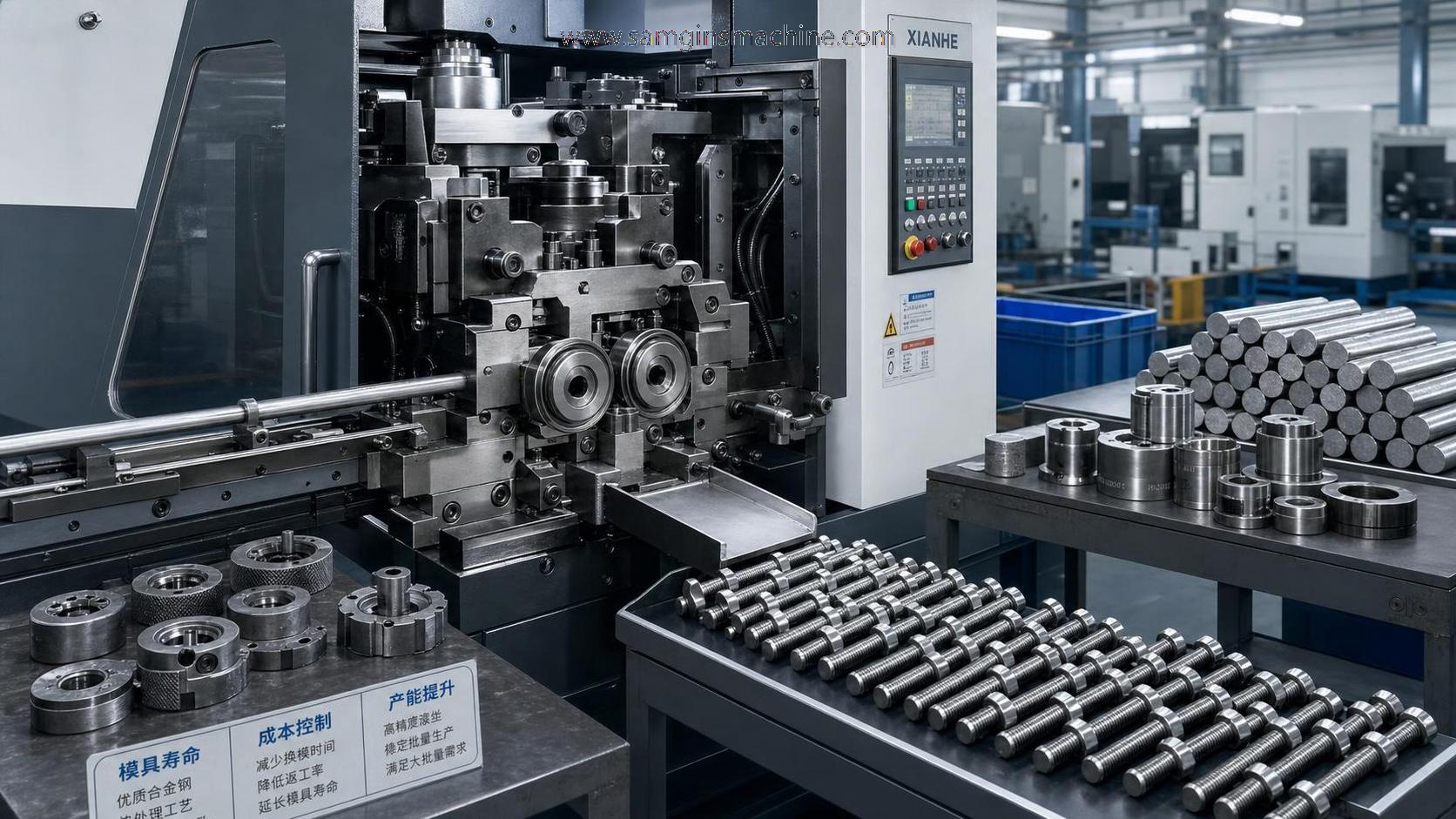
Bolt Thread Forming Machine Cost and ROI Factors: What Really Drives the Investment?
A Bolt thread forming machine is rarely judged by price alone.
In real purchasing decisions, the better question is whether the machine can deliver stable output, acceptable running cost, and predictable payback.
That is why Bolt thread forming machine cost and ROI factors deserve a closer look before any quotation comparison begins.
For metalworking operations, thread quality, tooling durability, automation level, and service response often influence total ownership cost more than the initial invoice.
Wuxi Samgins International Trade Co.,Ltd has worked in mechanical equipment supply since 2012, covering thread rolling machines, CNC systems, welding equipment, and related fabrication lines.
That wider equipment background matters because thread forming performance is usually tied to upstream cutting, material preparation, and downstream assembly efficiency.
When people ask about Bolt thread forming machine cost, what should they include?
The visible machine price is only the starting point.
A useful cost review should include tooling, installation, training, electrical requirements, spare parts, preventive maintenance, and expected downtime risk.
Many buyers also miss the effect of material variation.
If the machine must form threads on different bolt sizes or material grades, setup time and die wear can change operating cost significantly.
Another practical point is labor structure.
A lower-priced manual or semi-automatic model may look attractive, but long-term labor dependence can weaken ROI when production volume grows.
In actual workshops, the more common mistake is comparing two Bolt thread forming machine offers without normalizing what is included.
One quotation may include commissioning and starter tooling, while another may not.
A quick cost checklist helps avoid that gap
How do production capacity and tooling life change ROI?
This is where ROI becomes real.
A Bolt thread forming machine with higher output is not automatically a better investment.
If that extra speed causes frequent adjustments, unstable threads, or faster die replacement, the expected return can disappear.
Tooling life is often underestimated.
For high-volume bolt production, die consumption can become one of the largest recurring costs after labor and materials.
The better approach is to ask for output under actual conditions, not ideal laboratory figures.
That means checking bolt diameter range, thread pitch range, material hardness, scrap rate, and average die life per batch.
Payback usually improves when the machine can hold consistent quality without constant operator intervention.
That reduces rework, improves delivery reliability, and keeps downstream assembly from slowing down.
Questions worth asking during comparison
- What is the tested output per hour for the target bolt specification?
- How many parts are produced before die replacement is normally required?
- What thread rejection rate is considered normal?
- How long does changeover take between common bolt sizes?
- Can the supplier provide production data from similar applications?
Is a more automated Bolt thread forming machine always worth the extra money?
Not always, but often under stable volume conditions.
Automation tends to improve ROI when output targets are consistent, labor cost is rising, or traceability is becoming more important.
Automatic feeding, sorting, and simple parameter storage can reduce handling time and lower variation between shifts.
Still, automation should fit the production pattern.
For small-batch and multi-variety work, complex automation may create more setup burden than value.
A balanced decision often comes from calculating labor savings against expected utilization.
If the machine will run one shift with frequent changeovers, simple controls and reliable mechanics may outperform a heavily automated platform.
This logic appears across fabrication equipment.
For example, in precision manufacturing and metal cutting, some operations prefer flexible CNC systems over maximum automation.
That is also why equipment such as Steel Plate cnc fiber laser cutting machine is often evaluated by usable throughput, programming convenience, and maintenance cost rather than headline speed alone.
What mistakes usually lead to poor Bolt thread forming machine ROI?
Several mistakes repeat across projects.
The first is buying for peak demand instead of normal demand.
An oversized machine may stay underused for long periods, stretching the payback window.
The second is ignoring raw material consistency.
Different steel grades, diameter tolerances, or surface conditions can affect thread quality and die wear more than expected.
The third is treating service support as a minor detail.
For imported machinery, spare parts lead time and technical communication can become major cost drivers during unplanned stoppages.
A supplier with broader export experience is usually easier to work with on documentation, standards, and remote troubleshooting.
Wuxi Samgins has supplied equipment to Southeast Asia, Europe, the Americas, and Oceania, which is relevant when response speed and compliance discipline matter.
ISO9001-based production control and CE-oriented design practices also help reduce avoidable specification gaps.
Common warning signs before purchase
How can you compare suppliers without getting lost in specifications?
The most effective comparison method is to build a short decision sheet around business impact.
That keeps the review practical and prevents technical details from hiding commercial risk.
A useful supplier review usually covers five areas.
- Machine fit: bolt range, material compatibility, and output stability.
- Commercial clarity: tooling scope, warranty, shipping, commissioning, and exclusions.
- Service depth: manuals, remote diagnosis, spare parts planning, and training support.
- Compliance and quality: production discipline, testing records, and applicable standards.
- Expansion logic: whether the machine can adapt to future bolt sizes or line upgrades.
It also helps to look at the supplier’s wider machinery portfolio.
A company that handles thread rolling machines, CNC tools, laser systems, and fabrication equipment often understands process links more realistically.
For instance, where upstream plate preparation or custom fixtures matter, equipment such as the Steel Plate cnc fiber laser cutting machine shows how precision, material range, and low maintenance can support efficient manufacturing beyond a single machine purchase.
So, what is the smartest next step before placing an order?
Start with your real production profile, not the brochure headline.
List the bolt types, annual volume, material grades, target rejection rate, staffing pattern, and desired payback period.
Then compare each Bolt thread forming machine option against those conditions.
The best decision usually comes from three verified numbers: actual hourly output, expected die life, and service response capability.
If those numbers are clear, Bolt thread forming machine cost and ROI factors become much easier to judge.
If they remain vague, the quote is not ready for approval.
A disciplined shortlist should include sample testing standards, full scope confirmation, spare parts planning, and a realistic ownership-cost estimate for at least the first year.
That approach reduces purchasing risk and leads to equipment that performs well long after installation.
search
Products Navigation
Send Us A Message