




Two Axis Thread Forming Machine Setup Mistakes
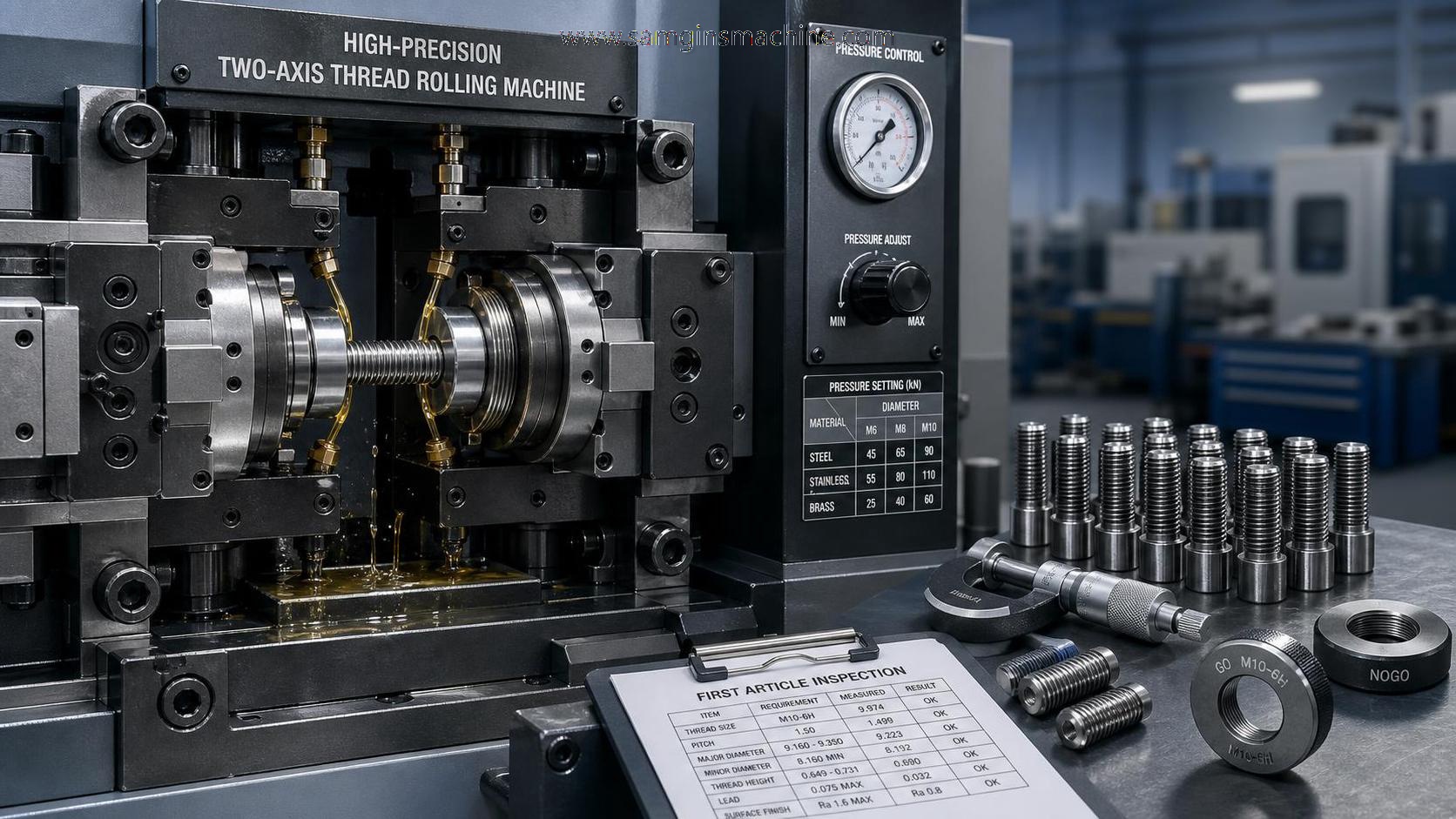
Two Axis Thread Forming Machine Setup Mistakes
Even a high-performance Two axis thread forming machine can produce poor threads, excessive wear, or unexpected downtime when the setup is wrong.
Most problems do not start with the machine itself.
They start with small setup errors that slowly damage quality, stability, and output.
In daily production, these mistakes are easy to miss because the machine may still run.
That is exactly why they become expensive.
This guide explains the most common Two axis thread forming machine setup mistakes and how to correct them before they affect productivity.
Why Setup Accuracy Matters So Much
Thread forming depends on pressure, alignment, timing, and material behavior.
Unlike cutting, forming displaces material instead of removing it.
That means setup errors show up quickly as distorted thread shape, surface marks, or unstable pitch.
A well-set Two axis thread forming machine gives cleaner threads, longer die life, and steadier production speed.
A poorly adjusted machine creates repeated rework and operator frustration.
Mistake 1: Incorrect Die Alignment
This is one of the most common setup problems.
If the rolling dies are not aligned correctly, the thread will not form evenly.
You may notice angled threads, inconsistent depth, or strong vibration during forming.
Sometimes the defect looks like a material issue, but the real cause is die position.
How to avoid it
- Check axial and radial alignment before every production run.
- Confirm both dies contact the workpiece evenly.
- Use a sample part and inspect the first threads under good lighting.
- Recheck alignment after changing dies or material size.
When the Two axis thread forming machine is aligned properly, thread shape becomes more stable from the first part onward.
Mistake 2: Wrong Pressure Setting
Pressure that is too low will leave incomplete threads.
Pressure that is too high can overload the dies, mark the surface, and stress the machine frame.
This mistake often happens when changing material grade or diameter without updating the settings.
Carbon steel and stainless steel do not respond the same way under forming pressure.
What good practice looks like
- Start from the recommended pressure range for the material.
- Increase in small steps instead of making large adjustments.
- Watch thread fill, surface finish, and machine load together.
- Record the best setting for repeat jobs.
A Two axis thread forming machine performs best when pressure is matched to both the material and the thread profile.
Mistake 3: Poor Workpiece Preparation
Many thread quality issues begin before the part reaches the machine.
If the blank diameter is wrong, the thread cannot form correctly.
If the surface has scale, burrs, or oil contamination, the result may be rough or uneven.
This is especially important in continuous production, where one bad batch can affect hours of output.
The same principle applies across metalworking.
For example, companies handling pipe fabrication often prioritize process stability at every stage.
That is why automated systems like 12 meter Pipe inside and outside seam welding machine focus on accurate adjustment, monitoring, and steady speed control.
Thread forming needs the same discipline.
Preparation checklist
- Verify blank diameter against the thread specification.
- Remove burrs and sharp entry defects.
- Keep the surface clean and consistent.
- Reject material with heavy ovality or bending.
Mistake 4: Ignoring Lubrication Conditions
A Two axis thread forming machine needs proper lubrication to reduce friction and protect die surfaces.
When lubrication is insufficient, heat rises fast.
Then surface tearing, die wear, and unstable forming become much more likely.
Too much lubricant can also create handling issues or reduce grip in some applications.
Practical correction steps
- Use lubricant suited to the material and forming load.
- Make sure delivery points are not blocked.
- Inspect dies for heat discoloration or scoring.
- Replace dirty lubricant before contamination spreads.
Good lubrication often solves problems that operators first blame on tooling quality.
Mistake 5: Running at the Wrong Speed
Speed affects forming pressure, heat, finish, and cycle stability.
Some operators raise speed to improve output, then lose more time through rejected parts.
Others run too slowly and create unnecessary heat exposure on certain materials.
The best setting depends on thread size, material hardness, and die condition.
How to set speed more effectively
- Begin with the standard speed for the job type.
- Check thread finish after a short trial run.
- Adjust gradually while watching load and temperature.
- Do not separate speed decisions from lubrication and pressure settings.
A stable Two axis thread forming machine setup always balances speed with control.
Mistake 6: Skipping First-Piece Inspection
This mistake usually comes from production pressure.
The machine is set, the line is waiting, and the run starts too quickly.
But without first-piece inspection, a setup problem may continue through dozens or hundreds of parts.
That is a costly way to learn that the setup was wrong.
What to inspect
- Major diameter and pitch accuracy.
- Thread flank consistency.
- Surface finish and visible marks.
- Part straightness after forming.
- Fit with the related nut or gauge.
A few extra minutes here can protect the whole shift.
Mistake 7: Overlooking Machine Condition During Setup
Not every defect comes from operator settings alone.
Wear in guides, looseness in fixtures, or poor calibration can affect the result.
If setup keeps drifting, the issue may be mechanical rather than procedural.
That is why experienced teams combine setup checks with maintenance awareness.
Manufacturers with broad equipment experience, such as Wuxi Samgins International Trade Co.,Ltd, often emphasize this link between machine condition and output consistency.
Their product range spans welding, cutting, milling, lathes, bending, deburring, pipe processing, and thread rolling equipment built to ISO9001 and EU CE related standards.
That kind of cross-process experience matters because setup discipline is rarely limited to one machine type.
Quick condition checks
- Confirm fixtures hold the workpiece securely.
- Check guide wear and unusual play.
- Listen for abnormal sounds during trial operation.
- Verify gauges and measuring tools are reliable.
A Simple Setup Routine That Prevents Most Problems
A repeatable routine reduces guesswork and protects quality.
- Confirm the material, blank size, and thread specification.
- Install and align the dies carefully.
- Set pressure and speed based on the job record.
- Check lubrication flow before starting.
- Run a first piece and inspect it fully.
- Monitor the first batch for heat, sound, and thread stability.
This routine does not take long, but it prevents the most common Two axis thread forming machine errors.
Final Takeaway
Most Two axis thread forming machine setup mistakes are small at the start and expensive later.
Incorrect alignment, wrong pressure, poor blank preparation, weak lubrication, bad speed choices, and skipped inspection all reduce thread quality.
The practical answer is not complexity.
It is consistency.
Treat every setup as a controlled process, not a quick adjustment.
When that mindset becomes routine, the Two axis thread forming machine delivers better threads, longer tool life, and more predictable production results.
search
Products Navigation
Send Us A Message