




How to Choose a Hydraulic Thread Rolling Machine
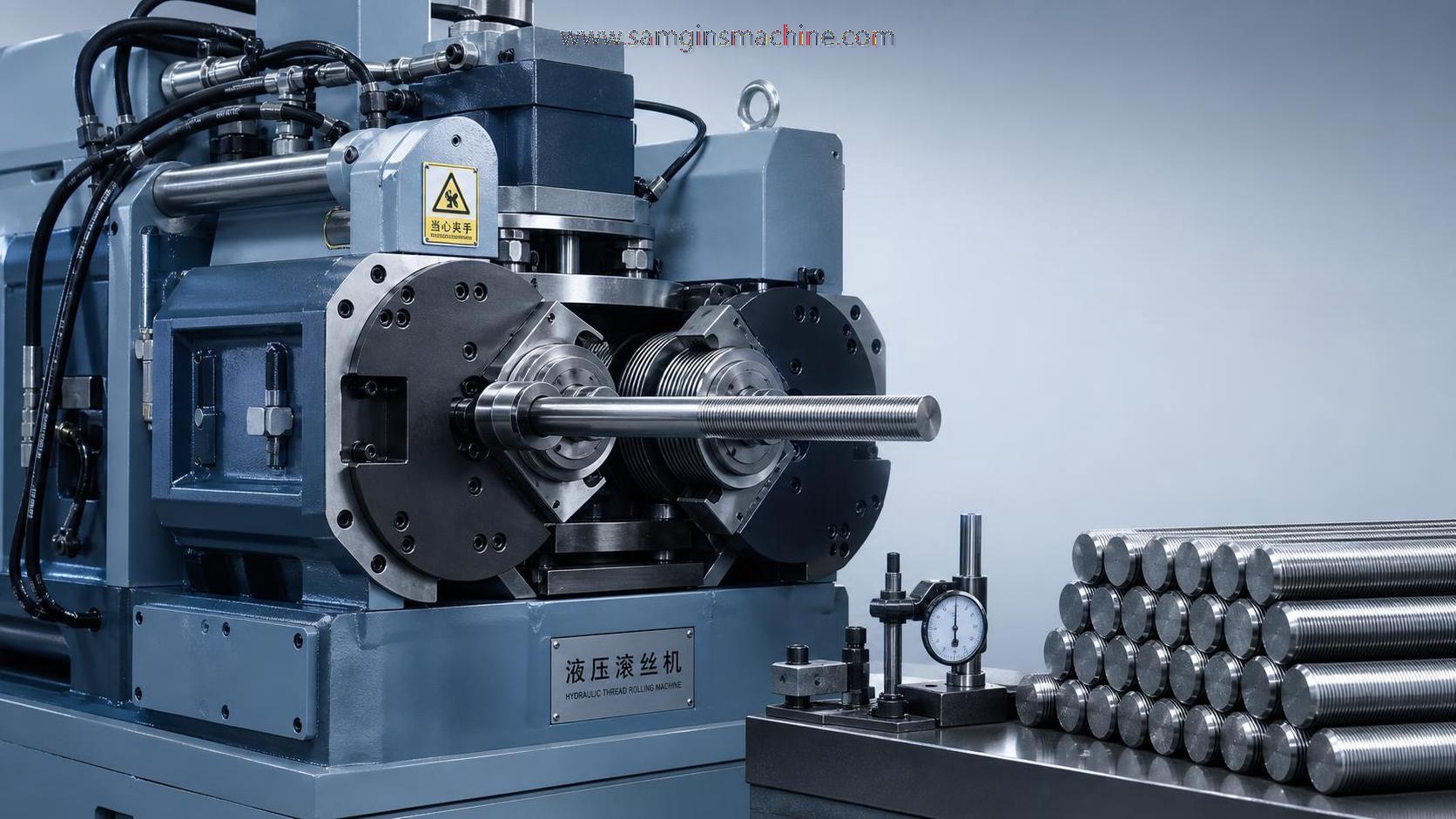
Choosing a Hydraulic Thread rolling machine is rarely a simple matter of matching diameter range and output rate. In metalworking operations, thread quality, machine rigidity, hydraulic consistency, and downstream compatibility all influence whether a line runs smoothly or creates avoidable rework.
That matters even more when production schedules are tight and material costs are rising. A machine that performs well in a brochure may still fall short in real use if the hydraulic system fluctuates, tooling changes take too long, or the frame lacks long-term stability.
For companies comparing equipment across global suppliers, the evaluation process should connect technical details with practical production goals. The right Hydraulic Thread rolling machine supports precision, throughput, and service life without creating hidden maintenance burdens.
What a Hydraulic Thread Rolling Machine Must Deliver
A Hydraulic Thread rolling machine forms threads by plastic deformation rather than cutting. The material is displaced under pressure between rolling dies, creating external threads with improved surface finish and favorable grain flow.
In practice, the machine is expected to do more than produce a thread profile. It must deliver repeatability across batches, maintain die alignment, and handle the required material range without excessive setup correction.
This is why technical evaluation usually starts with process fit. A machine suitable for standard fasteners may not be the best choice for shafts, automotive components, construction hardware, or high-strength alloy parts.
Why the Market Pays Closer Attention Now
Thread rolling remains attractive because it combines material efficiency with strong thread performance. Unlike cutting, rolling reduces chip waste and often improves fatigue resistance through compressed surface structure.
At the same time, buyers are under pressure to standardize quality across multiple product lines. A Hydraulic Thread rolling machine is now evaluated not only for output, but also for data visibility, operating stability, and ease of integration.
Export-oriented operations especially look beyond purchase price. Certification practices, documentation quality, and after-sales response increasingly affect final machine selection.
This broader view is common among suppliers with wide equipment portfolios. Wuxi Samgins International Trade Co., Ltd, based in Wuxi near Shanghai, works across thread rolling, CNC machine tools, welding systems, laser cutting, and plate processing equipment, which reflects how buyers often assess complete workshop compatibility rather than one machine in isolation.
Core Machine Factors Worth Comparing
Frame strength and structural stability
A rigid machine frame reduces deflection under load. That directly affects thread depth consistency, die contact balance, and long-term dimensional accuracy.
Full steel welded structures are often preferred for demanding use. The point is not just weight, but resistance to vibration and loss of alignment over time.
Hydraulic system behavior
Hydraulic pressure must remain stable during the rolling cycle. Pressure fluctuation can lead to incomplete thread formation, surface defects, and uneven deformation.
Ask how the machine manages oil temperature, sealing reliability, and cylinder response. A strong hydraulic design should support both continuous operation and precise pressure control during variable workloads.
Guide accuracy and die alignment
Even a powerful Hydraulic Thread rolling machine can produce poor results if the die movement lacks parallelism. Slide guidance, spindle accuracy, and positioning repeatability should be checked together.
This is also where test samples become useful. Measured thread pitch, major diameter, flank quality, and surface condition reveal much more than catalog claims.
Matching the Machine to Real Production Conditions
Selection becomes clearer when the intended application is defined in production terms. The same machine may perform very differently depending on part geometry, material hardness, and expected daily volume.
Usually, the most expensive issue is not under-capacity. It is buying a machine that cannot maintain stable quality across the actual part mix.
Automation, Setup, and Operator Efficiency
A modern Hydraulic Thread rolling machine should reduce setup time as much as it increases production speed. Fast die change, readable controls, and repeatable positioning save more time than nominal top speed alone.
Semi-automatic models may be enough for stable, single-part production. Mixed production with frequent changeovers usually benefits from stronger control logic and more flexible adjustment functions.
This principle appears across metal forming equipment. In sheet processing, for example, a well-designed Torsion bar synchronize CNC press brake gains value from reliable slider synchronization, clear stroke adjustment, and consistent positioning, not only from nominal force output. The same thinking applies when comparing thread rolling systems.
Quality Signals Beyond the Main Specification Sheet
Some of the most useful evaluation clues appear outside the headline parameters. Build discipline, documentation quality, and standard compliance often say more about long-term reliability than one isolated capacity number.
- Check whether the supplier provides sample inspection records and realistic tolerance data.
- Review hydraulic component sourcing, electrical layout, and maintenance accessibility.
- Confirm whether ISO9001-based production control and CE-oriented design practices are actually implemented.
- Ask how spare parts, remote guidance, and commissioning support are handled for export markets.
Suppliers active in Southeast Asia, Europe, the Americas, and Oceania often develop stronger documentation habits because cross-border delivery leaves less room for ambiguous technical communication.
Common Evaluation Mistakes
One common mistake is focusing only on maximum rolling force. Higher force does not automatically mean better thread quality if the die system, guide accuracy, or hydraulic response is poorly matched.
Another mistake is overlooking material variation. A Hydraulic Thread rolling machine selected around mild steel trials may struggle when actual production includes stronger or less consistent material lots.
It is also risky to ignore maintenance access. Filters, seals, lubricating points, and electrical components should be easy to inspect and replace. Downtime usually costs more than the original price difference between two models.
Finally, avoid evaluating the machine by isolated samples alone. A short test can look acceptable while cycle stability, oil temperature behavior, and die wear patterns remain unproven.
A Practical Way to Narrow the Choice
A useful shortlist usually comes from a simple sequence. Define the part family first, then confirm material range, thread standard, expected output, and required inspection criteria.
After that, compare each Hydraulic Thread rolling machine against actual production conditions, not idealized test cases. Review machine structure, hydraulic consistency, die compatibility, controls, and service support together.
Where possible, request a trial based on your own workpiece or a close equivalent. Ask for evidence of repeatability across several cycles, not just one acceptable sample.
The strongest decision usually comes from turning process needs into a written checklist. Once the checklist is clear, machine comparisons become more objective, and the final choice is easier to defend in technical and commercial terms.
search
Products Navigation
Send Us A Message