




What Determines Laser Cutting Machine Price? Power, Bed Size, Automation, and After-Sales
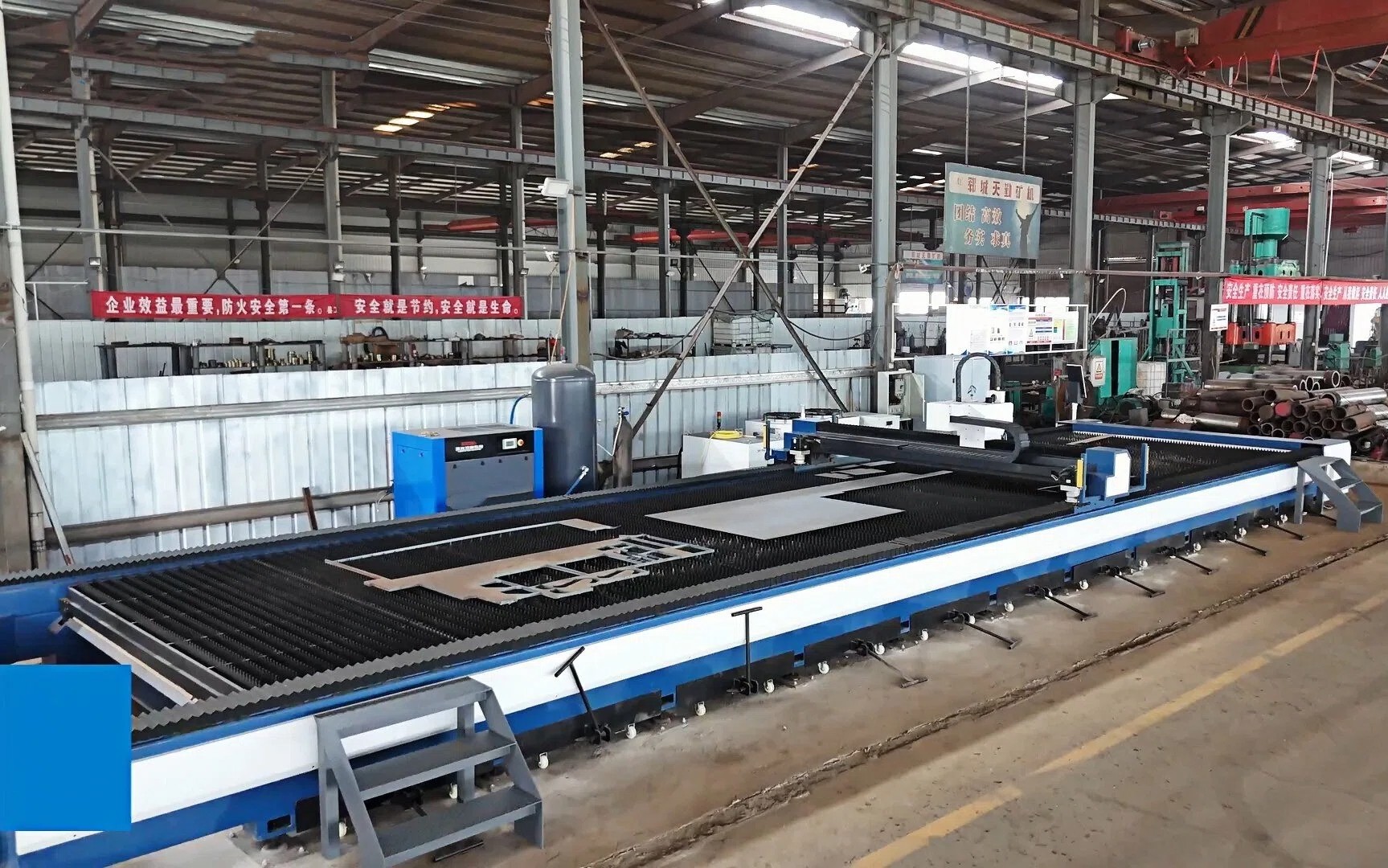
Laser cutting machine price is rarely a single-number decision. In fabrication, the quoted amount usually reflects cutting power, working range, software depth, automation options, expected uptime, and the supplier’s ability to support the machine over years, not weeks.
That is why price comparisons often go wrong. Two machines may look similar on paper, yet deliver very different output, maintenance costs, and production flexibility. For metal processing operations, the smarter question is not only what the machine costs, but what the investment includes.
Why laser cutting machine price has become a strategic issue
Fabrication workshops are under pressure from shorter lead times, tighter tolerances, and rising labor costs. In that environment, equipment spending is tied directly to throughput, scrap control, and order profitability.
A low entry quote can be attractive, but it may hide weaker acceleration, lower precision, more downtime, or limited expansion. A higher quote may include stronger motion control, better energy efficiency, and a service structure that reduces total operating risk.
This is especially relevant in machinery manufacturing, sheet metal work, structural steel processing, and customized production, where machine utilization has a direct effect on cash flow and delivery reliability.
Power affects more than cutting speed
Power is one of the most visible drivers of laser cutting machine price. Higher wattage usually increases the quote, but the reason is not simply faster cutting.
More power expands the thickness range and improves performance on reflective or demanding materials such as stainless steel, aluminum alloy, copper, and titanium alloy. It also influences piercing time and edge consistency.
For lighter sheet work, overspecifying power can reduce return on investment. For heavy-duty production, underspecifying power can create a bottleneck that is far more expensive over time.
In practical terms, the best power level matches actual order mix. If most jobs are thin carbon steel parts, a moderate configuration may be enough. If the workload includes varied gauges and materials, a stronger source can protect long-term capacity.
Where power changes the cost structure
- Higher source cost and stronger supporting components
- More demanding cooling, optics, and electrical design
- Broader material capability and better thick-plate efficiency
- Potential labor savings through shorter cycle times
Bed size changes both price and production logic
Bed size is another major pricing factor. A larger working area increases the machine frame cost, guide systems, table structure, and floor-space requirements. It can also require stronger drives to maintain stable motion.
Still, the value of a larger bed is not only about handling bigger sheets. It can improve nesting efficiency, reduce material waste, and support batch cutting of multiple parts in one setup.
This matters when production includes mixed orders, oversized plates, or structural profiles. In those cases, bed size becomes a planning tool, not just a dimensional specification.
A good example is the H beam cnc fiber laser cutting machine, which fits applications where workpieces are larger, more complex, or part of structural fabrication flow. In such scenarios, machine size and loading method directly affect scheduling efficiency.
Automation often explains the gap between two quotes
When buyers see a wide difference in laser cutting machine price, automation is often the missing explanation. The machine body may be similar, while the production system is not.
Automation can include auto feeding, exchange tables, visual alignment, intelligent nesting, waste collection, and software integration with CAD/CAM or factory planning systems. These functions reduce handling time and improve consistency.
For low-volume work, manual operation may remain acceptable. For repeatable orders, night shifts, or labor-constrained production, automation usually shifts the economics in its favor.
Machine performance data also matters here. Positioning accuracy of ±0.01mm, repeatability of ±0.03mm, minimum line width of 0.01mm, and travel speeds up to 30,000mm/min support the kind of stable output that automation needs to be worthwhile.
On higher-end models, acceleration of 3.0G or even 5G can significantly shorten non-cutting motion time. That detail may not stand out in a sales quote, but it influences real productivity.
When automation pays back faster
- Frequent job changeovers
- High labor cost per shift
- Demand for unattended or semi-attended production
- Tight delivery deadlines with limited staffing
After-sales support is part of the real machine price
After-sales support is often undervalued during quotation review. Yet in equipment-intensive operations, downtime can cost more than the price difference between two suppliers.
The practical cost includes installation, commissioning, training, spare parts access, remote diagnostics, software updates, and response time when faults occur. A cheaper machine with slow support may become the most expensive option on the floor.
This is why supplier background matters. Wuxi Samgins International Trade Co.,Ltd has focused on mechanical equipment since 2012, with products covering CNC cutting machines, welding equipment, machine tools, beam production lines, and sheet metal processing equipment.
That wider equipment experience matters because laser cutting rarely operates alone. It usually sits inside a broader manufacturing process that may involve leveling, deburring, bending, welding, or profile fabrication.
Production and design aligned with ISO9001 and EU CE expectations also help reduce compliance and quality uncertainty, especially for projects intended for international markets.
What should be reviewed behind the quotation
A useful comparison goes beyond the headline number. Laser cutting machine price should be reviewed against operating life, output quality, and integration cost.
For example, a narrow cutting seam of 0.1mm to 0.3mm, roughness at Ra ≤ 6.5, and a small heat affected zone can reduce secondary finishing. That lowers downstream labor and improves part consistency.
Non-contact processing also reduces tool wear and avoids mechanical stress on the workpiece. In small-batch, multi-variety production, that flexibility can create measurable savings because there is no mold cost and fewer setup constraints.
Energy consumption deserves attention as well. Fiber systems with photoelectric conversion efficiency around 30% typically offer lower operating energy demand than older CO2 equipment. Over several years, that difference becomes meaningful.
Different production scenarios lead to different price logic
Not every business should pursue the same configuration. The right laser cutting machine price depends on what the machine is expected to solve.
For standard sheet metal parts, the best value may come from stable mid-range power and practical automation. For structural steel or profile processing, larger-format systems and specialized motion control may deliver better returns.
For customized precision manufacturing, accuracy and software capability may outweigh raw speed. In these cases, machines that support complex shapes, CAD/CAM integration, and reliable repeatability often justify a higher initial quote.
This is where a solution-based review is more useful than a catalog-based comparison. The machine should fit the production path, not only the budget line.
A practical way to move from price to decision
A clear decision starts with three internal checks: actual material mix, target output, and acceptable downtime risk. Once those are defined, laser cutting machine price becomes easier to interpret.
Then compare suppliers on complete lifecycle value. Ask what is included in installation, training, warranty, software, and support. Confirm whether the machine can handle current work and probable future contracts.
It is also worth reviewing one or two representative parts before final approval. Real cutting samples often reveal more than general specifications.
In the end, the most reasonable laser cutting machine price is the one that matches production reality, maintains quality, and avoids hidden cost over the machine’s working life.
search
Products Navigation
Send Us A Message